17th century ship Vasa Stockholm Sweden
grief

Photos and a Good Layer of Guilt

I posted exactly one photo from a once-in-a-lifetime trip I took last September.

My dear friend whisked me away to Sweden, Stockholm specifically, and we had a fabulous time.

So much about our trip was aesthetic and Scandi and Instagram-worthy.

But the only photo I shared was one on the last full day of our trip, which happened to be my father’s last day on earth.

And while I subjected my husband and girls to a screen-cast slideshow squeezed on our couch when I was back stateside, the photos sat largely untouched for the last year.

Now Ive been known to live in an entirely different timeline in scrap-landia. According to our family scrapbook, it is circa 2012.

But this was somehow different.

Somehow, and largely subconsciously, I’d covered those photos in a layer of guilt.

Guilt at not being by his bedside, guilt at not being there for my mother, guilt at not being there when he breathed his last.

Guilt at enjoying this life-expanding event while an equally heartbreaking one was occurring.

When the one-year anniversary of both came round, I wanted to honor both – but it still felt like throwing celebration in the face of sadness.

When I finally sorted through the hundreds of photos this week, it didn’t occur to me until I discussed it with my therapist the next day, that the process was actually part of grieving my father. I had been thinking of him all that week already. He had been with me in so many spiritual and even metaphysical ways. And while our trip had been planned well before he even fell ill, God had chosen his final time even sooner than that.

I didn’t choose to not be with my father. He would’ve chosen to savor each and every moment with me had I been able to come home and tell them all to him.

In so many synchronistic ways, we sailed together that week.

And what is grief – and life – but beauty and pain together.

Photo Info

17th-century warship Vasa at the Vasa Museum located on the island of Djurgården in Stockholm, Jennifer Butler Basile, September 21, 2025

Standard
Caleb Oquendo Pexels
grief

The Playlist

With my father’s first visits to the oncologist, so started my early morning drives to meet my parents at the office.

I’d rouse the older ones to let them know the younger one was already awake downstairs and had had breakfast and head out on my own. A forty-five minute ride of silence became full with plenty of thoughts, questions, and worries.

But the agency of getting there at a certain time and meeting with/talking to the doctor, collecting information for my parents, being a second set of ears, a sounding board, a buffer, was an outlet for the enormity of what ifs and kicked the certainty of what we all dreaded into some indeterminate future.

When it became clear that he did, in fact, have cancer (one of the worst general zeitgeist told me you could get), my mind morphed to getting him through treatment, supporting him and making it as . . . enjoyable . . . as possible? or at least less horrific. The musical soundtracks of my sunshine drenched drives, soon to be snuffed out by ice cold air conditioning, inspired a growing playlist I was mentally making for my dad.

First, I pictured it as tunes meant to soothe and relax him as he sat through chemotherapy or radiation or whatever they would pump into him as he sat tethered to a chair. Then, when it was clear those weren’t options, I pictured the sonic waves surrounding him at home as he peacefully rested. When he slipped away faster than any of us could have imagined, a goal in that frenzied week between his passing and services was to finish that damned list so at least we could all listen to the kind of songs he loved as we celebrated his life. His spirit could still reverberate around us even if his presence didn’t.

A year ago this week, he lay on his death bed. And though it’s lived in my memory and mind’s eye and ears and in bits and pieces on the notes app of my phone, I built the playlist I never played for my father today. As I listened to each song before I hit the plus sign adding it to the list, I felt the moods and melodies envelop me, raise me up, raise that terribly beautiful feeling of love and anguish, holding me up and threatening to drop me from a great height like all of the delicately heartbreaking hymns of sacred masses.

And it pained me to think that he would’ve loved all these songs – if I’d only been able to share the carefully curated list I’d made for him.

And then I wondered if it was really all more for me all along.

Standard
Tom Fisk Pexels
grief, Uncategorized

Beside Myself

It did not escape me that the computer went black just as I went to hit send on an email scheduling a mass for the one-year anniversary of your death.

Your sense of humor was always a touch . . . little brother poking the bear?

And your infinite wisdom / innate annoyance of computer devices that should work a certain way certainly fits.

I also notice how often you order up a Paul Simon song (with or without Garfunkel), sometimes just at the moment I turn onto your and Mom’s street.

I could not and would not forget you lived there too and think of you each time I visit anyway.

I think of you each time one of the girls knows some random cultural touchpoint because you explained the archaic origin of it. I thought of how unfair it was that I learned my most recent one from a book and not from you, even though I heard it in your voice.

You are everywhere and nowhere.

And that is both comforting and irritating – just the way one of your factual and deeply researched pontifications were.

The same book that taught me that the “slang phrase, up shit’s creek, [is] from [the] Pawnee Indians, [a] reference to the Republican River which was polluted with buffalo manure, [meaning] in deep trouble” is also the one that offered this description of GRIEF:

The state of mind brought about when love, having lost to death, learns to breathe beside it. See also love.

Kayak Morning / Roger Rosenblatt

The way I found this book was coincidental – if you believe in those.

It was sitting kitty-corner atop the stack of memoirs at the edge of the stairs to the children’s section. I saw it as my foot hovered above the top step preparing to leave.

Had the librarian, whom I know personally, pulled it from the shelf and let it float there like flotsam in the hopes that I would see and read it? Did she know I needed stream-of-consciousness, nature-inspired writerly reflections on grief?

Did you know?

I would have made the connection anyway.

Standard
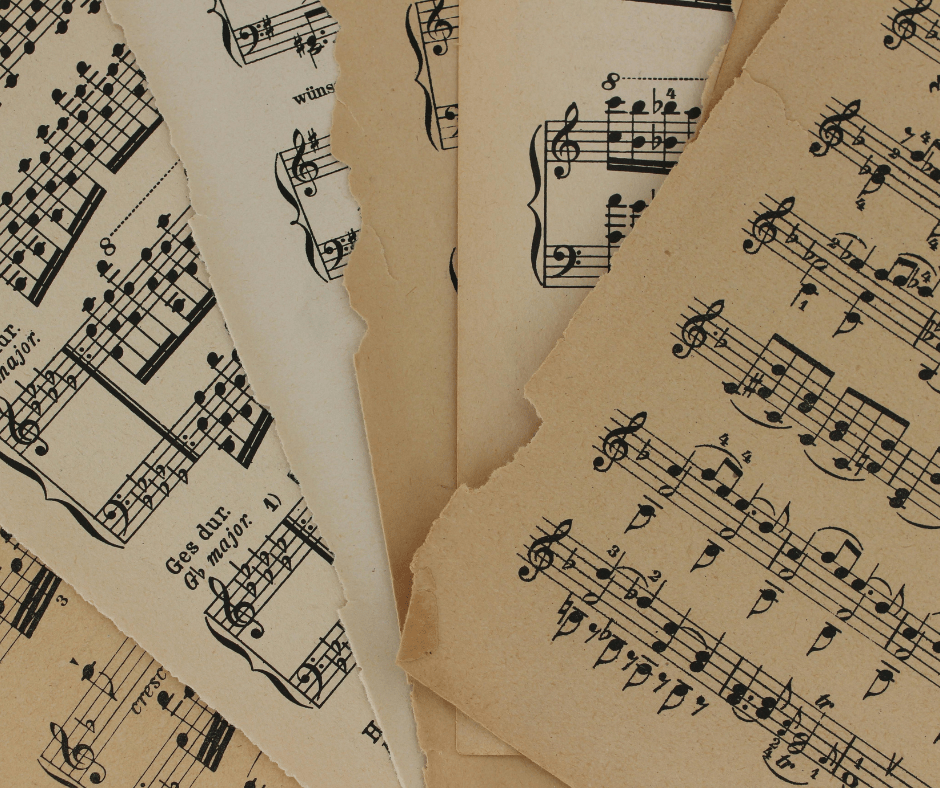
music notes yellowed sheet music
grief, music

Uncaging the Elephant

It was a new single 
but hearing it brought me back
to seeing them perform live
two summers ago

That made me think of the song
I wanted to share with my dad
because it sounded like guitar-driven neatly sewn together 60s -
but could never remember the name
when the time came

Now I’m thinking about how the time has gone
And just as I’m slipping into melancholy
the disc shifts to Paul Simon
As it always does when I’m driving and thinking of Dad

The joy felt by me and Julio down by the schoolyard
is drenched by the downpour
and the demise of Glen Hansard
as he sings to his babe in arms atop an Irish mount

Forward and back
Side to side
A web of associations and feelings
All attached to notes floating in the ether
Standard
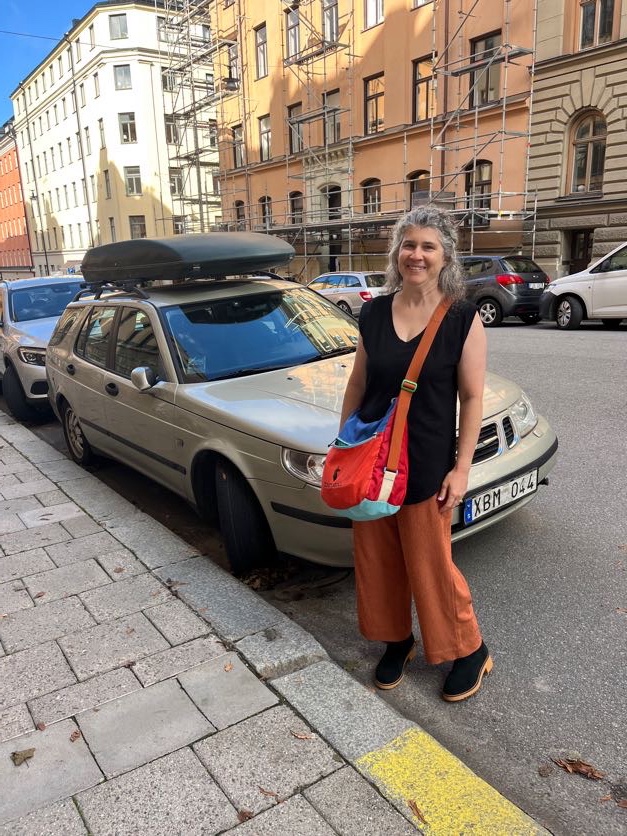
Saab sidewalk Stockholm Sweden
Automobiles, grief

Not a Standard Transmission

When I was in kindergarten, my mother had a metallic blue Mustang. I have a clear memory of a thunderstorm with rain so torrential we had to pull into a parking lot on the side of the road, listening to “Gloria” by Laura Branigan until it passed. I cried when she and my father told me they were selling it, shyly offering up the cap of the same shiny shade of touch-up paint to the man who’d come to buy it. I was aghast when he intimated that he didn’t need it because he was thinking of changing the color.

When I learned to drive it was on a 1987 Ford Escort. Ironically, though it was my mother I’d watched expertly move through the gears in that shimmery blue mustang as a young girl, thinking she was psychic when she’d shift into first seconds before the light turned green (not knowing she was watching the edge of the light one quarter turn away), it was my father who bucked and shimmied beside me as I worked to unlock the nuances of clutch/gas, left/right mysteries.

That car became the key to many adventures, even before it officially became mine. I’d already bought my first brand new car in my own name when we sold to it a young guy with whom my dad worked. I tried to explain how my dad and I had maintained it over the years, changing the oil religiously, rotating the tires ourselves. As with the Mustang buyer, this guy was not that into it. Even less so in fact. He was planning on using it as a beater to get back and forth to work. And its age and actual metal frame and shell made it just that. Of course I’d attached much more than old Coast Guard and Annie’s Organic bumper stickers.

The very act of preparing a car for sale stirs a sorrow in me. Removing the bits of detritus that made the car yours seems to suck the soul right out of it. Seems sacrilegious. You almost want someone else to come and do it so you don’t have to see it.

Whenever we’ve left one of our cars on the lot after a trade-in, I get a feeling similar to the one I had leaving my stuffed animals alone while going off to school. You know, a bit guilty so you sit them up nice so they won’t be angry at you all day. Don’t forget rotating them so they don’t think you’ve got a new favorite.

I’ve written extensively about my love of the new car that replaced the first: my Saab. The psychological heft of that one. . . Yeesh. I won’t get into it here. Just note: Dad got me into them and it was a standard.

Now we are getting rid of the car that replaced the Saab. Adding one more layer to the separation. I was pregnant with my youngest when we picked this one out. I remember squeezing my swollen belly into it as George the salesman showed us how to synch our smartphones to the touchscreen system. That baby’s now nearly ten.

The Subie was my husband’s daily commuter and he had gotten sick of shifting while stuck in traffic. I asked whether he could take the minivan to work yesterday so I could have one last day driving it.

We got the standard transmission because of me. I was the one who’d been driving stick since I first learned to drive. My mom made it look like she was shifting a race car. My dad said it was a skill that would allow me to drive any vehicle for the rest of my life.

And now we are replacing the Subie with a car that does not have a manual transmission. As I drove to and from my errands yesterday, instead of the joy I expected to feel in the final throes of passion, I felt sadness: that cars don’t come through with standards anymore, that something as concrete and dependable as metal gears interlocking and propelling steel and self forward is no longer a permanent guarantee, that I may forget how to shift by the time we own a standard again.

That a skill I thought I’d have forever, given to me by my dad, is now in danger of going – just like he did.

And so, it’s much more than getting rid of a car.

* photo courtesy Danielle Ringer

Standard