When I was in kindergarten, my mother had a metallic blue Mustang. I have a clear memory of a thunderstorm with rain so torrential we had to pull into a parking lot on the side of the road, listening to “Gloria” by Laura Branigan until it passed. I cried when she and my father told me they were selling it, shyly offering up the cap of the same shiny shade of touch-up paint to the man who’d come to buy it. I was aghast when he intimated that he didn’t need it because he was thinking of changing the color.
When I learned to drive it was on a 1987 Ford Escort. Ironically, though it was my mother I’d watched expertly move through the gears in that shimmery blue mustang as a young girl, thinking she was psychic when she’d shift into first seconds before the light turned green (not knowing she was watching the edge of the light one quarter turn away), it was my father who bucked and shimmied beside me as I worked to unlock the nuances of clutch/gas, left/right mysteries.
That car became the key to many adventures, even before it officially became mine. I’d already bought my first brand new car in my own name when we sold to it a young guy with whom my dad worked. I tried to explain how my dad and I had maintained it over the years, changing the oil religiously, rotating the tires ourselves. As with the Mustang buyer, this guy was not that into it. Even less so in fact. He was planning on using it as a beater to get back and forth to work. And its age and actual metal frame and shell made it just that. Of course I’d attached much more than old Coast Guard and Annie’s Organic bumper stickers.
The very act of preparing a car for sale stirs a sorrow in me. Removing the bits of detritus that made the car yours seems to suck the soul right out of it. Seems sacrilegious. You almost want someone else to come and do it so you don’t have to see it.
Whenever we’ve left one of our cars on the lot after a trade-in, I get a feeling similar to the one I had leaving my stuffed animals alone while going off to school. You know, a bit guilty so you sit them up nice so they won’t be angry at you all day. Don’t forget rotating them so they don’t think you’ve got a new favorite.
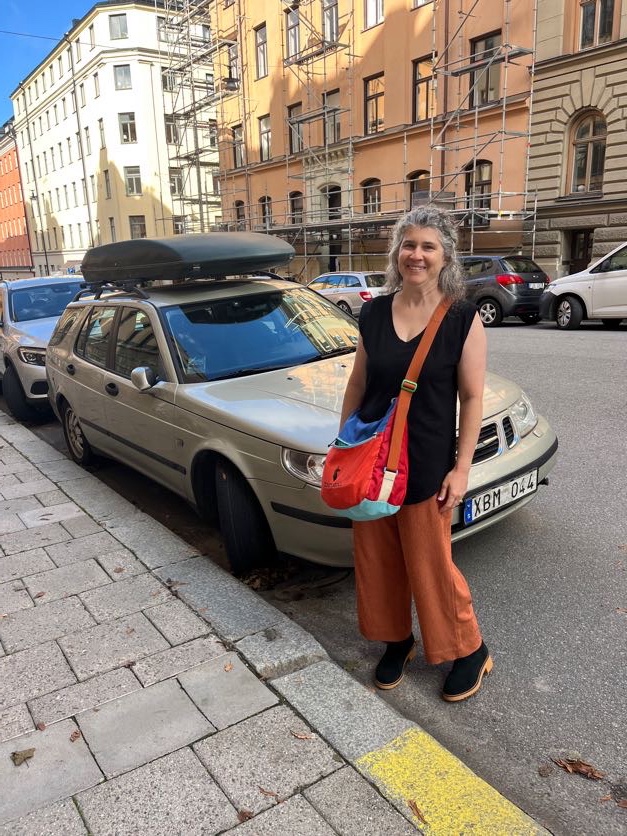
I’ve written extensively about my love of the new car that replaced the first: my Saab. The psychological heft of that one. . . Yeesh. I won’t get into it here. Just note: Dad got me into them and it was a standard.
Now we are getting rid of the car that replaced the Saab. Adding one more layer to the separation. I was pregnant with my youngest when we picked this one out. I remember squeezing my swollen belly into it as George the salesman showed us how to synch our smartphones to the touchscreen system. That baby’s now nearly ten.
The Subie was my husband’s daily commuter and he had gotten sick of shifting while stuck in traffic. I asked whether he could take the minivan to work yesterday so I could have one last day driving it.
We got the standard transmission because of me. I was the one who’d been driving stick since I first learned to drive. My mom made it look like she was shifting a race car. My dad said it was a skill that would allow me to drive any vehicle for the rest of my life.
And now we are replacing the Subie with a car that does not have a manual transmission. As I drove to and from my errands yesterday, instead of the joy I expected to feel in the final throes of passion, I felt sadness: that cars don’t come through with standards anymore, that something as concrete and dependable as metal gears interlocking and propelling steel and self forward is no longer a permanent guarantee, that I may forget how to shift by the time we own a standard again.
That a skill I thought I’d have forever, given to me by my dad, is now in danger of going – just like he did.
And so, it’s much more than getting rid of a car.
* photo courtesy Danielle Ringer