Living

Shades of the Past

The news of my junior-high-turned-life-long-friend’s father’s death shocked me. It shook me for its suddeness and the blow it served to my friend, his brother, and mother. It also pulled me back into a fold I hadn’t been part of for quite some time.

This family gave me first, the friendship of its younger son, then older brother, deepened by the quasi-adopted status of daughter in a family of boys. Through a childhood bond of the older brother and the wheeling and dealing of the younger, it gave me my husband. When our band of merry men wasn’t tearing into the cul-de-sac in front of their house, we were storming their vacation cottage in the mountains. We ate, drank mai tais the old way, and managed to meet up around the country and world as life took us on its various roads.

But year spooled into year, and suddenly it had been over a decade since I’d visited their home. I didn’t think it would affect me until our car slid into line with the others at the curb, much like it did when we’d jockey for position years ago. Stepping over the threshold from the breezeway to the kitchen, a wave of emotion rolled over me. The same wallpaper, the same linoleum, the same smell. The books, the airshow posters, the tea bags and coffee press. The fresh air billowing in the bathroom window overlooking the backyard. The same futon where three of us had crammed to watch German subtitled movies for English class.

We gathered around the table on the patio and drank the sweet, slushy lemonade of our childhood with a splash of rum from Pappy’s reserve. I don’t think I’d realized how much a place can take on a life of its own. But really, what this place gave me is a better appreciation for the people and times that made it so special.

Andrew Apuya

Andrew Apuya

Standard
Living, Poetry

A Few of My Favorite Things

When a knit stitch pulls through smoothly, with satisfaction

The strength of a bond pulled taut, in spite of the miles

Connection

Certainty

Sun on your face

A wind rushing through the trees,
upturned eyes searching for a brief blot of the sun,
finding an osprey soaring high above

An upsurge of soul,
a welling of emotion

Fleeting, yet profound

We must seek these moments for all they are worth.

Standard
postpartum depression

An addendum

In my post Thursday, I discussed the pitfalls of postpartum in dads.  There is a major one I erroneously omitted.

One more thing for postpartum moms to worry about

In all my talk about supporting dads in their postpartum world, I failed to think what such advice/discussion would do to a mom currently suffering from postpartum.  Though I’ve still got plenty of issues to sort out, I am no longer in the deep, dark depths of my postpartum period.  I have traveled far enough beyond it to be able to reflect upon what the experience was like for my husband.  In the midst of it, however, I couldn’t help myself – let alone another human.  I apologized for lashing out; I thanked him for his support; I commiserated when he said he didn’t know what to do.  But beyond that, there was nothing I could do for him.  Nothing except put myself back together.  And that took all my energy.

So all you women and mothers suffering from postpartum mood disorders out there, my last post was not meant to make you feel bad.  It was not meant to give you one more thing to feel shitty about.  To make you think you’ve ruined one more life.

Let me reiterate the point that it takes an entire community to surround and uplift the postpartum tribe.  It should not fall to you to do everything.

Yes, dad needs support, but you don’t have to be the only one to give it to him.  You may not be able to at all.  And that’s okay.

People outside your tight-knit trio need to help put you all back together.

Tripod-of-Life_Holy-Trinity

Standard
postpartum depression

Down in the Valley

When I first heard the idea of postpartum depression in fathers, I thought it was a bunch of hooey. I knew, with the interests I have and the topics I research, I should jump wholeheartedly into the facts of the phenomenon, but I harrumphed at the links and passed them by. Men simply and physiologically could not experience the hormonal onslaught and the horrific physical demands of the perinatal period. I felt that such attention on males would only distract from the already poorly represented female population of sufferers. Could they really have it so bad?

And then I participated in Postpartum Support International‘s webinar on ‘Involving Dads and Partners’.

Dr. Daniel Singley, a psychologist with The Men’s Center for Excellence, opened the webinar with a discussion on relationship issues, stating that one must look at perinatal depression within the arc of a couple’s relationship, as they directly affect each other. Also, a couple’s childbearing years usually coincide with a dip in relationship satisfaction already occurring, an interesting factoid that may explain a lot.

ushaped curve

With the modern expectations of hands-on and collaborative fathering, there has not also come guidelines for how to do that. Fathers are told they must support mom, but they aren’t told how. They must be strong for her, but all without anyone having their back. Gender differences often don’t allow for solicitations for help either. If there is an underlying mental health issue already, such conditions exacerbate it.

Parenting is new to both parties – not just the mother. There is a vast body of knowledge yet untapped in human experience until a parent holds that fragile little being. Insecurities and lack of self-confidence abound in both sexes as they navigate these new waters.

Having only walked in my own flattened out shoes, I dare say women still have the larger burden. We had to push the human out of our bodies. We have to recover from that onslaught while some of us continue to sustain baby with our bodies through breastfeeding. And the huge learning curve of caring for an infant comes with the mantle of harrowing hormones (Feel good hormone, my right raw nipple).

However – Dr. Christina Hibbert makes a good point. In excerpted text from her video, Postpartum Mood Disorders: The Couple’s Experience, she describes how a husband feels he cannot do anything to help the women he loves so much as she suffers. Another husband says ‘it’s as if an alien abducted my wife, returning someone who looked like her and acted like her, but was totally different.’ I showed this part of the webinar to my husband. He paused, nodded thoughtfully, and said, yeah, that’s about right.

This is where looking at postpartum in terms of a spousal relationship is important. As if an individual’s depression weren’t complex enough; as if birthing a child weren’t enough of an event; as if worrying about raising that infant to adulthood safely weren’t overwhelming enough; there is the irrevocable effect the whole evolution has on your relationship. And if it’s a truly loving and compassionate one, watching your partner devolve into depression would certainly take its toll on you.

I was in my own vortex of hell; I couldn’t see anything beyond it. I would hug my husband and thank him for staying with me, other days asking if he’d leave me for all the trouble/misery I’d caused. But I had no idea what his experience was like until I heard these descriptions on this webinar. The pain and grief he experienced. My heart ached anew. For the ways my depression had hurt him and how I was helpless to fix it.

Postpartum – and any other brand of – depression is truly a familial condition. It is not, nor even should be, a solitary journey. Unfortunately, many times the family members are drawn into the negative effects whether they like it or not. But with awareness and support, the weathering of and coming out of can be that much kinder and gentler.

I should not have scoffed at the idea of postpartum depression in dads. Perhaps it is the flawed nature of the term in general. The field is moving toward the broader and more comprehensive term perinatal mood and anxiety disorders (PMAD), which I agree is much clearer and effective. Fathers do not experience the perinatal phase exactly as mothers do, but then, each mother experiences the perinatal phase in a different way.

Everyone involved in the perinatal process needs understanding and openness, warmth and wisdom. Then, perhaps we can all make it up the mountain on the other side of the valley.

Standard
Living, Spirituality

Smash the Taskmaster

I will not feel guilty for doing what the Spirit moves me to at any given time.
I will revel in the mindless work of plucking pine needles from fingers of moss.
I will lose myself in the monotony.
I will let my mind drift along meandering paths –

    not to the should’ve, could’ve, would’ves.

I will write for the pleasure of it,

    not the drudgery.

I will not let unfinished business ruin the relish of the deal on the table.

There is no sense in feeding our souls if we are constantly counting calories.

open

Standard
Living, Spirituality

Breaking Ground

Jennifer Butler Basile

Jennifer Butler Basile

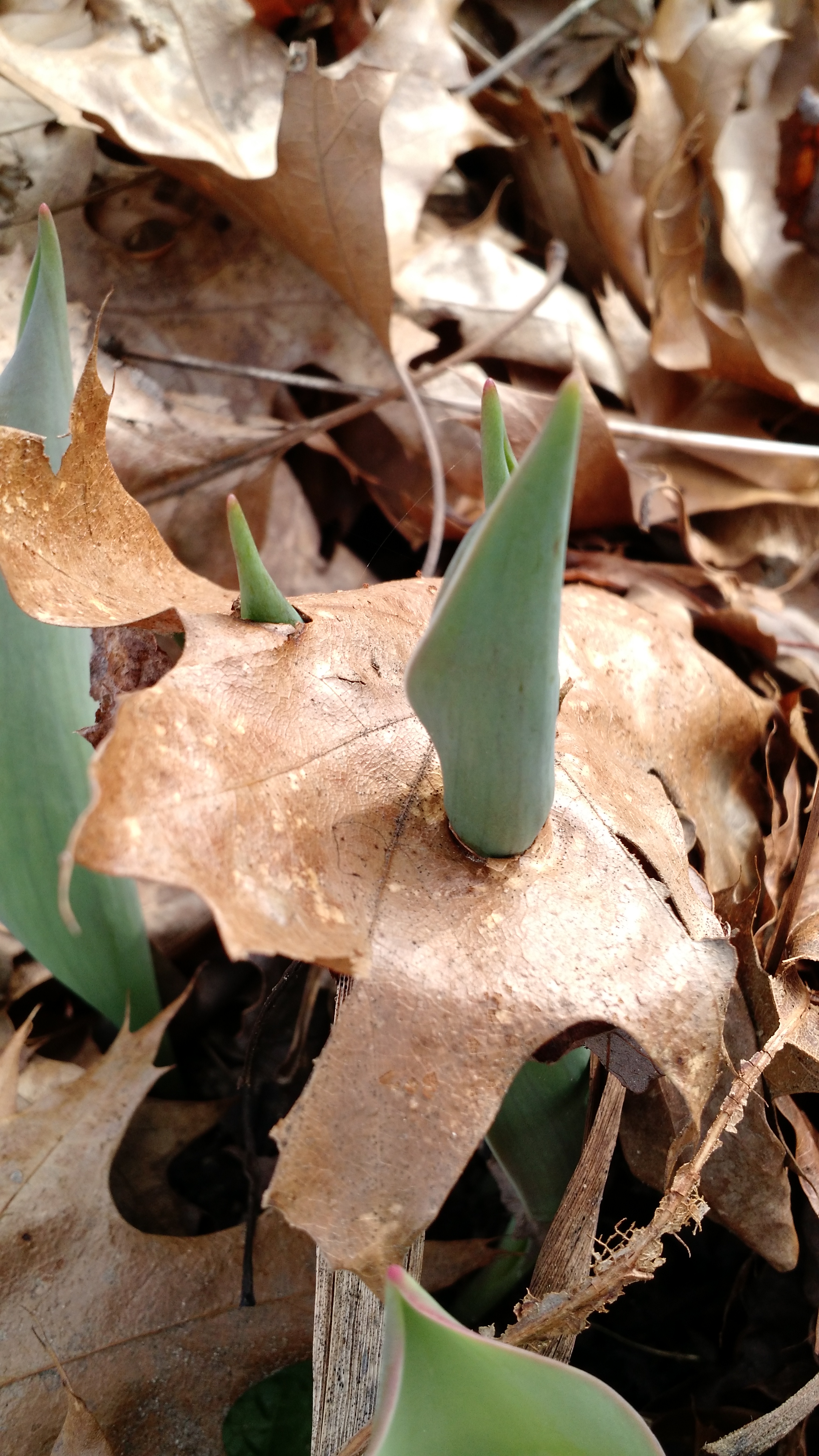
Nature, fate, the universe, the Spirit – has a way of prevailing.

While we humans fret that we may impede it,
that if we do not clear the ground and make way,
the right way will not progress –
we give ourselves too much power, too much credit.

All shall move forward on its own course.
We just need to stay that course.

Standard
Living

Slip(up)stream

I wonder if God intended our minds to race

to rush from the wonders of the universe to a bit of ham stuck in our teeth

the tick of the speedometer to the sun glinting in our eyes to the trickle of guilt in our hearts

Love, lust, and what to have for dinner

Are we to let it run roughshod over our mental terrain
or train it to a specific point?

hilarymurdoch.wordpress.com

hilarymurdoch.wordpress.com

Focus or freedom?

How much is intentional
and how much is divine inspiration?

Stream of consciousness
vs.
clogged waterway.

And how do we pull the plug?

Standard