News

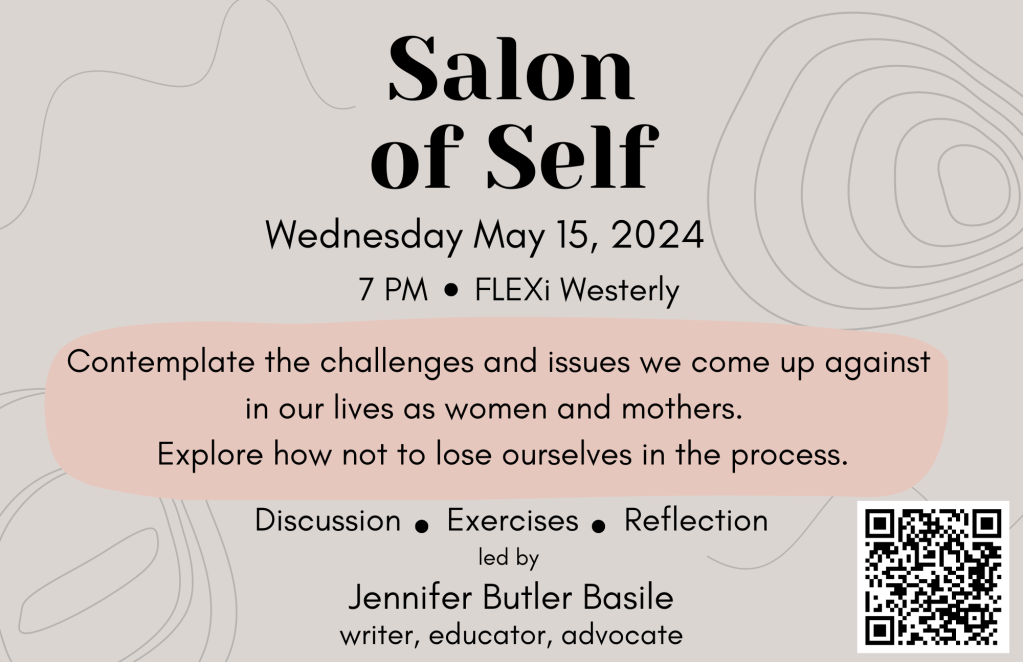
Have you been to the salon lately?

Last week I shared with you the improved updates to the Chopping Potatoes site and the streamlined subscription process.

Today I have an exciting announcement!

The in-person workshop is back! And we’re taking it to the salon.

Sad to say, I will not be offering mani/pedis – believe me you probably wouldn’t want what I would have to offer.

Before the modern meaning of the word, salons were gatherings of thought, conversation, inventive ideas. And while we are no longer in the Enlightenment, who has more inventive ideas than mothers?

Except what needs attention and creativity more than anything is how to keep our selves from slipping below the surface.

This is why we gather.

To (re)discover what makes our heart sing. To fight our way through the tough parts. To commune with others making the same slog.

Please join me for a combination of reflection, writing, and discussion – all directed toward supporting your SELF.

or scan the code above to register!

Standard
Write to Heal, Writing

Ain’t Nobody Got Time for . . .

A small kelly green hardbound book with a gold embossed border and square locking mechanism.

Even then, in the dire days of second grade, I failed to fill in the daily pages.

Perhaps the slot at the top of each page to fill in the date was where my ongoing cycle of expectation/failure/guilt got its perfectionist start. If only there were simply blank pages with no open forward slashes for month/day/year, maybe then I would’ve been free to record my thoughts as I wished, order them as needed.

But it was only this summer that it took me two entire days to write one entry in my journal. Now the pages were wide open, but my days were not. The stream of thoughts were interrupted when sports practice actually ended on time one evening and completed in fits and starts when swim lessons turned into extended splashing in the shallows. As parents beckoned with outstretched towels, I began to stir from my chair. But my little leapfrog still happily skidded her hands across the surface of the water even as her classmates began to leave. And her older sisters were likely still snoozing. So why not let her play a while longer and finish my thoughts?

Staying seated in that chair strained every productive perfect bone in my body.

Will another mom see me with my head down and judge me as putting my child in danger? (I looked up every few words and rose from time to time to make eye contact with her) Should I go home and check on her sisters? (I’d texted and only one had risen and started to think about breakfast) What laundry/dishes/errands need to be completed next? (The list was never-ending and would still be there when I got home)

Why did letting my child extend her playtime in the outdoors feel like a bad choice?

Because, in this instance, it meant that I got to fill the lines on my pages and my cup. Because in a daily schedule/vocation/lifestyle (ie motherhood) that society orders as self-less, it seems self-ish to take a few minutes for oneself. On a perpetual treadmill, it seems wasteful to sit and stare into space.

But just as it did my daughter well to soak up some sunshine and wonder in the lapping water, it did me well to off-load some thoughts and feelings onto the page, synthesize others, and start with a clean slate.

In that instant I couldn’t change the tempo of my life, I couldn’t create time, but I chose to step out it. I chose to do something that would allow a refreshed me to step back in.

And we all have that choice.

Whether we draw, doodle, sketch; list, pen lengthy diatribes, or long poems; write letters to someone with whom we’re angry, our younger or future self; discover truths buried deep in our hearts or a simply profound recognition – journalling is whatever we make of it and accessible to us all.

All it takes is a piece of paper, something to write with, and a willingness to be open.

This may be the exact diary I had! Minus the kelly green and drugstore sticker!
Standard
Identity, motherhood

Balance the Equation

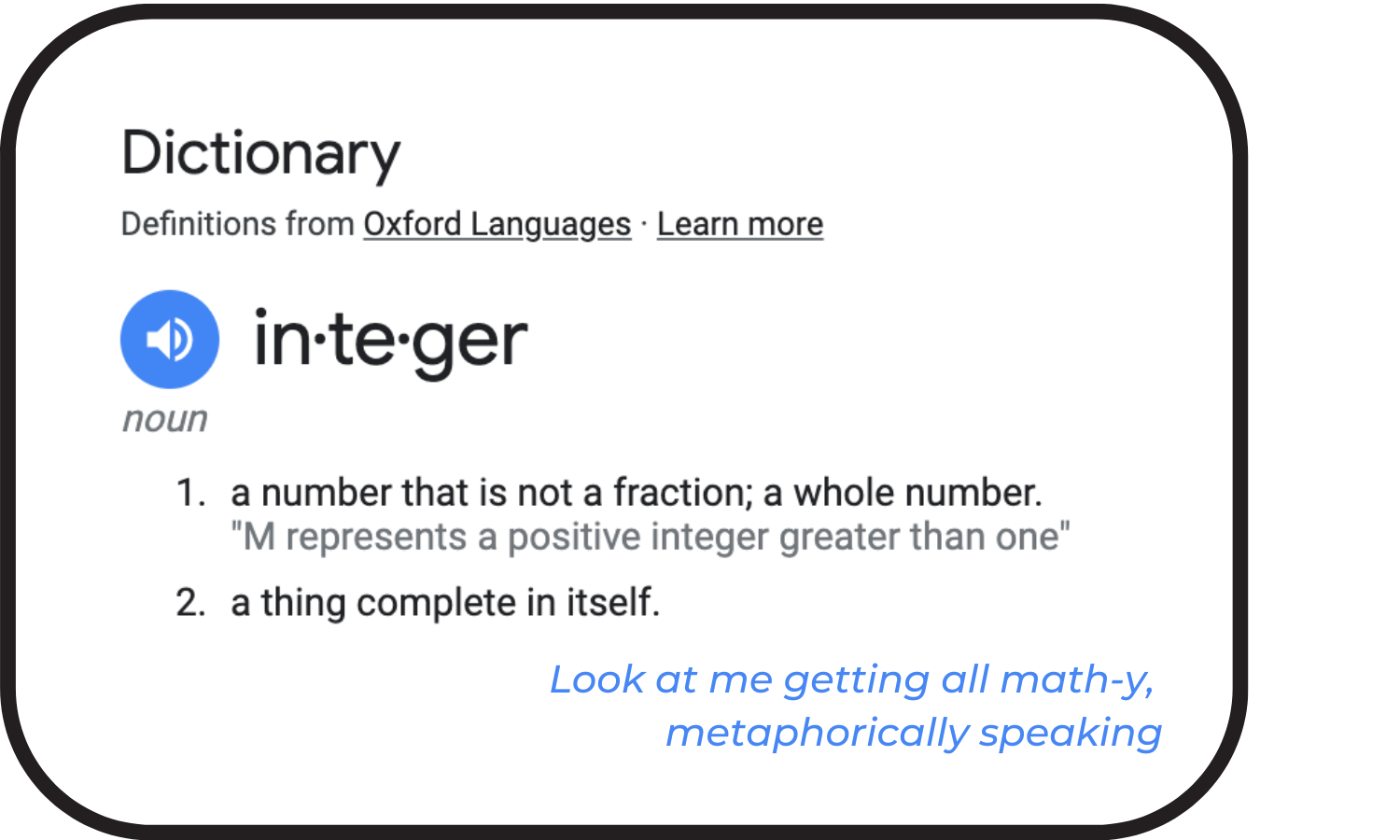
I think I know why mothers put themselves last. The one thing they can unequivocally control, with no x-factors or unknown variables, is themselves. In a world of crushing responsibility and swirling chaos – with them at its center – it is easier to remove oneself from the equation than adjust other unwieldy elements to make room for themselves.

When my now six year-old was a SCREECHING toddler-preschooler (and yes, it was in all caps and a continual hybrid of those two phases), many freak shows occurred in the tinny tube of a well-sealed minivan. When we had no choice but to hurtle through the tunnel of terror, my husband would often turn up the volume of the music. With all the children, we’ve always joked that music calms the savage beast, but if that didn’t work, I believe his secondary goal was to at least drown out some of the noise with more pleasant ones. But music – no matter how soothing it was – was just another layer of auditory assault on top of her banshee screams and the increasingly agitated protests of her sisters, who had a front row seat in the fallout zone. At some point, all the windows would be shooshed open, adding full-blast high-velocity wind to the affront. With something in my head about to twist in upon itself and either roll out my ears or burst out my forehead, I would lean forward and snap off the radio. Which inevitably would anger my already wound-tight husband at the wheel. I think his reasoning was to have some say in the cacophony, a pleasant personal addition to counteract all the negative auditory input over which we had no control. Mine was: the one thing I have control over and can remove from the untenable equation needs to be gone before I go out of my ever-living mind.

And that is much how I’ve operated these last several years. In the midst of pick-ups and drop-offs, errands to run and food to buy, kids who don’t nap and others who stay up too late – it was easier not to dream. It was easier to not start a project than be interrupted and watch it languish in the corner for months, years. It was easier to not even entertain the thought than watch it drift away on a sea of to-dos on scraps of paper.

It was certainly easier than fighting.

The amount of fighting it takes for modern mothers to get validation not awash in guilt and judgement is ridiculous. Unconscionable. Borderline criminal.

I’ve been trying to leave that combative quality out of my more recent mathematics. For I feel it just feeds into the idea that I’m doing something abnormal.

I want feeding my true authentic self to be as natural as the air I breathe, we all breathe.

Hopefully not as it’s whooshing past us in an attempt to drown out one (or more) of our screaming offspring.

Standard
motherhood

Stop Gaps on the road to Self Care

My last post, The Kids are All Right, elicited a lot of feelings and reactions. More than I expected actually.

I always view difficulties through the lens of mental illness vs health, but those I outlined last Tuesday struck a chord with many moms across the spectrum.

That doesn’t mean there is an epidemic of maternal mental illness – though there is an underreported and underserved population for sure. It only underscores what every mother already knows: motherhood is extremely trying.

Every age and every stage has its challenges, which usually present themselves directly after one set has been deciphered and conquered. But add in a post-pandemic, high-inflation, middle-age slump (at least for me and my contemporaries) and even getting out of bed seems like a monumental feat.

There are many systemic and cultural constructs that make up the fabric of our current constraints – and yes, there needs to be change at those levels. But what can one mother do as she looks at her own face in the mirror?

She needs to be clear on what motherhood means to her. What it looks like. What is non-negotiable and what falls under should. What has to occur/or not for her to be able to rest her head on her pillow at night and not toss and turn.

This does not preclude those around her from supportive responsibility. But the reality is, she likely will have to recruit this, too.

Self-care has been co-opted as a concept by the those who can make money off face masks and body poufs, candles and cocoa butter. But taken at its literal meaning, mothers need stop gaps to release the daily pressure of motherhood.

Mothers need stop gaps to release the daily pressure of motherhood.

In the everyday rush of responsibility and running on empty, however, caring for oneself can be just one more item on an already too-long-list.

Sometimes it is quiet and solitude. Sometimes it is community. Sometimes it is rest. Sometimes it is activity.

Surviving motherhood is a constant balancing act. Hopefully we don’t get turned around in the process.

Standard
motherhood, Survival

Mother as Refugee, Part II

Stemming from the author’s note I addended to my last piece, I have some more thoughts to share on the idea of mother as refugee.  I alluded to the fact that my musings obviously came from a very ‘first world problem’ place.  Even had I not used that actual phrase, there were many details in my post that gave me away.

Assumption: access to child care

To escape, i.e. leave one’s home, someone else has to watch the kids.  While many mothers may dream of it, the point is moot if there is no one to care for the children in their absence.

Assumption: a partner in child-rearing

Raising one’s children with a support partner – both emotionally and logistically – frees one to care for oneself, offers the space to do so, validates the importance of . . . an act which is exponentially harder without one.

Assumption: financial solvency

My piece presupposes that there is extra room in one’s budget for such frivolity as a fancy coffee drink.  Buying a coffee I could’ve made at home is a luxury I need to plan for in my first world budget.  It’s also a way to secure space in the establishment.  For mothers with low incomes, buying a drink in exchange for a seat isn’t even an option.  This also assumes that one doesn’t first have to pay for child care in order to get some time to oneself, in which case even an overpriced cup of coffee is a drop in the bucket.

Assumption: local resources/community

A latte at a coffee house as self-care is the ultimate example of white mom privilege.  Coffee shops – one really – are also the only places in my mostly rural town that are open in the evenings.  If the library happens to be open when I get the chance to escape, there isn’t a quiet section for me to hide.  I’ve resorted to sitting in my car in some picturesque spot, but that only works during daylight hours in warm weather.  Winter in the Northeast is not conducive to this.  In other words, place plays a large role in the opportunities available to mothers.  If there is no building, no business with availability that suits her schedule and economic needs, there is no escape.   

Assumption: home as a safe and comforting place

Perhaps home as it exists is a very triggering place.  Some mothers may associate their surroundings with abusive episodes or people who live(d) there.  The emotions elicited may be polar opposite to the relaxation response.  Others may be overwhelmed by the sight of dishes to wash or piles of laundry to process, a very real and overwhelming reminder of her daily duties.  Or perhaps others expect her to perform such duties when at home or consider her time squandered.

I cannot assume that I’ve done any justice to the situations I’ve described above.  I cannot presume what it is like to actually live in such conditions.  I only open them in an attempt to unpack some of my own privilege and honor the experience of every mother.


Standard
motherhood, Survival

Mother as Refugee

For many reasons, I needed to sit on the couch yesterday and do nothing.  After a short while, it became clear that TV time with the toddler was not going to provide my needed respite.  Even snuggled under the same blanket, I was not providing her with enough [attention/snack food/video selection].   Circle all that apply.

It was just that kind of day.

She continued to want; her sisters added to the cacophony when they got home.  The toddler was a bit extra on the toddler scale, but none of them made outrageous requests.  By the time my husband got home and I stepped into the kitchen seeking an adult conversational release valve, I was all edges.  The last of a staccato flurry of requests nearly made me run screaming from the house.

That’s when an inner alarm went off.  I need a day off.  I need time away.

But the glaring alarm bells weren’t entirely correct.

What I need is time at home, alone.

I need a day off in my house left to my own devices.  To sit on the couch for as long as I want until I want to rise and retrieve a snack.  To watch a British drama until I cry and/or decide I’ve had enough.  To read, to write, to fill some of the pages in those adult coloring books I bought for self-care following the birth of the present toddler.  To sleep.  To stare into space.

But moms are not afforded that luxury.  I am never in my house alone.

In order to get a respite, I need to leave the house.

With respites few and far between, by the time I get one or my mental health sounds the alarm, I am usually in such a state of exhaustion that the ideal break would be crawling under a blanket and ceasing to exist for a while.  Except coffee houses don’t usually have a corner in which to hole up.  Plus, they have people.  To me, people-ing does not constitute a break.  And I can’t bring my own gluten-free vegan snacks to go with the yummy latte.

I encounter this same conundrum when I slip away to write.  Even if I don’t want to crawl under a blanket, there isn’t a quiet corner to be had.  Last weekend, I thought I’d come up with the perfect plan when I dropped off my ten year-old at a two-hour birthday party.  I’d go to the big library four minutes away, spread out all my materials on a big oak table on some deserted level, and get shit done.  Except the big library is closed on Sundays.  The sweet parking spot I snagged right in front should have tipped me off before I got out of the car.

So off to a different coffee house this time for a sweet drink not good for my blood sugar or wallet.  The convivial atmosphere was not good for concentration either.  Apparently 2 PM on a Sunday is the time to get coffee in this town.

If someone could figure out a way to provide moms with a hidey-hole to escape from the circumstances that won’t let them relax at home, it would be a huge success.  And if I can figure out a way to do this, consider this my official claim to the idea.


But that excuses the actual problem: that mothers are not allowed to shelter-in-place. 


They are forced from the nests of their homes by the demands and responsibilities that weigh on them there.  Not given the chance to breathe, they must take it.  The surface tension of the home, while a thin skin, must be broken through for a gasp of air.

And while the act of taking this time is choosing oneself, showing one’s deserved value – it is undermined by the fact that mothers are ousted from their territory, their home base to get it.

promenade-solitaire--1473171360frf

Richard Revel via publicdomainpictures.net

Should not the pyramid be flipped the other way?

Mothers work hard to make the house a home.  And yet, they don’t get to enjoy the benefits of that.  The soft blanket and pillows that grace the bed.  The way the sunlight spills through the windows casting the white walls a brilliant hue.  A quiet so sound that the click of the boiler can be heard far below.

Even if a step away gives a break, a breather, it is on foreign territory.  Any comfort it gives is not of the ultimate level.  It is not complete because it isn’t home, where one can be completely and totally oneself and off-guard.  Relaxation, yes.  Complete, never.

Mothers are forced to roam, choosing the least off-putting or triggering place to settle for an attempt at realigning and regulating their overwrought senses and psyche; adding one more thing to an already overflowing list of decisions and tasks which elicit the need to escape in the first place.

I don’t know what the solution is.  I don’t know what needs to change to honor mothers and their numerous sacrifices.  All I know is I wish I could just stay home, alone.


Author’s Note: The use of refugee here is as metaphor; it is in no way attempting to compare my ‘first world’ struggles as a mother to the very real and devastating conditions that true refugees face for themselves and their children.

Standard
Mental Health

Find Your Umbrella

Jennifer Butler Basile

This collection of items has sat on my dresser for the last year.  Plus a few weeks.  There was a rectangle of dark wood in the dust when I lifted it from its spot today.

It is a self-care kit I purchased at a holiday fair last year.

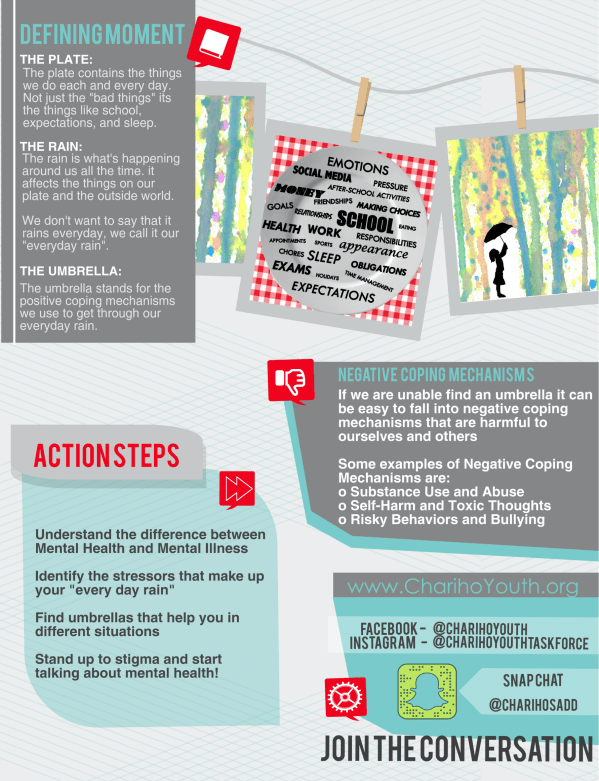
Our community has a fabulous youth task force that started in our schools and now focuses on the mental and emotional health of our youth at large.  Each year, they have a display at our district’s arts showcase, which is how I first learned of their work.

via Chariho Youth Task Force

In 2017, when they were launching their ‘Let’s Talk About Mental Health’ campaign, my heart sang when I saw these young people standing in front of their green screen of watercolor rain under a blue umbrella.  I, of course, jumped right in, my older two daughters sidling away as Mom started talking shop.

Finding my umbrella with two of my cooperative children / photo by Jennifer Butler Basile

Young people fired up and active about the cause I held dear to my own heart and psyche – I applauded their efforts, took their literature, and started following them.  The next year, I picked up their ‘Mental Health and Stress First Aid Kit’.

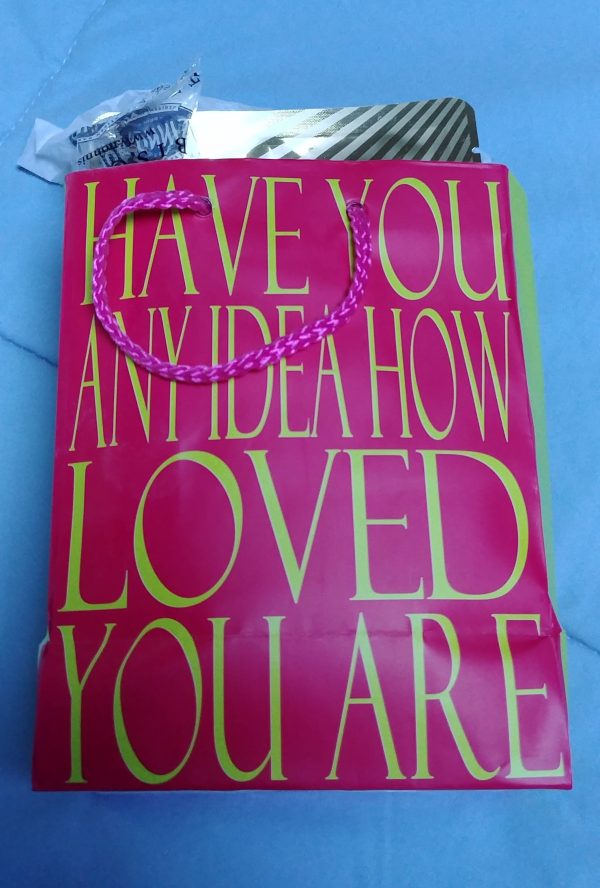
Last fall, I saw that they’d be selling ‘Self-Care Kits’ to support their efforts.  I went to this full-scale fair and bee-lined straight to these adorable bags emblazoned with affirmations.  Once home, I made my children well aware this bag full of goodies to destress and reward oneself was all for Mom.  I was even inspired to recreate the kits as Christmas gifts for two of my relatives depleted by selfless caretaking of parents.

I could see the value of these kits for these two women who sorely needed to take some care and time for themselves, I preached the virtues of self-care, I knew the therapeutic effects – and yet, my own gift bag sat unopened upon my dresser.

The idea of self-care for my-self has been in a box as well-defined as that dust-free square on my dresser.

I spilled the contents onto my bed today to take this picture.  Ironically, the impetus for their spillage was not to partake in their benefits, but to write this post.  It’s a long way round – and I don’t think I’m rationalizing too much – but writing this post, which could be considered ‘work’, was a radical act of self-care.  See, I was neck-deep in Christmas preparations today.  I baked three recipes worth of goodies, prepped two batches of dough for our weekly pizza evolution, and never got to the wrapping and other recipes still on my list.  I almost enlisted my eldest to watch her siblings while I continued on with my tasks instead of heading out to write.  I was so close.  I’m so tired with so much to do; so full of guilt for the things I should be doing.  After all, adults should pick the requisites and let the extracurricular fall to the side when time and circumstances dictate, right?  It’s only the responsible thing to do.

But there’s always something to be done and never enough time.  In my (our) frenetic world and with my unrealistic expectations and standards, I could never possibly get it all done.  Sure, there are certain things I must do before the holiday – but there is always tonight (or the wee hours of some night, as I usually roll) or tomorrow.  If I don’t put myself first at least some of the time, my needs and I will always come last.

And the spilling of that bag for this piece has led me to know its contents, to meditate again on the importance of self-care, given me a cup of tea and some quiet time.  And maybe just maybe reminded me that I’m worth it and need to make these times a priority.

Jennifer Butler Basile


Chariho Youth Task Force is a wonderful resource for exploring mental health – what it is, how to obtain it, and how to maintain it.  Explore these resources:


Standard
Living, Spirituality

Expectations

How many gentle moments do we poison each day when we cling to our expectations?  When we are imagining breakfast while we rock the baby, we miss the joy of rocking, we lose a precious moment with the baby – and we still miss breakfast.  When we simply rock when we are rocking, and then eat while we are eating, we become more open to the blessings available in the moment.

 Some expectations are extremely difficult to relinquish.  Some of us still expect our parents, friends, or spouses to finally become the loving people we always wanted them to be.  We think of how it might have been if only the right person or career had come along.  Some of us are still so attached to these hopes that we have not yet really begun our lives in earnest.  We are still patiently waiting for the world to match our perfect picture before we start.  How much longer can we wait?


from Legacy of the Heart: The Spiritual Advantages of a Painful Childhood

by Wayne Muller

Standard
anxiety, Living, motherhood, Survival

Much Ado About Nothing

I’ve had one full-fledged panic attack.  With all the anxiety over all these years, one full-fledged horrible panic attack.  That’s pretty amazing and pretty lucky.  The lid-about-to-boil-over effect is one of my body’s favorite go-tos.  Lately, it’s switched over to heart palpitations when my mind starts racing.  The other night as I lay in bed thinking of all I wanted to accomplish, my heart ticked up.

See, I was faced with two whole days by myself.

Well, sort of.  The kids, on school vacation, were leaving partway through Wednesday and returning partway through Friday for a sleepover at their grandparents’.  My husband was working, but we’d have the evenings together.

But as I lay in bed the night before this whole evolution started, I felt incredibly disjointed.  I’d be waking with the kids the next day and making sure they had all the underwear and rain jackets and stuffed animals they’d need for Grammie’s.  Starting the day as mom, and then transitioning to . . . what?  A quasi-homemaker washing the laundry of my own that I haven’t had a chance to wash, but would like to wear since I’ll be my own person for a day or so?  Run the errands I didn’t get to yesterday because I can do them in half the time kid-free.  Or switch straight to sloth because I can sit on the couch and watch a movie uninterrupted in the middle of the day?  The pull of doing all the things – and needing to do some of the things – versus the things I wanted to do for my soul’s survival were ramping me up.  Or, more accurately, the fact that I was going to run out of time before I ran out of things to do – and my people came home.

When my baby – at the time – started kindergarten, I found myself floundering as I tried to fit indulgent baths and writing time and house projects in the six hours of each school day.  I actually restarted therapy because I was so lost.  After years of never being alone, I thought I couldn’t wait until I finally was.  And I was right.  But, as any mom of a certain number of years will tell you, whether you mean to or not, so much of yourself becomes the mom-self that when there suddenly is a void – be it from kindergarten or college – you unexpectedly find yourself flailing.  So the switch of me-time flipped from famine to feast – and it still wasn’t enough.  I found myself dreading the return-time of the bus – because I hadn’t done enough, been alone long enough.  And I hadn’t even decided what I was going to do for work now that all my kiddos were in school.  My therapist told me I wasn’t ready to go to work; that I needed to unwind a bit more before I contemplated what was next.

And then I got pregnant.  [Insert bitter ironic laugh here]

Next month that baby will be three.  We’re contemplating sending her to preschool next year so I find myself facing the same quandries of what to do with my ‘free’ time as I did three and a half years ago.  But I’m starting a little early this time.  My eldest is old enough and owns a phone now so for a few hours a week I put her in charge of her sisters and sneak away to write, think.  I can already feel that I have much work to do on myself to prep for the actual work.  Plus, even on those days it’s me and the baby while the others are at school, I still dread the return of the bus.

These two days are a microcosm of that feeling; what elicited that heart-pounding panic in the dim of my room the other night.  I’m not back to square one.  I’m working on such a backlog, such a deficit of self-care in the simplest sense of the word – like silence to think – that the return of my people, the resumption of the needs, demands, to-dos, freaks me the %*$# out.  Not because I don’t love them.  Not because I hate my life.  Not because I could/should keep them away so I can do all my things.  It’s unrealistic for me to think I could possibly catch up on all I’ve been wanting to do in one day to myself.  But I think my ‘fight or flight’ is afraid I’ll never get any time to myself again.

So I lie in bed and run through every possible permutation of what I could do with my time, petrified that I won’t get it right and regret squandering my precious time to myself.

Obsessive, anxiety-inducing behavior.  Not totally rational, though rationalizing every move, of course.

But this day and a half have produced some wins.

I got a haircut.  I hand-washed those long-since buried bits of clothing.  I scheduled two posts.  I drank a latte and ate a muffin bigger than my head.  I drank wine with my husband, enjoyed a new recipe with him without the kids turning their noses up, and watched a movie without turning the volume down.  I reveled in lyrical literature.  And stared into space a bit while my mind wandered.

There’s always the panic – or possibility of.  There’s always something that could be done.  There’s always doubt.  But there are the good things, too.  Here’s to looking in the middle distance enough – neither too closely nor unseeingly – to recognize them.

Standard
Mental Health, Mental Illness, Recovery, Survival

Post Script

The following is not advisable, nor is it recommended or endorsed by any of the information herein; the anecdotes serve as a reflection of my personal experiences. Do not take the same road I have.

 About three and a half weeks ago, I weaned myself off my antidepressant of seven years. For all the advice I’ve heard saying not to do so without medical supervision and all the times I’d poo-poo’d those who abruptly stopped medications – I weaned off my meds without medical supervision having made the decision totally independently.

I’ve written before about the panic that ratchets up watching the tablets dwindle in my amber colored bottle of sanity; about the same reasons I take them leaving me overwhelmed enough not to call the doctor for a new string of refills. It happened the same this time.

Except this time, I’d been growing ever more resentful of that daily bitter pill, something to remember, something to lean on heavily, something to possibly poison me.

In an as-yet-to-be-seen brilliant realization, I decided to space out my tablets to make them last longer – ‘until I got a refill’. I think that was my rationalization. I went down to one for several days, half for several more, and then a quarter.

Also around this time, however, I began reading A Mind of Your Own: The Truth About Depression and How Women Can Heal Their Bodies to Reclaim Their Lives by Kelly Brogan. Now, if the rest of my follies here are not endorsements, this most certainly is not an endorsement of this book. It took me an awful long time to swallow – pun possibly intended – what Brogan had to say. After years of coming to terms – mostly – with taking antidepressants, here was an in-your-face account of how they were absolutely unhealthy and unnecessary. The whole first half of the book told me in no uncertain and sometimes holier-than-thou terms that I had been duped and made a terrible decision for and possibly irreparable damages to my body.

As I said, I started reading this book around the same time I was weaning. I did not read one ‘expert’s’ book and change my entire life regimen around it. As I was already tapering these ‘evil’ meds from my system, however, I was curious to see what other options could help me complete this process.

The second half of Brogan’s book is the best; the part where she gets to the heart of her mission: helping women live healthy and whole lives. I don’t know that her tone was less sanctimonious or I was better able to temper it with my own decisions of what would/would not work for me. Her plan focuses on a four-week implementation of diet, detoxing the home, meditation, exercise and sleep – a four-pronged approach to keeping the body and mind on track.

There is a lot in this book that resonates with me – some of which I already do, in fact. However, the four-pronged approach makes that panic rise in my chest almost as much as the rattle of fewer and fewer pills in the bottle.

When I started meds, feeling so like a failure for needing them (no projection, just my own neuroses), my therapist said, “this is the tenor of your life right now. Whether or not you were previously suffering with a mental illness, you were able to cope. Now, mothering several children, there are significant unalterable circumstances that make you unable to cope. Your medication can help you do so.”

Tenor still untenable.   Nothing new there. Well, actually there is a new kid.

So perfecting diet, sleep, mindfulness, exercise, clean living – all factors dependent on me, everyday, in my imperfect life is a little terrifying. Especially considering that failure, which is inevitable really, means a depressive state. No big.

Back to weaning: Brogan advises her 30 day detox before weaning to reset your system first. Ha. That may have helped. It also may have helped if I didn’t wean in the last week before my period as I prepped and embarked on a week-long trip with all four kids solo only to return, take two weeks to prep for school, and pack for one final vacation that ends on the eve of the new school year. Timing is everything.

There were times I wanted to scalp myself or my children that first week; times I wanted to scream louder than the baby refusing to just.go.to.sleep; scared that the crying jags meant my depression was coming back; irritable and snippy with my husband; and in a much lesser, yet slightly amusing development, America’s Got Talent’s package materials and any high note hit by a contestant made me well up.

Brogan warned me the withdrawal symptoms might present as a relapse of the original condition. Who’s to say I was struggling because I desperately needed the pill to supplement my body or give it a crutch?

I didn’t complete a long yoga session last week seeking clarity of mind in regards to all this. I was finally sick and scared enough at the skin and muscle getting looser around my frame and the big kids were shoe shopping with their grandparents. The amount of tension in my muscles shocked me. I sobbed at even the slightest release of it. Not the wet, slimy tears of a betrayal or breakdown, but the semi-silent, breath-catching heaves of chest with a few slick tears sliding down from the corner of eyes when I unsquinched them long enough to let them fall. I didn’t realize how much I’d been carrying until I tried to let it go.

And that was just the physical.

As trite as it may be, I had an epiphany on the yoga mat that morning. Even if I was taking medication to take care of my mental health, I wasn’t taking care of my self. I’d forgotten to force time for the things that keep my soul alive. Stretching, meditative thought and moments, reading, writing.

Did I need to stop meds to hit rock bottom hard enough to make the burning fire of my calves burn a hole in my consciousness? Perhaps not. Would I recommend cessation of meds as a path to clarity? No. But stopping meds to see where my mind and body were at this point in my life, nearly eight years out from the offending episode of postpartum, and then having such a visceral reaction to the stress in my life and body – that sent me an important message.

Regardless of what my decisions are in regard to lifestyle and care, self-care must be part of it. Placebo or perfect chemistry, a pill isn’t a miracle. All cylinders of my life, my soul must be firing.

Life will never be perfect. Even if I decide to follow Brogan’s regimen or another with or without meds, there will be times I fail. I can’t control circumstances outside my body, my sphere – hell, even in my sphere. (Did I mention I have four children?) But perhaps with the balance of self-care, I can temper the abberations. It’s a tall order, but right now, it’s keeping my mind centered on care – not maintenance or even just keeping the lid on.

That’s a pretty compelling read for me.

Standard