word cloud
Living

An Inside Job

Am I the only one who finds the relentless stream of self-improvement programs this time of year depressing?

Not only because their purveyors are capitalizing on someone’s idea of self-worth

Not only because they remind me of my own lack of self-actualization and self-love

— Or maybe that’s what drives my major bone of contention:

That it is never as simple as ten steps, six sessions, and three weeks. 

There is no miracle mini-session that can cure the complex web of what has gotten us to our present state of . . .

And that’s what I think depresses me.

The false hope.

How many times can a title draw you in, only to be left wanting more after a superficial few paragraphs.

When nothing exterior can help, when it’s all an inside job.

Standard
Mental Illness

Coming Round the Mountain

After I wrote my last post, I came across notes with the title of this entry.

From years ago.

Ironically, they referenced a book by Emily and Amelia Nagoski entitled, Burnout: The Secret to Unlocking the Stress Cycle.

Seriously.

I’d say you can’t make this shit up – but I literally did.

In fits and starts I have been working my way towards this puzzle – for years.

At the end of my last post, I said “I should go back to the beginning of this latest cycle”.

On some level, my mind, returning to that little coffee shop table repeatedly over the last few years, has known it needed release. That it’s been dragging around all the stress and feelings associated with that deluge of depression and fighting my way back to the surface. And three years ago, when I drafted this ‘mountain’ of notes, I even discovered a big part of why I haven’t been able to let go.

“Magazines tell us that if we just drink ten green smoothies a day, we’ll feel great and look great, our kids will say ‘please’ and ‘thank you’ and our boss will give us that promotion.  And if none of those things happen, it’s because we failed to drink the ten green smoothies; it’s certainly not because of systemic bias.
 
The message is consistent and persistent – whatever is wrong, it’s your fault.  It can’t be true that the whole rest of the world is broken or crazy; you’re the one who’s broken and crazy.  You haven’t tried hard enough.  You haven’t done the right things.  You don’t have what it takes.”

Amelia Nagoski, DMA and Emily Nagoski, PHD

It was in the months/year leading up to January 2020 that I made my first ever attempt at bullet journaling – and it was to track the administration of my natural supplements. Increase to two DHA, take Zen GABA twice daily, add 5-HtP. The fact that I hadn’t ‘cured’ my anxiety and depression just meant that I was adhering to the protocol closely enough. And so I went into logistical overload to ensure I’d given it my best shot.

And I realized two things. That the supplemental schedule was untenable with all that my day already demanded of me – and that it wasn’t enough. While it did improve or ameliorate certain aspects, it did not destroy my depression.

But why couldn’t I trust my body, my own intel?

Obviously what bothered me in 2020 and since then is much bigger than a slender bottle of petite pills.

I still must work on releasing the emotional gak associated with that transition – but it plays into the larger cycle of self-actualization and acceptance I’ve been working through for the larger portion of my life.

Message around the other side of the mountain . . .

Mental illness is not a failure on your part.

Standard
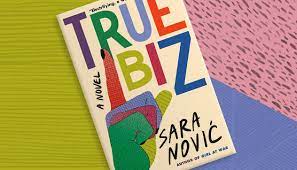
true biz ASL
Weekend Write-Off, Writing

Being the Verb

What that? she signed, pointing to one boy’s lunch tray.

Pizza, someone said.

What i-s that? she said. She fingerspelled emphatically, question-marked her eyebrows. Austin understood first. With a flash of recognition, he scrunched up his face and gave her a scolding finger wag.

I-s. Finger wag, he said.

Charlie was disappointed – so ‘is’ and ‘am’ and ‘are’ just . . . weren’t?

How could a language exist without so fundamental a concept? Perhaps, she thought grudingly, her mother and doctors were right about the limitations of signing. Could you have a real language without the notion of being?

true biz ASL

But Austin just pointed to Charlie’s hand, then made his own gesture, sweeping up from his stomach out into an arc across the room. Charlie copied the sign, but that didn’t seem to be what he wanted. She stared.

Me, said Austin, pointing to himself.

He patted his chest, then his arms, then held out his hands, flexed his fingers before her.

You, he said.

He took her by the wrists and held her own hands out before her. She looked down at her palms and understood – her being was implied, her potential thoughts and feelings coursing through her body, the names of everything she knew and those she didn’t yet, all in perpetual existence in her fingertips.

Standard
motherhood

Shadow Work

“What are you doing tomorrow?”

My twelve year-old often asks me this as we bid each other good night. 

After years of staying home amidst the push and pull of patriarchy vs feminism, I instantly sense a trap. 

Why do you ask?  Why do you need to know?  Who put you up to this?  What do you want me to do?  Are you insinuating that I do nothing with my day?  Do I need to account for all my time?

Her reaction the first time I came back at her made me realize, that while her query had triggered me, my tone was not meant for her.  She was simply wondering what mom was going to do while she spent the day at school.  She knew how her day would go, but not mine.  Perhaps it was also an acknowledgment of how much I do to take care of her and her sisters – so what did that entail when I wasn’t physically with them?  Maybe, hope of all hopes, she was actually wishing for/validating some sort of relaxation from or reward for my toils.  That’s most likely reaching, but she is empathetic for her age. . .

I chose to leave the workforce when my first children were small, when they needed full-time care.  Having four children, that time stretched to encompass the younger ones as they came along.  As they all began to spend more time out of the house, I remained at home because there were always varied schedules, sick days, afterschool obligations – and that was before the inconsistencies of COVID life.    

But as they get older, and I angle myself toward both personal and professional pursuits – though none as of yet in a structured or official capacity – I wonder if the assumption that I will always be there is stunting the growth of all of us.

I wonder if we (mothers, women, parents) set ourselves up for more work and less appreciation by being available to our children.  By being there every afternoon after school, do they assume we’re the snack purveyor, chauffeur, laundry service, backpack picker-upper?  By doing less – or by being home less, as in working – would they appreciate us and what we do more?  The only time they usually acknowledge what I do is when it’s not done.  So if they are left to do more things for themselves, would they appreciate when I do complete a task for them more?  Because of its special quality, its novelty, or unexpectedness? 

In supporting our children and being there for them, are we making them less able to actualize themselves? 

Don’t get me wrong, I feel the heft of the unloading of a day’s troubles in a walk home from the bus stop.  I cherish the teachable moments that occur as we unpack their belongings and experiences.  I revel in the jokes and laughter as we all come together again at the end of a long stretch of separation.  These are valuable moments – for me and, I hope, for them. 

But the in-between moments. 

The assumption that I will pick up the slack because I don’t answer to a bell-schedule or time-clock.  That the jeans/leggings/sweatshirt they love will always be in the drawer when they reach for it.  That I will unlock the door at the exact moment they reach for the knob even though they have a key hanging from a hook slung over their shoulder. 

Perhaps I am rehashing the existential loop of my own childhood/mother’s experience.  Perhaps I am perpetuating another generation of children who live in a world of the laundry fairy and the fairy godmother, who don’t see the magic beyond the end of their noses because it’s always been there; who don’t sense the wizard behind the curtain because they don’t look long enough to see it ripple – or aren’t allowed to approach and draw it back for themselves. 

Work/life is a balance.  Supporting our children so they can flourish while allowing and urging them to apprentice in their own lives is as well.

It’s ALL in a day’s work. 

Standard
Writing

Shock and Awe

I’ve saved every blank book I ever filled – from the first hardbound, mottled watercolor cover to the psychedelic smiley faces.  All but the most recent sit high upon a shelf, my own little archive of embarrassing moments.

Every so often – when I have to move my collection from point a to point b, when I’m feeling nostalgic, or looking for a particular passage – I’ll skim the pages and revisit my words, my state of being at that point in time.  Sometimes the words are merely confessional, the quintessential catharsis for which we all count on ‘dear diary’.  Sometimes the paragraphs give way to great insight.  Sometimes, I read a passage that takes my breath away, that makes me flush with the way the words are crafted, the beauty and power of their make-up.  I crafted such quality?  My God, I really can write.  And then I find the author’s attribute, my little indent and dash noting the actual author’s name.  Drat.  Foiled again.

Though even in that moment just before I discover the author’s name, as I still unbelievingly read ‘my words’, it’s not a self-congratulatory moment.  There’s always a shock and awe involved.  A pinch-myself moment where I get a glimpse of the holy grail of writing.  Is it really possible?  For me?  By me?

But then, a few months ago, out of the blue, my aunt asked me what were some of the favorite things I’d written on this blog.  A few irreverent attempts at humor came to mind; the inaugural post explaining what all these potatoes are, of course.  When I actually dove into the blog to review, I realized just how much writing I’ve done on here.  Lots to sift through!  And lots to reorganize, I realized (so I – and hopefully you – can find it all).

A day or so later, I received an email from that same aunt with a link to a video.  A marketing and public relations professional by trade, she’d been working with a new platform and wanted to share it with me.  I clicked, eager to see what she’d created.  Striking images flowed across the screen, dovetailing each other seamlessly.  Sentences strung together over them told a story.

It wasn’t until nearly halfway through the video that I realized they were my words.

The same shock and awe that usually came over me as I read evocative passages in my journals occurred – only this time, it was I who had penned the words.  The shock and awe were accompanied by gratification.  And a little disbelief.  My journal dreams may yet come true.


The video that started it all . . .


Thanks to Janet Crook for helping me visualize in more ways than one.

Standard