Depression, Survival, Weekend Write-Off

A Man Called Ove

We all know a man called Ove – or better yet, exactly like Ove.

A crotchety old man. The neighborhood watchdog policing persnickety policies about which no one else cares. A man who never has a nice word to say, who always has something about which to complain.

He exists in every family or neighborhood. In archetypes and novels. Small screen and silver.

He excels in Fredrik Backman’s A Man Called Ove.a-man-called-ove-9781476738024_lg

A third person narrative and clever titles for each chapter continually referring to the main character as ‘a man called Ove . . .’ (backs up with a trailer – as in chapter three) establish a sort of psychic distance between Ove and the reader. We see him as the world does. The archetypal cranky old man.

But just as many of us secretly yearn for the day and chronological age at which we can tell the world around us how we really feel, such outrageously brusque behavior almost endears Ove to the reader. At the very least, it entertains us. His dysfunctional interactions with his neighbors and clerks at the Apple store made me laugh out loud more than once. The fact that Ove is resolutely dedicated to his lifetime car of choice, Saab, brought me – as a Saab driver myself – even more joy.

While the chapter titles are structured the same throughout the book, readers slowly move closer to Ove and his motivation, the reasons for his dysfunction and underlying sadness. He wants to be left alone. He purposely pushes people away because the one person in the world who made him live – his wife – is gone.

“If anyone had asked, he would have told them that he never lived before he met her. And not after either.”

And so now, “Ove just wants to die in peace.” He wants to meet his wife on the other side and will try whatever means it takes to get there.

What I appreciate about this novel is the empathetic way it deals with depression and attempted suicide. Ove, while archetypal in other ways, does not fit the stereotypical profile of a suicidal person. Backman’s portrayal shows that depression can be situational – and elicit feelings of such dire circumstances that the only option left seems to be suicide.

However, Backman’s novel also shows the amazing strength and redemptive powers of love. It may be love that causes Ove to yearn to be reunited with his departed wife, but it is also the long reach of her love that reminds him to be a better man. It is through the initially annoying love and attention of his neighbors that Ove finds a reason to live. It is the hard fought and won love of a feline companion that offers him solace.

There is love in a riotously abstract portrait blasted in color by a three year-old. In a hand to hold. A skill transferred. A deed proffered. A meal shared. There is love in a sense of belonging, community.

A Man Called Ove reminds us all what it means to truly live and love – and I loved every minute of it.


In fact, I loved Ove so much, the next few ‘Weekend Write-Off’ entries will be dedicated to favorite excerpts of the novel, which is just full of gems.  Ove and I will see you next Friday!

Standard
Depression, pregnancy, Uncategorized

I Wept

For the pregnant woman
who loved her child enough to stop taking the psychopharmaceuticals she desperately needed
to guarantee its unencumbered growth –
and that of her paranoia and compulsion
until she threw herself and that unborn child off the top of her building

Because she loved her child so much and had run out of ways to keep her safe

For the grown man
acutely aware of his condition and how to manage it
with a cocktail of meds and careful counseling –
until one tile shifts out of place and sends the rest clattering to the floor in an instant

Because he thought he didn’t have to look over his shoulder for the rest of his life

I wept for their stories, their lives, their pain
I wept for the syncronicity, the melancholy, myself

I wept
because there is never a safe enough distance from the places they – I’ve – been


As inspired by the June 6th edition of Fresh Air, “Pregnant Women With Depression Face Tough Choices, No Easy Answers” with author Andrew Solomon.  Click below to listen – well worth the time.

pregnant-depression

Standard
Depression, Living

Relearning Life

People in their right minds – or moods anyway – don’t anticipate their next inevitable bad day. The appearance of them every once in a while proves their unfortunate existence, but people in their right minds don’t dread bad days on a daily basis.

I don’t dread such days either. I live down days every day of my life.

A good day is the out of the norm experience for me.

The words, I feel good, dawn as a surprise, a foreign thought and sensation.

What should be the modus operandi of my life, with the occasional interruption of shitty days, becomes a cause for suspicion. A lightness of mood, a clarity of mind, becomes the bone of contention. That is the square peg for the round hole – rather than the overall scheme being the problem.

I feel my psyche has sucked me into a trap; luring me closer with the promise of bright light and fresh air, only to drape me in cobwebs deeper and darker than before. Instead of experiencing a ‘ lightness of being’, I drag around the weight of fear – that it won’t last, that my life will never be the way it was before the clouds.

. . . That we should all bask in the warmth of sunshine on our skin . . .

Irham Anshar

Irham Anshar

Standard
Depression, Poetry, Recovery

In my Resting, In my Rising

I chase down cures in my dreams,
seeking the open office door,
the present practicioner,
but they’re never there, never open.

Test after trial, trial after tribulation
No solution in sight.
Tablet, pill, capsule.
Needle, scale, survey.

No magic bullet.

There are symptoms, there are diagnoses,
but no cure.
No point of origin to return to and restart.

I want someone to fill this hollow inside –
but the only cure is in there as well.
It lies at the core of me,
but I am so very tired . . .
and cannot wake from this nightmare.

Standard
medication, Mental Illness

Stuff We All Get

When I got married, I inherited a staggering amount of pharmaceutical office supplies. Some women marry into wealth. Some women carry a substantial dowry; others, a hope chest full of handmade linens and needlework. I got a cardboard box full of sticky note pads and ball point pens bearing the name of brand-name drugs. A distant cousin on my husband’s paternal side, a salesman for a pharmaceutical company, had a wealth of such products himself, to which I was now a party.

Not one to turn up my nose at anything free, I welcomed this surfeit of stationery. The pen on a lanyard came in handy as I made circuits around my classroom – not only did hanging it about my neck ensure I didn’t lose it, but the big block letters emblazoned along the side. You found an Androgel pen, you say? That’s mine. Unless there was another twenty-something female teacher with stock in Androgel, there was no doubt who the pen’s rightful owner was.

However, this example also illustrates one of the disadvantages of pharmaceutical swag. Your use of said promotional product could be construed as endorsement of said drug.

This wasn’t a problem with the note cube advertising Flonase. Nasal congestion and seasonal allergies don’t carry much of a stigma with them. No one cares if your nose is running or you’re snorting floral scented mist up it. Same with the cute little calculator whose flip-top lid schilled for blood pressure medication. No one will judge me for the inner cleanliness of my arteries.

But I always thought of my audience when I wrote a note on the Wellbutrin pad.

I didn’t want anyone to think that I actually needed an antidepressant; that I was such a frequent flier, I’d earned promotional prizes; that the ‘dealer’ and I were such good buds, I got benefits.

Forget that it doesn’t work that way. It’s not like filling the card of stamps at the grocery store of yore to earn a full set of ceramic dishware. One doesn’t get a sticker for each pill ingested. But I didn’t want anyone to get the wrong idea . . . whatever that meant.

Fast-forward nine years and I’d be fighting my own internal battle with stigma as I debated whether to go on low-level sertraline while I battled postpartum depression. I did. Don’t know which side of stigma won, but I started on the meds I’m still on today.

Today.

The day irony served me a big slap in the face.

The day my physician suggested I add Wellbutrin to my prescription regimen – because sertraline doesn’t seem to be cutting it; because I need a ‘lift’ in the morning to get me going; because while I don’t have ADHD, I need help focusing, prioritizing; because all my labs came back normal and there is no organic reason for my symptoms other than plain old depression and anxiety.

Whoop-ti-do-da-freakin’ DAY.

Four to five years after I started my first antidepressant. Two to three years after I finally (or so I thought) came to terms with ‘succumbing’ to the help of an antidepressant.

Seemingly light years away from that time when I humorously pointed out the name on a sticky-sided square of paper – thinking my worst worry was that people would mistake me for a person who needed medicinal balancing of her brain chemicals.

I have so much more to worry about now.

Standard
Maternal Health Month, Maternal Health Month 2014, may is maternal mental health month, motherhood

No Pressure

Coffee mugs saying, “You probably don’t recognize me without my cape.” T-shirts with a shield standing for Supermom rather than Superman. Photos of gorgeous women receiving hair and beauty treatments while breastfeeding a baby below a smooth decolletage.

These images can be taken one of two ways. We can see the strength of mothers, their uncanny ability to make seeming miracles happen for the little ones who look up to them, the beauty inherent in their life-giving and nurturing ways. We can feel the immense pressure of an ideal to achieve that leaves us primped to within an inch of our skin’s elasticity, our patience pulled out like a piece of taffy, and pissed.

It’s easy to feel completely overwhelmed and fall into the second category. I don’t care about being perfectly coiffed, as my crazy, silver-tinged curls would attest, but I allow the unseen hands of unrealistic expectation to tighten their choke-hold around my neck. I feel I have – and often, try – to be all and do all for everyone. The reason it’s so easy for images like these to inform our mothering decisions is because they appeal to the deep-seated love we have for our families. Naturally, we want to do our best for them, so it’s a seemingly natural progression for that slight tweak toward perfection.

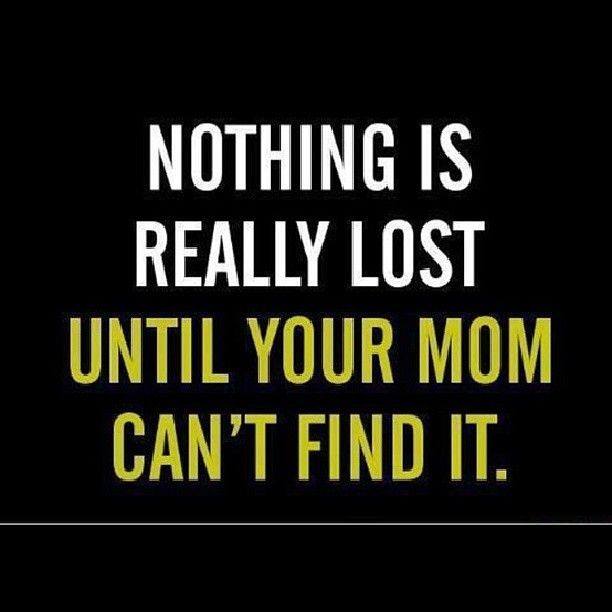
The unconditional love of our children unwittingly feeds into this phenomenon. Take this on-line post, for instance:

hope


Unswerving devotion. Disciple-like adoration. Unadulterated trust.

The keeper of socks. Seeker of single ones. Holder of pebbles, lost teeth, lucky pennies.

“Mom, where is my [insert any pertinent object here]!?”

It’s not a God complex. So much happens throughout the day where we are the be all, end all.

Which is fine – if you’re a well-adjusted, level-headed, simpatico kind of person.

Horrific if you overthink things, catatrophize things, can’t cope with things, can’t get yourself out of bed in the morning.

If the thing Mom can’t find is hope, all really is lost.


If you or someone you love falls into this category, please help them get the professional help they need.  Contact an organization or individual like the ones below:


Standard
Depression, postpartum depression

Four Years a Fourth Trimester

The baby of the family wanted to look at her baby book yesterday. She always wants to look at her baby book. It has become a chore. Dragging the behemoth book off the shelf, finding a place where it can lay supported across our laps, turning the pages for her so they don’t get bent. Like so many things in life lately, it’s a task I don’t want my child/children to do because I have to do it with them. I don’t have the energy or desire to do so. I have other things I’d like to be doing. I have other things I should be doing.

We sat yesterday, wedged side to side in the rocking chair I used to nurse her in, with the book stretched between us. I flipped through the pages with her as I usually did: answering random questions with half my attention. I’d seen all this a hundred times. I’d lived it, though it seemed like an alternate reality, eons ago in a fog.

There was a time, a long time, I couldn’t bring myself to create this baby book of hers. I couldn’t peer into the thin nylon parting gift of a bag from the hospital that held all the paperwork and memorabilia. Perhaps opening it up would release the demons I’d stuffed deep inside. Or that I’d carried home from the hospital.

I remember that bag as a turning point. It taunted me as it hung listless from the closet doorknob of the nursery. It twisted and banged against the door as we opened and closed it. It loomed in my eyesight as I sat in that rocker and nursed.

I think I finally emptied the bag because I was so sick of looking at it and its reminders.

Now all those reminders are bound up in that baby book.

That she forced me to look at yesterday.

I maintained psychic distance until I looked closely at the pages of her actual birth. I still search her face for signs of sibling similarity. I still try to pinpoint the moment between the pictures where they lost her bracelets in the nursery. From that point on, is there still sibling similarity?

It’s a tired routine. It’s not as fresh and real as the anguished feelings that drove it in the first place. But I still look. When I force myself to really see, I still look.

I never want to look at the pictures again. I want to box them up and send them with her when she’s grown and going out on her own. I love her as she is. I don’t want to become the person I was when she was born. Looking at pictures of her from that time, brings that me back.

Ironically enough, I bonded with this baby of mine. We share the most loveable, profound moments. I never wanted to hurt her or give her away or wish her out of existence. But somewhere in that hospital room, I split in two. Thankfully, one half was the loving mother who was able to give her what she needed. The other half? That’s not so easy to define. That’s me. Inside out, soft underbelly exposed to the harsh world. Quivering. Questioning. Knowing that she was screwed as the first labor pains hit because, even at the end of nine months of burgeoning, she still hadn’t prepared herself for this birth.

And as much I liked to think it was behind me, it came crawling back in as I looked at those pictures.  Maybe that’s why it’s such a chore to drag that book out.

Will I always cringe to remember that time? Will it always elicit the same feelings, years, decades, lifetimes passed?

chap4-headerFour years is far too long for a fourth trimester.

Standard
Writing

It’s ON, like Donkey Kong!

I may be revealing my status as a child of the 80s, but that’s how I feel at seeing THIS post over at A Manic World.

Robert Poposki, who manages that eclectic site dedicated to the many manifestations of depression, asked me to contribute.  Um, yes!  So, it’s ON!  Check it out if you feel like playing along!

http://amanicworld.com/2014/01/10/a-ten-letter-word/


Standard
anxiety, Depression, Living

Mired in the Meantime

In the inbetween time,
the meantime
when you wait for the pain to stop,
the congestion to clear,
something to pass.
Long periods of indecision
followed by a flurry of panicked action.
Exhaustive measures
after exhausting nothingness.
The miserable day isn’t helping –
a logy stasis trapped in time.

Meanwhile, the next generation is languishing.
The one you thought was safe.
The one you thought could pull from those before and after her.
She is trapped in her own middle space.

And you can’t pull either one of you out.


Standard