Identity, motherhood, parenting

It’s All Fun and Games Until Somebody Loses an I

Play dates are for moms.  Contrary to popular belief, they are not for kids.

It is moms who drive this runaway train off the tracks.  While children like to play together, they would not give a crap if they did not organically meet Suzie at the playground.  They would not cry if Sven didn’t come to their house for a tea party.  They would not be scarred for life if abstract murals were not painted at the museum with the ‘it’ kids in kindergarten.

The moms would lose out.

On the opportunity to:

I'm not looking for a mate - just a partner in crime

I’m not looking for a mate – just a partner in crime

  • have adult conversation
  • to coax their ego into believing they’re doing a good job parenting
  • to drink wine
  • to make friends themselves
  • to keep their sanity intact
  • to keep the little monsters off their back for ten minutes or more
  • to make sure their kids are as popular as they want[ed] to be

And while all this is already over thinking, there’s even more to the psychology of play dates.

Remember, mothers are just grown-up kids.

We worry about making friends just as much as we did in our younger incarnations.  What will we talk about with these new moms?  Will we get along as swimmingly as our children?  What if we hit it off with a mom at drop-off or pick-up and she has a child in another grade or – gasp – of the other sex!?  Sometimes a compatible mom friend just doesn’t have the right kid to hide the real intent: that moms want to make friends, too.  [Perhaps more than their kids because they need an ally in this crazy road trip called parenting.]

New situations make us nervous, too.  What is the play date etiquette?  Do I invite myself in?  Do I drop-off and ditch?  How much do I discipline my kids in front of this other parent?  Will they follow the kids-will-be-kids approach or think I’m lax if I don’t?  Will they think I’m horrible if I don’t make my kids clean up before they go?  Or will they be appalled if I walk up the stairs into their child’s bedroom looking for the toy tub?

Peer pressure, though less crippling than in junior high, still exists.  Do we share our deepest, darkest bad mom moments?  Will she understand and share her own?  Or will she judge?  Will we commiserate over this shared, easier-said-than-done existence?  Will we build each other up or tear each other down?  Will we be able to have a real conversation as two people who happen to be mothers or as two women trying to fit the textbook model?

“Play” dates are really just a lot of work.  Our kids would get along just fine if we sent them to school; if we took them to the playground and let them chat up little Sophia on their own.  What intrinsic need does it fulfill in us?  The need for human [read: adult] companionship?  To keep them busy before their idle hands find the devil’s work?  To make it easier for ourselves?

When I was a teacher, we used to tell particularly snarky students that we didn’t need them to like us because we had enough friends.  As moms, do we?  Are we using our kids as an excuse to make connections for ourselves?  What is it that we are lacking?

And for what else do we use them as an excuse?
Standard
anxiety, Identity, Living, Writing

Ironic Tosh of Fate

Irony.

When I titled yesterday’s blog entry, I had a song from the early career of Bob Marley and the Wailers in my head.  I searched in vain for a recording or video of it, finding only a much slower version.  The version I remembered had more of a rock-steady beat than rolling reggae one.  A few comments online reminded me that it was Peter Tosh singing that version (with the Wailers) anyway.

I gave up the hunt, but got the ironic twist that, though the universe was handing me a slower beat, I still wanted the frenetic one.

And I remembered that a character I’d written – if whom bares any resemblance to her author is purely coincidental – blasted that song in her car as she tried to outrun her problems.

After muddling her way through study hall and forcing concentration in the rest of her classes, Kathryn finally flopped into the front seat of her car.  She stared out the front window.  She put the keys in the ignition, but did not turn them.  She just sat.  She sat and thought about nothing and everything all at once.  She took vague notice of the cars moving and leaving around her, but only when they moved directly across her line of sight did her eyes actually focus.  When she finally noticed that there had been no movement around her for quite some time, she looked around to see hers was the only car left in the parking lot.  She reached her feet towards the clutch and brake pedal and her hand towards the keys.  Peter Tosh’s voice suddenly flooded the insides of the car and ran down her eardrums and into her brain.  She was awake now.  Maybe the rock-steady would steady her nerves and take her out of this funk.  She moved the gearshift into first and grasped the steering wheel.

Kathryn left the parking lot without having any idea of where she was going.  It was as if her car was on autopilot and eventually she found herself on the highway.  All the while, she bounced in time to the music and occasionally would break into song, but all of this was secondary.  It was as if her body and car were simply performing a routine; her consciousness really wasn’t along for the ride.  As she moved on, off, and around the major arteries surrounding the city, moving in one big loop, she had no destination.  She let the CD loop continuously as the steering wheel slid loosely between her fingers.

The sun finally dipped so low it angled itself right into her windshield and her eyes.  She realized it was probably time to go home.  She put on her left blinker to signal her way into the passing lane.  Just as she edged her way around the car in front of her, she saw the two stripes of black rubber on the road.  They started right where her front tires were now and arced away from her in a gentle curve until they ended at the Jersey barrier and a broad metallic smudge and gouges began.  She almost wanted the car to follow them the way her eyes had – but why?  Because it was a natural progression?  Because she felt she was already set up on that path?  Because it was easier to continue on an established path than to start a new one not even forged yet?

Suddenly the deep bass line of another Peter Tosh song resounded through the car speakers and she jerked the car back into line with the others.  She shook her head and took a deep breath.  She gripped the steering wheel, her fingers resting in the grooves meant to keep her hands in place, in control, and began to sing along:

“Stop the train, I’m leavin’, stop the train, I’m leavin’ believe me when I say, stop the train, I’m leavin’, said it won’t be too long whether I’m right or wrong, won’t be too long whether I’m right or wrong.”

Personal resemblance to our characters – especially when they do things we don’t like – is a whole ‘nother discussion.  But there it was.  Stop the train, I’m leavin’.  Maybe I can shut my mind off long enough to disembark and get back to center.

In the meantime, I can at least listen to some kick ass music.


Editorial note:  Thank you for respecting my intellectual property and not sharing my work with others without my permission – unless of course you know an editor who needs new talent ; )


Standard
Identity, Writing

Schooled in the Ways of Crap

When I think back on all the crap I learned in high school . . .

I have always loved that song by Paul Simon.  I wasn’t entirely sure I agreed with it, because I did, in fact, learn lots of useful things, but his thrumming on the guitar was so infectious I’d bounce along in time.

Then I became a teacher.  I student-taught in high school, but ended up in the seedy underbelly of the ancient junior high building I attended myself as a skittish prepubescent.  Many of the veterans I spoke to said junior high was where we all started out, paid our dues, and then transferred to the high school.  The general tone was that no one wanted to spend much time with the roiling turmoil that was the junior high population.  I can still hear the words of a talented veteran, though, who also happened to be the mother of a good friend I made in that school years earlier.  She said stay put until you earn tenure and if still like junior high kids at that end of those three years, this is where you’re meant to be.

I spent the next seven years with junior high kids, teaching English/Language Arts.

I might still be there if it weren’t for an extended leave after the birth of my second child that turned into stay-at-home-mom-dom and a third child.

I’m still very much a teacher, though.  And not just in the “parents are the first teachers” sort of way.  It’s definitely a mindset.  I’ve kept all the instructional materials I created, the units of study I formulated, the texts I used to teach.  I still read books in such a way that makes me wonder if I’ve taken my analytical reading to another level or if I’m dissecting it in order to reconstruct it with an imaginary class.  I listen intently to fellow parents’ descriptions of child behavior and learning experiences as if I have a stake in their success or struggle.  I’m sure I make my child’s teachers wonder why I’m nodding as if I know exactly what they’re going to say when they explain how educational standards are once again changing.

These are all positive carry-overs from my teaching career.

There’s also a bane that comes with teaching: the feeling that you never graduate.

I counted down the final days of student teaching until graduation, only to fall headlong into another classroom.  The fact that it was in a junior high that I had already spent two years of my life in added to the sensation of demotion.  Back to homework – because giving it to students means you yourself have it.  And that’s just the correcting.  Not the involved planning (though the planning and successful execution of lessons was by far the most enthralling part of teaching).  You perpetually feel like a student yourself.

Like I did when I sat down to the computer this morning.

Hmm . . . how to start today’s blog entry.  Let’s see.  Well, I started with a question last time.  Oh, a quote?

That’s when I realized I was walking myself through the eight types of leads I’d taught my students.  And that I was as haunted by all that crap I’d learned – and taught – in school as Paul Simon was.  The role of perpetual student did not end when I left the classroom – neither sitting in the desk nor in front of it; it still follows me.  And while it’s humbling and rather uncomfortable to still be learning the lessons I taught my junior high students, it’s validating to know that at least one lesson was valuable if it’s germane to my current writing.  At least that day I wasn’t trying to learn them some crap.

Standard
Identity, Living, Technology

Keep Calm and – well, you know

I guess I want to be George Takei.

When he first exploded on the internet with his clever and quirky posts, I thought, who died and made him king of our on-line kingdom?  How did Sulu earn the clout to be our trendsetter and meme-maker?  There were two things that let me rationalize enjoying his posts: the fact that many were freakin’ hilarious and that, well, he’s Captain Sulu.

Then the other day, feeling incredibly down and tired, I opened my blank book hoping to release whatever funk was plaguing me.  I stared at the blank pages, too tired to form thoughts and too tired to get up and shut off the radio that was also distracting me.  Then this song came on:

In that weird way that the universe seems to speak to us from time to time, the lyrics of this song said exactly what I needed to hear.  That we’ve all been in that funk and need to keep going until we pull out of it.  One of those great realizations that make us feel alive again.  And I thought, how wonderful it would be to share this feeling.

Enter blogging.  Facebook.  Twitter.  What have you.

The perfect platform to share favorite quotes, songs, photos, jokes.  All those clever and quirky things that bang around in our heads and until social media didn’t have anyplace to go – except the backs of notebooks, bottoms of scribbled notes, and countless collages that littered my bulletin board or inside of my locker growing up.

Maybe I was snarky about George Takei’s meteoric rise to fame because I envied it.  We all have a little Sulu inside us, I guess.  Now, engage, and carry on!

Standard
Identity, Spirituality

Cultural Catholic

While driving home late last night, I caught the tail end of Terry Gross interviewing Dusting Hoffman.  I didn’t know at the time it was Dustin Hoffman, having tuned the station to the middle of one of his responses.  I simply heard a distinctive voice telling me his father was essentially an atheist.  And that, as a child, he would lay on the grass in the backyard, looking up to the sky, and talk to God, asking him questions – and hear God’s answers.

The discussion then turned to ‘being Jewish’ as a cultural phenomenon vs. a religious one.  Hoffman said he most definitely identified with his Jewish heritage, given from where he and his family hailed, his culinary likes and traditions, the idiosyncratic sense of humor.  But it was only a cultural connection, not a belief in or adherence to organized religion.

And it occurred to me – is there such a thing as a cultural Catholic?

Those who pray to St. Anthony when they lose something, but don’t attend mass.  Those who break the commandments knowingly, yet still feel the immense pressure of Catholic guilt instilled in them since childhood.  Those who dangle the rosary from their rearview mirrors yet never recite the prayers.  Those who don’t consider an Ash Wednesday, Christmas, or Easter complete unless they’ve attended mass, but don’t darken the door of the church any other day of the liturgical year.  Those who don’t get married in the church, but insist on baptizing their children.  Those who believe we’re all made in God’s image, but support abortion.  Those who are proud to be part of the institution, but don’t uphold its tenets.

Catholic means universal.  There is no one language, tradition, race, or cuisine that defines it.  So I suppose there is no one way to practice it.  And it would be impossible to divide it cleanly into two halves of religion and culture as one could argue with being Jewish.  But there certainly seems to be a human inclination among some believers to keep secular routines and discard the spiritual aspects.  To consider oneself Catholic, but not practice it.  To tow some of the party line, but not the parts of the Catechism that drag them down.

When I first heard what I learned afterward was Dustin Hoffman’s voice and heard his responses before Terry Gross’ questions, I had no context in which to place them.  They were pure thoughts and information – no judgment, no interpretation.  And the thoughts and questions they provoked here are just the same.  It is what it is.  This is what I see.

I simply wonder if there is such a thing as a cultural Catholic.

Standard
Identity

Still Flying the Flannel

Our local modern rock station, born of a university radio station since gone commercial, is currently airing “90s week” programming for “those of [us] still flying the flannel”; an extended Christmas gift, if you will.

It really is all I could ask of WBRU.

I cut my alternative teeth on their play lists.  I made tape – yes, audiocassette – recordings of their “twelve cuts above the rest” and “retro lunch” programs.  I mailed one such cassette to my now husband when he was in some far-flung locale in the Coast Guard.  I did have a few flannels and one ripped-in-all-the-right-places pair of men’s jeans I still miss from time to time.

Over the years, some of the music made my ears hurt and I found myself asking the question oft-repeated by our forebears, ‘they call this music?’  And I questioned some of their song selections for the “retro” lunch: ‘they call this retro!?’  I scoffed at the apparent naiveté of the new jockeys, these rookies who didn’t know the really classic stuff.  It never occurred to me that for them to be considered whippersnappers, I had to be moving into a new age bracket myself.

Slowly, tastes changed, a new sound came about, and I reveled in it.  There was this niggling thought in the back of my head, though.  Was this a new crop of really fabulous music – or was I old enough to have witnessed my first cycle of the old becoming new?  After all, Rainbow Brite, a color-wheel explosion of my childhood, is now available on DVD.  The Strawberry Shortcake picture that once hung above my twin bed now adorns my daughters’ space – and they know who she is!

When I was in second or third grade, I remember rocking out to Billy Idol’s version of “Mony, Mony”.  I was flabbergasted when my mother chimed in.  ‘This is an old song, you know,’ she told me with a certain triumph in her voice.  I can’t say I share in her bravado.

The very phrase, “for those of you still flying the flannel”, suggests that we’re somehow stuck in an outdated place.  Are the glorious days of my hey-day now ancient?  And am I becoming so?

It’s a bittersweet feeling.  While one never wants to be considered passé, the gut-wrenching chords of “Seether” still awaken the adolescent beast in me.  “Particle Man” still reignites images of my favorite people bouncing around to it.  And the supposed one-hit-wonders, The Mighty, Mighty Bosstones, still make me turn up the volume to an unhealthy level and groove.

The synapses are still firing and helping me remember some of the best and brightest moments of my life.  And luckily the music that inspired them has inspired a new group of whippersnappers to create like-minded and nearly as good music for a new soundtrack.

Standard
Identity, Legacy, parenting

Odd is One Word for It

Last night, my husband and I watched The Odd Life of Timothy Green.  We were looking for a feel-good, fun film to offer some distraction and diversion.  Instead, it made me think.

The story is book-ended by Cindy and Jim’s overwhelming desire and relentless pursuit of parenthood.  Before they digest the heartbreaking news that they cannot conceive, they build the idea of the perfect boy – then pack their dreams away and bury them safely underground.

Watching the palpable yearning of these scenes, I realized the amazing gift of my own children.  I felt almost guilty that they came to me so easily; for getting so caught up in the drudgery of day to day that I fail to see the miracle that they are.  How blessed we are.

Then Cindy and Jim’s dreams of the perfect boy sprout out of the mud and they obtain instant parenthood.  Their joy at his arrival was a familiar feeling.  And that the universe rewarded such yearning was a gratifying feeling.  They truly wanted this child.

As the movie went on, however, their journey seemed to be less about Timothy and more about their own performance.  How did Cindy’s child measure up to her sister, Brenda’s?  How would Jim better his own father’s parenting skills?  Were they making the right choices?  Were they keeping him close enough?

The scene that haunts me most is their argument after Timothy’s game-winning goal for the opposing soccer team.  As per his demeanor throughout most of the film, Timothy is nonplussed by his social and sporting gaff.  He is happy simply to have participated and had fun.  Cindy and Jim, however, have an all-out fight about their parenting.  Did they hope for the wrong things for their child?  Are their own feelings of validation getting in the way of their parenting?

Yes.

In their pursuit of parenting excellence, Cindy and Jim lost sight of the most important thing – their child.

Is that not a struggle we all face as parents?

Do we use parenting as a vehicle for helping our children fulfill their true potential as human beings or to fulfill our own latent, unrealized dreams?  Do we get so wrapped in assessing and perfecting our own performance that we fail to see the perfectly imperfect little being we so longed for in front of us?  The yearning to have a child is a strong, very personal and intimate one and that child truly is a part of us; however, it’s also essential that we see their distinctiveness as well.  At some point, their needs and desires diverge from ours and our performance is simply a supporting role.

If I allow for a willing suspension of disbelief, I know that Timothy is a magical being sent to prepare Cindy and Jim for parenthood.  Indeed, soon after his short visit, they adopt a young girl.  But as Timothy departed from them, he said they had always been ready for parenthood.  Were they?  Were/are any of us?

Are we ready to subvert our own desires and needs for the care of this little one?  Will we be able to use our own experiences to teach him or her without projecting our own agenda?  Will we be able to train his or her growth without stunting it?

It’s not about us.  It’s not about the perfect child.  The idea of perfection is a box in which we cannot place our child.  Nor can we do it to ourselves as parents.

Standard
anxiety, Identity, Living

A Change in Me

I was totally on my game last night.  I mention it because it is so not me.  I was laughing, telling jokes, comfortable, making comments without much worrying about what people would think of me.  In other words, I was my authentic self.  Not insecure, not worried, not painfully self-aware.  And there were times throughout the night when I realized this and took note; not quite like an out-of-body experience watching it from afar, but my insecure or irrational or timid mouse inner self noticed and was pleasantly surprised.  And then I tried to tell her to go away, to enjoy it for what it was worth, to follow this relaxed, uninhibited self however far she would go.  Not to jinx it, second-guess it, scare her away with too many self-checks and ruminations.  And now I think of the Halloween party we went to last Saturday.  My kindergartener was invited to a classmate’s family party.  Their neighbors were there, family members, other classmates and their families.  Walking in to a crowd of ‘strangers’ was a bit daunting, but surprisingly only a little.  A playmate’s mom soon walked up and introduced herself.  I found the host’s mom and introduced myself.  I sought out other classmates’ parents.  I told jokes.  I talked to strangers.  I initiated conversations.  I was so not me.  But then, I said to my husband, I was on my game.  Because that is me – part of me, anyway.  The part that is uninhibited, comfortable in her own skin, totally inhabiting the spacious self that is she.  My authentic self.

Is it this place?  Is it the excuse, the opportunity of a change in place to make things happen, to reinvent myself?   Because I could’ve done all these things in my former home.  But I didn’t.  Was it the memory and residual trauma of postpartum?  Was it the repression of people who knew me from way back when, when I was a certain way?  Was it the familiar that I began to blend into?  I was scared.  I was stuck.  Now I’m free.  I don’t know if it’s the physical space that now surrounds us that is freeing us; the mental space that in turn affords (if you believe if in the elements of Feng Shui); the need to ground ourselves and make connections since we don’t have any.  But life seems to be shaping up.  And me right along with it.


Standard
anxiety, Identity, Living, Writing

A Rock to Remember

Last week, I was forced to go to the beach.

I was cranky.  I was tired.  It was a holiday and all three kids were home, but my husband was working.  I still had tons of tedious tasks to do to get settled in the new house.

My parents said, it’s a beautiful day, let’s go for a walk.

I walked from the breach way to the border of this same beach with my parents when I was a girl.  It was like coming full-circle treading it this day with my own children a short distance from the place I now call home.

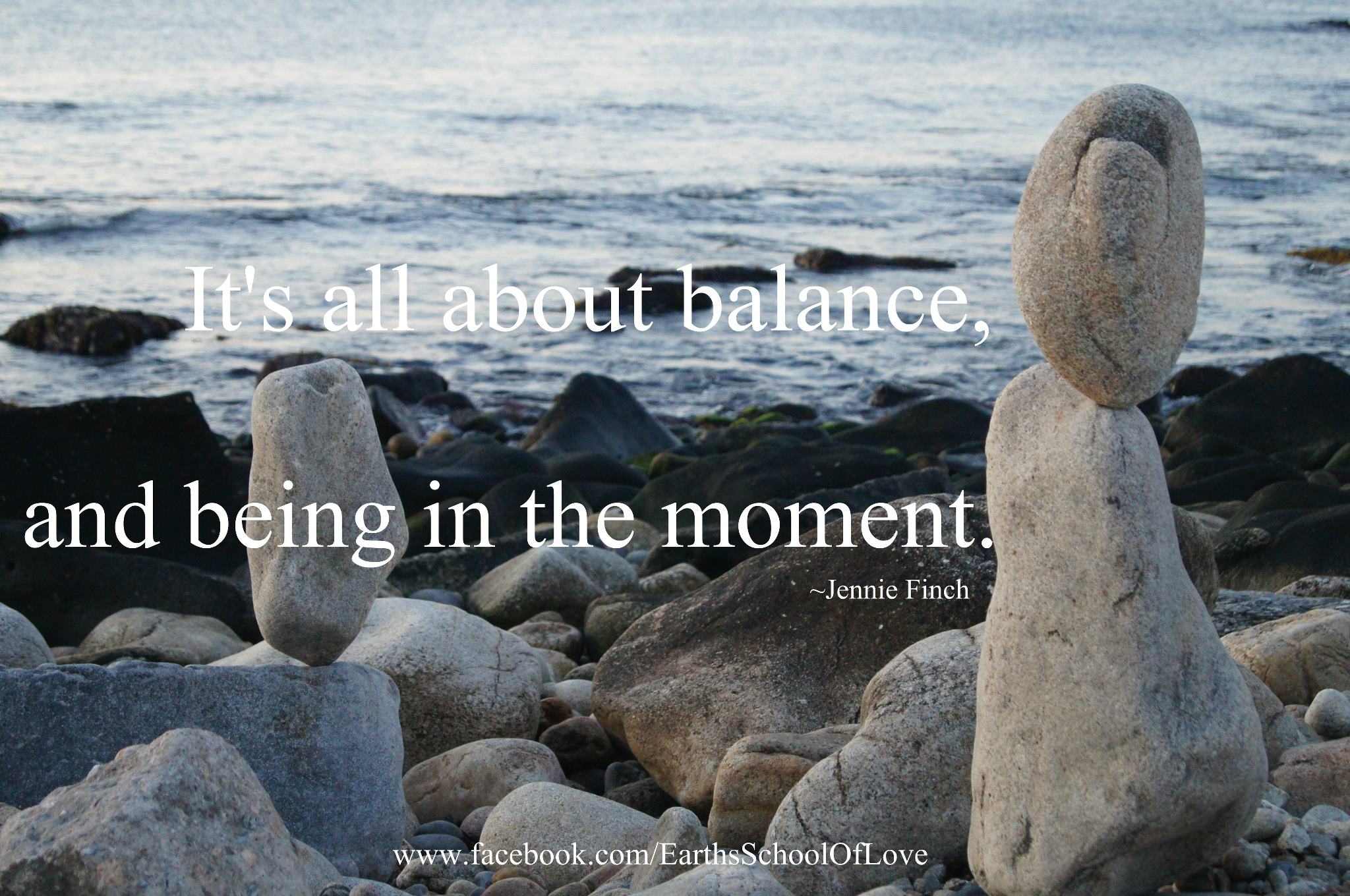
The girls dove straight into rock hunting with my mother.  I didn’t even have to chase my three year-old out of the waves, as she plopped down in one spot and proceeded to sift and stack.  I sat down, too, and gave myself over to the sound of the rocks chattering against each other in the surf.

My other home was a short walk from a small inlet on Narragansett Bay.  It was a lovely spot and we were fortunate to live so close to it (though we didn’t make the trek nearly enough).  But it had nothing of the raw power and expansiveness of this beach, the open ocean.  I am not used to the mass amounts of rocks, perfectly pounded and rounded by the constant tumbling of the sea.  The smooth spheres of granite, mica, and other minerals I should remember from science class and Rhode Island history.  Their shapes were so alluring to me, beckoning me to pick them up, roll them in my hands.

And so I did.  I sat just apart from my daughter’s sifting and sorting and felt the weight in my hands.  The cool heaviness, the sun-soaked pressure.  I searched for the one that fit perfectly in the palm of my hand.  Then I spun it round and round, the smooth surface soothing me in a way that didn’t seem needed, but became suddenly essential.

I felt my hackles lowering, my blood slowing in my veins, my body decompressing, my soul expanding.  I was running, running, running so quickly, so constantly, that I didn’t even know how wound up I was.  I didn’t know how much I needed the salve of the sea.

I recalled a stretch of preteen fall days when a friend and I rode our bikes to the sand flats with our notebooks and sketchpads.  I was so disappointed that I was caught without a notebook when the muse was so apparently calling to me, when an epiphany was beating me over the head with a smoothly-shaped rock.  I hoped beyond hope that I could bottle this feeling and bring it home with me.  It’s been diluted over the last week, but I did bring some rocks home with me as reminders.  I picked out some beautifully speckled, striated, spotted ones that I stacked into cairns in my garden.  I selected two larger ones to use as worry rocks, prayer stones, literal talismans to ground me; I planned to give one to my husband so he could benefit from my lesson, too.

As I kneaded these rocks in my hands, I thought of the many manifestations of humanity’s need for physical reminders of the spiritual side of life, of our souls.  Kachina dolls, worry dolls, worry stones, chime balls, stress balls, rocks perched on gravestones, relics . . . there are so many examples.  But they all begin at their basest level with a bit of the natural world.  There is a reason humans turn to nature to reset their moods, their demeanors, their selves.  While I cannot put my finger on it, there is something about it that resonates in our souls.  I’ll just have to wrap my hand around those rocks each time I forget.

Standard
anxiety, Identity, Living

Liminal and Beyond

“The Waiting Place . . . [a most useless place]

for people just waiting.

Waiting for a train to come or go

or a bus to come, or a plane to go

or the mail to come, or the rain to go

or the phone to ring, or the snow to snow

or waiting around for a Yes or No

or waiting for their hair to grow.

Everyone is just waiting.


Waiting for the fish to bite

or waiting for wind to fly a kite

or waiting around for Friday night

or waiting, perhaps, for their Uncle Jake

or a pot to boil, or a Better Break

or a string of pearls, or a pair of pants

or a wig with curls, or Another Chance.

Everyone is just waiting.”

As I was waiting for the will to write a positive blog entry today, these lines from Dr. Seuss’ Oh, the Places You’ll Go rang through my head.

I’m waiting.  For the end of PMS.  For the washing machine to finish its cycle.  For an expected tradesperson to show up.  My husband to come home from work.  My children to stream up the stairs and into the corner in which I’m hiding (which took one more line of typing, by the way).  For this new place in life to feel ‘normal’, to reach some sort of stasis.

Well into On Moving by Louise DeSalvo now, I’ve read about “liminal life – the life that is neither here nor there . . . These difficult-to-live-through interstices, I’ve read, are necessary for growth: the psychic spaces where the old self is shed and the new one begins to develop (DeSalvo 72).

A few weeks ago, I said that I felt I could become my authentic self in this house.  I didn’t realize how much the move would shake things up though – both our physical possessions and my own psychological foundations.  Everything can’t feel just as it did in the other house, though, because then I’d fall into familiar routines and frustrating ways of being.  Now’s the chance to fix things that are broken.  Discard things that are hindrances.  Create new ways of living and doing and being that improve our life, not just get us through it.  I wouldn’t have done that in the comfortable nest of my other home.

On the flip side, I cannot ignore the pieces of myself that will remain no matter where I am, those rituals that will follow and sustain me wherever I go.  DeSalvo said, “I’ve been waiting to ‘settle in’ before I start writing.  But writing will help me ‘settle in’.” (DeSalvo 88)  Just as there are certain beloved objects that will travel from home to home and comfort with their mere presence, so must I make time to practice these rituals that will soothe me.

I cannot wait for everything in my home to be set up perfectly before I roll out the yoga mat.  I cannot avoid writing until the perfectly appointed writing desk sits in its nook.  I cannot avoid ‘living’ while I run through my unpacking/set-up list.  If I ignore those foundational elements of myself that will indeed make anywhere I live a home, the window of liminal time will close and this chaos will become my life.

No more waiting.

This is not ‘the waiting place’.  These are the living rooms.  This is home.  It’s time to start feeling it.

Standard