Propped Up by Patriarchy
mother vs self, Write to Heal

Propped up by Patriarchy

Where did your picture of ‘the perfect mom’ come from? What sources or sociology helped paint it? Were your ideas strictly of your own thoughts and feelings? Or influenced by someone or somewhere else?

Could it be patriarchy?

So much of what we see in our society now regarding the roles of both men and women, fathers and mothers, is based on understandings of nature, physiology, and psychology.

“The struggle to escape the restrictions of society is part of what makes progress for both women and men so challenging. Some of that struggle is caused by underlying biology. While physical strength is no longer needed to govern, big seemingly strong men typically do. That biological difference, coupled with centuries-old cultural precedent, still holds excessive influence.” Leslie Lehr

It is ‘centuries-old cultural precedent’ like those cited in the timeline that keep women stuck in such restricted roles of motherhood.

It even keeps women isolated from each other.

If we orbit in a patriarchal sphere, governed by rules created by male rulers, it is the males who reward obedience to the system. And if they judge success, it does not foster cooperation but competition amongst similar contestants.

“Female bonding is extraordinarily difficult in patriarchy: women almost inevitably turn against women because the voice of the looking glass sets them against each other.” Gilbert and Gubar

And so, does this patriarchal poison infect even the most feminine process – that of growing and giving life? Of course it does. The ‘Mommy Wars’ rage furiously, pitting women against each other in comparison and competition rather than collaboration.

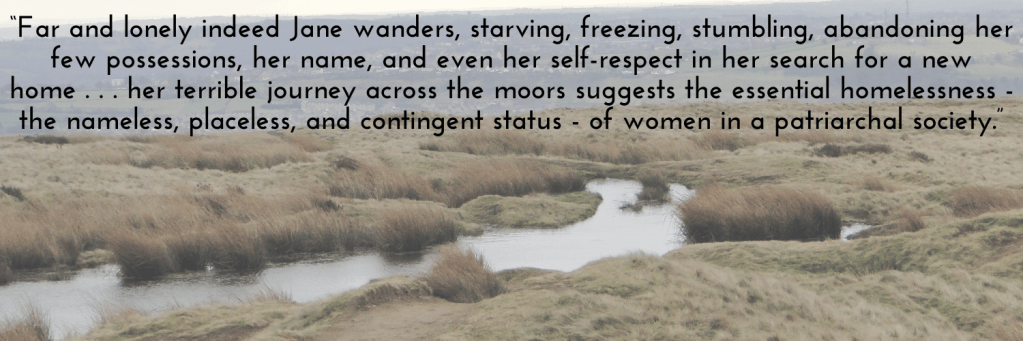
Even fictional literature addresses the isolation and rootlessness patriarchy has put upon women: case in point, Jane Eyre by Charlotte Bronte (as analyzed by Gilbert and Gubar).
Reflect upon the ideals of the perfect mother you recorded last week. From what roots of patriarchy did these come? From what male-centered or male-serving roots did those images and ideals sprout? Many of the ‘innocuous’ givens of motherhood, ones that we judge others on for adhering to or not, were born not of necessity, but some other sociological structure. Dig into those roots now and record them below. (Print the PDF if you’d like to label each root of the graphic)

Standard
perfect mom archetype
mother vs self, Write to Heal

Misguided Archetype

Much of my reading, writing, and research regarding motherhood shows either one or both sides of the juxtaposition of the expected appearance and behavior of mothers vs. the reality of, or how individual women would actually like to enact, motherhood. Women living motherhood right now often come up against this tension on a daily basis. In this module, we will explore the foundations of the fallacy of the perfect mother.

In 1941 Britain, as part of their welfare food initiatives, the Ministry of Food released this advertisement, urging women to best welcome their baby with “a beautiful body, a contented disposition and [as] a healthy, happy mother.” An actual advertisement for the “idea of maternal-health perfection”.

While this advertisement overtly exploits the idea of perfection for the sake of the offspring, it is but one block building the foundation of the misguided archetype of motherhood. Below are more contributing factors building the facade.

* above graphic inspired by information from Lehr and Cleghorn (see related reading) *

Post-war America (and Britain) in the 1950s was the fertile breeding ground for such an archetype – pun certainly intended, and some would argue socially engineered. Our soldiers were coming home, the roles that women had filled in their absence no longer went unfulfilled, and the population, affected by absence and casualties, needed boosting. Whether a Ruben-esque ploy to suggest fertility or stir soldiers’ loins, publications painted women as buxom nest-makers. A domestic intersection of motherhood, home economics, and beauty pageant.

So how did we get where we are today?

Obviously a lot happened in home life, work conditions, human rights, and legislation between then and now – and we will get into that in future modules – but history does form the basis for today’s image of the perfect mother.

What is your image of the perfect mother?

Not the standards you hold yourself to, not even the standards you feel you’re falling short of – because I assure you, you are not.

What does the term mean in today’s society and culture?

How has the illusory archetype of perfect mother been purveyed to you? Use the template below to capture words and phrases, expectations and ideals.

Standard
Children, parenting, Uncategorized

‘Tis the night before Christmas Vacation

‘Tis the night before Christmas vacation
and all through the land
not a parent is sleeping
for teacher gifts await – to be made by hand

There are crayon wreaths
and cookies
Ornaments galore
I might’ve lost the baby
in the mess of ribbons on the floor

Such care is taken
Special attention to detail
There is no room for error
No such thing as a Pinterest fail

For our beloved children,
teachers go the extra mile.
It’s really the least we can do –
to burn off our fingerprints
with an overflow of hot glue

wine-bottle-boy-today-tease-1-151005_dafe9dd9bcffe57d6f8b1c92ec31437b

If we’re being real . . .

At daybreak, the kiddies
to the bus they will go
your precious cargo – the gifts –
into their throes
But you’ll hear the bus driver exclaim as she drives out of sight:
What, was your mom up making that all night?

Standard
motherhood, parenting, postpartum depression, Recovery

Mom – that’s enough

A couple of weeks ago I made the mistake of calling in to a radio talk show.  Stupidly enough, I thought the host, a contemporary of mine in age and many ideas, and I would be able to have an intelligent dialogue.  I had forgotten the talent that radio hosts have to turn every conversation on its ear until it follows the tack they had intended for that evening’s show.

I called to counter that ridiculously inflammatory article ‘timed’ to coincide with Mothers’ Day.  I said that the issue was not whether this woman should be breastfeeding her child, but that this magazine had the chutzpah to title their article in such a way.  As if mothering isn’t a hard enough job on its own, as if women don’t constantly question themselves, and as if some of us don’t already feel tempted to attack others’ decisions to validate our own.  There is no need to create divisiveness where there should only be support and camaraderie.  For when it all comes down to it, aren’t we all just struggling to make it through as best we know how?

The topic of blogging came up, the host wondering about the now infamous woman from the cover photo’s own blog.  I said that while I hadn’t read it, blogs can be an enormous help to other readers going through similar experiences.  He said, yes, I can see if you or a loved one are suffering from some rare disease and there is a support group or information on a blog, but a blog on mothering?  Sharing your ‘fresh’ experiences on something that has been done down through the millennia?

I felt the fire rise up the back of my neck, but I knew the conversation was over.

This man does not know I am a mother.  Who blogs.  Who receives enormous benefit from it as I come to grips with the person left in the wake of postpartum.  Who has felt like less of a woman because I didn’t do X, Y, Z with my babies and children like I knew other moms were doing.  Who has suffered in misery thinking I was so completely and totally alone.  Like a failure.  Who shares my story in the hopes that other women will not suffer as I did.

And he could never possibly understand.

And that, I understand.  This post is not about attacking him.  Everything’s relative, this I know.  My own husband said, Jen, when he’s a father and watches his wife go through it, he’ll know.

But there are many people who already know.  The women – my aunts, my grandmother, my friends, my cousins, women wrangling their children at the grocery store, women struggling to drop their kids at daycare and get to work, women all around the world – with whom I’ve shared my struggles.  It took me a long time to admit I wasn’t the perfect mom I tried to portray.  But when I did, my confessions were met with nods, knowing smiles, affirmations, similar stories. There is a special bond with these women.  A comfort.  An unspoken feeling that they’ve got my back – if for no other reason that they’re not going to judge me because they’ve been in my same position.

That’s what women need to share – not the stepping on each other in the struggle for perfection, but the imperfection.  That’s the only way we can shatter the idea of ‘the perfect mom’ and end the war for our self-esteem and self-image.  Because who the hell are people trying to sell magazines and get radio ratings to tell us if we’re mom enough?  That’s up to us and our fellow moms, the women who are all in this together.

Standard