Propped Up by Patriarchy
mother vs self, Write to Heal

Propped up by Patriarchy

Where did your picture of ‘the perfect mom’ come from? What sources or sociology helped paint it? Were your ideas strictly of your own thoughts and feelings? Or influenced by someone or somewhere else?

Could it be patriarchy?

So much of what we see in our society now regarding the roles of both men and women, fathers and mothers, is based on understandings of nature, physiology, and psychology.

“The struggle to escape the restrictions of society is part of what makes progress for both women and men so challenging. Some of that struggle is caused by underlying biology. While physical strength is no longer needed to govern, big seemingly strong men typically do. That biological difference, coupled with centuries-old cultural precedent, still holds excessive influence.” Leslie Lehr

It is ‘centuries-old cultural precedent’ like those cited in the timeline that keep women stuck in such restricted roles of motherhood.

It even keeps women isolated from each other.

If we orbit in a patriarchal sphere, governed by rules created by male rulers, it is the males who reward obedience to the system. And if they judge success, it does not foster cooperation but competition amongst similar contestants.

“Female bonding is extraordinarily difficult in patriarchy: women almost inevitably turn against women because the voice of the looking glass sets them against each other.” Gilbert and Gubar

And so, does this patriarchal poison infect even the most feminine process – that of growing and giving life? Of course it does. The ‘Mommy Wars’ rage furiously, pitting women against each other in comparison and competition rather than collaboration.

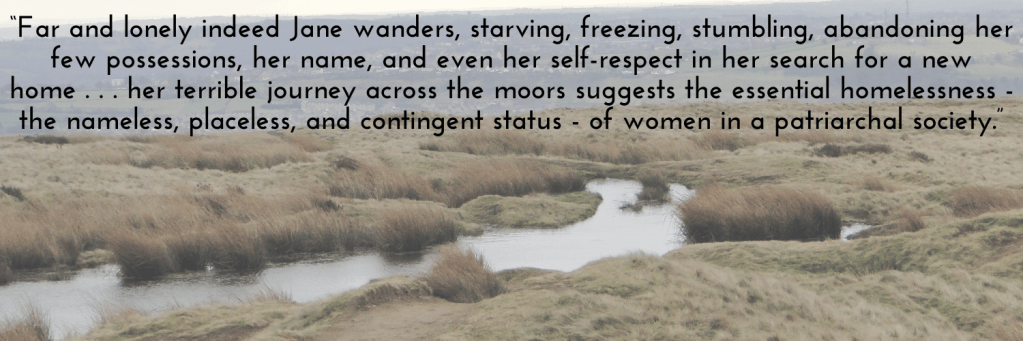
Even fictional literature addresses the isolation and rootlessness patriarchy has put upon women: case in point, Jane Eyre by Charlotte Bronte (as analyzed by Gilbert and Gubar).
Reflect upon the ideals of the perfect mother you recorded last week. From what roots of patriarchy did these come? From what male-centered or male-serving roots did those images and ideals sprout? Many of the ‘innocuous’ givens of motherhood, ones that we judge others on for adhering to or not, were born not of necessity, but some other sociological structure. Dig into those roots now and record them below. (Print the PDF if you’d like to label each root of the graphic)
Standard
motherhood

Shadow Work

“What are you doing tomorrow?”

My twelve year-old often asks me this as we bid each other good night. 

After years of staying home amidst the push and pull of patriarchy vs feminism, I instantly sense a trap. 

Why do you ask?  Why do you need to know?  Who put you up to this?  What do you want me to do?  Are you insinuating that I do nothing with my day?  Do I need to account for all my time?

Her reaction the first time I came back at her made me realize, that while her query had triggered me, my tone was not meant for her.  She was simply wondering what mom was going to do while she spent the day at school.  She knew how her day would go, but not mine.  Perhaps it was also an acknowledgment of how much I do to take care of her and her sisters – so what did that entail when I wasn’t physically with them?  Maybe, hope of all hopes, she was actually wishing for/validating some sort of relaxation from or reward for my toils.  That’s most likely reaching, but she is empathetic for her age. . .

I chose to leave the workforce when my first children were small, when they needed full-time care.  Having four children, that time stretched to encompass the younger ones as they came along.  As they all began to spend more time out of the house, I remained at home because there were always varied schedules, sick days, afterschool obligations – and that was before the inconsistencies of COVID life.    

But as they get older, and I angle myself toward both personal and professional pursuits – though none as of yet in a structured or official capacity – I wonder if the assumption that I will always be there is stunting the growth of all of us.

I wonder if we (mothers, women, parents) set ourselves up for more work and less appreciation by being available to our children.  By being there every afternoon after school, do they assume we’re the snack purveyor, chauffeur, laundry service, backpack picker-upper?  By doing less – or by being home less, as in working – would they appreciate us and what we do more?  The only time they usually acknowledge what I do is when it’s not done.  So if they are left to do more things for themselves, would they appreciate when I do complete a task for them more?  Because of its special quality, its novelty, or unexpectedness? 

In supporting our children and being there for them, are we making them less able to actualize themselves? 

Don’t get me wrong, I feel the heft of the unloading of a day’s troubles in a walk home from the bus stop.  I cherish the teachable moments that occur as we unpack their belongings and experiences.  I revel in the jokes and laughter as we all come together again at the end of a long stretch of separation.  These are valuable moments – for me and, I hope, for them. 

But the in-between moments. 

The assumption that I will pick up the slack because I don’t answer to a bell-schedule or time-clock.  That the jeans/leggings/sweatshirt they love will always be in the drawer when they reach for it.  That I will unlock the door at the exact moment they reach for the knob even though they have a key hanging from a hook slung over their shoulder. 

Perhaps I am rehashing the existential loop of my own childhood/mother’s experience.  Perhaps I am perpetuating another generation of children who live in a world of the laundry fairy and the fairy godmother, who don’t see the magic beyond the end of their noses because it’s always been there; who don’t sense the wizard behind the curtain because they don’t look long enough to see it ripple – or aren’t allowed to approach and draw it back for themselves. 

Work/life is a balance.  Supporting our children so they can flourish while allowing and urging them to apprentice in their own lives is as well.

It’s ALL in a day’s work. 

Standard