My eight year old daughter likes the stations on the edges of satellite radio.
You know the stations at the far end of your presets that you chose, with music you like, but not the stuff you listen to all the time. The ones you usually land on when the regulars don’t have any good options.
It has become part of our morning routine for her to seek one of these out.
First, there was the affinity for the channel playing downtempo electronic and deep house. Maybe she wanted to start off her days in a relaxing way. Maybe she just needs more chill in her life.
Then there was a brief stint with Smokey Robinson’s emceed soul station.
She was bummed when they replaced 40s Junction with holiday favorites, but her jazz and standards came back.
Which leaves me in the car, after she climbs the steps onto the bus, listening to Buddy Clark and the Andrews Sisters, orchestral early Sinatra, Bing Crosby and Louis Jordan. (I am actually excited at how much Louis Jordan there is)
Some of it didn’t age well. Misguided lyrics or culturally inappropriate band names.
All of it speaks to the atmosphere of the time.
The yearning to be reunited with loved ones after the war. The desire to forget all worries in a night of dancing on the town. The hope that the one you love will return your affection.
The lyrics tell a story or hint at one just beyond the notes. Like the “great big mouse eating an onion and crying like a baby” that gave us pause in The Three Flames’ version of “Open the Door, Richard” – absurdity that’s just perfect for an eight year old’s imagination. And made me deep dive into the background of the black vaudeville skit which gave birth to the song.
It makes me dream of the dance halls of my grandmother’s youth. It makes me wonder about the artists of color who were forced to compromise their craft for crowd recognition. It makes me long for a time when the music was bigger than the artist.
What will our songs say about us?
We can only hope that eight year olds keep sticking to the fringes.
At some point in my life between the end of high school and becoming a mother, when I had time to ponder and plan such things, I dreamed up the perfect playlists for various moods. I wanted to create mix-tapes (and then burned CDs) ready to roll on appropriate occasions. When getting amped up for an evening out, high energy dance numbers. When nursing a lonesome melancholy, low fi instrumentals and lyrics that reverberated deep in my soul. Either way, a continuous loop of pertinent music that did not necessitate the shuffling of CD cases or channels.
I remember especially wanting the low fi loop. I don’t think it was so much about maintaining that mood, but that only certain sounds were tolerable during it. If no person around me could understand how I felt, the aching melodies with which I resonated could at least reflect it. While I wallowed, I at least had a soundtrack and a companion.
As my own girls approached this age, my two oldest with wildly different tastes in music, the idea of emo came into being. Outside of the scoffing my husband and I made that it had all already been done in the name of goth, there was almost a mocking attitude toward this music and lifestyle. I got the sense that my kids and those their age who didn’t identify as emo feared turning so if they listened to the music.
The Cure fan in me was insulted. Why discount music based purely on the associated stereotype? Now, I was not defending Panic! At the Disco, but I felt it was dangerous to swear off an entire category of music and its fans simply because they were misunderstood.
And while I wore my darkness in the quiet of my teen bedroom ensconced in sound, such mocking obviously struck a chord. What about the kids who needed a musical companion to confront or survive the darkness inside?
That’s when I started wondering what came first: the Cure fan or the depressed teen? Boys (and girls) about to fall out or those who already down?
Was the music a crutch or did it egg the depresso on?
During a summer when my then three children were home on summer vacation, I discovered the book A Man Called Ove by Fredrik Backman. I loved it so much, I wrote extensively about it, but in describing its eponymous main character’s drastic means of dealing with his deep depression to a relative, she asked whether it was a good idea for someone dealing with her own depression to read such a novel. Ah, I scoffed, I’ve already been so freaking low, what else can happen? From then on, I read it with a ‘come at me’ attitude, daring the book to do its best.
Backman’s treatment of depression and the loneliness it breeds was achingly beautiful. He handled Ove’s character with such compassion and dignity – while also being starkly accurate. I appreciated the unflinching reality of the illness from which I also suffered. And yet, the realistic descriptions did bring back my own reality. Even in memory, the feelings were difficult to relive. Come at me, they did.
And so a few weeks ago, like a dolt, I plucked another questionable title for such a highly sensitive survivor as myself off the library shelf. The book jacket description of My Year of Rest and Relaxation by Ottessa Moshfegh –
“A shocking and strangely tender novel about a young woman’s efforts to duck the world by embarking on an extended hibernation with the help of one of the worst psychiatrists in the annals of literature and the battery of medicines she prescribes”
A Year of Rest and Relaxation by Ottessa Moshfegh
– piqued my mental health-abstract fiction-tragic hero-loving, meaning seeking self’s interest. Never mind that ‘ducking the world’ was high on my postpartum mother’s list. It was like Kramer’s portrait in Seinfeld.
“He is a loathsome, offensive brute. Yet I can’t look away.”
I wondered whether reading about a woman who obviously did not deal with her ennui by healthy means was a narrative I should entertain, but I threw it into my bag of books, alongside Clark the Shark and Elephant and Piggie.
By the time I’d powered through the three other books I’d selected – in hopes of inspiring juvenile summer reading, but ended up reading in moments stolen between snack-getting, screeching, and screen time – I’d forgotten what the fourth book at the bottom of the bag was.
Oh, I thought as I pulled it out.
Reading late at night and in a bleary-eyed early morning state may not have aided my digestion of this book. The end of the summer with kids all sick of each other and me with a new school looming over all of us may not have helped my self-esteem either. I mentioned my possibly poor choice of books to my therapist. She said, at the very least, you can reflect on how things could always be worse. Which made me laugh, of course.
Moods do tend to overcome me. Even other people’s. But if I pull myself out of the moment to take stock of my mood, especially in relation to everything else – the big picture as they say – I should be all right. Even with ennui and affective moods and music. I won’t blame my depression on Robert Smith just like I won’t become a psychotropic fiend a la the young woman having a year of rest and relaxation.
Just as flies didn’t issue forth from mud in medieval times, moody music doesn’t cause depression. Do people who suffer from low moods tend to gravitate toward such music? Perhaps. Would I be as compelled to read novels about mental illness if I didn’t suffer from a form of it myself? Probably not.
Everyone needs to be conscious of the media they consume – especially those who are highly sensitive.
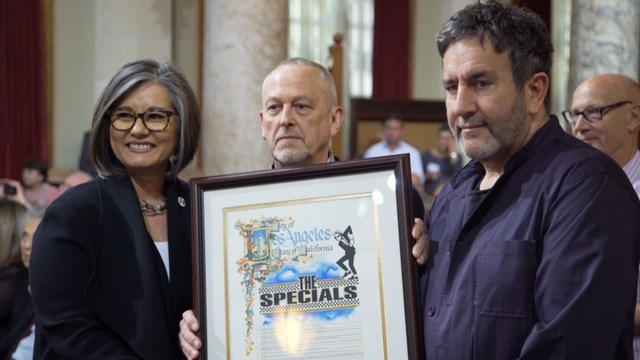
Last week I learned via a post from Reggae Steady Ska that May 29, 2019 was dubbed (see what I did there?) The Specials Day in Los Angeles, California. Now I was a little confused as to why LA would honor a band who hails from the UK, but then again, I am a white woman in RI who listens to reggae, rock steady, and ska. The idea that The Specials themselves and the themes of their music exemplify and encourage diversity is what drew a Los Angeles councilwoman to hold them up for the city to see. It drew me to my CD rack (yes, I still own those) and The Specials album I hadn’t listened to in far too long.
As the bright beats of trumpet danced above the driving guitar, the music swelling from the speakers and spilling into the corners of this room and the next, I realized the deep hole that is left inside me when music doesn’t play.
I have four children. My house, my life, my mind is very loud. The last few years I’ve taken to not turning the radio on at all in the car because, there is enough noise in there already. The power button on the radio is one level of sound on which I can hit the kill switch. About a year or so ago, on a return drive from ‘the city’, about an hour away from home, I got through more than two thirds of the trip before I realized I hadn’t even turned the radio on then, when I was by myself. The cacophony in my head was complete if I couldn’t even partake of music when I could listen uninterruptedly to what I chose.
And that’s so sad.
Most of my memory has an overlay of obsession with music. So many genres and artists. So many generations and styles. I’ve imagined the soundtrack of certain parts of my life and relive other parts of my life through song.
In August 2017, 95.5 WBRU, the local modern rock radio station I had cut my anti-establishment musical teeth on, closed up shop. (Well, they were sold to a Christian rock outfit.) I still had the CDs, I still had internet access, I still had the memories – if I dare be so dramatic – but I mourned the loss of that running record of new and individualistic music as if someone close to me had died. Still, nearly two years later, I wax nostalgic if I happen to catch the low-power signal they sometimes broadcast on. I still post from time to time about how much I miss the station when I find a song they used to play on YouTube. I was getting to the point where even I was wondering what was wrong with me. Why was I so attached to a freaking radio station?
The obvious answer is because its going off the air was a death of part of my youth. BRU’s Retro Lunch was the soundtrack to the lunch we all had at my house before Junior Prom. Their Screamer of the Week was something I talked about with the guy I’d just started dating. Their Friday Night Countdown was what I recorded onto a cassette and mailed him when he went away to Boot Camp and we were still dating. So many pivotal moments of my coming of age were backed up by the beats of WBRU.
And research shows that songs elicit the same emotions we experienced when we first heard or listened to them most frequently. If I loved that part of my life and its soundtrack was now going away, it was almost as if that part of my life was dying. A leap, yes. And yes, I can cue up any of those songs on a streaming service or ‘go down the YouTube rabbit hole’ as I say my husband does of an evening every so often (He likes to relive the days I made him all those mixed tapes – yes, we married), but the spontaneity of what would appear next, the destiny of your song coming on at just the right moment, the discovery of something new you’ve never heard before, or hearing it at the moment of its release – that magic of the broadcasting universe is gone.
That radio station represented my teenage self thumbing my nose at the world. It signified my independence, culling my own style, my own voice, my own philosophy. I started listening to it when I was first heading out into the world. Its closing reminds me that I’ve been out here some time now. Not hearing it makes me suddenly wake up from the melodious trance and notice all the things I wanted to do, but haven’t yet. I don’t know really any much more than I did then; I am really no happier than I was then. The teenage angst has been switched out for that of the existential sort. Only now I can’t blare the radio and rage.
I think the closing of BRU was also the death knell of something bigger in my life. The joy of music I once had. The carefree release of a rollicking rhythm. Now I think too much about heavier things. I have too much to do. I don’t have time to pop in the CD or turn on the radio before I rush on to the next thing. I really feel adrift when the only two stations that play anything remotely my style of music either are out of range or on commercial. There’s probably a part of me that figures it’s so different, so lesser, then why bother trying to find the music at all.
It’s no secret that I hate change. I dig my heels in and get drug along unwillingly more often than not. I’m trying to open my heart to grace, allowing the full potential of situations, my life unfold. I know reopening my heart and soul to music would only make the journey that much richer. It’s just sad when you’d found your canon and reveled in it – and now it’s gone. But I can always use signs from the universe – like FB posts read in RI of UK bands being honored in LA – to signal it’s time to break out those old albums. And there’s always Pandora. But if it’s not painfully apparent already – I’ll always be hopelessly old school.
LA Councilwoman Monica Rodriguez with Horace Panter and Terry Hall of The Specials
If you’ve ever watched a three year-old dance, you will quickly realize that rhythm is innate.
Is it the way the earth turns below us, the pull of the tides, the swish and wash of our mothers’ womb that makes our bodies able to move in time to the music?
And what is it about growing up that makes us lose this innate ability?
If you’ve ever seen a thirty year-old twitch on the dance floor, you realize that some of us indeed do.
When we knew we would spend our lives together and started forming dreams of family, my husband and I imagined bringing our barefoot babies to outdoor concerts where we could watch them twirl and bounce them on our knees and hips. When the time came, we were either too tired or it was the children’s bedtime or it was simply too much work to pack an army of little people and all their accoutrements for the park.
Three kids and several years later, we actually achieved some of that dream last night.
A local tribute band to Bob Marley and The Wailers was playing on the beach a town over from where we live. A beach concert with a picnic supper would probably be enough to lure my husband and the music of one of my favorite musicians – albeit covers – was more than enough for me. The kids were impressed with the novelty of sitting on the beach listening to live music, aided by the fact that they got to peer through their father’s binoculars to see the action on stage. My eight year-old made me burn with pride, when just by the opening chords of a song, she said, “Mom, isn’t this one on your CD?” She has a great ear for music. She skipped through the waves crashing on the shore as the music played, her sisters quickly following her lead and soaking the one pair of clothes they each had.
photo courtesy of Tunes on the Dunes
Just as the riveting bass line of “Could You Be Loved” surged through the speakers, not one, but two daughters expressed the urgent need to use the facilities. I heard what turned out to be the last song of the concert through the bathroom walls. I hadn’t exactly envisioned this in my dreams of family concerts. But it was a nice night with a good vibe and the girls were having fun by the water, so we decided to hang out and let the crowds disperse. Many others decided to do the same and the band apparently decided to do another set. I was psyched. ‘Redemption’ from my bathroom run!
But my youngest was soaked and sandy, my husband was getting cranky at running interference with the girls, and the tide was coming in. In resolute denial that I wasn’t watching a show in my peasant blouse cuddled with my fiancé on our Guatemalan blanket, I turned away from the shore in my mom capris, huddled with my toddler on our picnic blanket – determined to enjoy the show.
My husband finally sat down. My older two finally buried themselves in the sand at my feet. And I got to rock steady to the beat. I was rewarded by deep tracks only on my Bob vinyl. By the time the finale came, I rocked and bounced my youngest in my arms. We had our own extended “Soul Shakedown Party” as the sun faded. She laughed and anticipated my moves, bobbing her head one way as I bobbed mine the other.
Time seemed to stop. No, suspend. As the band played an extended version of that great song, the minutes spooled out with the sound, a treasured pocket of time where my daughter and I moved to the same driving rhythm. In synch. In tune.
I saw a mother a few blankets over rocking and bopping with her infant and I flashed back to the times I’d worn tracks in our living room rug doing the same thing. It occurred to me that rhythm may be innate, but we help transfer it to our children. Or make the tendency stick. And they in turn remind us of our primal instincts. The marrow of our being, what we came into this world knowing and needing to do.
Moving, grooving, and enjoying the rhythm of life.
Our local modern rock station, born of a university radio station since gone commercial, is currently airing “90s week” programming for “those of [us] still flying the flannel”; an extended Christmas gift, if you will.
I cut my alternative teeth on their play lists. I made tape – yes, audiocassette – recordings of their “twelve cuts above the rest” and “retro lunch” programs. I mailed one such cassette to my now husband when he was in some far-flung locale in the Coast Guard. I did have a few flannels and one ripped-in-all-the-right-places pair of men’s jeans I still miss from time to time.
Over the years, some of the music made my ears hurt and I found myself asking the question oft-repeated by our forebears, ‘they call this music?’ And I questioned some of their song selections for the “retro” lunch: ‘they call this retro!?’ I scoffed at the apparent naiveté of the new jockeys, these rookies who didn’t know the really classic stuff. It never occurred to me that for them to be considered whippersnappers, I had to be moving into a new age bracket myself.
Slowly, tastes changed, a new sound came about, and I reveled in it. There was this niggling thought in the back of my head, though. Was this a new crop of really fabulous music – or was I old enough to have witnessed my first cycle of the old becoming new? After all, Rainbow Brite, a color-wheel explosion of my childhood, is now available on DVD. The Strawberry Shortcake picture that once hung above my twin bed now adorns my daughters’ space – and they know who she is!
When I was in second or third grade, I remember rocking out to Billy Idol’s version of “Mony, Mony”. I was flabbergasted when my mother chimed in. ‘This is an old song, you know,’ she told me with a certain triumph in her voice. I can’t say I share in her bravado.
The very phrase, “for those of you still flying the flannel”, suggests that we’re somehow stuck in an outdated place. Are the glorious days of my hey-day now ancient? And am I becoming so?
It’s a bittersweet feeling. While one never wants to be considered passé, the gut-wrenching chords of “Seether” still awaken the adolescent beast in me. “Particle Man” still reignites images of my favorite people bouncing around to it. And the supposed one-hit-wonders, The Mighty, Mighty Bosstones, still make me turn up the volume to an unhealthy level and groove.
The synapses are still firing and helping me remember some of the best and brightest moments of my life. And luckily the music that inspired them has inspired a new group of whippersnappers to create like-minded and nearly as good music for a new soundtrack.




 Chopping Potatoes