Claudio-Duart-Designer pixabay canva
Living, Mental Health, Survival

Five Years On

I’d like to blame my current malaise on COVID.

Not the having of the virus, though two times was punishment enough. (I know, it certainly could have been worse. Believe me, I know.)

And while the pandemic and attendant lockdown messed with my time-space continuum royally, it started in the months before.

When I let myself get so low, I had a near-panic attack just going to the doctor’s office to ask for meds.

When I got so low, I let my mind trick me into thinking needing meds was a moral failure on my part.

When I stumbled around in a fog so thick, I didn’t realize how bad it had gotten.

And then as I climbed out, I felt the need to tell the story.

I knew I needed to explain how I’d gotten there – for the mental health narrative and for my own mental health.

But the story was so huge. The path so steep and craggy, I knew not where to begin or how.

And the more time passes, the harder a thing is to tell. Details forgotten, edges dulled.

And then the world stopped.

We were all in survival mode. Myself acutely.

I thank God for the fortuitous timing of that first appointment.

For if I hadn’t started meds when I did –

thrown into ‘homeschooling’ and online learning and personal loss from afar. . .

But after months of bizarre, those details began to be forgotten and those edges dulled.

And this was life.

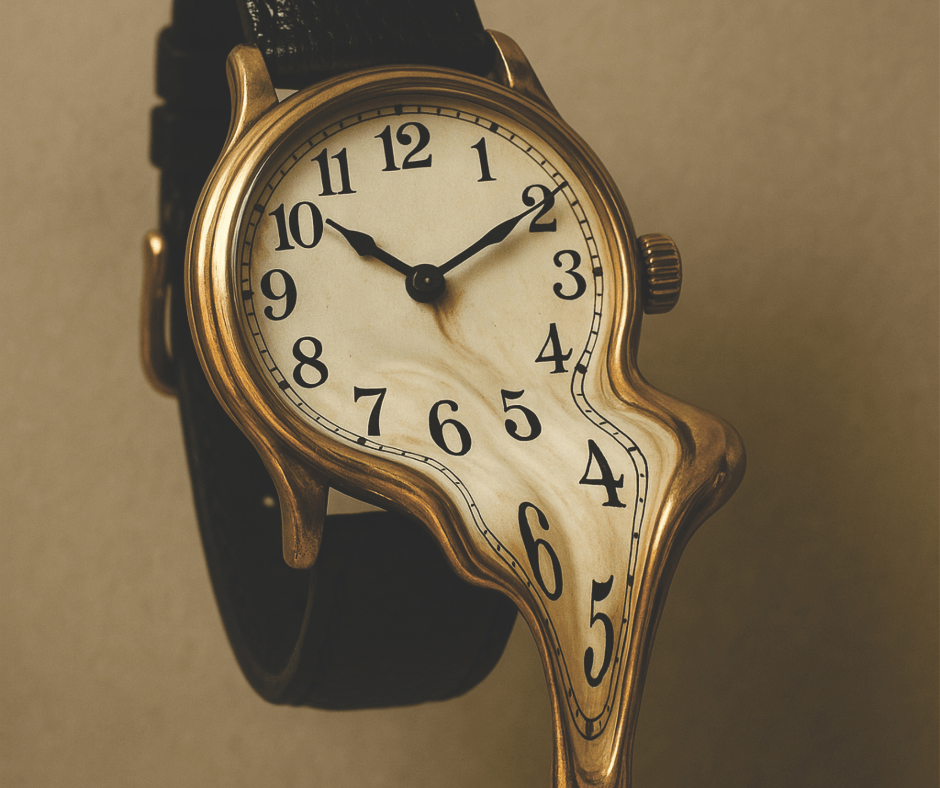
We were expected to pick up the baton and keep time

when time was wonky, hearts were broken, and psyches scarred.

Five years on

I’ve picked up bad habits, sloth and sipping alcohol.

Smack-dab in the middle of perimenopause

and the slog of midlife.

What started as peeling back the layers of over-exhaustion and exertion

flipped the other way into inert.

Achieving perfection and avoiding failure by not attempting at all

has settled into paralysis.

And now, what is life, but this fragile thing that can be taken and wrenched dry in mere months.

When the acute sorrow is gone and you’re left with nothing but the days

and another load of groceries to unpack.

Five years on

and I still can’t tell you how I got here.

But I have begun.

Standard
Maternal Health Month 2014

May 2014

An overview of my second annual series for mental health awareness, specifically focused on maternal mental health. Part resource, part description and discussion, part personal reflection. One encouraging observation: while I was in some low spots, I am not now. Everyday is a journey and I’ve survived every one thus far.

Standard
Mental Illness

Harnessing the Seether

“Seether” hits differently as a middle-aged woman.

As a 16 year-old, I was obsessed with the song from Veruca Salt, with its hard-hitting guitar, sick riffs, and angry lyrics – but I was a bit mystified by who exactly the seether was.

I saw it as someone or something outside of her, trying to control her or change her actions – which makes total sense, seeing as how the rage of teenage years is totally self-righteous and almost always directed outside of oneself.

A nasty break-up. Parents trying to tighten the leash. Managers not giving us enough shifts or pay.

Now, as a middle-aged woman with real reasons for rage, I see that the seether is within me.

In January 2020, I had hit the bottom of a very low low. Not as bad as, but the lowest I’d been since, post-partum depression.

Two and a half years earlier, I had weaned myself off the antidepressants I’d been on for nine years. It was a combination of that often false sense of good health that medication management can give you and refill snafus. In the ultimate combination of Yankee can-do attitude/Catholic flagellation, I figured it was time I was healed enough to handle it on my own.

And I was, for a while.

Whether the meds hung around in my system for awhile or my naturopathic/lifestyle aides helped or I got worse in only slight increments, I was doing okay. Until the increments started stacking up the other way and there was such a big pile of mess, I was fucking depressed. Like bad.

I relived the ridiculous feeling of failure/guilt that I felt the first time I went on meds and went to see a psychiatrist nurse practitioner for the first time.

My anxiety for this appointment was beyond. I was all wrapped up in avoidant behaviors, irrational thoughts, nerves, worry. Of course I was running late. Of course there was road construction blocking the entrance to the building I stared at as the clock ticked by. Of course it was raining as I realized I parked in the wrong lot and rushed my then toddler over the adjoining stone wall. Of course I busted into a podiatrist’s office like a crazy woman to get directions to Unit 8.

When I arrived breathless and sweaty at the reception window, the sanctimonious office manager asked me how I was doing. I think he actually thought he was creating a pleasant atmosphere. I was so amped up with anxiety, for once, I answered honestly.

“Horrible.”

I still haven’t figured out whether he had no personality or I set the tone for our relationship with my snarky response.

Late that afternoon, when my husband had returned from work and all the kiddos were settled, I stole away to a quiet coffee shop for a writing session. I still hadn’t processed all the high-energy feelings from the day. I was likely feeling some sort of post-adrenaline slump. I managed a journal entry and this.

I knew it wasn’t enough for the blog that usually helped me think through major mental health journeys. But it was all I could muster. It was all I had.

I was devastated by the complete control my irrational thoughts and fears had over me. And that was coming at the tail end of a harrowing descent into depression.

Periodically, over the last four years (that also included a worldwide pandemic, Holy Mother of God), that little table in its dim corner, complete with coffee cup, has come to mind. The incompleteness of my thoughts that day – and since. How that is a story I have needed to tell. But haven’t been able to. How I should go back to the beginning of this latest cycle – but haven’t been ready to.

I still don’t know if I am.

But “Seether” helped me recognize the strength and sorrow of that rage within.

Perhaps it’s time to process it – and harness it.

Standard
may is maternal mental health month, News

May is Maternal Mental Health Month

My first contribution to Rhode Island Moms is live. Check it out!

In a month dedicated to moms, it’s also important to focus on maternal mental health – the most important gift we can give to ourselves.
— Read on rhodeislandmoms.com/health-and-wellness/may-is-maternal-mental-health-month/

Standard
Photo by Paul Bulai on Unsplash
Mental Illness, Survival

What no one ever tells you

about your worst bout with whatever mental illness you’ve had

is you’ll put yourself back there

every. other. time. you struggle

forever.

Every time

you get oh so tired

or life’s bitter edge rubs sharp against you

or you just can’t crawl deep enough into the corner of the couch –

You will think,

here it comes again

it’s back

I’m falling down the rabbit hole once more.

And then, a flicker at the edge of your consciousness.

It’s midafternoon; you haven’t taken your meds

The sun hasn’t shone in days

A deep mood does not mean a depressive down swing.

But the feeling is so unsettlingly familiar

it sets off alarm bells

of a flame that once fueled an inferno

Standard
Mental Health

Question, Persuade, Refer: A Path to Prevention

Last month, I had the opportunity to attend a suicide prevention training at my community hospital. I’d heard about it through their email newsletter and jumped at the chance to complete the training I’d had on my radar for at least a year. Finding MHFA training so beneficial, the extension of care specifically to those experiencing suicidality was something I was very interested in.

When I saw that some of the participants were apparently hospital staff extending their own professional knowledge, I was even more appreciative that they opened the class to the community – and that was before I met the instructor.

Dr. Robert Harrison had a long and dedicated career at Westerly Hospital as an Emergency Room physician – and that was after his service to the country in the United States Navy.

Now, he serves as director of the Washington County Zero Suicide Program.

As impressive a vitae as that, it was Dr. Harrison’s extensive knowledge of and empathy for people suffering from depression and slipping into the despair that can lead to death that was even more so.

He shared the staggering statistics of the mental health crisis of which our nation is currently in the grip.

Facts such as:
  • The suicide rate rose 33% from 2004 to 2021
  • Total deaths by suicide in 2021 were 48,183
  • Suicide is the 11th cause of death in the US; 3rd leading cause for 15-24 year-olds

The sobering facts of suicide, the stories of suffering could have gone on all evening, but Dr. Harrison shifted the focus during the second half of the presentation – to one of HOPE.

QPR, the steps of this process we could use to help those we suspect are suffering, is intended to provide hope through positive action.

By QUESTIONing, we can deduce whether a person is contemplating ending their life.

We can then PERSUADE them to get help, to find a hopeful solution to what seems like an ‘insoluble problem’.

Finally, we REFER them to professional help, either by taking them directly, making arrangements with them, or giving them referral info and getting a ‘good faith commitment’ that they will not complete or attempt suicide.

Having practical tools to apply in what seems like an unfixable situation is empowering. Depression IS terrifying. But to know that there are ways to stave off or circumvent its lying advances and urgings is the epitome of HOPE.

As striking as this revelatory information is, knowing that there are empathetic people who walk this earth and populate our hospital halls is even more amazing. The nuance and care with which Dr. Harrison shared his experience and information was moving; the witness he bore to pain and suffering and support of people who care was affecting.

In a mental health atmosphere where citizens don’t want to discuss the uncomfortable, practitioners aren’t armed with the skills to stave off suffering, and systems don’t support access or affordability – this conversation at Westerly Hospital one evening in October is one I won’t soon forget.

Yes, it served the professional development of my skills; it fortified the tools and resources in my fight for mental wellness – but it also filled my reserves of hope to overflowing.

That can be an uncommon occurrence in this work.

But it’s at the very root of what we do.

All anyone wants in this life is HOPE.

QPR helps us walk the path together.

Standard
Mental Health, Mental Illness

Red Hot Reminder

I had just taken my morning meds when I went to light the woodstove. 

Reduced to embers and ashes from the night before, I had to start fresh and stacked the bricks of compressed wood dust in their faintly cheerleader-ish pyramid.  I twisted two long tears of newspaper into loose spirals and set them inside.  Usually a small square of firestarter set atop would be all that was left. 

But this morning, I picked up the medication information sheet that shipped with my newest refill of meds.  I usually just recycle it.  I’ve received dozens, if not hundreds, before.  This morning, for whatever reason, I tore it into quarters and laid them over the delicate spirals of newspaper, tucking the firestarters in as if for bed. 

The opposite ends of each coil of newsprint burst into light at the touch of the match, that crawled toward the center as usual.  But the information sheet, made of a heavier weight and sitting atop it all, didn’t catch right away.  It sealed in the tongues of flame and made the smoke swirl above the bricks in a pulsating plate. 

One quarter of the sheet, that rested vertically, served as a firebreak.  On one side of it, the fire roiled, yet the paper seemed untouched.  On the opposite side, the words of warning, of various side effects and negative outcomes attached to this tablet meant to cure me, to fix my foibles – glowed, as if alive with molten lava; not painted or poured; moving, active – and yet about to disappear.  About to be consumed by the heat and flame.  At their brightest and most brilliant – about to fade into oblivion, no longer legible or meaningful.  Not even holding shape or form, a hot rush of ethereal, ephemera.

Obviously, I am a sucker for symbolism. 

And so, as I sat and stared into the fire, amazed and mesmerized by what very likely was a mere reaction of the ink to the heat of the fire, I pondered glowing prophecies and potent mystical messages.  I know that seeing warnings like ‘may cause nausea or stomach upset’ in a rosy hue doesn’t make them magical or more enjoyable.  But as someone always ambivalent to ‘fix my mood’ with meds, the occurrence seemed to have some sort of message.

I’d thrown the paper in the woodstove this morning on purpose.  Prescriptions and warnings and medical material litter my life and countertops and brain.  How I would love to wake in the morning and walk out the door without having to take something so life doesn’t seem so overwhelming.  But as much as my stubborn will desires and tries to snuff it out of existence – the problem, the illness remains. 

Sometimes I need a red hot reminder to stay the course and keep healthy.     

Pexels/Free Range Stock
Standard
Living, Mental Health, Mental Illness, Survival

Incremental Illness

It’s easy to ignore when it creeps up on you,
increasing slowly, by small degrees

Or not even ignore –
just not even notice

the paranoia that maybe you’re not cool enough to hang
the resentment for the life you do not have
the loneliness
the inability to relax
the overwhelm over everyday things:
shopping, showering, getting out the door

Just not feeling
talking, going, doing –
                              it

Until one day it’s suddenly all you can see,
all you can feel

And you have to deal with it all at once

Standard
Depression, Mental Illness

This is My Bag

Jennifer Butler Basile

This is the closest I’ve gotten to Kate Spade.

A purse that may or may not even be an original piece.

I don’t know her.

Yet, when my husband told me yesterday the breaking news about her death, my mood instantly plummeted. I stared at the black and white text and felt the sobs come.

Not because I know her. In a cliched way, I know her pain. In a frightened animalistic way, I see how quickly I could become her.

Facebook friends who know mental illness posted their sadness and support at the news. Some hinted at public posts with ugly comments and sage advice given too late. But I don’t read comments – of the general population anyway – for my own mental health.

And then one of those comments wormed its way into a personal post I saw.

It was easy for me to lament that stigma was still alive and well, that we’ve so much farther to go, and how sad it is that people still think that way – when I hadn’t read the comments. And then I saw how alive and well stigma is, how much farther we’ve to go, and how scary it is how some people think.

To think that suicide is a choice. To think that those who have reached the point of contemplating suicide are doing so as part of a rational decision-making process. That they eschew their many blessings in life purposefully.

Suicide isn’t supposed to make sense. That’s the fucking point. The mind, the psyche is not working properly. Depression is replacing the authentic voice of self with lies.

You would think the fact that it strikes down even people with blessing piled upon blessing would make people realize that there is something more to suicide than horrible circumstance and selfish choice.

May God save us all.

Standard
Living, Mental Health, Mental Illness

So Much Blah

For such a bland, nonspecific word, blah actually does a lot.

At the end of last month, I started a mood tracker to get a closer look at and more specific language for my moods.  I’d been using blah too much and too widely.

Now that I’ve been pinning my days and moods to – what I thought were – more specific descriptors, I realize just how evocative blah is for me.

Blah is not wanting to get off the couch – either from physical exhaustion or lack of motivation – or both.  Blah is not knowing where to start when faced with a day’s plan or duties.  Blah is not knowing how to structure a day with no plan or duties.  Blah is feeling off.  Blah is not wanting to get dressed because you haven’t had the time to shower or because nothing would feel as comfortable against your skin as pjs.  Blah is worrying about an unnamed idea.  Blah is not wanting to interface with people.  Blah is not eating because nothing seems appealing.  Blah is eating candy or snacks that will bring on more blah for sure – but perhaps will be a happy treat.  Blah answers the question, ‘How are you?’ with a shrug because blah really isn’t sure – even if things aren’t that bad.

Blah is a lot of ‘not wanting to’.  Blah must be a toddler.  Or a moody teenager.

Blah comes to visit me a lot – and not because I have all of those in my house.

I wanted to get away from using blah to describe my state of mind because I wanted something more specific.  I don’t know that I realized how many versions of blah there were.

In my mood tracker, I opted for descriptors like ‘not focused’, ‘not productive’, ‘unsettled’.  According to those little squares of color on my chart, there’s been a lot of unsettled lately.  I think I just switched blah for unsettled.  I need to unpack the feelings in that paragraph above and figure out the different shades of blah or unsettled or whatever I want to call it.

blahblah

from sillyoldsod.com


Standard