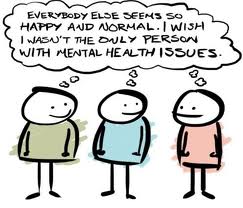
Claudio-Duart-Designer pixabay canva
Living, Mental Health, Survival

Five Years On

I’d like to blame my current malaise on COVID.

Not the having of the virus, though two times was punishment enough. (I know, it certainly could have been worse. Believe me, I know.)

And while the pandemic and attendant lockdown messed with my time-space continuum royally, it started in the months before.

When I let myself get so low, I had a near-panic attack just going to the doctor’s office to ask for meds.

When I got so low, I let my mind trick me into thinking needing meds was a moral failure on my part.

When I stumbled around in a fog so thick, I didn’t realize how bad it had gotten.

And then as I climbed out, I felt the need to tell the story.

I knew I needed to explain how I’d gotten there – for the mental health narrative and for my own mental health.

But the story was so huge. The path so steep and craggy, I knew not where to begin or how.

And the more time passes, the harder a thing is to tell. Details forgotten, edges dulled.

And then the world stopped.

We were all in survival mode. Myself acutely.

I thank God for the fortuitous timing of that first appointment.

For if I hadn’t started meds when I did –

thrown into ‘homeschooling’ and online learning and personal loss from afar. . .

But after months of bizarre, those details began to be forgotten and those edges dulled.

And this was life.

We were expected to pick up the baton and keep time

when time was wonky, hearts were broken, and psyches scarred.

Five years on

I’ve picked up bad habits, sloth and sipping alcohol.

Smack-dab in the middle of perimenopause

and the slog of midlife.

What started as peeling back the layers of over-exhaustion and exertion

flipped the other way into inert.

Achieving perfection and avoiding failure by not attempting at all

has settled into paralysis.

And now, what is life, but this fragile thing that can be taken and wrenched dry in mere months.

When the acute sorrow is gone and you’re left with nothing but the days

and another load of groceries to unpack.

Five years on

and I still can’t tell you how I got here.

But I have begun.

Standard
Sebastian Voortman from Pexels
may is maternal mental health month

Female Fulcrum

Who would’ve thought that being an adult volunteer with Girl Scouts would pay such dividends? Obviously there’s the bonding with one’s own child and building experiences for all in the troop. But the connections between the grown females is what always moves me.

At our troop’s camp-out this year, another mom and I rallied the girls to set up an oversized see-saw contraption. Essentially a wooden dock on a fulcrum, we had to slide it from ramp position to a teetering position so as to ‘ride the waves’. Two grown adults couldn’t do it by themselves and everything Girl Scouts is GIRL-led, so the entire troop found a spot and together we lifted and slid the slab into place.

As the girls leapt onto the sloshing see-saw one by one and experimented with movement and weight distribution, the mom and I marveled at the power of the physical example right in front of our faces.

Teamwork. Small actions combining for a great force. Empowerment. Goal realization.

I remarked how important it was for girls to be in an environment solely for them with ample space for their voices and desires. This led into a conversation about this mom’s experience as a personal and fitness coach, saying that a young man in the administration of her organization had tried to offer tips for improving her practices. She and her core group had already found an incredibly enriching and cohesive bond. She, as a woman, in a different age bracket, and a mother, had all she needed to interface with these women. She had lived in experience.

“There is such power when women gather,” I said.

“Absolutely,” she said. “Especially when it’s a space just for them.”

We looked at each other knowingly, nodding, and I know my eyes were certainly filling.

And all that from a cold, rainy, muddy weekend at camp strong-arming a wooden raft into a precarious – or perfectly balanced – position.

But the community and calm knowing that comes from a gathering of women is what I want to celebrate and what I know to be at the core of maternal mental health.

Standard
May is Mental Health Month

May 2013

May 2013 was the first time I undertook a month-long theme of multiple posts to mark mental health awareness. Below are some of my posts from that series. A trip in the way back machine that explains a lot about my current state of mental health, motherhood, and life – and how I got here.

Standard
Legacy

Working with What We Have

The way our parents parented shaped us.

Intellectually, we can understand this. Rationally, we accept this.

I don’t think, however, we realize how much our relationship with them informs so much of our relating moving forward.

Only now, after over twenty years, do I realize how sticking points with my father are presenting themselves in my marriage.

Of course it shows up in how we parent.

But it wasn’t just in how their example informs our parenting behaviors.

Their shit affected how they raised (treated) us and consequently how we see ourselves and so on and so on ad infinitum.

I’ve always said I have to slow my roll as I uncover pieces of my emotional history and upbringing – because any anger I harbor will just come back to bear on me when my kids dissect their own upbringings.

One good thing about social media is that it has normalized this phrase that one of my older girls said she’d heard during a recent discussion:

Your parents did the best they could with what they had

May we all be covered in the Grace of that statement.

Standard
may is maternal mental health month, News

May is Maternal Mental Health Month

My first contribution to Rhode Island Moms is live. Check it out!

In a month dedicated to moms, it’s also important to focus on maternal mental health – the most important gift we can give to ourselves.
— Read on rhodeislandmoms.com/health-and-wellness/may-is-maternal-mental-health-month/

Standard
Photo by Paul Bulai on Unsplash
Mental Illness, Survival

What no one ever tells you

about your worst bout with whatever mental illness you’ve had

is you’ll put yourself back there

every. other. time. you struggle

forever.

Every time

you get oh so tired

or life’s bitter edge rubs sharp against you

or you just can’t crawl deep enough into the corner of the couch –

You will think,

here it comes again

it’s back

I’m falling down the rabbit hole once more.

And then, a flicker at the edge of your consciousness.

It’s midafternoon; you haven’t taken your meds

The sun hasn’t shone in days

A deep mood does not mean a depressive down swing.

But the feeling is so unsettlingly familiar

it sets off alarm bells

of a flame that once fueled an inferno

Standard
Mental Health

Question, Persuade, Refer: A Path to Prevention

Last month, I had the opportunity to attend a suicide prevention training at my community hospital. I’d heard about it through their email newsletter and jumped at the chance to complete the training I’d had on my radar for at least a year. Finding MHFA training so beneficial, the extension of care specifically to those experiencing suicidality was something I was very interested in.

When I saw that some of the participants were apparently hospital staff extending their own professional knowledge, I was even more appreciative that they opened the class to the community – and that was before I met the instructor.

Dr. Robert Harrison had a long and dedicated career at Westerly Hospital as an Emergency Room physician – and that was after his service to the country in the United States Navy.

Now, he serves as director of the Washington County Zero Suicide Program.

As impressive a vitae as that, it was Dr. Harrison’s extensive knowledge of and empathy for people suffering from depression and slipping into the despair that can lead to death that was even more so.

He shared the staggering statistics of the mental health crisis of which our nation is currently in the grip.

Facts such as:
  • The suicide rate rose 33% from 2004 to 2021
  • Total deaths by suicide in 2021 were 48,183
  • Suicide is the 11th cause of death in the US; 3rd leading cause for 15-24 year-olds

The sobering facts of suicide, the stories of suffering could have gone on all evening, but Dr. Harrison shifted the focus during the second half of the presentation – to one of HOPE.

QPR, the steps of this process we could use to help those we suspect are suffering, is intended to provide hope through positive action.

By QUESTIONing, we can deduce whether a person is contemplating ending their life.

We can then PERSUADE them to get help, to find a hopeful solution to what seems like an ‘insoluble problem’.

Finally, we REFER them to professional help, either by taking them directly, making arrangements with them, or giving them referral info and getting a ‘good faith commitment’ that they will not complete or attempt suicide.

Having practical tools to apply in what seems like an unfixable situation is empowering. Depression IS terrifying. But to know that there are ways to stave off or circumvent its lying advances and urgings is the epitome of HOPE.

As striking as this revelatory information is, knowing that there are empathetic people who walk this earth and populate our hospital halls is even more amazing. The nuance and care with which Dr. Harrison shared his experience and information was moving; the witness he bore to pain and suffering and support of people who care was affecting.

In a mental health atmosphere where citizens don’t want to discuss the uncomfortable, practitioners aren’t armed with the skills to stave off suffering, and systems don’t support access or affordability – this conversation at Westerly Hospital one evening in October is one I won’t soon forget.

Yes, it served the professional development of my skills; it fortified the tools and resources in my fight for mental wellness – but it also filled my reserves of hope to overflowing.

That can be an uncommon occurrence in this work.

But it’s at the very root of what we do.

All anyone wants in this life is HOPE.

QPR helps us walk the path together.

Standard
motherhood

The Kids are All Right

When I saw this image as part of an Instagram post shared by The Blue Dot Project, my mind did the mental equivalent of a fist pump. I’d uttered a very close variation of this to my own father during my own bout with postpartum depression.

“The kids will be fine.  They will always be fine.  Me on the other hand . . .”  I twisted my face into a questionable shrug.  I’m not sure I actually said it, but what I meant was: it was me it was killing.

I wasn’t failing on some self care front. I was totally consumed by the day-to-day care of (at the time) three littles. After that, there was little time or energy left – and all of that went to me keeping it together. Not thriving, not growing, not healing – keeping the fucking lid on.

And I think that’s the irony of preparing mothers for motherhood. And the way we support mothers after birth.

Yes, you should swaddle. Yes, you should lay them on their backs to sleep. Yes, you must wake them for feedings.

No, you can’t take them to bed. No, you don’t need more than an inch or two of water in the bath.

Is there ANY mention of how to care for mother?

The ways that women take care of the themselves before baby don’t necessarily work afterward. Schedules and responsibilities shift. Existences shift. Hell, even space and time shift.

The reality of motherhood is that most women will grind themselves into the ground to provide for the ‘thrive’ of their child.

And that has propagated the species. It has kept generations of us alive and marching forward. It often gives us the fierce, yet tender protection of her love.

But we cannot set mothers up for this. We cannot send them into self-sacrifice unwittingly. No matter how ready they are to swipe tiny bums with warm wipes, they stand the chance of losing themselves and their mental health if we do not support them.

The kids usually are all right. It’s the moms for whom we have to watch out.

Sometimes, I feel I gotta get away
Bells chime, I know I gotta get away
And I know if I don't, I'll go out of my mind
Better leave her behind with the kids, they're alright
The kids are alright, the kids are alright, the kids are alright
  

Pete Townsend wrote the above lyrics to the song whose title inspired that of this blog post. And it was going to be just the title that inspired it – until I looked closely at the lyrics.

We cannot leave moms to be swallowed up by the all-encompassing duties of caring for and growing humans. Yes, the kids will be all right – but moms should be, too.


  • quoted text Jennifer Butler Basile, memoir
  • song lyrics “The Kids are Alright” The Who
Standard
Mental Health, Mental Illness

Red Hot Reminder

I had just taken my morning meds when I went to light the woodstove. 

Reduced to embers and ashes from the night before, I had to start fresh and stacked the bricks of compressed wood dust in their faintly cheerleader-ish pyramid.  I twisted two long tears of newspaper into loose spirals and set them inside.  Usually a small square of firestarter set atop would be all that was left. 

But this morning, I picked up the medication information sheet that shipped with my newest refill of meds.  I usually just recycle it.  I’ve received dozens, if not hundreds, before.  This morning, for whatever reason, I tore it into quarters and laid them over the delicate spirals of newspaper, tucking the firestarters in as if for bed. 

The opposite ends of each coil of newsprint burst into light at the touch of the match, that crawled toward the center as usual.  But the information sheet, made of a heavier weight and sitting atop it all, didn’t catch right away.  It sealed in the tongues of flame and made the smoke swirl above the bricks in a pulsating plate. 

One quarter of the sheet, that rested vertically, served as a firebreak.  On one side of it, the fire roiled, yet the paper seemed untouched.  On the opposite side, the words of warning, of various side effects and negative outcomes attached to this tablet meant to cure me, to fix my foibles – glowed, as if alive with molten lava; not painted or poured; moving, active – and yet about to disappear.  About to be consumed by the heat and flame.  At their brightest and most brilliant – about to fade into oblivion, no longer legible or meaningful.  Not even holding shape or form, a hot rush of ethereal, ephemera.

Obviously, I am a sucker for symbolism. 

And so, as I sat and stared into the fire, amazed and mesmerized by what very likely was a mere reaction of the ink to the heat of the fire, I pondered glowing prophecies and potent mystical messages.  I know that seeing warnings like ‘may cause nausea or stomach upset’ in a rosy hue doesn’t make them magical or more enjoyable.  But as someone always ambivalent to ‘fix my mood’ with meds, the occurrence seemed to have some sort of message.

I’d thrown the paper in the woodstove this morning on purpose.  Prescriptions and warnings and medical material litter my life and countertops and brain.  How I would love to wake in the morning and walk out the door without having to take something so life doesn’t seem so overwhelming.  But as much as my stubborn will desires and tries to snuff it out of existence – the problem, the illness remains. 

Sometimes I need a red hot reminder to stay the course and keep healthy.     

Pexels/Free Range Stock
Standard
motherhood, Survival

Mother as Refugee

For many reasons, I needed to sit on the couch yesterday and do nothing.  After a short while, it became clear that TV time with the toddler was not going to provide my needed respite.  Even snuggled under the same blanket, I was not providing her with enough [attention/snack food/video selection].   Circle all that apply.

It was just that kind of day.

She continued to want; her sisters added to the cacophony when they got home.  The toddler was a bit extra on the toddler scale, but none of them made outrageous requests.  By the time my husband got home and I stepped into the kitchen seeking an adult conversational release valve, I was all edges.  The last of a staccato flurry of requests nearly made me run screaming from the house.

That’s when an inner alarm went off.  I need a day off.  I need time away.

But the glaring alarm bells weren’t entirely correct.

What I need is time at home, alone.

I need a day off in my house left to my own devices.  To sit on the couch for as long as I want until I want to rise and retrieve a snack.  To watch a British drama until I cry and/or decide I’ve had enough.  To read, to write, to fill some of the pages in those adult coloring books I bought for self-care following the birth of the present toddler.  To sleep.  To stare into space.

But moms are not afforded that luxury.  I am never in my house alone.

In order to get a respite, I need to leave the house.

With respites few and far between, by the time I get one or my mental health sounds the alarm, I am usually in such a state of exhaustion that the ideal break would be crawling under a blanket and ceasing to exist for a while.  Except coffee houses don’t usually have a corner in which to hole up.  Plus, they have people.  To me, people-ing does not constitute a break.  And I can’t bring my own gluten-free vegan snacks to go with the yummy latte.

I encounter this same conundrum when I slip away to write.  Even if I don’t want to crawl under a blanket, there isn’t a quiet corner to be had.  Last weekend, I thought I’d come up with the perfect plan when I dropped off my ten year-old at a two-hour birthday party.  I’d go to the big library four minutes away, spread out all my materials on a big oak table on some deserted level, and get shit done.  Except the big library is closed on Sundays.  The sweet parking spot I snagged right in front should have tipped me off before I got out of the car.

So off to a different coffee house this time for a sweet drink not good for my blood sugar or wallet.  The convivial atmosphere was not good for concentration either.  Apparently 2 PM on a Sunday is the time to get coffee in this town.

If someone could figure out a way to provide moms with a hidey-hole to escape from the circumstances that won’t let them relax at home, it would be a huge success.  And if I can figure out a way to do this, consider this my official claim to the idea.


But that excuses the actual problem: that mothers are not allowed to shelter-in-place. 


They are forced from the nests of their homes by the demands and responsibilities that weigh on them there.  Not given the chance to breathe, they must take it.  The surface tension of the home, while a thin skin, must be broken through for a gasp of air.

And while the act of taking this time is choosing oneself, showing one’s deserved value – it is undermined by the fact that mothers are ousted from their territory, their home base to get it.

promenade-solitaire--1473171360frf

Richard Revel via publicdomainpictures.net

Should not the pyramid be flipped the other way?

Mothers work hard to make the house a home.  And yet, they don’t get to enjoy the benefits of that.  The soft blanket and pillows that grace the bed.  The way the sunlight spills through the windows casting the white walls a brilliant hue.  A quiet so sound that the click of the boiler can be heard far below.

Even if a step away gives a break, a breather, it is on foreign territory.  Any comfort it gives is not of the ultimate level.  It is not complete because it isn’t home, where one can be completely and totally oneself and off-guard.  Relaxation, yes.  Complete, never.

Mothers are forced to roam, choosing the least off-putting or triggering place to settle for an attempt at realigning and regulating their overwrought senses and psyche; adding one more thing to an already overflowing list of decisions and tasks which elicit the need to escape in the first place.

I don’t know what the solution is.  I don’t know what needs to change to honor mothers and their numerous sacrifices.  All I know is I wish I could just stay home, alone.


Author’s Note: The use of refugee here is as metaphor; it is in no way attempting to compare my ‘first world’ struggles as a mother to the very real and devastating conditions that true refugees face for themselves and their children.

Standard