childbirth

The Dish on Doulas

As this past October dawned, I woke early on a Saturday, put on some presentable clothes, and drove an hour north to a farmers’ market – and I didn’t even need any produce.

I was researching an article on doulas for Rhode Island Moms. My initial idea was “An Interview with a Doula” to create a personal connection introducing how and what doulas offer. After discussions with three doulas I either knew personally or through a few degrees of separation, the article’s focus became more broad-based. When I saw that Doulas of Rhode Island (DORI) was hosting a Meet the Doulas event at Lippitt Park in conjunction with the farmers’ market, I knew I’d learn even more.

What is a doula?

Click to read more of my article on rhodeislandmoms.com

My trusty little notebook quickly became filled with the emotional and physical support these women provide to mothers everyday in hospitals and homes. I spoke to Emma setting up the table and welcoming guests. I spoke to Katherine, membership coordinator for the doula organization (who connected me with Paulette who gave me more info via phone). I met Ava, based in my neck of the woods and friends with a Warrior Mom doula I know. I met Emily, who had just relocated to Rhode Island and was getting the lay of the land for mamas here. I met Shay who translated her own birth experience into a way forward with future moms. Some of these women prepare mothers in the prenatal phase and see them through labor. Others support them during labor and at home postpartum. Some prepare nutritious foods and provide childcare while mom sleeps. Some do it all. All establish a solid and supportive foundation for moms to thrive.

While it wasn’t meant to be an article about mental health, that is often the lens through which I view issues. I asked several of the doulas what they do to support and assess mental health/illness in their clients. They obviously all watch for the signs and know when to call in help, but I was shocked by the surprisingly simple, yet profound, response Lily had. As a postpartum doula and overnight nanny, she emphasized the benefit of sleep, how even PMAD treatment programs and hospitals focus on mom getting adequate sleep.

How refreshing that if we ensure moms get what they need (ie sleep, nutritious food, companionship, informed decision making), mood disorders may not even arise!

And THAT is why doulas are a force to be employed, paid attention to, and celebrated.

I spent over two hours speaking to and circulating around the doulas of Rhode Island and their table. I told Emily that I could talk about maternal (mental) health all day. “Me too,” she said.

The article that went to press November 5, 2024 could not contain all the stories and wonderful women I met. The way I serve women and mothers is affected by them. I am thankful for their work and their sharing.

With a community like this, women and mothers cannot go wrong.


The doulas who shared their work and time with me. . .
Many thanks

Standard
Sebastian Voortman from Pexels
may is maternal mental health month

Female Fulcrum

Who would’ve thought that being an adult volunteer with Girl Scouts would pay such dividends? Obviously there’s the bonding with one’s own child and building experiences for all in the troop. But the connections between the grown females is what always moves me.

At our troop’s camp-out this year, another mom and I rallied the girls to set up an oversized see-saw contraption. Essentially a wooden dock on a fulcrum, we had to slide it from ramp position to a teetering position so as to ‘ride the waves’. Two grown adults couldn’t do it by themselves and everything Girl Scouts is GIRL-led, so the entire troop found a spot and together we lifted and slid the slab into place.

As the girls leapt onto the sloshing see-saw one by one and experimented with movement and weight distribution, the mom and I marveled at the power of the physical example right in front of our faces.

Teamwork. Small actions combining for a great force. Empowerment. Goal realization.

I remarked how important it was for girls to be in an environment solely for them with ample space for their voices and desires. This led into a conversation about this mom’s experience as a personal and fitness coach, saying that a young man in the administration of her organization had tried to offer tips for improving her practices. She and her core group had already found an incredibly enriching and cohesive bond. She, as a woman, in a different age bracket, and a mother, had all she needed to interface with these women. She had lived in experience.

“There is such power when women gather,” I said.

“Absolutely,” she said. “Especially when it’s a space just for them.”

We looked at each other knowingly, nodding, and I know my eyes were certainly filling.

And all that from a cold, rainy, muddy weekend at camp strong-arming a wooden raft into a precarious – or perfectly balanced – position.

But the community and calm knowing that comes from a gathering of women is what I want to celebrate and what I know to be at the core of maternal mental health.

Standard
Maternal Health Month 2014

May 2014

An overview of my second annual series for mental health awareness, specifically focused on maternal mental health. Part resource, part description and discussion, part personal reflection. One encouraging observation: while I was in some low spots, I am not now. Everyday is a journey and I’ve survived every one thus far.

Standard
Grayscale Photograph of Man Laughing
May is Mental Health Month

Generational

Last weekend, I traveled a good portion of the eastern seaboard and visited with a dear aunt. The eldest of her three siblings, my godmother, I hadn’t seen her in seven years. She is the keeper of important family details, historical data. My cousin (and travel partner) had countless deep conversations with her across our four-day visit.

When my aunt showed us her photo album/geneaology book, she pulled out a copy of the following blog entry. Given the weight of many of our conversations, the poignant irony could not be any thicker than if fog had filled the room.

The motto of the weekend, a lot of our family, my life.

Standard
May is Mental Health Month

May 2013

May 2013 was the first time I undertook a month-long theme of multiple posts to mark mental health awareness. Below are some of my posts from that series. A trip in the way back machine that explains a lot about my current state of mental health, motherhood, and life – and how I got here.

Standard
Green Leaves and White Flower Crown
may is maternal mental health month

Immaculate

When I was a child, bright May mornings were filled with energy.

Sturdy rubber soled, strapped toes met pebbly concrete as in formation we marched

to crown Mother Mary.

Even if your hands didn’t rest the blooms atop her head

the songs and solemn file made you feel special.

The Mother of our Church, it makes sense that this month also celebrates earthly mothers.

And given the true gravity of motherhood, it makes sense that it also celebrates mental health.

I’ve done all manner of mother-centric posts over months of May past.

This past year has been full of research and connection as well, but in some new directions. I’ve decided to share some of my experiences over this month of maternal mental health and mamas. To shine a light on some of the amazing work that mothers and women are doing. On their own and in support of each other.

Standard
may is maternal mental health month, News

May is Maternal Mental Health Month

My first contribution to Rhode Island Moms is live. Check it out!

In a month dedicated to moms, it’s also important to focus on maternal mental health – the most important gift we can give to ourselves.
— Read on rhodeislandmoms.com/health-and-wellness/may-is-maternal-mental-health-month/

Standard
mother vs self, Uncategorized, Write to Heal

How Did We Get Here?

In 2012, I began this blog as an exploration of my experience with postpartum depression. I wasn’t doing it to publicly rehash all the difficult details; I was hoping that in sharing my story, women who had been to the deepest depths that I had wouldn’t feel so hopelessly alone. And I did find others. They found me. I’ve forged some amazing friendships through the wonders of the web.

In the first part of 2015, I embarked on a new leg of the journey. My research began in earnest, collecting evidence of pre- and postnatal care and experiences, outcomes and interventions – all through the lens of maternal mental health. I completed Postpartum Support International’s Perinatal Social Support Webinar Series. In July, I attended Postpartum Progress’ Warrior Mom Conference in Boston, the first ever large-scale gathering of survivors of perinatal mood and anxiety disorders.

I was poised to bring my advocacy to a new level.

I sent my ‘baby’ off to kindergarten – and a month later, got pregnant.

Truly, she was the pleasantest surprise.

My past experiences armed me with a proactivity I hadn’t had in previous pregnancies. And I see now that my knowledge and experience have deepened in the intervening time to enrich my advocacy even more.

Still, even with my depression ‘managed’, motherhood was challenging. And not in a growth mindset sort of way; in a soul-sucking, all-encompassing sort of way. I realized that mothers needed support whether they were suffering from a mental illness or not. Untenable conditions with no support could mean a tip into mental illness. And even if it didn’t, what of a mother’s mental wellness?

With writing being such a cathartic and expanding experience for myself, I sought ways to share it with others. How could I use journalling prompts, easily accessible and customizable to anyone – even if they weren’t in love with writing like I was, to aid women in their journey to authentic and fulfilling mother- and personhood?

In a synthesis of my writing, experience as an educator, and lived-in motherhood, the idea of a workshop was born. A chance for women to share their experiences in a community of empathetic peers and to explore their own personal questions, fears, joys, and challenges through writing. A release and a way forward.

I knew I wanted to offer the inaugural in-person workshops in the month of May, to coincide with Mothers’ Day – not to commemorate that holiday, but to give mothers an alternative celebration of themselves in a world that often lets them down. This finally happened in May 2023. I gave three workshops in three different locations in my surrounding area. But that only served those within driving distance. Readers and supporters reached out to me from other states, even Canada, suggesting a virtual option.

Nothing can replace in-person dialogue and the energy of community and I am no Zoom-inista – but the subscription series was born. I tried to translate the thought and writing prompts into weekly sessions across a monthly theme.

I endeavor to make this a virtual community, even if the gathering place may initially be in the comments section of each weekly module. With the dream of gathering us all in a center of our own someday. A center dedicated not only to the worthy and fulfilling vocation of motherhood – but to the sacredness of our individual personhoods as well.

Standard
motherhood

Stop Gaps on the road to Self Care

My last post, The Kids are All Right, elicited a lot of feelings and reactions. More than I expected actually.

I always view difficulties through the lens of mental illness vs health, but those I outlined last Tuesday struck a chord with many moms across the spectrum.

That doesn’t mean there is an epidemic of maternal mental illness – though there is an underreported and underserved population for sure. It only underscores what every mother already knows: motherhood is extremely trying.

Every age and every stage has its challenges, which usually present themselves directly after one set has been deciphered and conquered. But add in a post-pandemic, high-inflation, middle-age slump (at least for me and my contemporaries) and even getting out of bed seems like a monumental feat.

There are many systemic and cultural constructs that make up the fabric of our current constraints – and yes, there needs to be change at those levels. But what can one mother do as she looks at her own face in the mirror?

She needs to be clear on what motherhood means to her. What it looks like. What is non-negotiable and what falls under should. What has to occur/or not for her to be able to rest her head on her pillow at night and not toss and turn.

This does not preclude those around her from supportive responsibility. But the reality is, she likely will have to recruit this, too.

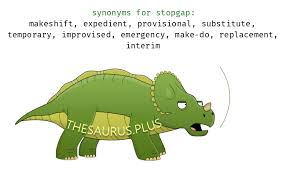
Self-care has been co-opted as a concept by the those who can make money off face masks and body poufs, candles and cocoa butter. But taken at its literal meaning, mothers need stop gaps to release the daily pressure of motherhood.

Mothers need stop gaps to release the daily pressure of motherhood.

In the everyday rush of responsibility and running on empty, however, caring for oneself can be just one more item on an already too-long-list.

Sometimes it is quiet and solitude. Sometimes it is community. Sometimes it is rest. Sometimes it is activity.

Surviving motherhood is a constant balancing act. Hopefully we don’t get turned around in the process.

Standard
motherhood

The Kids are All Right

When I saw this image as part of an Instagram post shared by The Blue Dot Project, my mind did the mental equivalent of a fist pump. I’d uttered a very close variation of this to my own father during my own bout with postpartum depression.

“The kids will be fine.  They will always be fine.  Me on the other hand . . .”  I twisted my face into a questionable shrug.  I’m not sure I actually said it, but what I meant was: it was me it was killing.

I wasn’t failing on some self care front. I was totally consumed by the day-to-day care of (at the time) three littles. After that, there was little time or energy left – and all of that went to me keeping it together. Not thriving, not growing, not healing – keeping the fucking lid on.

And I think that’s the irony of preparing mothers for motherhood. And the way we support mothers after birth.

Yes, you should swaddle. Yes, you should lay them on their backs to sleep. Yes, you must wake them for feedings.

No, you can’t take them to bed. No, you don’t need more than an inch or two of water in the bath.

Is there ANY mention of how to care for mother?

The ways that women take care of the themselves before baby don’t necessarily work afterward. Schedules and responsibilities shift. Existences shift. Hell, even space and time shift.

The reality of motherhood is that most women will grind themselves into the ground to provide for the ‘thrive’ of their child.

And that has propagated the species. It has kept generations of us alive and marching forward. It often gives us the fierce, yet tender protection of her love.

But we cannot set mothers up for this. We cannot send them into self-sacrifice unwittingly. No matter how ready they are to swipe tiny bums with warm wipes, they stand the chance of losing themselves and their mental health if we do not support them.

The kids usually are all right. It’s the moms for whom we have to watch out.

Sometimes, I feel I gotta get away
Bells chime, I know I gotta get away
And I know if I don't, I'll go out of my mind
Better leave her behind with the kids, they're alright
The kids are alright, the kids are alright, the kids are alright
  

Pete Townsend wrote the above lyrics to the song whose title inspired that of this blog post. And it was going to be just the title that inspired it – until I looked closely at the lyrics.

We cannot leave moms to be swallowed up by the all-encompassing duties of caring for and growing humans. Yes, the kids will be all right – but moms should be, too.


  • quoted text Jennifer Butler Basile, memoir
  • song lyrics “The Kids are Alright” The Who
Standard