mother vs self, Write to Heal

Seamlessly Invisible

When we ACCEPT the role of mother, others EXPECT a whole host of duties and obligations to be met. Feeding (if from the body) and love are the only absolute definites by mom. There is no reason others cannot rally around mother to help fulfill the myriad requirements. Unfortunately, due to the myriad reasons discussed throughout this theme of modules, ALL of the expectation often does fall to mom – leaving little room for little else.
Of course a woman has an identity outside of mothering. Maintaining and nourishing that part of herself, however, often becomes one more responsibility for her to manage. In the daily onslaught of caregiving, it can sometimes be left behind.

Graeme Seabrook and Beth Berry both have done work describing women who one day find themselves with grown children and no sense of purpose. They both also support women in strengthening their personal selves alongside their mother muscles.

There certainly must be a way to embrace oneself while loving our children extravagantly – without leaving like Elena Ferrante’s Leda did for three years.

Or falling into mental illness.

None of the protagonists in the above mentioned plays are mothers – and yet part of their experience is familiar. Whether it be by her child, partner, or the patriarchy, every woman has felt she has not been sufficiently regarded at some point – or increasingly so with each year. And while this does not mean every one of them/us is descending into insanity, it is not outside the realm of possibility with repeated exposure and/or lack of change (systemic or personal).

If the discrepancies are too large between the expected version of ourselves as women/mothers and our reality, therein lies the rub. One that will rub us raw if we don’t find some way to bridge that gap. Or let that foreign shore drift farther and farther away as we move toward the who and what we want.

The crux of the struggle is maintaining, using, validating our voice.

Review your own performance as a mother:

  • Is it dramatic? Or more authentic?
  • Is your experience thus far what you expected? How about initially?
  • What did you never expect?
  • What have you accepted as reality, but do not like?
  • Did you create your own vision of motherhood to accept? In some ways?
  • What is one way you could be more supported?
  • What is one thing you’ve made your own in motherhood? Excelling at it . . .
Standard
mother vs self, Write to Heal

Subverting the Structure

While we’ve seen the evidence of odds stacked against women and mothers time and again, it’s also clear that our smart strength has ensured continued success despite it. Still, there is no reason our jobs and lives should be any harder. But until society reforms the (lack of) support structures that be, women will continue to rail against the injustices in both overt and covert ways.

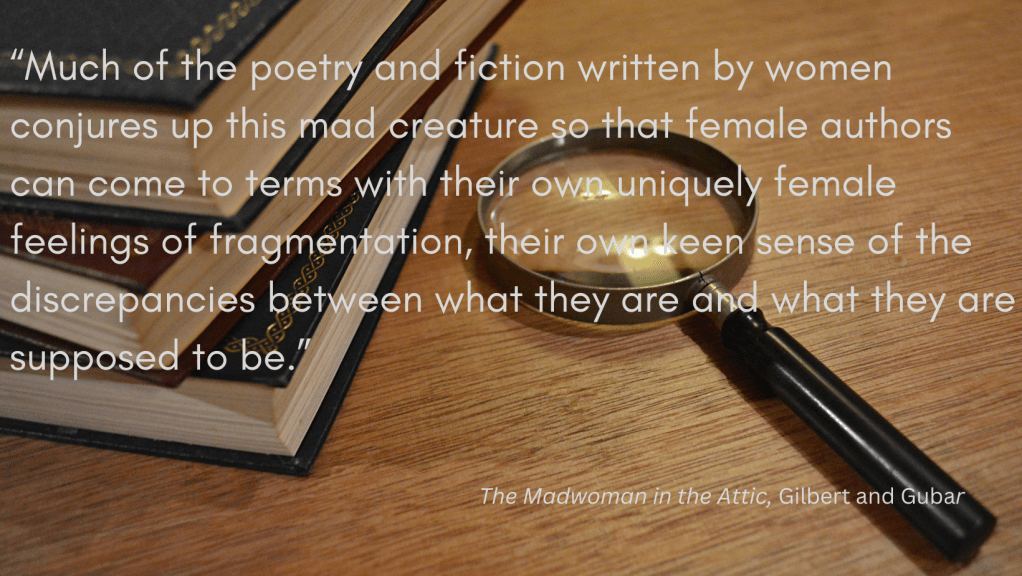
While the above description would fit a modern feminist author, it actually describes English and American writers in the nineteenth century. While the cultural mores of the time wouldn’t allow overt criticism, they were “especially concerned with assaulting and revising, deconstructing and reconstructing those images of women inherited from male literature . . . the paradigmatic polarities of angel and monster.” Gilbert and Gubar go on to say, “Examining and attacking such images, however, literary women have inevitably had consciously or unconsciously to reject the values and assumptions of the society that created those fearsome paradigms.”

What characters or authors have you read that subvert ‘fearsome paradigms’ of patriarchy? In what ways?

While fighting for authentic experiences in our own lives, it is empowering to see ourselves reflected in the pages we read for enjoyment and enlightenment. Not images created by someone else that vilify those who dare buck the system.

Does your life, your existence show discrepancies between who you are and who you are ‘supposed’ to be? Are you somewhere in the middle? How does that feel?


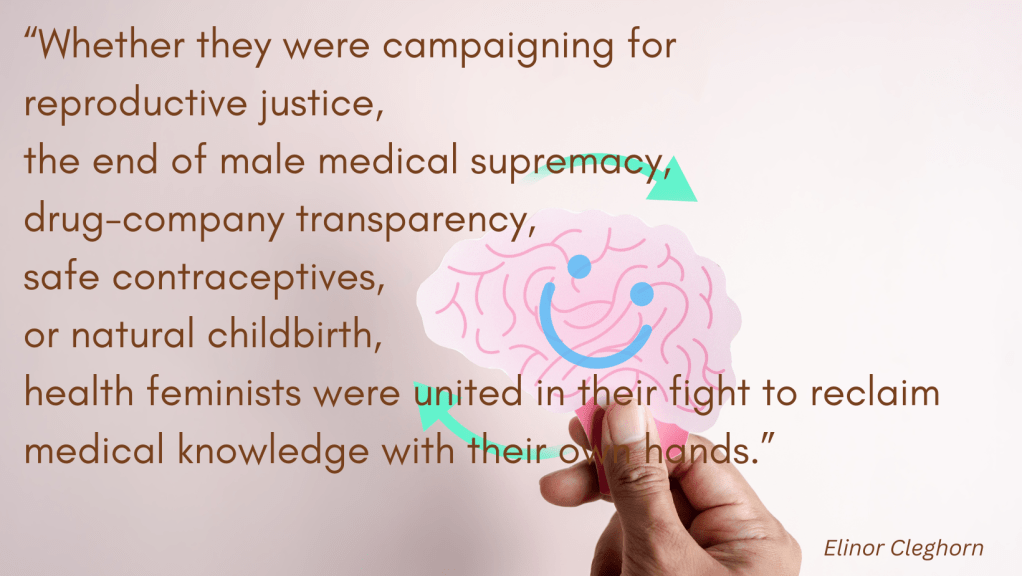
Self-help. While the initial image that comes to mind may be a busy mix of paperbacks and spiral-bound workbooks on a bookstore shelf, this was actually another field in which women subverted the system from the inside out. It was at the crux of a “giant upsurge of interest in women’s health care.” (Cleghorn 283)

In their 1973 book Witches, Midwives, and Nurses, Barbara Ehrenreich and Deirdre English said that “every effort to take hold of and share medical knowledge is a critical part of our struggle.”

Self-Help has somewhat morphed into ‘self-care’ these days – but only in the truest sense of the word. In real activism and attention to policies as well as true self-work and growth – not merely beauty routines and out-priced treatments.

How do you take care of yourself?

In what ways do these acts help you choose yourself over what society says is the way to be?

Can you identify one place you could help yourself more? How will you do it?

Can you identify one way YOU subvert the system of motherhood society has set up for us?

Standard
mother vs self, Write to Heal

Upside-Down Paradigm

An ancient symbol of Hinduism, Adi Shakti, represents the sacred feminine. Her four symbolic weapons represent primal creative feminine power. The numerous weapons reflect the balance each individual female must make between woman and mother.

Not only is this a potent reminder of the balance women have always had to seek, but the innate and sacred power within us.

In fact, I’m all but convinced that women are so strong that Satan tried to set us up for inferiority for all eternity. When he chose Eve as the recipient of his tempting invitation in the garden, which he knew would enact the chain of events leading to (hu)man’s fall from grace, he did so with the full intent that the full blame would fall on her. She ate the forbidden fruit. She offered it to Adam. She instigated the break from God’s will. Never mind that he set her up. Thousands of years later Eve still bears the blame.

Childbirth was apparently meant to be painful, but the intensity ratcheting up a result of Eve’s transgression. Does this increase in pain (ie bad, negative) also lessen or taint the power of childbirth? At least in the eyes of male biblical scholars who punish the evil woman with it.

[I do find it interesting that Mary, the mother of Jesus, has been referred to as the ‘new Eve’, undoing the advent of sin ushered in by the first woman by bringing the life of her child – God’s child – into the world. Not to get too theological, but it does encourage me that perhaps the patriarchal tide will be spiritually stemmed – which many would find completely surprising coming from the Catholic Church!]

Another indicator of women’s strength is the fact that patriarchy pits us against each other. In our previous module, Propped up by Patriarchy, we started to explore this idea. That, in order to play by patriarchy’s rules, to achieve success in that paradigm, we often must out-play or cast out our female ‘competitors’.

A major reason Sarah McLachlan founded Lilith Fair was to fight the idea of record labels and promoters who often said, “but we already have a girl.”

It is the paradigm of patriarchy that there’s limited room for females in that space. At least a most favored or powerful one.

This idea is present in fairy tales even.

Snow White.

Historically, the Queen is an evil, hated character. But, “in the patriarchal Kingdom of the text these women inhabit the Queen’s life can be literally imperiled by her daughter’s beauty.” (The Madwoman in the Attic, Gilbert and Gubar) Is the Queen simply responding to the threat of her own demise? How devastating that her own power and vitality can’t exist alongside that of her burgeoning daughter.

It is not the men who create the ideal stereotype who endanger these women, mothers – at least not overtly. They’ve set the board for women to knock each other down.

In an article by Angie Hunt cited in the first module (Misguided Archetype), Kelly Oddenweller says “In some cases, [the ideal moms] are mothers who embody what our culture believes is a good mom and yet among mothers, they are treating each other very negatively.”

It is not that we live to tear others down; such attacks or negative attitudes come from insecurity. Fear of ‘looking bad’ or being less than fuels such animosity. And no woman I’ve known longs to be perfect or drive themselves into lunacy achieving insane standards.

No woman created the ideal mother.

Men, society encourage this to keep us from achieving our true power.

If we look back to Adi Shakti . . .

“Many of you will feel you don’t have the space or energy to pick up this sword, to recapture the true meaning of health, peace, and happiness. I argue that you don’t have the space or energy not to.”


Has society made you or your ways of being feel weak? How so?

  • Reflect on these instances, either one or one at a time.
  • What about these moments actually showed strength? Flip the paradigm and find the authenticity of your personal way of doing in that instance.

Where do you take up your sword?

  • Do you feel the upside down quality of the paradigm and try to operate outside of it? How so?
  • If you haven’t yet or can’t think of a time you did, find one now that, going forward, you can flip to your advantage. Write on how you’ll do things differently in that instance.
  • Do you carve out time and space for you as a woman? Does doing so feel like a fight?

What is your relationship to the shield?

  • Do you revel in protecting and caring? Is it an honor? Or a burden? Sit with this in writing for a few minutes.
  • Do you find it challenging yet rewarding? Or do you feel it is thrust upon you (at least this version of it) by the misshapen paradigm?
  • Reflect on ways you can wield the shield to best protect your version of motherhood.
Standard
mother vs self, Write to Heal

Sharp Contrast of COVID

In March 2020, the Atlantic proclaimed COVID-19 a ‘disaster for feminism’.

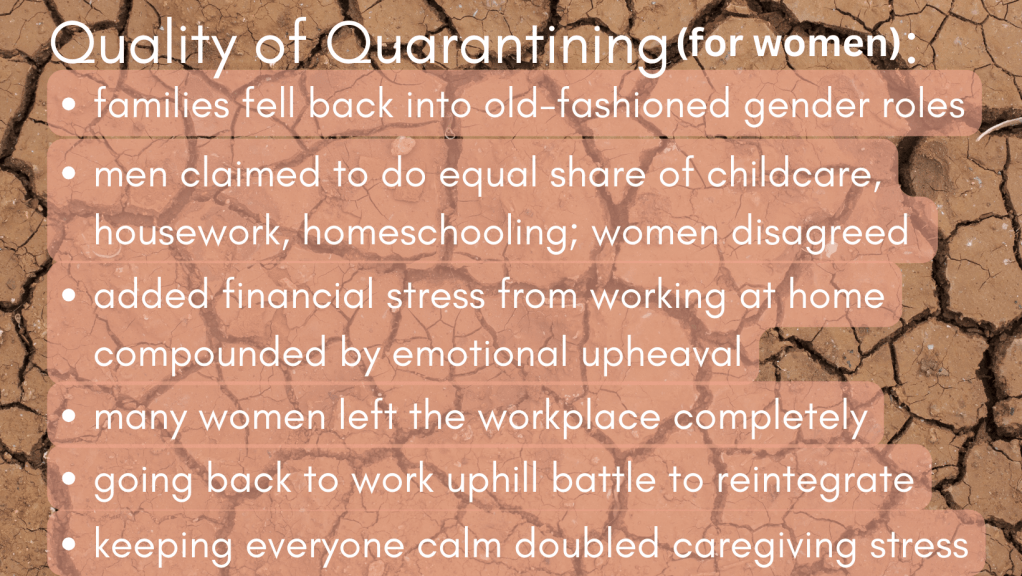
Most of the added labor created by dining rooms turned into classrooms and kitchens into childcare centers fell to women – not because they were the sole caregiver, but due to . . . outdated gender norms? And the added stress of overseeing remote learning brought into stark relief not only the difficulty of teaching, but our nation’s exploitation of school systems as childcare. It emphasized the lack of actual options mothers had. Pandemic conditions also exacerbated the fact that women especially don’t have jobs that support or flex with parenthood.

9 out of 10 working mothers said their mental health had been negatively affected by school closures

2021 TUC survey

A sobering realization, becoming increasingly clear to me, is that . . .

Bridging the gap, between where our support systems are currently and where we women need them to be, will only ever occur when women, likely mothers, force the movement themselves.

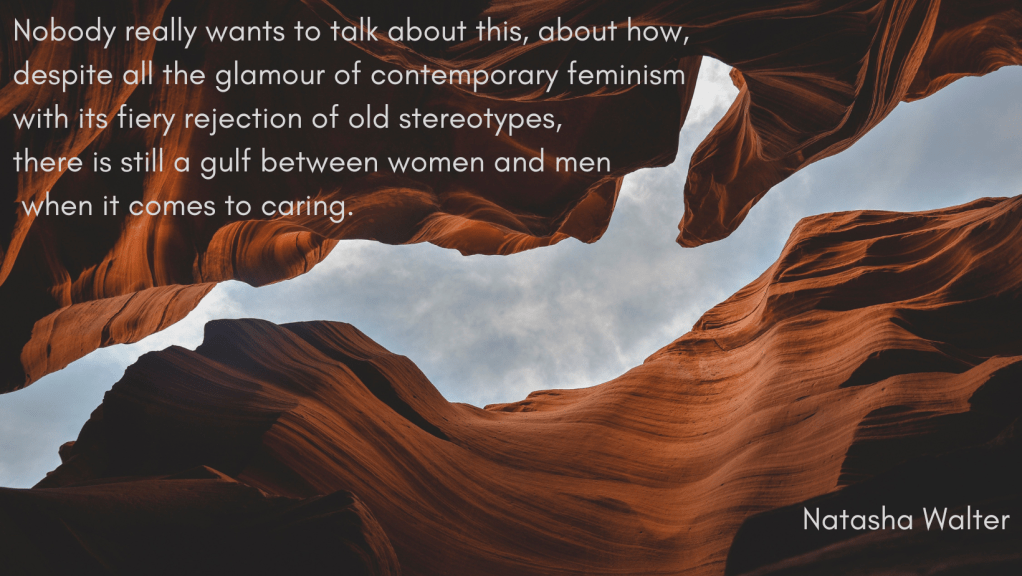
You don’t get any fame or followers these days for banging on about the second shift or the feminine mystique, so who wants to be associated with that kind of feminism today?

Natasha Walker

And why not? It obviously still needs to be talked about. My college freshman’s philosophy final had an essay prompt discussing Simone de Beauvoir and it startled me to see how misguided her interpretation may have been! (I didn’t push the issue because I wasn’t going to reteach an entire semester’s worth in the swiftly closing window she had to complete her essay)

Many young women I have spoken to seem to consider ‘feminism’ as a dirty word. Because they feel its usefulness has been worn out? Because they don’t agree with all tenets of every sub-movement? Because they don’t hate men?

The belief that women deserve equal opportunities and specialized options tailored to their current situations and leveled up as conditions equalize – is not a dirty idea, movement, or revolution at all.

COVID exacerbated a lot of what was already there. Now we all need to recover.


COVID Confidential

What was your COVID experience like?

  • Were you working? Did your employment situation remain the same or change? How?
  • What was home life like?
  • Were your children involved in an educational program? What did that entail for you?
  • What fears did you have?
  • Were there any positives about lockdown/pandemic? For you? For work? Family?
  • What did COVID shine a spotlight on that did NOT work about your life – either something that changed for the better or something that got so bad it really stood out?
  • Did your experience highlight any systems that were failed or broken in your life?
  • Is it possible to brainstorm ideas for how those might be improved if they still affect you?
Standard
mother vs self, Write to Heal

No Money, Mo Problems

“Comparatively few people realise the long hours of monotonous unrelieved domestic drudgery needed to keep her home and surroundings clean and wholesome, to buy and prepare food, and to attend to the manifold wants of her husband and children in sickness and health.  Fewer still appreciate fully the effects on a woman’s health and mental outlook of the incessant struggle needed to stretch an inadequate income to its utmost limits, and of her restricted environment and the scanty opportunities for recreation or social intercourse during the small amount of leisure she is able to snatch from her daily toil.”

Dame Janet Campbell gave this description of the mother’s experience in 1933 in the Working Class Wives Health Survey in England (cited in Under the Radar). While this isn’t the exact situation of every mother in present-day America, there are alarming similarities

In the 1990s stateside, Leslie Lehr says,

“Since I worked at home, I also wrote for the PTA newsletter, volunteered in the girls’ classrooms, and chauffeured them across the city for playdates and ice-skating, softball and violin. This was all good and fun and worthwhile. I wanted my girls to enjoy everything I had missed when my own mother was working. Yet everything my mother complained about during the second wave of feminism was true. We needed childcare and parental leave to share the burden. I showed Drew financial charts of what my caregiving time would be worth in dollars, but it didn’t make any difference. Without money, I had no power. And none of his respect.”

Not all of us have partners as exacting as the first excerpt or as dismissive as the second, but certain parallels remain.

Even in 1933, women who had been bookkeepers and typists with solvent salaries before marriage and motherhood, whose husbands were suddenly jobless due to the unemployment crisis, faced not only “desperate poverty” but pressures to “make do, tend, and provide” for their family regardless that “their ‘mental and physical well-being’ was being ‘sacrificed.'”

For the last few years of my stay-at-home status, I’ve taken to referring to myself as a financial wizard. Fortunately, I have not been doing so amidst ‘desperate poverty’, but I have become super-creative at stretching a finite amount of money to cover as many infinite financial family needs as possible.

Women don’t get enough credit for the wizardry they perform – both in money-saving gymnastics and in the completion of costly services.

Disparity and dependency are the key words when it comes to finances and woman/motherhood.

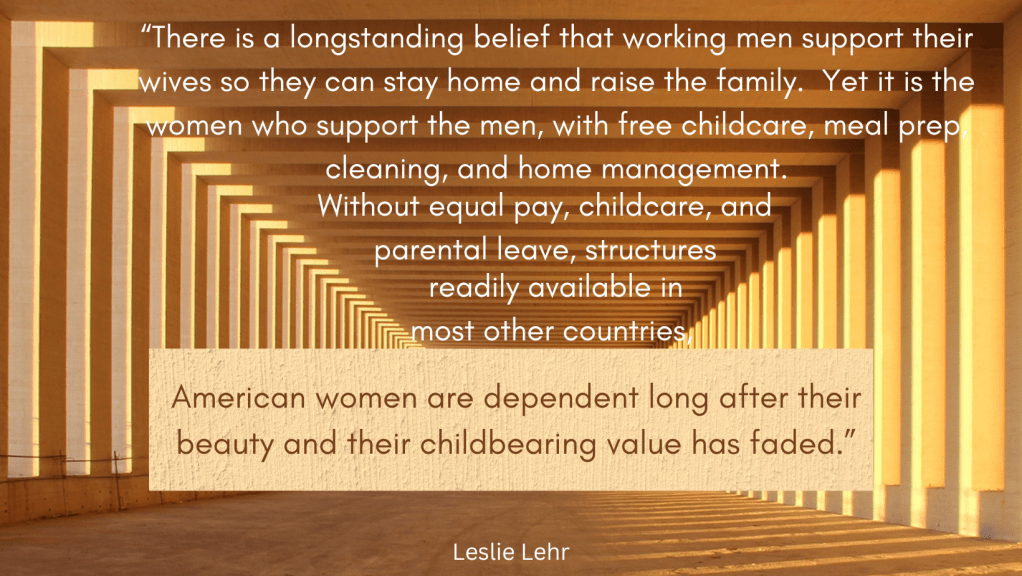
And whether it’s the systems society has upheld for us (from capitalistic values of productivity to wage discrimination to gender expectations) or the overflow in our homes (rigid relationship roles or unintentional assignment of/ignorance of duties), women and mothers are significantly impacted by finances. (Beyond the obvious fact that kids are really expensive!)


Money Talks: What does it say to you?

In your notebook, reflect on the following prompts about financial concerns:

  • When you hear the word, money, what thoughts and feelings come to the front?
  • Is it the same with finances or financial?
  • How would you describe your financial status?
  • Does money help you do anything? Does money keep you from doing anything?
  • Does money influence how you mother? If so, how?
  • Have you ever felt you had to be a financial wizard? When? How?
  • Freewrite to explore the connection between money and productivity in your life. You might start by looking at each one individually. Then explore the interplay between the two.
  • Revisit your description of your financial status. Based on your work on the previous prompt, would you change the description now?

Use the calculator in the related resources below to see how much your invisible labor is worth (besides the obvious value of priceless).

Standard
Impossible Job
mother vs self, Write to Heal

Impossible Job

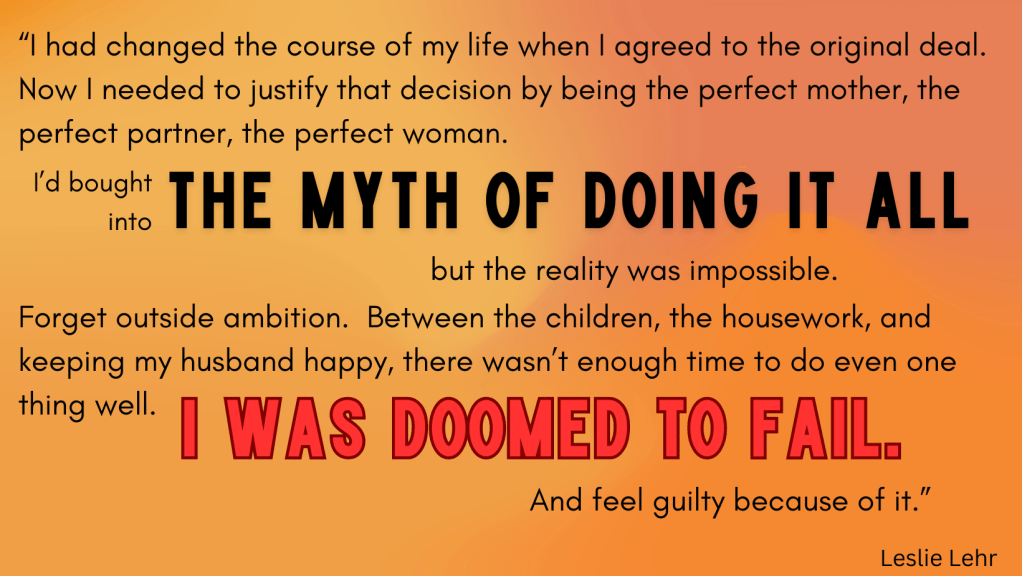
Whether consciously or not, when our needs are subjugated, it is still impossible to do everything perfectly. And whether that failure brings us guilt or utter exhaustion, it was an unfair fight to begin with.

As I neared the end of an unpaid year of leave following the birth of my second child, I saw a colleague of mine who asked when I would be coming back to work. When I stated that I’d decided to resign my position to care for our two children, she said, “Must be nice.” Insinuating, I presume, that it must be nice to have the means to not return to a full-time position. The reality of returning would be putting infinite emotional, physical, and mental resources into a full-time job that would yield approximately half of my previous income due to childcare costs. For our family, and my sanity, it made more sense for me to resign and care for my own children.

Neither situation is necessarily a winning one.

And this example illustrates much more than the financial struggles facing mothers.

First, it exploits the perfect mother stereotype; that I somehow was doing something better or worse than another mother’s decision; adding a layer of judgment to a personal decision.

Then, it pits career/employment vs. caring for children. It shouldn’t be an either/or.

Which rolls right into shared responsibilities, or lack thereof, of maintaining a household/family logistics.

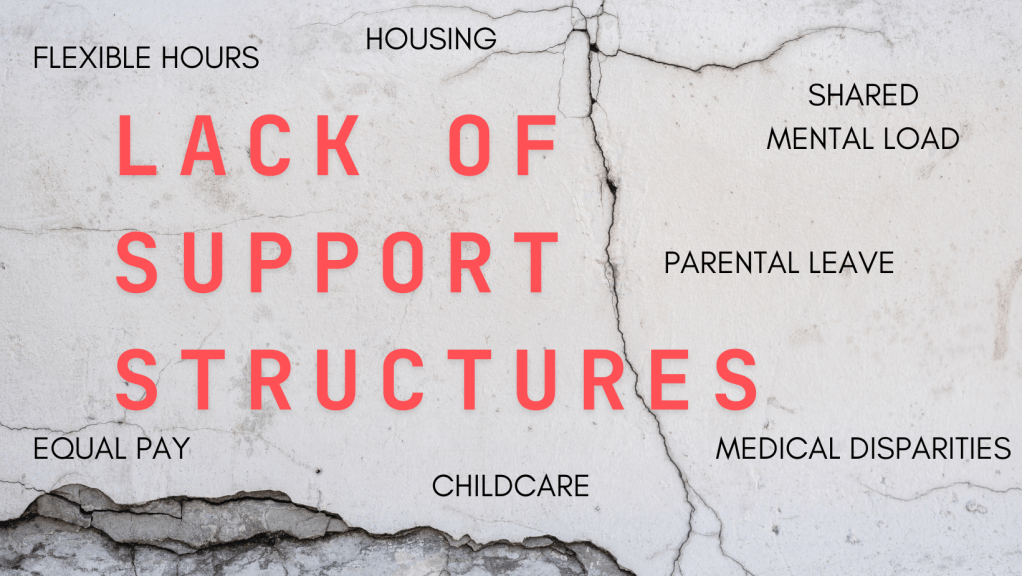
Perhaps if my employer offered reliable flexible working options, I would have been able to scale back or arrange my work hours instead of leaving.

If safe and quality childcare was affordably available, perhaps I wouldn’t have had to work full-time to receive a part-time wage while spending less quality time with my children.

Nevermind that our medical systems drop mothers six weeks after birth, shifting care solely to the infant.

What parts of the job of motherhood do you find impossible?

In the first ever Mother vs. Self workshop, we listed the duties and tasks we completed throughout a typical day.

Which of those things do you find difficult? Why?

Does the difficulty come from error in execution, a personal place for growth – or are you holding yourself to an impossible standard?

I want you to isolate two aspects of your daily mothering. One must be something essential that’s just difficult. One must be something that stems from an unrealistic unattainable expectation.

Once you have addressed these two prompts, take some time to plan for the future by writing/reflecting in your notebook. How can you plan for better support surrounding the first goal? How can you cut the second goal out of your life? What needs to shift in your feelings and self-perceptions to make either of those happen?

Standard