Her kitchen is tiny – the size of a large cupboard – but perfectly arranged and stocked so that she has everything at hand when I drop by to discuss when we might make the said gnocchi. ‘Ora!’ she insists, unfazed by the notion of improvising a cookery class on the spur of the moment. ‘Now!’ She is already spooning coffee into the aluminum Moka pot and placing it on the stove: hospitality is, it seems, the first duty for every Italian.
A Year in the Village of Eternity: The Lifestyle of Longevity in Campodimele, Italy by Tracy Lawson
A small kelly green hardbound book with a gold embossed border and square locking mechanism.
Even then, in the dire days of second grade, I failed to fill in the daily pages.
Perhaps the slot at the top of each page to fill in the date was where my ongoing cycle of expectation/failure/guilt got its perfectionist start. If only there were simply blank pages with no open forward slashes for month/day/year, maybe then I would’ve been free to record my thoughts as I wished, order them as needed.
But it was only this summer that it took me two entire days to write one entry in my journal. Now the pages were wide open, but my days were not. The stream of thoughts were interrupted when sports practice actually ended on time one evening and completed in fits and starts when swim lessons turned into extended splashing in the shallows. As parents beckoned with outstretched towels, I began to stir from my chair. But my little leapfrog still happily skidded her hands across the surface of the water even as her classmates began to leave. And her older sisters were likely still snoozing. So why not let her play a while longer and finish my thoughts?
Staying seated in that chair strained every productive perfect bone in my body.
Will another mom see me with my head down and judge me as putting my child in danger? (I looked up every few words and rose from time to time to make eye contact with her) Should I go home and check on her sisters? (I’d texted and only one had risen and started to think about breakfast) What laundry/dishes/errands need to be completed next? (The list was never-ending and would still be there when I got home)
Why did letting my child extend her playtime in the outdoors feel like a bad choice?
Because, in this instance, it meant that I got to fill the lines on my pages and my cup. Because in a daily schedule/vocation/lifestyle (ie motherhood) that society orders as self-less, it seems self-ish to take a few minutes for oneself. On a perpetual treadmill, it seems wasteful to sit and stare into space.
But just as it did my daughter well to soak up some sunshine and wonder in the lapping water, it did me well to off-load some thoughts and feelings onto the page, synthesize others, and start with a clean slate.
In that instant I couldn’t change the tempo of my life, I couldn’t create time, but I chose to step out it. I chose to do something that would allow a refreshed me to step back in.
And we all have that choice.
Whether we draw, doodle, sketch; list, pen lengthy diatribes, or long poems; write letters to someone with whom we’re angry, our younger or future self; discover truths buried deep in our hearts or a simply profound recognition – journalling is whatever we make of it and accessible to us all.
All it takes is a piece of paper, something to write with, and a willingness to be open.
This may be the exact diary I had! Minus the kelly green and drugstore sticker!
Usually I use Weekend Write-off posts as a place to share an update on my own writing, thoughts on process, or an excerpt from the book on my bedside table, but today I am excited to feature a young writer with a wise outlook. Sometimes it takes the eyes of a child to put things in perspective.
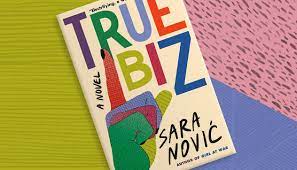
As a child, I’d spent hundreds of hours playing The Game of Life. According to Hasbro, you begin life as a phallic pink or blue peg (a fitting introduction to the patriarchy).
“Air-conditioning will give you kidney stones,” Luka said. I was gradually recalling those mundane moments – the ones that had until now given way to more traumatic memories – of a childhood governed by collective superstition: Never open two windows across from each other – the propuh draft will give you pneumonia. Don’t sit at the corner of the table; you’ll never get married. Lighting a cigarette straight off a candle kills a sailor. Don’t cut your nails on a Sunday. If it hurts, put some rakija on it.
I tried to think of a singularly American superstition. I’d learned a few from the Uncles – something about not letting one’s shoes touch the kitchen table – but those were all imported from the Old World. Perhaps a country of immigrants had never gotten around to commingling the less desirable pieces of their cultures. Either that, or life wasn’t difficult enough to warrant an adult’s belief in magic.”
What that? she signed, pointing to one boy’s lunch tray.
Pizza, someone said.
What i-s that? she said. She fingerspelled emphatically, question-marked her eyebrows. Austin understood first. With a flash of recognition, he scrunched up his face and gave her a scolding finger wag.
I-s. Finger wag, he said.
Charlie was disappointed – so ‘is’ and ‘am’ and ‘are’ just . . . weren’t?
How could a language exist without so fundamental a concept? Perhaps, she thought grudingly, her mother and doctors were right about the limitations of signing. Could you have a real language without the notion of being?
But Austin just pointed to Charlie’s hand, then made his own gesture, sweeping up from his stomach out into an arc across the room. Charlie copied the sign, but that didn’t seem to be what he wanted. She stared.
Me, said Austin, pointing to himself.
He patted his chest, then his arms, then held out his hands, flexed his fingers before her.
You, he said.
He took her by the wrists and held her own hands out before her. She looked down at her palms and understood – her being was implied, her potential thoughts and feelings coursing through her body, the names of everything she knew and those she didn’t yet, all in perpetual existence in her fingertips.
Something was missing. Where was the verb ‘to be’? How are you? What is your name? Maybe it was too complicated for beginners.
They spent the rest of the class pointing at objects around the room and learning what they were called, but this only exacerbated Charlie’s curiosity – what might the noun for ‘being’ be, and did the answer to her missing verb lie there? She wanted to ask the teacher but didn’t have any of the words to form the question. That night she stayed up searching online ASL dictionaries, endless scrolls of GIFs and line-drawn bald men frozen in sign. She looked for the sign for ‘to be’ and found several sites confirming that it did not in fact exist, but no satisfying explanation for its absence.”
Most people would probably have a hard time totally fucking up their life in under an hour. But then again, I’m not most people. I’m amazing. I’m like some kind of fuckup savant.
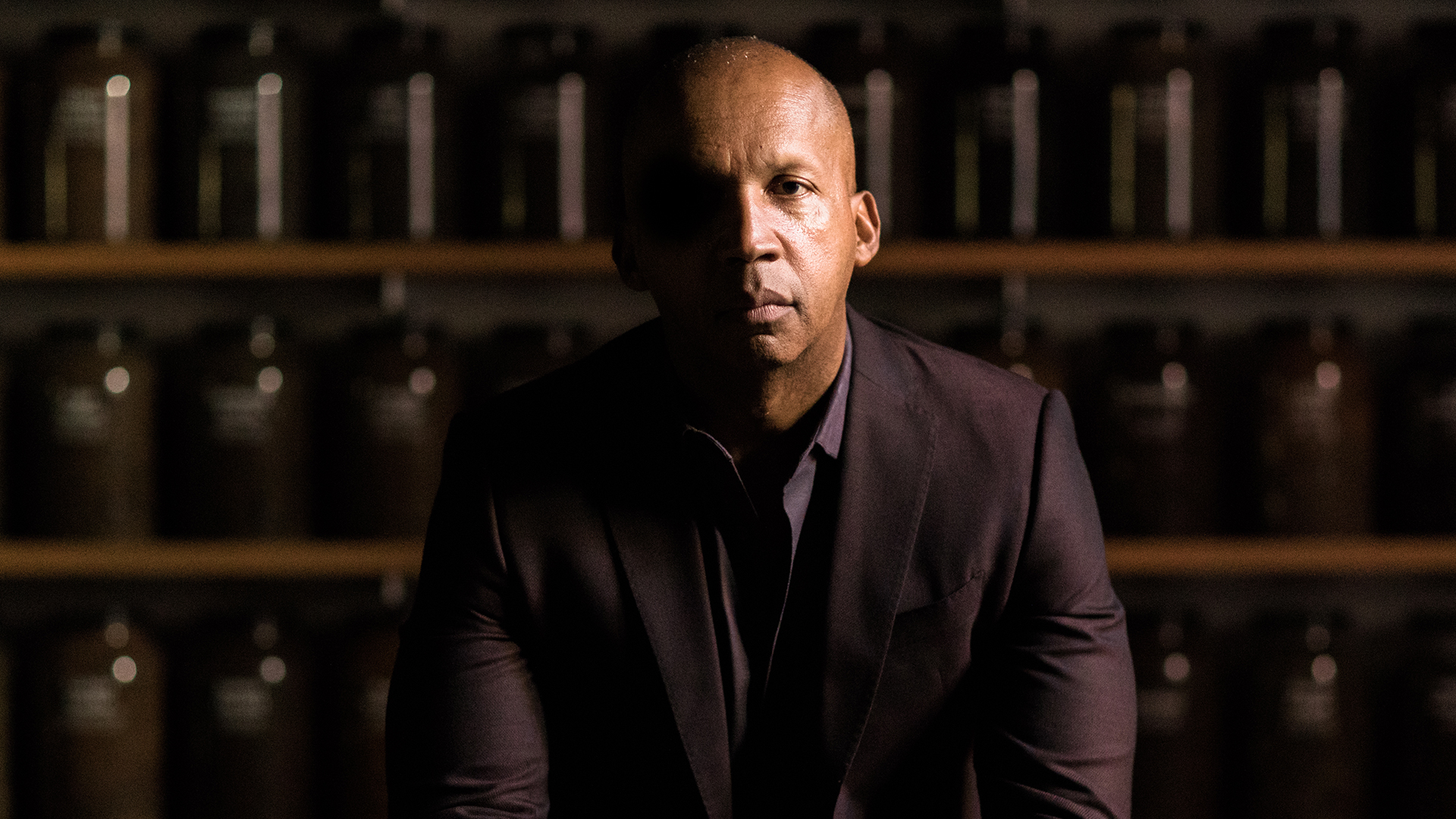
My imagination was captured by Bryan Stevenson’s work and ideas once I read his book, Just Mercy: A Story of Justice and Redemption. I was thrilled when HBO developed a documentary following his story. Fortunately, I was able to view it free of charge on their website (limited time, of course). I stayed up till the wee hours the other night, watching it once the kids were finally in bed, sobbing in silence on the couch. The stories Stevenson tells of his people, of the people wronged by this nation are so raw and real and ones, as he says, that must be told if any sort of healing and progress is to be made in our country and society.
Two quotes that hit me over the head:
In many ways, you can say that the North won the Civil War, but the South won the narrative war. If the urgent narrative that we’re trying to deal with in this country is a narrative of racial difference, the narrative that we have to overcome is a narrative of white supremacy – the South prevailed.
The Civil Rights community won the legal battle, but the narrative battle was won by people who were allowed to hold onto this view that there are differences between people who are black and people who are white.