
bleach
scrub
shave
sleep
supplement
maintain
refresh
want
need
require
refused
bleach
scrub
shave
sleep
supplement
maintain
refresh
want
need
require
refused
Stigma. Silence. Simply impossible to say the right thing.
All of these surround the topic of neonatal death, miscarriage, and stillbirth.
Tonight, a film determines to shatter all that.
Return to Zero tells the story of a couple expecting their first child, whom they are devastated to discover has died before he could even be born. It is the first feature film to tackle the uncomfortable and uncovered story of this type of tragedy.
Perhaps no one wants to watch a film with such a difficult plot, but certainly no parent wants to find themselves playing the starring role. Just as we all find comfort and empowerment in reading our story on the page, finding our face on the screen, this film should prove powerful – and hopefully therapeutic – for parents who have been silenced by the horrific events of stillbirth.
“There are no mistakes, no coincidences. All events are blessings given to us to learn from.” ~ Elisabeth Kubler-Ross
For the most part, I believe this.
Yes, we could drive ourselves crazy analyzing every bit of beef for meaning – when, indeed, it simply “may be an undigested bit of beef, a blot of mustard, a crumb of cheese, a fragment of an underdone potato” (Dickens, A Christmas Carol) – rather than a spectre of our own fate to come.
But I do believe the universe serves us up soul food at precisely the time we are starving. If we take the time to really see the menu.
Over the last four years, there have been moments I’ve really hated the concept behind this platitude. What kind of sadistic universe would send me depression and anxiety to teach me a lesson? Some would say such a struggle is meant to bring me closer to God, to trust in His care since I could not do it alone. Some would say it equips me to communicate with and possibly console others in a similar situation. Maybe it was meant to break me, to distill me down to my most raw entity to make me grateful for all I have despite all I’ve suffered. I don’t know the grand scheme of things and how I fit in. I wouldn’t be able to offer a treatment of it in one blog entry anyway.
Yesterday, though, as I listened to my priest reveal the healing power of an exorcism he’d performed (yeah, mind-blowing), I suddenly felt the pull of the universe on the strings of my soul. In thanking God for the gift of the human being in front of him, the evil harbored inside that being – whether in the form of guilt, regret, or an actual demon – was excised, freeing the person to live in love.
Now, before you sign me up for an exorcism, no, I am not possessed. Not by a demon, anyway. But as I listened to my pastor, I realized the shame and resentment I’ve harbored this long journey since the birth of my third daughter. The blame I’ve laid on myself for ‘succumbing’ to depression. The weakness I felt I exhibited by allowing myself to feel anxiety. The overall failure to be the master of my own body. The alternate guilt and anger at having such a beautiful life – aside from mental illness – and not being able to appreciate it.
So another platitude: acceptance is the first step?
I’m not sure where I’ll go from here or how much I’ve truly learned from this coincidence, but it’s a starting point. The answer, I know, has something to do with mercy – for myself.
“I pledge my commitment to the Blog for Mental Health 2014 Project. I will blog about mental health topics not only for myself, but for others. By displaying this badge, I show my pride, dedication, and acceptance for mental health. I use this to promote mental health education in the struggle to erase stigma.”

It’s not everyday that I can proudly wear the badge of my illness, but the badge above — this badge I’d slap on my forehead and parade around town.
A Canvas of the Minds is an amazing website dedicated to an amazing cause: spreading awareness of and eradicating the stigma of mental illness. A team of talented authors share knowledge, personal struggle and triumph, and, perhaps most importantly, a reflective surface to show us we’re not alone. It is a team to which I am extremely proud to say I will soon be contributing!
When my water broke at the end of my third pregnancy, it released the flood waters of postpartum depression. What I didn’t know was what else was dammed up behind that. ‘Regular old’ depression, I suppose, and most definitely, anxiety. In some ways, my life has never been better since this deluge; in others, it’s sucked eggs – big, nasty, rotten ones.
But awareness makes a huge difference in all lives – those struggling to achieve mental health and those alongside them.
So bravo, A Canvas of the Minds! And bravo to all of you out there fighting the good fight.
To everyone: please consider taking the ‘Blog for Mental Health’ pledge yourself. Do it for yourself or in support of those you love . . .
Everybody’s talking about The Sound of Music lately.
Julie vs. Carrie. Film vs. live performance. Old vs. new.
Initially I was appalled at the news of a SOM revamp with Carrie Underwood. Who could mess with Julie Andrews’ dulcet tones? I pushed it out of my head and got too busy to set the DVR. After putting the kids to bed the night it first broadcast, I wandered downstairs to my husband’s channel surfing. The remote lighted upon Carrie’s rendition of “The Lonely Goatherd”, yodels and all. Woo Hee. Bouncing and dancing and yodelling. Can’t fault a chick for that. I was thoroughly impressed. She has a lovely voice. But that’s all I watched. I wandered off in another direction.
A few days later, my oldest daughter had some friends over for a mini-birthday celebration. The movie this newly-minted nine year-old chose to watch? The Sound of Music. (original on VHS, baby!) And the four other girls who attended sat in rapt attention and sang along! My husband turned to me and said, “There is hope [for the next generation]!”
We found the televised version on-demand this past snowy weekend and that same daughter begged to watch it. The five of us squished on the couch and did. I don’t know whether it was that this new cast did such a bang-up job or if it was the sheer magic of the story itself that bore me along in its spell. I couldn’t keep from singing. I teared up when the Mother Abbess implored Maria to “Climb Ev’ry Mountain”. I finished with a hope in humanity, the enduring strength and support of family, that standing for one’s ideals will pay off in the end. My middle daughter requested to watch it again two days later when she returned from school. All three girls sang and danced around the living room as if on alpine mountains.
What is it about this story that captures our imagination?
The music has become part of the cultural canon. The refrains are easily learned and easily lodged in one’s head. Their topics and the theme of the story itself is familiar in some way or another to us all. We’ve all struggled with our life’s calling, finding a true mate, the personal vs political, facing up to or hiding from our problems. Perhaps the most enduring theme of all is that love does indeed conquer all – even amidst dire struggle and imperfect circumstances.
For me, personally, the part that really struck a chord – that point in the movie when you could’ve knocked me over with a wisp of Edelweiss – was the conversation between the Mother Abbess and Maria when she balks at returning to the von Trapp home. Maria asks, “How will I know which life is mine to live?” or some approximation of that (a line I don’t think was even in the 1965 film). The abbess (portrayed by Audra McDonald) tells her emphatically that she must go out and look for it, at which point she breaks into a soul-stirring rendition of “Climb Ev’ry Mountain”. Are you supposed to have life epiphanies watching network-television rip-offs of classic cinema? I had a moment.
This conversation, these words, the Mother Abbess’ exhortation, the orchestral arrangment – they spoke to me of things I’d forgotten. Things I’d known, but forgotten to pursue. Things, necessities that have been dulled by constant use or made commonplace by their very existence. Things I learned as a child – most notably when I was presented with a cross inscribed with its own exhortation: “Christ is counting on you to search.”

I may have been like Maria, sulking behind the abbey’s walls because life hasn’t turned out the way I’d expected. Maybe I’d forgotten how to climb those mountains – or even how to try. I’d gotten lazy in my search for a dream that will make me want to live and love it everyday of my life. And I’d forgotten to listen for the sound of music in the hills all around me.
The Sound of Music (1965) was playing on the hospital TV as I labored with my third daughter. I vetoed my husband’s choice of some flavor of Law and Order, saying I’d be witnessing enough blood and gore that night. Somewhere in my subconscious, I hoped it would soothe and inspire me. I can’t say that it necessarily did, but I can’t help but think that, now, it’s brought me full circle. That labor signalled the beginning of one of the roughest times of my life. Perhaps the Mother Abbess’ exhortation has been sent to me again to snap out of it and get out and climb.
“We have to let go of what the world wants us to hang onto and hold onto what the world wants us to let go of.”
The wise deacon who gave the homily this Sunday morning spoke these words.
But how do we operate within this paradox?
Why is it always about balance?
How much of it is our attitude and how much is our chemical make-up?
What miracles will ‘heal’ us if we believe?
This post raised similar questions.
I have struggled for most of my adult life with borderline depression and probably a little anxiety, too. These things, however, have not existed in real life like I would have imagined they would.
 I had previously figured that depression was reserved for people who had SOMETHING to be sad about. And those poor saps wouldn’t be able to get out of bed each morning. They would cry constantly. They would probably resort to maniacal meth usage, would wear all-black and would get swoopy haircuts, but would ultimately not really wash or style their hair much, anyway.
I figured that people who had anxiety would be nervous wrecks 100% of the time, would talk really fast, drink too much coffee, talk incessantly about governmental conspiracy theories, and would be all twitchy and weird.
Most of that stuff is dead wrong. For me, at least. Except, I could get into a…
View original post 696 more words
My friend is always sending me notes saying she wishes we could share a cup of tea. Or she’ll e-mail and say we need to schedule a phone call with a simultaneous cup of tea. She’s someone who would darken my door every afternoon for tea and sympathy if I weren’t in her kitchen first. If she didn’t live 585.9 miles away that is.
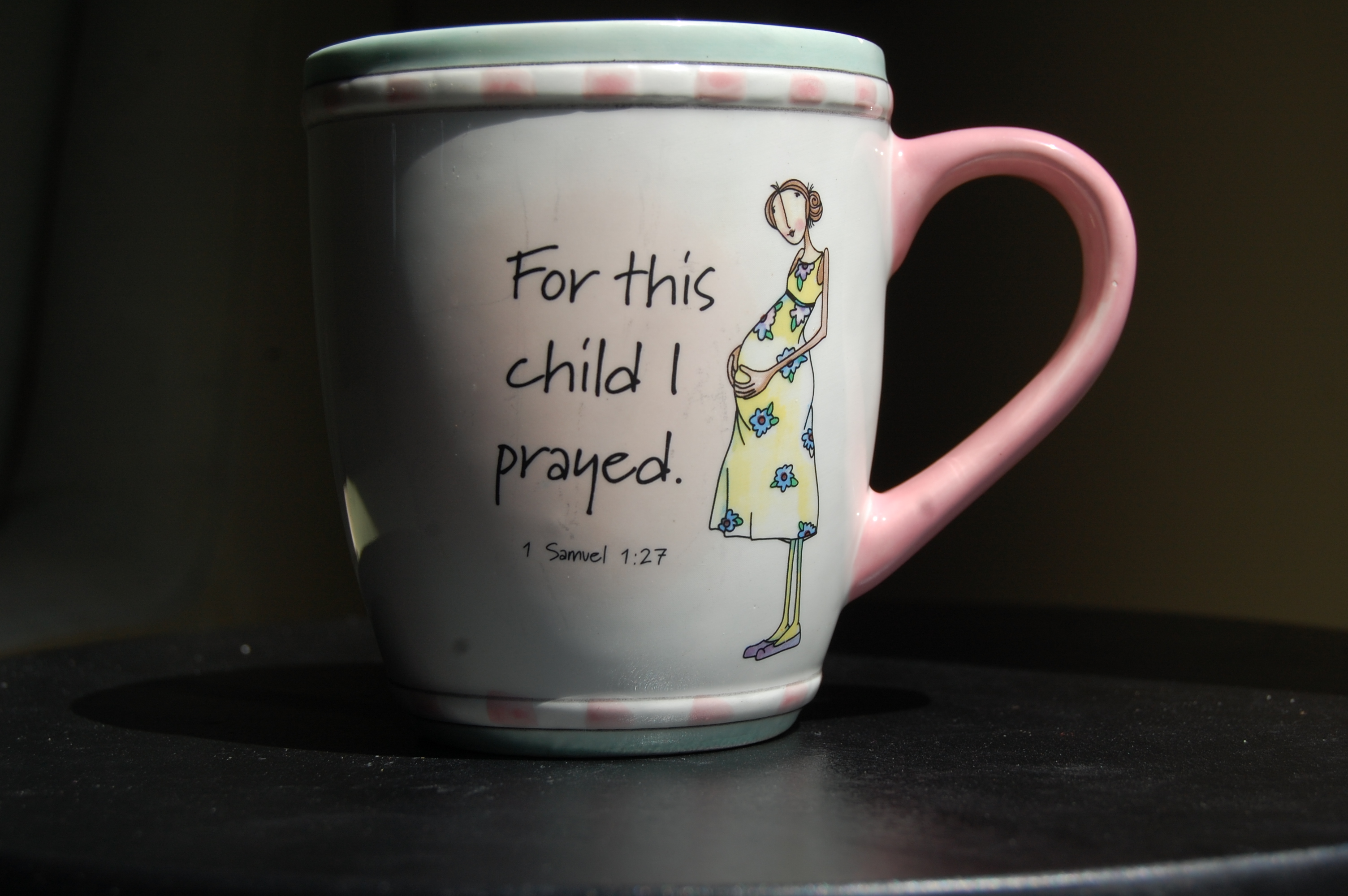
When we met in a charming seaside town midway between our homes for a spa weekend well into my third pregnancy, she said nothing of the fact that I couldn’t relax, that I was cynical, that something seemed ‘off’. Instead, she gave me a mug to celebrate the impending addition to my family that said, “For this child I have prayed.” When I told her what a sham I felt like because I hadn’t prayed for this child; that [she] had been gifted to me undeservingly, she said, ‘well, you’re going to pray for her now and when [she]’s here, aren’t you?’ So matter-of-fact, so trusting, so unfailing in her regard for me as a person, a mother.
And when that something stayed ‘off’ far past labor and delivery, she gently and honestly broke the news to me, a headline I’d written but couldn’t read. She’d been featured in a similar newsreel only a short time earlier. She knew the signs, saw the struggles that someone who hadn’t been through them might have missed. I gave her a firsthand account of postpartum depression without knowing what I was describing. She saw herself in me.
And she saved me.
She listened to the horrible thoughts I couldn’t share with anyone else for fear they’d find out what a despicable mother I was. She became a sounding board for all the worries running through my head. She was my font of information on all things postpartum. It was she who finally convinced me I needed to get help. It was she who urged me to remove the stigma I’d attached to medication. It was she who helped me see I wasn’t the only one who’d ever felt like a failure as a mother, a weak human being, a seriously flawed individual clinging to the sharp edge of a cliff.
Still, I fought her for a good part of the way. I didn’t want to see myself in the mirror she was holding up to me. I didn’t want the help she offered because it meant giving in.
But she didn’t give up on me.
She told me the things I didn’t want to hear – and kept doing so until I listened – because she wanted to help me. She forced me to get the help I needed. She didn’t want to see me suffer the same fate she did; she loved me so much, she wanted to shield me from it.
Like every child needs a trusted adult, so every one of us needs a confidant, a friend in shining armor; in my case, a faithful warrior, devoted to the cause of saving my soul and that of my family. Someone who won’t give up on you even when you turn away because she’s showing you the dark side of yourself – even if you take it out on her. Someone who sees it through to the bitter end of your acceptance and seeking of help, the start of your journey to healing. Someone who uses her own empathic experience to lovingly see you through the darkest days of yours.
They talk about warrior moms. Moms who fight for their children, their needs, their causes. Moms who fight for themselves and their survival. There are moms who fight for those who stand beside them, who pick them up when they fall, who drag them along when they stumble. And it’s usually when we’re so bloody and battered, we can’t even think to ask for help, can’t even see we need it. These moms lift us up in the midst of their own struggles. They are the shining light on the hill. Without them, our own lights would be extinguished. All hail the friends, partners, mothers who battle for the survival and triumph of those face down in the trench.
I’d be nothing without mine.
Don’t be alone. Don’t do it on your own. Accept a little help from your friends.
As the sun rose hours after the baby’s birth, I was fading fast. I had slept maybe two hours of the past 24 and didn’t have the strength to eat my breakfast. The nurse suggested the baby go to the nursery, I drink a pitcher of water, eat, and sleep. I did and woke up a short while later feeling a bit more human. When my husband went to retrieve the baby and came back empty-handed, the feeling was short-lived. “Where’s the baby?” I asked, panic creeping into my voice.
“Oh, her bracelets fell off, they’re just putting on some new ones,” he answered, easy-going as ever, which could’ve been an indication of my overreaction but went unheeded. I went through every possible combination of events I could think of: were the bracelets in the bassinet, did the nurses take her out of the bassinet, were there any other babies in the nursery? What I was really getting at was: how will we know this is our baby? My husband, thinking with a rational mind, told me it was fine; they were giving her new bracelets to match ours and were checking the serial number on her Baby Lo-Jack, the nickname for the security device affixed to all babies in the hospital. Still, I balked.
I worried for months, a year after. I had moments of clarity: an expression on her face as she gazed up at me, identical to her oldest sister when she was an infant; her tiny hands patting me on the back as she wrapped me in a hug; shadows of family members in baby photos. But always, when I allowed it to seep through, that dark thought,
I was afraid that if I loved her too much someone would come to take her away from me. The licensed social worker I had started seeing suggested I felt that way because things – the pregnancy, labor, delivery, and recovery – hadn’t gone according to my plans.
It wasn’t until we sped down the highway one day months later that the truth caught up with me. As I saw the family resemblance written all over my baby’s face, I realized that I hadn’t thought she was mine because I still hadn’t accepted the fact that I was having a third child. I hadn’t sanctioned it. It hadn’t gone according to plan. I was still grasping for some sort of control that I hadn’t felt since being plunged into the chaos of three children awash with my own anxiety. Did I not see the resemblance because I didn’t want to see it?
Yes and no. Or yes, but not totally. It wasn’t my wounded psyche that was totally to blame. As my therapist pointed out, irrational fears are another symptom of postpartum depression. I more than filled that box on the survey. It was a strange split, though. Rationally, I knew she was mine and accepted her with the unconditional love of a mother. In the stark predawn hours of loneliness or moments of love bordering on too intense, my irrational self would pull back, fraught with worry and dread.
My husband irresolutely assured me she was ours. “What do I need to do to prove it to you?” he asked. “Do you want to get blood tests done?” “She’s ours, Jen, I know it.” “I was right there beside you when she was born.” To which I responded, sometimes verbally – and later as the argument wore out, silently – “But that was before she went to the nursery and lost her bracelets.”
I couldn’t shut off the stream of irrational thought and worry – even though I knew there were holes all over my argument. I felt silly voicing my concerns, but wanted other people to tell me how much she looked like her sisters or me or my husband. I needed validation that the ‘voices’ in my head were wrong. I couldn’t defeat them myself.
And I didn’t. With love and support from my husband, my fabulous social worker, lifestyle changes, the passage of time, and eventually medication, the irrational worry stopped. It became definable, ‘boxable’, and I shut it away. I don’t think it’ll come back, but I think I’ll always remember how real and frightening it was.
Is there an easy way to cut a mango?
I tried the avocado method. Cut in half, drive knife blade into pit, rotate blade quarter turn, and pull. Not so much. That pit was not having it. Didn’t budge.
I tried digging it out. That just hacked up the fruit flesh around it.
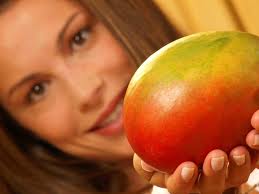
I did not have such warm feelings toward my mango.
I finally sliced the fruit away from the core, apple style.
Except my hands were completely covered in goo from the pulp most of the fruit had become.
Goo + santoku = not the optimal chopping situation
As three small children pulling at your pant-leg while wielding said santoku is not.
Giada’s fish tacos with mango salsa be damned. I was ready to fling that mango out the window or smash it against the wall. I’d have squeezed it in my fist if only it weren’t so damn slippery.
No, you can’t have fishies right now.
Mama’s trying to concentrate.
No, fish tacos aren’t disgusting.
Yes, I’m putting that green stuff in them.
How the hell do you cut a *&^%*(# mango!?
Potatoes, mangoes – whatever I’m chopping, preparing dinner is always a trigger for me.
It used to be because I hadn’t planned a meal. Countless trashed produce and late nights cured me of that. Now I plan an entire week of meals before food shopping. So that’s not the problem (well, that’s a PIA in and of itself, but that’s another topic for another day). I’m toast by the time dinner prep rolls around. I’m getting hungry myself. I’m tired. The sun is going down. Daddy isn’t home yet. That pot of anxiety boils up pretty quickly.
Revisiting the feelings elicited from chopping potatoes, things have changed. Potatoes are dense; mangoes are much softer, pliable. Potatoes are born of dirt; mangoes have a hard core with a soft surrounding (oh, there are so many metaphors for a post-baby body with that one). Potatoes are a cold-weather crop; mangoes thrive in a tropical clime.
I am a warmer, softer person than I was post-partum. I may not have tight abs, but I do have an inner reserve of power from which to draw. Like slicing through the pulpy flesh, a lot of things are easier, but not all (removing the pit).
I still get pissed off at the distraction and whining as I’m wielding a large, sharp knife, but I no longer want to cut off my fingers to earn an escape to the emergency room.
I’d call that progress.
And I’d call mango salsa on fish tacos freakin’ delicious if it weren’t so hard to chop.
* Against my better judgment, I’ve included the recipe for Giada’s fish tacos. Proceed with caution – and use sour cream instead of wasabi and crème freche, unless you like adding more stress to your life.
** I’ve also included a link to the proper way to cut a mango (There is a mango.org – who knew? Video is worth it for the entertainment value alone). I think I’d still proceed with caution.
A couple of weeks ago I made the mistake of calling in to a radio talk show. Stupidly enough, I thought the host, a contemporary of mine in age and many ideas, and I would be able to have an intelligent dialogue. I had forgotten the talent that radio hosts have to turn every conversation on its ear until it follows the tack they had intended for that evening’s show.
I called to counter that ridiculously inflammatory article ‘timed’ to coincide with Mothers’ Day. I said that the issue was not whether this woman should be breastfeeding her child, but that this magazine had the chutzpah to title their article in such a way. As if mothering isn’t a hard enough job on its own, as if women don’t constantly question themselves, and as if some of us don’t already feel tempted to attack others’ decisions to validate our own. There is no need to create divisiveness where there should only be support and camaraderie. For when it all comes down to it, aren’t we all just struggling to make it through as best we know how?
The topic of blogging came up, the host wondering about the now infamous woman from the cover photo’s own blog. I said that while I hadn’t read it, blogs can be an enormous help to other readers going through similar experiences. He said, yes, I can see if you or a loved one are suffering from some rare disease and there is a support group or information on a blog, but a blog on mothering? Sharing your ‘fresh’ experiences on something that has been done down through the millennia?
I felt the fire rise up the back of my neck, but I knew the conversation was over.
This man does not know I am a mother. Who blogs. Who receives enormous benefit from it as I come to grips with the person left in the wake of postpartum. Who has felt like less of a woman because I didn’t do X, Y, Z with my babies and children like I knew other moms were doing. Who has suffered in misery thinking I was so completely and totally alone. Like a failure. Who shares my story in the hopes that other women will not suffer as I did.
And he could never possibly understand.
And that, I understand. This post is not about attacking him. Everything’s relative, this I know. My own husband said, Jen, when he’s a father and watches his wife go through it, he’ll know.
But there are many people who already know. The women – my aunts, my grandmother, my friends, my cousins, women wrangling their children at the grocery store, women struggling to drop their kids at daycare and get to work, women all around the world – with whom I’ve shared my struggles. It took me a long time to admit I wasn’t the perfect mom I tried to portray. But when I did, my confessions were met with nods, knowing smiles, affirmations, similar stories. There is a special bond with these women. A comfort. An unspoken feeling that they’ve got my back – if for no other reason that they’re not going to judge me because they’ve been in my same position.
That’s what women need to share – not the stepping on each other in the struggle for perfection, but the imperfection. That’s the only way we can shatter the idea of ‘the perfect mom’ and end the war for our self-esteem and self-image. Because who the hell are people trying to sell magazines and get radio ratings to tell us if we’re mom enough? That’s up to us and our fellow moms, the women who are all in this together.

 Chopping Potatoes