May is Mental Health Month, Mental Health, motherhood, postpartum depression

Retreat

When the world got to be too much, including my little corner of it, I used to retreat to the bathroom.  It was usually just as supper was about to start, food laid out on the table, cups of milk poured, husband home from work – Mom sitting on the toilet sobbing soundlessly with an unnamed sadness and inability to cope.

My husband would give me a few minutes, then call softly through the door to see if I was all right.

You would think that would be the easiest part of the day, having made it through ten or more hours of sole care giving, dressing, feeding, getting out the door-ing.  A time to sit with my family and enjoy the shared responsibility of parenting with my spouse.  But just like a toddler who does not do well with a change in caregivers, so I was not transitioning well.  We were all getting hungry and tired and my head couldn’t take one more shrill scream or pop of sound.

At first, a friend didn’t recognize this scenario as one resulting from my postpartum depression.  She got angry, she said, irritable, wanting to lash out when she couldn’t abide the situation at hand.  She wanted to fight vs. my flight.  Both natural responses to elevated levels of stress; to the wooly mammoth of parenting postpartum.

The word retreat itself is an interesting choice.  It has wartime connotations, as in run away from the enemy, give up the fight, fall back to a place of safety, behind that line that should not have been crossed.

When the bathroom won’t do anymore; when they’ve figured out your hiding spot; when you can’t while away your tortured existence on a germ-infested throne anymore – what then?

throne

At first, I turned to my midwife, then a licensed social worker, then lifestyle and diet changes, then medication.  I don’t want to lock myself in the bathroom as much any more, but I still need a respite to get my wits about me.

As a teenager, it was a requirement to attend a retreat as preparation for Confirmation.  In college, I attended many enriching weekend retreats as part of peer ministry.  In preparation for marriage, my husband and I went on an “Engaged Encounter”.

Where are the programs for mothers who love their children but want to retreat?  Who have lost themselves and their faith amidst the everyday beat-down of the job?  Who know what a blessing their children are but just can’t feel it for the pressure pushing down on them?  Who found their depression only now because they must function, they have no choice to go sit in a corner and listen to The Cure until life seems better.

Children bring us out of ourselves.  As they say, it’s the only way you can feel your heart beat outside yourself.  They teach us selflessness and caring for others.  They give us a view of the future, of possibility.  But in giving our all to them, it sometimes feels as if it’s the end of our possibility.  It doesn’t seem like there’s room for anything else.  A feeling that often makes me want to retreat.

Standard
anxiety, Identity, Living, May is Mental Health Month, Mental Health, postpartum depression

The Blue Chicken or the Anxiety Egg?

Which came first? DownloadedFile

It’s the proverbial question.

Did my anxiety beget my depression?  Or am I worried how things will turn out because of my depression?

Worry-wort.  My own worst enemy.  Always running things through my head.  So sensitive.  Beating a dead horse.  All of these are terms used to describe me at one time or another.

I do have a tendency to perseverate.  I can’t let things go.  I worry them like a dog with a bone that is impervious to bite marks.  It’s not productive.  It’s not reassuring.  It’s a form of torment actually.

In college, after my roommate had left for the weekend, I would lie on my top bunk and stare out the window, wondering why I couldn’t go out and round up new friends as easily as everyone else seemed to be doing.  I would watch the sun set, thinking how alone I was.

As August neared its end one year, I bought a thin volume entitled, Why Are You Worrying?  As the cashier plugged my purchase into the register, he asked, “Are you a teacher?’  He said he’d bought the same book at the start of a school year once too.  While he may have bought the book for the same reasons I did, no self-help book could help me turn off the worry.  I triangulated every possible scenario in the classroom; how I would put out fires, cut off conflicts at the knees before they stood up, squash rebellion before it started.  But you can’t plan for every permutation.  The very nature of education is the X factor.

And this nervous nature – is that what plunged me into depression when life became so overwhelming as a mother of three?  I couldn’t control anything, didn’t understand and couldn’t fix the feelings I was having, and felt really crappy as a result.

Or is it viewing life through the dark glasses of depression that makes me see the shadows of worry in every corner?

It’s all tumbled together in the dryer at the highest setting anyway.

The only ‘good’ thing about all of it is that what I thought was a flaw on my part, a weakness, an inability to achieve, connect, push myself, believe in myself, is really anxiety.  I’m not this wimpy, pathetic, sad sack.  I have an excuse!  A reason, a rationalization, a disease.  Good for me!

So chicken or egg – it’s all part of the cycle of life.  All I can do is try not to get scrambled.

Standard
Living, May is Mental Health Month, Mental Health, motherhood, postpartum depression, Recovery

Wisdom in a Cup of Tea

My friend is always sending me notes saying she wishes we could share a cup of tea.  Or she’ll e-mail and say we need to schedule a phone call with a simultaneous cup of tea.  She’s someone who would darken my door every afternoon for tea and sympathy if I weren’t in her kitchen first.  If she didn’t live 585.9 miles away that is.

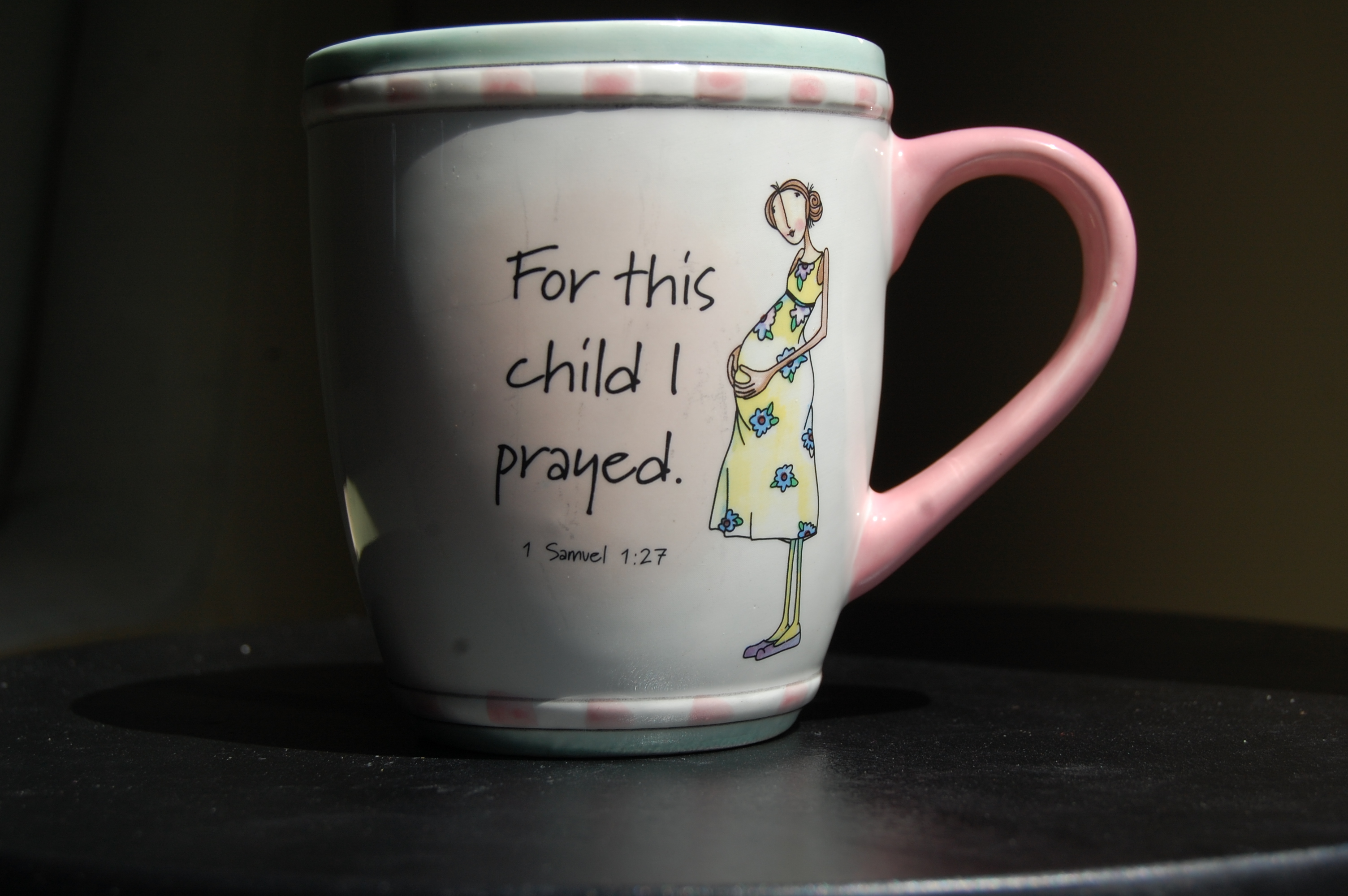
When we met in a charming seaside town midway between our homes for a spa weekend well into my third pregnancy, she said nothing of the fact that I couldn’t relax, that I was cynical, that something seemed ‘off’.  Instead, she gave me a mug to celebrate the impending addition to my family that said, “For this child I have prayed.”  When I told her what a sham I felt like because I hadn’t prayed for this child; that [she] had been gifted to me undeservingly, she said, ‘well, you’re going to pray for her now and when [she]’s here, aren’t you?’  So matter-of-fact, so trusting, so unfailing in her regard for me as a person, a mother.

DSC_0091

And when that something stayed ‘off’ far past labor and delivery, she gently and honestly broke the news to me, a headline I’d written but couldn’t read.  She’d been featured in a similar newsreel only a short time earlier.  She knew the signs, saw the struggles that someone who hadn’t been through them might have missed.  I gave her a firsthand account of postpartum depression without knowing what I was describing.  She saw herself in me.

And she saved me.

She listened to the horrible thoughts I couldn’t share with anyone else for fear they’d find out what a despicable mother I was.  She became a sounding board for all the worries running through my head.  She was my font of information on all things postpartum.  It was she who finally convinced me I needed to get help.  It was she who urged me to remove the stigma I’d attached to medication.  It was she who helped me see I wasn’t the only one who’d ever felt like a failure as a mother, a weak human being, a seriously flawed individual clinging to the sharp edge of a cliff.

Still, I fought her for a good part of the way.  I didn’t want to see myself in the mirror she was holding up to me.  I didn’t want the help she offered because it meant giving in.

But she didn’t give up on me.

She told me the things I didn’t want to hear – and kept doing so until I listened – because she wanted to help me.  She forced me to get the help I needed.  She didn’t want to see me suffer the same fate she did; she loved me so much, she wanted to shield me from it.

Like every child needs a trusted adult, so every one of us needs a confidant, a friend in shining armor; in my case, a faithful warrior, devoted to the cause of saving my soul and that of my family.  Someone who won’t give up on you even when you turn away because she’s showing you the dark side of yourself – even if you take it out on her.  Someone who sees it through to the bitter end of your acceptance and seeking of help, the start of your journey to healing.  Someone who uses her own empathic experience to lovingly see you through the darkest days of yours.

They talk about warrior moms.  Moms who fight for their children, their needs, their causes.  Moms who fight for themselves and their survival.  There are moms who fight for those who stand beside them, who pick them up when they fall, who drag them along when they stumble.  And it’s usually when we’re so bloody and battered, we can’t even think to ask for help, can’t even see we need it.  These moms lift us up in the midst of their own struggles.  They are the shining light on the hill.  Without them, our own lights would be extinguished.  All hail the friends, partners, mothers who battle for the survival and triumph of those face down in the trench.

I’d be nothing without mine.

Don’t be alone.  Don’t do it on your own.  Accept a little help from your friends.


Standard
Living, May is Mental Health Month, Mental Health, postpartum depression

A Sit-com of Errors

I desperately want[ed] to pin my depression on ‘postpartum’.

If the hormonal let-down following birth was responsible for my troubles, then it was acceptable.  It was normal, natural, physiologically sound.  And it was temporary.  Once my body got back to stasis, it would go away.

Three years later, though the cloud has shrunk, no wind stiff enough has come through to sweep it across the plain of my life and over the horizon.

I don’t think I can ‘blame’ postpartum anymore.

My therapist said that my anxiety and depression are situational; that the heightened stress of my last pregnancy, the trauma following it, the continued stress of a three-child household all brought out my worst symptoms.  I argued that I may have always had some latent tendencies toward anxiety and depression.  Perhaps, she said, but up until this point I had successfully managed them.  I wanted to pinpoint the origin of my maladies, while she was focused on helping me overcome them.  In my mind, if I could find a reason for it, my depression might be more understandable, more valid, more easily admissible.

I think the term situational freaked me out.  Situational.  Just because I was in a shitty situation I couldn’t hang?  What kind of weak human was I?  This wasn’t a sit-com on network television that, after thirty minutes, left the sad sack sitting on the couch for a vibrantly-colored automobile commercial that told viewers to go out and grab life by the *#&@s.  My situation had grabbed me by the neck and wouldn’t let go, throttling me for much more than thirty minutes.

Now as postpartum fades in the rearview mirror, and my symptoms continue, some getting weirder (reemergence of night sweats), I’m turning my attention to other causes.  My aunt gave me Thyroid Power: 10 Steps to Total Health by Richard L. Shames and Karilee Halo Shames.  Since adolescence, my physician has tested me for nearly every cause of low energy: anemia, low blood sugar, mono, thyroid . . . you name it.  A few years ago, she diagnosed me with Raynaud’s Syndrome (because of my frigid, ubersensitive extremies), but that was seemingly unrelated and no other conclusive evidence could be found of a specific problem.  After reading this book, it seems this is the story of many other individuals with undiagnosed and untreated thyroid issues, which – you guessed it – is a major cause of depression and energy problems.  At this very moment, I am awaiting the results of a blood test much more detailed than the usual thyroid work-up, which often isn’t sensitive enough to catch subtle problems.

But even if I never determine the exact cause of my depression, does that make it any less real?

Whether my brain is misfiring its seratonin, my hormones revolted against another pregnancy, my anxiety makes it impossible to hakuna matata, or my thyroid is on hiatus, my depression is impairing my ability to live.

Yes, I need to analyze certain factors to appropriately address it (i.e. choosing SSRIs, hormone therapy, and/or just plain old people-to-people therapy), but my therapist had the right idea with simply moving forward; rather than looking back, looking forward with a positive outlook to improve my situation.

images

It would be nice if the script-writer of my life could wrap it up in a nice, tidy episode, though.  To be continued . . .

Standard
Living, May is Mental Health Month, Mental Health, postpartum depression

All the Rage

In the months that followed the birth of my third child, and things got increasingly harder rather than easier, I joked that it was a good thing I was nursing since, otherwise, I’d be a raging alcoholic.

It wasn’t until months later that I realized how true that statement was.

Per what seems to be an emerging theme (re: pertinent, but heretofore hidden, family mental health history), I’ve been learning more and more of the role – genetic and otherwise – that alcoholism has played in my family.

Several relatives on both my maternal and paternal sides, going one, two, three generations back, have suffered from alcoholism.  Or mental illness resulting in alcoholism.

There are a few instances, at least, in which I know that relatives ingested alcohol as a means of self-medication (which apparently research has shown men are more likely to do than seek out professional help).  I can’t speak to the exact motivation as it wasn’t mine, but I wonder if it had something to do with an admittance of a problem, a need for help, being seen as a sign of weakness.  Or the oblivion of an alcoholic high allowing one to deny the pain or problem in the first place.

Receiving the various members of a raucous family after a long, exhausting day, sitting down to a dinner made in fits and starts, complained about for not having the right ingredients or all the wrong ones, enduring the wall of noise, the interrupted conversations, the fights, the ignored directions and requests, knowing an hour of wrestling wily alligators into pajamas and bed lies between you and relaxation – that goes down much easier with a side of adult beverage.

But when I found that it wasn’t just easier, but more enjoyable; that I was in a better mood, an altered mood, with alcohol, I began to wonder if there was a problem if I needed a drink to enjoy it, not just endure it.

Then one day, after a heinous day at home – not that the behavior of the children was exceptionally horrible, but my state of mind certainly was – I opened the fridge to get probably the two-hundred-and-fifty-seventh cup of chocolate milk of the day and saw a lone bottle of beer left from the weekend.  It was mid-afternoon, not five o’clock somewhere.  It wasn’t a hot summer day.  I hadn’t just picked up some salty smattering of take-out.  I knew if I drank it then, I’d be drinking it for all the wrong reasons.

Sure, it would be a treat like the bowl of ice cream I’d savor on the couch after the kids went to bed.  But just like I shouldn’t reward myself with food, so I shouldn’t soothe myself with beverage.

When I made that ill-fated joke way back when, my father shot right back at me with a quick retort.

“You know that saying, ‘You kids are driving me to drink’?  There’s a reason for it.”

It’s easy to fall prey to the societal more that a tough day deserves a drink.  It’s also important to know your family history and your own limitations and take those into account.  I’m so paranoid and so self-aware and nursed for so damn long 😉 that I don’t think I’d let alcohol become a problem.  But does anyone with a drinking problem set out with that goal in mind?

Some of the happiest drunks I’ve known were the ones with the deepest hurts inside.  Hopefully someday there’ll be a way to heal all the psychological and physical ailments of alcoholism.

Standard
anxiety, May is Mental Health Month, medication, Mental Health, motherhood, parenting, postpartum depression

You Got Some ‘Splainin to Do

i-love-lucy

This morning my daughter sat down to some interesting breakfast reading.

Coming home late after an evening “med check” appointment with my physician, I had left the visit summary on the dining room table.  Yesterday’s visit went swimmingly well.  No problems to report.  Successful treatment measures.  A-ok – until the next six month visit.

The chart information on the second half of the sheet told a different story, though; that of my history.  The medication I’m on; my ‘problem list’.

Depressive Disorder Not Elsewhere Classified.

I’m hoping that eight years old is not old enough to know what that means.  Hell, I don’t really know what that means.  The first time I saw it, I stopped in my tracks.  I remember the NOS designation on IEPs from my teaching days.  I remember the frustration of parents and teachers who knew something was up, but no diagnosis could be made.  How would this individual get the help he or she needed without a direction to go in?

Now that was me!

My eight year old wouldn’t be able to recognize the name of the medication I’m on either, Sertraline sounding more like a foreign language than a medicine to help her mother get through life.

Thank God, in this case, for medical illiteracy.  I’m all for blowing apart the stigma, but haven’t quite figured out how to explain it to my young children yet.  How much information would help them see it’s perfectly acceptable to struggle and receive help and how much would open them to an overwhelming, suffocating side of this world they don’t need to know exists yet?

I didn’t know there was a family history of whatever the hell ails my family until I was an adult starting to suffer from similar problems myself.  As a child, there was an underlying tension at family gatherings, but having no explanation and no other frame of reference, I just thought that was how it was.  Do I let my kids live in ignorant ‘bliss’?  Do I give my oldest an age-appropriate mete-ing out of Momma’s struggles so she doesn’t think she’s responsible for Momma’s wrath?  Or will I be giving them the framework for their own self-fulfilling depressive prophecy?

All important questions.  All of whose answers will remain unspecified for now, just like my diagnosis.  I’m still trying to wrap my head around all this.

Standard
May is Mental Health Month, Mental Health, postpartum depression

The Brand of Crazy I Am

I guarded my postpartum depression diagnosis like a dirty little secret.

While I felt a certain measure of peace at having a name for the pit I seemed to be peering out of, it didn’t translate to shouting it loud enough to be heard above the rim of that pit.  It didn’t even encourage me to tell my family.

After I nursed the baby and put her down for the night, I’d tuck the other two into bed saying, “Mama’s going to the doctor.”  It was never the therapist, or my LICSW, or someone I need to bare my soul to in order to process what’s going on in my heart and head.

I didn’t want to be one of those people.  The ones who lie on the couch to be psychoanalyzed.  The ones who aren’t normal, who can’t cope, who have problems.

And that was just the ‘me’ stuff.  Slathered on top of that was a thick coating of mommy guilt, seeping down into the crevices and open spaces.  What kind of mother was I if I couldn’t care for my own brood?  Blessed with three gorgeous, healthy children, why couldn’t I be happy?

I didn’t want anyone to see what a failure I was as a mother or how broken I was as a person.

I still have misgivings about sharing TMI on my blog.  I invited all my Facebook friends, many of whom I haven’t seen in years and knew me in former incarnations, from my personal profile to ‘like’ my author page on which I share links to these blog posts.  But did I want these acquaintances to know just what brand of crazy I am?

images

If I’ve learned nothing else during this experience, it’s that having nothing to hide takes away whatever shame there is.  Being completely open is what destroys the stigma.

And as far as postpartum goes, I believe it helps other women get the help they need.  In the surreal realm of new motherhood, it’s easy to feel completely alone.  Start adding feelings not featured on any Hallmark card and there’s no way in hell you’re going to seek someone out to admit to them.  But if you heard just one story, just one little anecdote similar to yours, you might, just might, open your mouth and let yours fly bit by bit.

Standard
anxiety, May is Mental Health Month, Mental Health, motherhood, postpartum depression, Recovery

Don’t Fear the (Ir)rational

As the sun rose hours after the baby’s birth, I was fading fast.  I had slept maybe two hours of the past 24 and didn’t have the strength to eat my breakfast.  The nurse suggested the baby go to the nursery, I drink a pitcher of water, eat, and sleep.  I did and woke up a short while later feeling a bit more human.  When my husband went to retrieve the baby and came back empty-handed, the feeling was short-lived.  “Where’s the baby?” I asked, panic creeping into my voice.

“Oh, her bracelets fell off, they’re just putting on some new ones,” he answered, easy-going as ever, which could’ve been an indication of my overreaction but went unheeded.  I went through every possible combination of events I could think of: were the bracelets in the bassinet, did the nurses take her out of the bassinet, were there any other babies in the nursery?  What I was really getting at was: how will we know this is our baby?  My husband, thinking with a rational mind, told me it was fine; they were giving her new bracelets to match ours and were checking the serial number on her Baby Lo-Jack, the nickname for the security device affixed to all babies in the hospital.  Still, I balked.

I worried for months, a year after.  I had moments of clarity: an expression on her face as she gazed up at me, identical to her oldest sister when she was an infant; her tiny hands patting me on the back as she wrapped me in a hug; shadows of family members in baby photos.  But always, when I allowed it to seep through, that dark thought,

‘Did I bring home the right baby?’

I was afraid that if I loved her too much someone would come to take her away from me.  The licensed social worker I had started seeing suggested I felt that way because things – the pregnancy, labor, delivery, and recovery – hadn’t gone according to my plans.

It wasn’t until we sped down the highway one day months later that the truth caught up with me.  As I saw the family resemblance written all over my baby’s face, I realized that I hadn’t thought she was mine because I still hadn’t accepted the fact that I was having a third child.  I hadn’t sanctioned it.  It hadn’t gone according to plan.  I was still grasping for some sort of control that I hadn’t felt since being plunged into the chaos of three children awash with my own anxiety.  Did I not see the resemblance because I didn’t want to see it?

Yes and no.  Or yes, but not totally.  It wasn’t my wounded psyche that was totally to blame.  As my therapist pointed out, irrational fears are another symptom of postpartum depression.  I more than filled that box on the survey.  It was a strange split, though.  Rationally, I knew she was mine and accepted her with the unconditional love of a mother.  In the stark predawn hours of loneliness or moments of love bordering on too intense, my irrational self would pull back, fraught with worry and dread.

My husband irresolutely assured me she was ours.  “What do I need to do to prove it to you?” he asked.  “Do you want to get blood tests done?”  “She’s ours, Jen, I know it.”  “I was right there beside you when she was born.”  To which I responded, sometimes verbally – and later as the argument wore out, silently – “But that was before she went to the nursery and lost her bracelets.”

I couldn’t shut off the stream of irrational thought and worry – even though I knew there were holes all over my argument.  I felt silly voicing my concerns, but wanted other people to tell me how much she looked like her sisters or me or my husband.  I needed validation that the ‘voices’ in my head were wrong.  I couldn’t defeat them myself.

And I didn’t.  With love and support from my husband, my fabulous social worker, lifestyle changes, the passage of time, and eventually medication, the irrational worry stopped.  It became definable, ‘boxable’, and I shut it away.  I don’t think it’ll come back, but I think I’ll always remember how real and frightening it was.

Standard
May is Mental Health Month, Mental Health, motherhood, parenting, postpartum depression

The Perfect Storm

hurricane

When my husband and I learned of the imminent arrival of our third child, we were in shock.  Yes, we knew how things worked.  Yes, we’d always considered, even expected, a third child.  No, we were not ready for it right then.  After our second was born, we said we’d definitely want to wait until she was older than our first had been before we welcomed number three, which was just over two and a half.    The best laid plans . . .

Our second was eighteen months old when we found out I was pregnant.  In the weeks that followed, we walked around in a stupor.  As I went about my daily activities caring for the kids, I would find myself staring into space, lost in thoughts of third car seats, reconfiguring furniture in our already small house, finances, schedules.  The phone would ring – my husband calling from work – and we would stare into space together, our shock suspended in the telephone lines.  We knew we wanted this child and loved it already, but were totally caught off-guard by its timing.

It was also a difficult time in my extended family.  My uncle was battling a terminal brain tumor.  My announcement to my mother was made by way of my explanation for not visiting the ICU.  He died a few days later.  Four months later, my cousin was killed in a motorcycle accident.  My grandmother’s devastation was complete.  My mother’s own grief was wrapped up in worry for her mother.

Somehow, the days wound on, the months passing.  Caring for two children while carrying my third was starting to take its physical toll.  The usual aches and pains of pregnancy were amplified.  My left hip and pelvis were giving me more pain than ever.  As my due date approached, I felt extreme pressure, a heaviness, different than impending labor.  Having nothing to compare it to, I just assumed it was my body’s worn-out response to doing this a third time.

In the delivery room, my midwife asked me if there’d be a fourth if we had another girl.  “I hope not,” I’d said.  By the time I was pushing, I was sure there wouldn’t be.  Even after two natural births, I’d never experienced anything like it.  I actually uttered the words that infuriate me when I hear them in television portrayals of labor: “I can’t do this.”  But somehow I did.  And the nurses placed a perfect little girl in my arms.

I’d like to say all the shock and worry evaporated as soon as I saw her face.  She was gorgeous, I loved her, but I almost felt like a stranger observing the scene from afar.  I still hadn’t wrapped my head around the idea of starting over again with a third child.  And I wouldn’t get a chance to right away.  In the hours and days following her birth, a new challenge presented itself: getting out of bed.

When the nurse came to get me the next morning, she asked if it was the first time I’d been out of bed.  “No,” I answered, nonplussed, until I saw her face as she watched me move.  My walk was more of a shuffle, getting in and out of bed was slower than glacial melt.  Finally, after many such episodes throughout the day, she said, “Maybe we should send you for an x-ray to make sure you didn’t break anything.”  Break anything?  You’re not supposed to break anything when you have a baby – except your water.  Now she was making me nervous.

An x-ray confirmed her suspicions – and my pain.  I had a slight case of diastasis symphysis pubis.  Thank God it was slight because it meant the ligaments in my pubic bone had separated.  And as slight as it was, it was excruciating.

Once the adrenaline wore off and the soreness settled in, I couldn’t roll over in bed without crying.  It took me 45 minutes to get out of bed early one morning when I didn’t wake my husband or call the nurse.  My father brought me the old karate belt I’d left at their house to lash my legs together as I rotated them off the bed to come up to sitting.  Hip adduction was simply impossible.

My husband had taken two weeks’ vacation to help with the baby.  He didn’t know that, in addition, he’d be doing everything for the other kids, washing and folding clothes, preparing food, and helping me to and from the car like a little old lady.  The helplessness that can afflict a new mother was magnified ten-fold by my handicap.

I told my mother-in-law, “I’m finding it hard not to feel sorry for myself.”

She said, “I don’t blame you.”

Her answer surprised me.  Were things really that bad that I should be feeling sorry for myself?

Apparently so.  I worked my way into some sort of routine with a newborn who fed at no particular time, a preschooler who had to be in school at a precise time, and a toddler who took off her shoes and socks whenever she felt like it.  Weekly visits to a physical therapist worked me through a regimen that gave me a tenuous, yet workable, physicality.  And yet, four months after the baby’s birth, I still couldn’t cope.

I would reach my breaking point over hair elastics stretched to theirs over the top of a dining room chair.  God help the poor soul who dumped out the basket of toys I just filled.  My two oldest would jump when I started screaming at the top of my lungs out of seemingly nowhere over seemingly nothing.  I felt like a pot about to boil over and I was trying desperately to keep the lid on tight.  It was a particularly grueling drop-off at preschool one morning that crystallized everything.

Sleet was just turning to snow as we pulled into the parking lot.  I strapped the baby into the baby carrier on the front of me and moved around to the other side of the car.  My toddler had already taken off the hat and mittens I’d fought to get on her at the house.  I reached into the back seat where the preschooler was seated to depress the red button on her harness, instructing her to unclip the top part while I redressed the toddler’s extremities.

“I can’t, Mommy,” came the plaintive cry from the back seat as she stared out the window at the passing kids.  I instructed her to focus on what she was doing and try again.  This conversation repeated itself over and over like an audio loop, her despair and my frustration escalating each time.  Finally, I lunged into the car, swearing like a sailor, the baby bobbing in her carrier like a cork on the ocean, undoing the strap and telling her to get out of the car.

Then I stopped.  I scanned the parking lot around us for parents going to and from their cars.  Had anyone heard me?  Had they seen this terrible little episode?  Shouldn’t I have known I was getting out of control before it was too late?  Once my oldest was safely in the classroom and the rest of us safely home, I dissolved into tears recounting the story to my husband on the phone.

“I need help,” I said.

A few weeks later, I started a new kind of therapy.  I met weekly with a licensed social worker to discuss and treat what finally had a name: postpartum depression.

At the end of my first visit, I said to her, “So, do I have postpartum?”  In classic counselor speak, she replied, “Would you like me to say you have postpartum?”  I laughed and she joined me.  “I can go through the indicators if you’d like,” she said.  One by one, she ticked off every single one of my circumstances: unexpected pregnancy, death of a loved one(s), stress, difficult delivery, physical trauma, demands of caring for other children, anxiety.  “Does that make you feel better?” she asked.  Oddly enough, it did.  For the first time in months, I felt light leaving her office.  I wasn’t a failure and I wasn’t crazy.

This perfect storm was not forecast, but at least now I had some sort of outlook for the future.

Standard
May is Mental Health Month, Mental Health, postpartum depression

Depression did not define me and the same is true for you. | Boundaries of the Soul

There comes a time when whatever is ailing you affects your quality of life so much that you go searching for answers.  For me, it was finding the Edinburgh Postnatal Depression Scale online.  Always one to minimize symptoms and having a surprisingly high threshold for pain (per my midwife) which perhaps translates to the emotional kind as well, I didn’t know how accurately I answered the questions.  But the fact that I sought it out was the first step in getting help.

Dr. Nicholas Jenner (see link below) wrote this incredibly helpful piece that I found too late to “diagnose” myself, but in reviewing his symptoms three and a half years into my own journey, I see how spot-on they are.  In fact, they made me smack my head in a “Gee, ya think?” sort of way.  Shit, is that what happened?

Maybe his article will reach you at a point somewhere before that one!

Depression did not define me and the same is true for you. | Boundaries of the Soul.

Standard