

photo: Jennifer Butler Basile
The sunset draws me in.
It pulls me west,
to the continuation of life, light.
If I move toward it,
if I suck the gloaming dry of its marrow,
I gain that much more
hope
possibility
potential.
The day is not yet done.
photo: Jennifer Butler Basile
The sunset draws me in.
It pulls me west,
to the continuation of life, light.
If I move toward it,
if I suck the gloaming dry of its marrow,
I gain that much more
hope
possibility
potential.
The day is not yet done.
Tea leaves swirling
Pulling to the middle,
metal flakes drawn magnetically
Center spinning,
growing,
with each revolution
gathering more to its core
Mesmerizing
Mind numbing
Eye opening
Poetry recitals, preschool sing-a-longs,
spring picnics, slumber parties, school vacation,
First Communions, community events, social commitments.
With so much fun to be had,
how can one have any fun at all?
Just looking at the list wears me out –
and I haven’t even thought of doing the laundry yet.
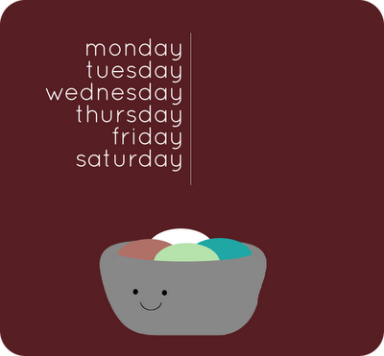
Good thing the laundry looks happy – because he’s going to be there for awhile.
Tart and sweet,
warmth running down my middle.
The cricket click of a processor.
The whine of refrigeration.
The wave of radiation shimmering in the shadow box of mullions.
No matter where I am, I can find the glow of the sun.
It and I travel all over, and yet, connect –
if I look, if I feel, if I stop to soak it in.
Sometimes the grandest thing to be done
is to do nothing but soak in the sun.
Free App: Poetry from the Poetry Foundation.
It’s National Poetry Month. Woo Hoo! Hang sonnets from the sashes and couplets from the cupolas. Let a ballad be your banner flapping in the brisk April breeze.
I would join in your revelry and pen my own poetic masterpiece, alas, I got distracted playing with this fabulous app. It doesn’t have flappy fins or diced fruit, but you can spin TWO wheels and garner a fortune of carefully crafted verse. It is a goldmine for logophiles like me, for it brings merit to the world of technophilia.
Which brings me to the book I just finished reading (and shows just how distracted I am today): Mr. Penumbra’s 24-Hour Bookstore by Robin Sloan. Though at times in the plot there are contentious arguments about the merits of print vs. technology, Sloan, for the most part, has created a loving universe where both coexist in meaningful and appreciative ways. The last lines, though, do give a good ol’ what what to my beloved book:
May you always find exactly the right book, at exactly the right time. And may the spinning poetry wheel of fortune be ever in your favor. Happy reading!

Kenneth Josephson, Chicago (blurred book pages) 1988
** Big shout-out to iGameMom for tipping me off to this app!
I want definition.
I want nice, neat little boxes.
If not black and white, then broad black borders to contain the colors within.
Classification. Order.
I don’t want things to merge, to blend, to intermingle.
I want to draw a line between thoughts and feelings.
I want to shut off that part of me responsible for irrational.
I don’t want to be able just to identify it, but send it packing.
There’s a difference between knowing and feeling.
I can know it all I want. I have to be able to feel it.
A rivulet of water running off the splash block
cutting an eddy through the sand and shell shards
pebbles and pickings from the beach
that landed on my driveway
months after the pluck
only after ice storms,
freeze and thaw,
cracked the plastic pail they called home.
The terrarium my kids toted home,
a miniature tidal pool,
silica and shale, pebbled granite,
remnants of the ice age released yet again,
eons later
by the elements
only to dribble down my driveway
into the gutter.
Some mechanical hum
the lonesome wail of a railway train
the cyclical sound of rain on window
The acrid smell of heat coming up
The warmth
as it soaks through my sweater
spreading from limb to limb
An upside down paint-by-number
with a hidden smiley face
Drink from that spring-fed well
that defies gravity
And go about your day
My head keeps butting up against expectation
No amount of plying with my pronged horns can make it go away
Some holes poked, but never enough to tear the fabric,
to crumble the wall,
topple the tower
I can peep through the hole, see the happy people on the other side
Those who can see their blessings
who are pleasantly surprised by the unexpected
those overwhelmed by the ordinary, everyday miracle
Setting the bar is fine
but those who only try to go over
are always left in limbo
I grew up with many students who hated poetry. Talented students. Intelligent students. Students who could write well themselves. But understand what a poem was really saying? And enjoy the process? No way.
And then I became a teacher. I worked with many teachers who avoided poetry, either because they had experiences similar to my former fellow students or because they figured their students would react in much the same way.
Somewhere between the playful lyricism of picture books and class study of extended texts, readers lose the magic of words, metaphor, and imagery, which is a missed opportunity for all. Poetry uses words in beautiful and economical ways, providing teachable moments for literary terms and succinct expression.
That’s why when I find a children’s anthology of poetry, I am more than happy to check it out. The latest one I’ve discovered is Sky Magic, a compilation by Lee Bennett Hopkins. His volume, My America: A Poetry Atlas of the United States, with lovely illustrations by Stephen Alcorn, once part of my classroom library, is now part of the special collection I plan to share with my own children. So I was eager to check out this other volume, illustrated by Mariusz Stawarski.
Every poem in Sky Magic evokes the dreamy nature of stargazing and sunny mornings. Every one is accessible, even those written by ‘adult’ authors. An excerpt from Tennessee Williams’ The Rose Tattoo mixes well with a poem by children’s author and poet Rebecca Kai Dotlich (whose poems in There’s No Place Like School, compiled by Jack Prelutsky, I love). All are accessible because they use sparse language to tell stories. All good poetry does so, through phrases and symbols, examples and metaphors. And there is no child – young or old – who cannot appreciate a story. Poetry anthologies made specifically for children have the added bonus of illustrations to add yet another dimension to the story. Stawarski’s paintings are so evocative of dreamy days and nights, they bring figurative language to literal life.
Share a book such as Sky Magic with the young readers in your life – or the poetry phobes – and usher in the dawn of a new era: another form of storytelling and verbal vision accessible to all.
Legends
In the language of stars
lie stories of old
brilliant legends
told; retold.Spelling out sagas,
spilling out light,
a mythical manuscript
filling the night.
– Avis Harley
 Chopping Potatoes