May is Mental Health Month, Mental Health, motherhood, postpartum depression

Retreat

When the world got to be too much, including my little corner of it, I used to retreat to the bathroom.  It was usually just as supper was about to start, food laid out on the table, cups of milk poured, husband home from work – Mom sitting on the toilet sobbing soundlessly with an unnamed sadness and inability to cope.

My husband would give me a few minutes, then call softly through the door to see if I was all right.

You would think that would be the easiest part of the day, having made it through ten or more hours of sole care giving, dressing, feeding, getting out the door-ing.  A time to sit with my family and enjoy the shared responsibility of parenting with my spouse.  But just like a toddler who does not do well with a change in caregivers, so I was not transitioning well.  We were all getting hungry and tired and my head couldn’t take one more shrill scream or pop of sound.

At first, a friend didn’t recognize this scenario as one resulting from my postpartum depression.  She got angry, she said, irritable, wanting to lash out when she couldn’t abide the situation at hand.  She wanted to fight vs. my flight.  Both natural responses to elevated levels of stress; to the wooly mammoth of parenting postpartum.

The word retreat itself is an interesting choice.  It has wartime connotations, as in run away from the enemy, give up the fight, fall back to a place of safety, behind that line that should not have been crossed.

When the bathroom won’t do anymore; when they’ve figured out your hiding spot; when you can’t while away your tortured existence on a germ-infested throne anymore – what then?

throne

At first, I turned to my midwife, then a licensed social worker, then lifestyle and diet changes, then medication.  I don’t want to lock myself in the bathroom as much any more, but I still need a respite to get my wits about me.

As a teenager, it was a requirement to attend a retreat as preparation for Confirmation.  In college, I attended many enriching weekend retreats as part of peer ministry.  In preparation for marriage, my husband and I went on an “Engaged Encounter”.

Where are the programs for mothers who love their children but want to retreat?  Who have lost themselves and their faith amidst the everyday beat-down of the job?  Who know what a blessing their children are but just can’t feel it for the pressure pushing down on them?  Who found their depression only now because they must function, they have no choice to go sit in a corner and listen to The Cure until life seems better.

Children bring us out of ourselves.  As they say, it’s the only way you can feel your heart beat outside yourself.  They teach us selflessness and caring for others.  They give us a view of the future, of possibility.  But in giving our all to them, it sometimes feels as if it’s the end of our possibility.  It doesn’t seem like there’s room for anything else.  A feeling that often makes me want to retreat.

Standard
anxiety, Children, May is Mental Health Month, Mental Health, motherhood

Crash and Burn

My five year-old was invited to a classmate’s birthday party at the bowling alley.

The day dawned rainy and miserable.  She had stayed up late the night before.  Her grandparents brought donuts for breakfast.  She was so amped up, I think she had burned through her reserves before we even got in the car.

She excitedly greeted her classmates, donned her bowling shoes, and added her name to the scorecard when we arrived, but two turns down the lane, she gave up.  “I don’t know how to play,” she complained.  Then she spotted the arcade games.  Cut from the same cloth as her father, she gravitated toward the motorcycle that swayed side to side as its driver maneuvered the flat terrain of the screen.

We had a seemingly needless discussion about why we were at the bowling alley: to visit and celebrate with her friend, the birthday girl.

The behavior that followed defied all logic – unless you take into account the lack of rest, the lack of energy resulting from sugary foods, the lack of barometric pressure that was doing something to her brain and skull.

By the time we said goodbye to the guest of honor and her mother, she was a sniveling mess grasping onto me for dear life.

“Oh no, what’s wrong?  Is she okay?” the mother asked.  I think she was concerned she was hurt – and also that she hadn’t had a good time at the party she’d hosted.

“Oh, she’s fine.  She’s just crashing and burning,” I said.DownloadedFile

“I know how you feel,” said the mother with an exasperated look.

Indeed, I’d watched her try to catch her breath throughout the party as five year-olds pooled around her legs.  ‘Herding cats’ was the phrase that came to mind as I watched them try to adhere to bowling procedure.  As she tried to coordinate with the staff to get lunch on the table for all these kitties, I overheard her tell her husband to ‘do something’. 

I recognized in her all my telltale signs of anxiety bubbling up.  The throwing of hands in the air.  The curt responses.  The barked commands.  Looking around you as if you’ll see the one thing that will calm the chaos.

I wasn’t supposed to notice.  I wasn’t supposed to hear the slightly heated exchange between she and her husband.  But I didn’t judge.  Instead, it roused me to action.

For once, I wasn’t the one crashing and burning, but since I certainly had been there, I did what I thought I might appreciate when I was.  I grabbed a pitcher of soda and refilled cups.  I moved said pitcher when I was afraid the birthday girl’s unwrapping might upend it.  I tried to assist the kitties at my end of the table with cutting of food, getting of napkins, etc.  I tried to make her laugh and get her out of her own mind, which no doubt was swirling and sucking her in.

I don’t know her that well.  I don’t have any right to assume what she needs.  But I know what it’s like to crash and burn.  And I know I’d appreciate it if someone slowed my descent even just a little.

As for my five year-old, after scowling into middle distance on the thirty-minute ride home and sulking for a bit once there, she finally snapped out of it.  The familiar surroundings of home and routine and a good night’s sleep resurrected her good mood.

I guess we all just need care and attention to thrive – or at least not end in a fiery inferno.

Standard
Living, May is Mental Health Month, Mental Health, motherhood, postpartum depression, Recovery

Wisdom in a Cup of Tea

My friend is always sending me notes saying she wishes we could share a cup of tea.  Or she’ll e-mail and say we need to schedule a phone call with a simultaneous cup of tea.  She’s someone who would darken my door every afternoon for tea and sympathy if I weren’t in her kitchen first.  If she didn’t live 585.9 miles away that is.

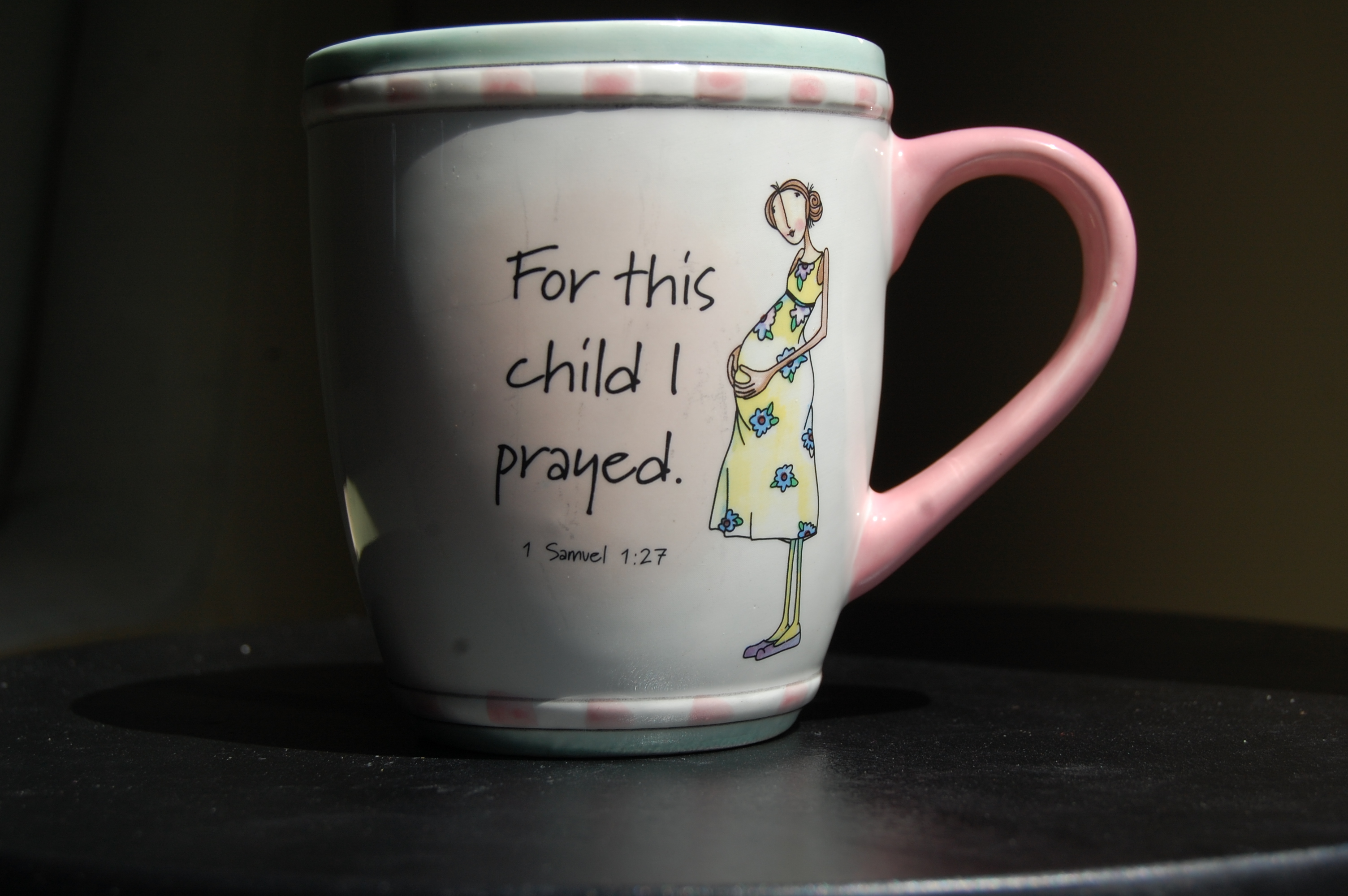
When we met in a charming seaside town midway between our homes for a spa weekend well into my third pregnancy, she said nothing of the fact that I couldn’t relax, that I was cynical, that something seemed ‘off’.  Instead, she gave me a mug to celebrate the impending addition to my family that said, “For this child I have prayed.”  When I told her what a sham I felt like because I hadn’t prayed for this child; that [she] had been gifted to me undeservingly, she said, ‘well, you’re going to pray for her now and when [she]’s here, aren’t you?’  So matter-of-fact, so trusting, so unfailing in her regard for me as a person, a mother.

DSC_0091

And when that something stayed ‘off’ far past labor and delivery, she gently and honestly broke the news to me, a headline I’d written but couldn’t read.  She’d been featured in a similar newsreel only a short time earlier.  She knew the signs, saw the struggles that someone who hadn’t been through them might have missed.  I gave her a firsthand account of postpartum depression without knowing what I was describing.  She saw herself in me.

And she saved me.

She listened to the horrible thoughts I couldn’t share with anyone else for fear they’d find out what a despicable mother I was.  She became a sounding board for all the worries running through my head.  She was my font of information on all things postpartum.  It was she who finally convinced me I needed to get help.  It was she who urged me to remove the stigma I’d attached to medication.  It was she who helped me see I wasn’t the only one who’d ever felt like a failure as a mother, a weak human being, a seriously flawed individual clinging to the sharp edge of a cliff.

Still, I fought her for a good part of the way.  I didn’t want to see myself in the mirror she was holding up to me.  I didn’t want the help she offered because it meant giving in.

But she didn’t give up on me.

She told me the things I didn’t want to hear – and kept doing so until I listened – because she wanted to help me.  She forced me to get the help I needed.  She didn’t want to see me suffer the same fate she did; she loved me so much, she wanted to shield me from it.

Like every child needs a trusted adult, so every one of us needs a confidant, a friend in shining armor; in my case, a faithful warrior, devoted to the cause of saving my soul and that of my family.  Someone who won’t give up on you even when you turn away because she’s showing you the dark side of yourself – even if you take it out on her.  Someone who sees it through to the bitter end of your acceptance and seeking of help, the start of your journey to healing.  Someone who uses her own empathic experience to lovingly see you through the darkest days of yours.

They talk about warrior moms.  Moms who fight for their children, their needs, their causes.  Moms who fight for themselves and their survival.  There are moms who fight for those who stand beside them, who pick them up when they fall, who drag them along when they stumble.  And it’s usually when we’re so bloody and battered, we can’t even think to ask for help, can’t even see we need it.  These moms lift us up in the midst of their own struggles.  They are the shining light on the hill.  Without them, our own lights would be extinguished.  All hail the friends, partners, mothers who battle for the survival and triumph of those face down in the trench.

I’d be nothing without mine.

Don’t be alone.  Don’t do it on your own.  Accept a little help from your friends.


Standard
Marriage, May is Mental Health Month, Mental Health, motherhood, parenting

They’re Baaaaaack

And what a hell of a reentry that was.

They came bearing packages, bags of laundry, and lots of noise.  All of which happened to coincide with the whine of chainsaws and segments of tree thudding to the ground as we removed two more trees from our property.

The yard looks like a tornado came through, which I would think was totally fitting, if I wasn’t the one swirling around in its center.

Apparently there are findings that show people experience depression upon returning to their routine schedules after vacation.  This weekend felt like the ultimate vacation.  I was calm.  I was peaceful.  I was not done.

The moment they walked back in – in fact, even as I rushed around trying to finish things I knew I wouldn’t be able to when they came home – my stress level ratcheted up.

We showered them early because they had run around sticking to the tree sap and I looked at my husband at 6:13 PM and said, do we really have to wait over an hour to put them to bed?  Whatever reserves I had built up over the weekend had been depleted in a few short hours.

One validating point: my father-in-law, when recounting how the weekend had gone, looked at me and said,

“I don’t know how you keep up with the three of them all day.”

Yes, it was a shallow victory because it just confirms how life-sucking they are.  BUT – and this is a very big BUT – it means that there is not something wrong with me to find it challenging.  It’s a normal, natural response that many people have apparently.

That doesn’t make it any easier to deal with on a day-to-day basis . . . but at least I know I’m not some freak of nature.

So, the take-away.

  • I like alone time.
  • I crave uninterrupted creative time.
  • I respond well to long, drawn-out, meandering shopping trips.
  • I thrill in the perfect flea market find for my home décor.
  • I eat like a pig who has found the trough for the first time when I can do so without distraction.
  • A new dress does a girl good.
  • Certain physical endeavors provide good stress relief 😉
  • I suck at carrying over these lessons to the everyday; reality, if you will.

But I have to figure something out.  As I said when I lay in bed last night, in an exhausted stupor, ‘I love them.  I need to find a way to like being with them.’

Whether it’s situational depression or what, that’s not something a mother is supposed to say.

Standard
Identity, motherhood, parenting

Contradiction in Terms

For all the bitching I do about taking care of my children, I stood listless on my porch this afternoon as I watched them drive away with their grandparents.

When you take away the main reason for my modus operandi, where does that leave me?

A skiff adrift, a compass needle with no magnetic pull, a mother with empty arms and a quiet mind.

I stood there for a moment, thinking I should literally be jumping for joy as I face down a weekend alone with my husband.  But I couldn’t get past the immediate feeling of ache.  A dull feeling somewhere around my solar plexus as I watch my babies leave.

They waved, and beeped, and yelled goodbye out the window.

And then I thought, okay, now what do I do with these hands, now idle, but so out of practice.  The hands and mind forget what it’s like to do something other than the constant care of children.

But once I allowed the thought in, my mind raced with possibilities.  I can write on the deck under the umbrella!  I can read in the sun.  I can put my feet up and have a nice cool drink.

What did I do?

I finished the laundry I’d started before they left.  I unpacked the schoolbags they’d forgotten about in their rush out the door.  I swept the crumbs they’d left under the table at dinner last night.

Giving me time off is an exercise in futility, no?

No.

Remember when your child was an infant and that hour during which they slept and the floor clear of squeak toys and random detritus was like heaven?  And then they woke up and flung everything from its cute little basket and all over the floor all over again?

Now imagine a larger child.  Now multiple that by three.  Now multiple that cute little basket into one huge mess of stuff.  All over the house.

This weekend is like that nap.  If I can clear all the stuff away now as soon as possible after their departure, I can enjoy a house free of gak for that much longer.  And I rushed around and did it as quickly as I could so I could still get to my laptop and get some writing in before my husband came home.

Time with the hubby is sublime.  But it’s also nice to feed our own soul.

What do we go to first?  How do we prioritize when every item on the list is important?  Dabble in a little of each so we can appreciate each in its contrast?  I don’t rightly know.  Hell, the one time I clean the house is when I should be eating freakin’ bon-bons while soaking in the bathtub.

I miss myself when the kids are here.  I miss my babies when they’re gone.  I miss quiet conversations (I’d even go for simply uninterrupted) with my husband.  I miss doing whatever the hell I want because no one is demanding anything of me.

I am a contradiction in terms.  And I have a whole weekend off to celebrate it.

Standard
May is Mental Health Month, Mental Health, motherhood

Happy Mother’s Day?

images

I’m trying really hard to make today’s post about mental health; something full of knowledge, experience, resources. But I also feel that, in chronicling my journey toward mental health – that is, out of depression – many of my posts have been depressing themselves. On this banner day of Mother’s Day, I feel like I should be all full of flowers and fairy dust.

I’m laying in bed, exhausted, freezing from the night sweat my hormones gifted me, snorking from an allergy attack that will most likely turn into a sinus infection, listening to the rain steadily thrum the window above my head.

And yet, I returned from the bathroom earlier to find two of my daughters lined up, positively vibrating with the creative joy they couldn’t wait to unleash in the form of scrolls and paintings and cards. The best gift, though, was my five year-old shaking and giggling, burying her head in my lap when I told her how much I liked her portrait of me. Her pride, her modesty, her shyness, her beatitude. My eyes welled up – and I realized Mother’s Day could end right there and I’d be whole.

It is the unexpected joy that is the best – especially in the midst of struggle. It is most certainly unexpected then, and therefore, even sweeter. As acute as the suffering is, the joy is crystalline clear.

I realize that life continues on a parallel, sometimes intersecting, track with depression. It cannot be separated out. But it also cannot crowd out all positive experience. Life happens despite it. Even happiness and poignant moments can happen in spite of it.

So Happy Mother’s Day. May you have a bright spot in the midst of your trials.

Standard
anxiety, May is Mental Health Month, Mental Health, motherhood, parenting

Why three is the most stressful number of children to have – BUT mothers of four are MORE relaxed | Mail Online

Why three is the most stressful number of children to have – BUT mothers of four are MORE relaxed | Mail Online.

Third time’s a charm.  1,2,3 – GO!  The three amigos.  Father, Son, and Holy Spirit.  Celery, carrots, and onions.  Huey, Duey, and Louey.  The Three Little Pigs.  Even the tri-cornered hat.  Three is a magic number!

Unless you have three children.  Then, apparently, it drives you out of your gourd.

My husband sent me the link to the article above in an e-mail one day with the subject line, “interesting article . . .”  Well, the ellipses said everything.

The article, though, doesn’t give any specific reasons why, I thought – at least none I hadn’t already known.  My husband and I had already joked that we’d  moved from man-on-man defense to zone defense once we had three.  I already told people that the only thing that helped going from two to three was that you already knew how to keep multiple balls in the air – but that, now, there was always a ball in the air.  The woman quoted who said it was easy going from one to two?  Yeah, no.  I swear my second is still a light sleeper because I was constantly shrieking at her sister to stay away from her as a newborn (can you say undiagnosed case of some sort of postpartum something?  No wonder the $#*% the fan with the third).

As far as the benefits of having four, I already reap some of those now with three.  A Dr. Taylor in the article says about perfectionism that “‘there’s just not enough space in your head’ once you have at least four children.”  There is no available space in my brain.  Burn photos or video to a DVD?  I knew how to do that once.  That knowledge oozed out my ear during one of the twenty minute periods of sleep of some child’s infancy.  And forget head space – what of physical or mental energy?  Once upon a time I hung sheetrock at Habitat for Humanity home sites, after scoring and snapping it myself.  I fought vehemently to do things around the house my way.  Now if the home improvement fairy comes and takes care of things, I don’t really care as long as it gets done (with the possible exception of painting/decorating).  Something’s gotta give.

And that’s where I do agree with something Dr. Taylor says.  “The more children you have, the more confident you become in your parenting abilities. You have to let go.”  There is confidence in repetition, practice.  I didn’t worry about ‘breaking’ my baby after countless diaper changes and pulling little arms through tiny shirt sleeves.  I didn’t freak out as much over breast feeding and whether they were getting enough to eat.  But did I worry if I was doing enough?  Not doing the damage that would land my kids in their own form of therapy someday?  Heck, yeah.  That didn’t change with multiple kiddos.  That increased.  Still, for self-preservation – and really, theirs too – you do have to let go.

A dear friend, who had her three children three steps ahead of mine, and therefore in the as-cool-as-a-cucumber phase while I was just entering the anal-retentive, told me when I had my third, that I was much more relaxed.  When I relayed the story to my father-in-law, hinting that she’d called me anal-retentive, he agreed!  I hadn’t seen what everyone else had.  People laugh now because I’m so laissez-faire with everyday concerns.  When my impatient five year-old says she wants a snack so emphatically that it sounds like she’s gone without food for days, I say, ‘That’s nice.”  After the thud, I wait for the scream or wail.  If my child wants to go to school looking like it’s mismatch day everyday of year, more power to her.

I could be accused of being lax.  I could be accused of swinging the pendulum so far away from anal-retentive, it’s a tad too much.  But somedays I feel like I’m living inside an episode of The Three Stooges.

At least my kids are cuter

At least my kids are cuter

I can’t be all things to everyone.  I sure as hell can’t be perfect.  And I’m not going to try for a fourth to test this article’s theories!

Standard
anxiety, May is Mental Health Month, medication, Mental Health, motherhood, parenting, postpartum depression

You Got Some ‘Splainin to Do

i-love-lucy

This morning my daughter sat down to some interesting breakfast reading.

Coming home late after an evening “med check” appointment with my physician, I had left the visit summary on the dining room table.  Yesterday’s visit went swimmingly well.  No problems to report.  Successful treatment measures.  A-ok – until the next six month visit.

The chart information on the second half of the sheet told a different story, though; that of my history.  The medication I’m on; my ‘problem list’.

Depressive Disorder Not Elsewhere Classified.

I’m hoping that eight years old is not old enough to know what that means.  Hell, I don’t really know what that means.  The first time I saw it, I stopped in my tracks.  I remember the NOS designation on IEPs from my teaching days.  I remember the frustration of parents and teachers who knew something was up, but no diagnosis could be made.  How would this individual get the help he or she needed without a direction to go in?

Now that was me!

My eight year old wouldn’t be able to recognize the name of the medication I’m on either, Sertraline sounding more like a foreign language than a medicine to help her mother get through life.

Thank God, in this case, for medical illiteracy.  I’m all for blowing apart the stigma, but haven’t quite figured out how to explain it to my young children yet.  How much information would help them see it’s perfectly acceptable to struggle and receive help and how much would open them to an overwhelming, suffocating side of this world they don’t need to know exists yet?

I didn’t know there was a family history of whatever the hell ails my family until I was an adult starting to suffer from similar problems myself.  As a child, there was an underlying tension at family gatherings, but having no explanation and no other frame of reference, I just thought that was how it was.  Do I let my kids live in ignorant ‘bliss’?  Do I give my oldest an age-appropriate mete-ing out of Momma’s struggles so she doesn’t think she’s responsible for Momma’s wrath?  Or will I be giving them the framework for their own self-fulfilling depressive prophecy?

All important questions.  All of whose answers will remain unspecified for now, just like my diagnosis.  I’m still trying to wrap my head around all this.

Standard
anxiety, May is Mental Health Month, Mental Health, motherhood, postpartum depression, Recovery

Don’t Fear the (Ir)rational

As the sun rose hours after the baby’s birth, I was fading fast.  I had slept maybe two hours of the past 24 and didn’t have the strength to eat my breakfast.  The nurse suggested the baby go to the nursery, I drink a pitcher of water, eat, and sleep.  I did and woke up a short while later feeling a bit more human.  When my husband went to retrieve the baby and came back empty-handed, the feeling was short-lived.  “Where’s the baby?” I asked, panic creeping into my voice.

“Oh, her bracelets fell off, they’re just putting on some new ones,” he answered, easy-going as ever, which could’ve been an indication of my overreaction but went unheeded.  I went through every possible combination of events I could think of: were the bracelets in the bassinet, did the nurses take her out of the bassinet, were there any other babies in the nursery?  What I was really getting at was: how will we know this is our baby?  My husband, thinking with a rational mind, told me it was fine; they were giving her new bracelets to match ours and were checking the serial number on her Baby Lo-Jack, the nickname for the security device affixed to all babies in the hospital.  Still, I balked.

I worried for months, a year after.  I had moments of clarity: an expression on her face as she gazed up at me, identical to her oldest sister when she was an infant; her tiny hands patting me on the back as she wrapped me in a hug; shadows of family members in baby photos.  But always, when I allowed it to seep through, that dark thought,

‘Did I bring home the right baby?’

I was afraid that if I loved her too much someone would come to take her away from me.  The licensed social worker I had started seeing suggested I felt that way because things – the pregnancy, labor, delivery, and recovery – hadn’t gone according to my plans.

It wasn’t until we sped down the highway one day months later that the truth caught up with me.  As I saw the family resemblance written all over my baby’s face, I realized that I hadn’t thought she was mine because I still hadn’t accepted the fact that I was having a third child.  I hadn’t sanctioned it.  It hadn’t gone according to plan.  I was still grasping for some sort of control that I hadn’t felt since being plunged into the chaos of three children awash with my own anxiety.  Did I not see the resemblance because I didn’t want to see it?

Yes and no.  Or yes, but not totally.  It wasn’t my wounded psyche that was totally to blame.  As my therapist pointed out, irrational fears are another symptom of postpartum depression.  I more than filled that box on the survey.  It was a strange split, though.  Rationally, I knew she was mine and accepted her with the unconditional love of a mother.  In the stark predawn hours of loneliness or moments of love bordering on too intense, my irrational self would pull back, fraught with worry and dread.

My husband irresolutely assured me she was ours.  “What do I need to do to prove it to you?” he asked.  “Do you want to get blood tests done?”  “She’s ours, Jen, I know it.”  “I was right there beside you when she was born.”  To which I responded, sometimes verbally – and later as the argument wore out, silently – “But that was before she went to the nursery and lost her bracelets.”

I couldn’t shut off the stream of irrational thought and worry – even though I knew there were holes all over my argument.  I felt silly voicing my concerns, but wanted other people to tell me how much she looked like her sisters or me or my husband.  I needed validation that the ‘voices’ in my head were wrong.  I couldn’t defeat them myself.

And I didn’t.  With love and support from my husband, my fabulous social worker, lifestyle changes, the passage of time, and eventually medication, the irrational worry stopped.  It became definable, ‘boxable’, and I shut it away.  I don’t think it’ll come back, but I think I’ll always remember how real and frightening it was.

Standard
May is Mental Health Month, Mental Health, motherhood, parenting, postpartum depression

The Perfect Storm

hurricane

When my husband and I learned of the imminent arrival of our third child, we were in shock.  Yes, we knew how things worked.  Yes, we’d always considered, even expected, a third child.  No, we were not ready for it right then.  After our second was born, we said we’d definitely want to wait until she was older than our first had been before we welcomed number three, which was just over two and a half.    The best laid plans . . .

Our second was eighteen months old when we found out I was pregnant.  In the weeks that followed, we walked around in a stupor.  As I went about my daily activities caring for the kids, I would find myself staring into space, lost in thoughts of third car seats, reconfiguring furniture in our already small house, finances, schedules.  The phone would ring – my husband calling from work – and we would stare into space together, our shock suspended in the telephone lines.  We knew we wanted this child and loved it already, but were totally caught off-guard by its timing.

It was also a difficult time in my extended family.  My uncle was battling a terminal brain tumor.  My announcement to my mother was made by way of my explanation for not visiting the ICU.  He died a few days later.  Four months later, my cousin was killed in a motorcycle accident.  My grandmother’s devastation was complete.  My mother’s own grief was wrapped up in worry for her mother.

Somehow, the days wound on, the months passing.  Caring for two children while carrying my third was starting to take its physical toll.  The usual aches and pains of pregnancy were amplified.  My left hip and pelvis were giving me more pain than ever.  As my due date approached, I felt extreme pressure, a heaviness, different than impending labor.  Having nothing to compare it to, I just assumed it was my body’s worn-out response to doing this a third time.

In the delivery room, my midwife asked me if there’d be a fourth if we had another girl.  “I hope not,” I’d said.  By the time I was pushing, I was sure there wouldn’t be.  Even after two natural births, I’d never experienced anything like it.  I actually uttered the words that infuriate me when I hear them in television portrayals of labor: “I can’t do this.”  But somehow I did.  And the nurses placed a perfect little girl in my arms.

I’d like to say all the shock and worry evaporated as soon as I saw her face.  She was gorgeous, I loved her, but I almost felt like a stranger observing the scene from afar.  I still hadn’t wrapped my head around the idea of starting over again with a third child.  And I wouldn’t get a chance to right away.  In the hours and days following her birth, a new challenge presented itself: getting out of bed.

When the nurse came to get me the next morning, she asked if it was the first time I’d been out of bed.  “No,” I answered, nonplussed, until I saw her face as she watched me move.  My walk was more of a shuffle, getting in and out of bed was slower than glacial melt.  Finally, after many such episodes throughout the day, she said, “Maybe we should send you for an x-ray to make sure you didn’t break anything.”  Break anything?  You’re not supposed to break anything when you have a baby – except your water.  Now she was making me nervous.

An x-ray confirmed her suspicions – and my pain.  I had a slight case of diastasis symphysis pubis.  Thank God it was slight because it meant the ligaments in my pubic bone had separated.  And as slight as it was, it was excruciating.

Once the adrenaline wore off and the soreness settled in, I couldn’t roll over in bed without crying.  It took me 45 minutes to get out of bed early one morning when I didn’t wake my husband or call the nurse.  My father brought me the old karate belt I’d left at their house to lash my legs together as I rotated them off the bed to come up to sitting.  Hip adduction was simply impossible.

My husband had taken two weeks’ vacation to help with the baby.  He didn’t know that, in addition, he’d be doing everything for the other kids, washing and folding clothes, preparing food, and helping me to and from the car like a little old lady.  The helplessness that can afflict a new mother was magnified ten-fold by my handicap.

I told my mother-in-law, “I’m finding it hard not to feel sorry for myself.”

She said, “I don’t blame you.”

Her answer surprised me.  Were things really that bad that I should be feeling sorry for myself?

Apparently so.  I worked my way into some sort of routine with a newborn who fed at no particular time, a preschooler who had to be in school at a precise time, and a toddler who took off her shoes and socks whenever she felt like it.  Weekly visits to a physical therapist worked me through a regimen that gave me a tenuous, yet workable, physicality.  And yet, four months after the baby’s birth, I still couldn’t cope.

I would reach my breaking point over hair elastics stretched to theirs over the top of a dining room chair.  God help the poor soul who dumped out the basket of toys I just filled.  My two oldest would jump when I started screaming at the top of my lungs out of seemingly nowhere over seemingly nothing.  I felt like a pot about to boil over and I was trying desperately to keep the lid on tight.  It was a particularly grueling drop-off at preschool one morning that crystallized everything.

Sleet was just turning to snow as we pulled into the parking lot.  I strapped the baby into the baby carrier on the front of me and moved around to the other side of the car.  My toddler had already taken off the hat and mittens I’d fought to get on her at the house.  I reached into the back seat where the preschooler was seated to depress the red button on her harness, instructing her to unclip the top part while I redressed the toddler’s extremities.

“I can’t, Mommy,” came the plaintive cry from the back seat as she stared out the window at the passing kids.  I instructed her to focus on what she was doing and try again.  This conversation repeated itself over and over like an audio loop, her despair and my frustration escalating each time.  Finally, I lunged into the car, swearing like a sailor, the baby bobbing in her carrier like a cork on the ocean, undoing the strap and telling her to get out of the car.

Then I stopped.  I scanned the parking lot around us for parents going to and from their cars.  Had anyone heard me?  Had they seen this terrible little episode?  Shouldn’t I have known I was getting out of control before it was too late?  Once my oldest was safely in the classroom and the rest of us safely home, I dissolved into tears recounting the story to my husband on the phone.

“I need help,” I said.

A few weeks later, I started a new kind of therapy.  I met weekly with a licensed social worker to discuss and treat what finally had a name: postpartum depression.

At the end of my first visit, I said to her, “So, do I have postpartum?”  In classic counselor speak, she replied, “Would you like me to say you have postpartum?”  I laughed and she joined me.  “I can go through the indicators if you’d like,” she said.  One by one, she ticked off every single one of my circumstances: unexpected pregnancy, death of a loved one(s), stress, difficult delivery, physical trauma, demands of caring for other children, anxiety.  “Does that make you feel better?” she asked.  Oddly enough, it did.  For the first time in months, I felt light leaving her office.  I wasn’t a failure and I wasn’t crazy.

This perfect storm was not forecast, but at least now I had some sort of outlook for the future.

Standard