May is Mental Health Month, Mental Health, motherhood, postpartum depression

Destymie-ing Dysthymia

http://www.health.harvard.edu/newsweek/Dysthymia.htm


The American Psychiatric Association defines dysthymia as depressed mood most of the time for at least two years, along with at least two of the following symptoms: poor appetite or overeating; insomnia or excessive sleep; low energy or fatigue; low self-esteem; poor concentration or indecisiveness; and hopelessness.

With all the myths and tragedies running around my head lately, it’s perfect poetic justice that the word dysthymia comes from the Greek.  And I’m starting to think that’s what I have.

My raison d’etre in this land of depression (or whose labor and delivery unleashed the beast) is now approaching four years old.  My depressive symptoms linger on.  They’ve certainly lessened, that’s for sure.  I no longer want to chop off my fingers, run out the door and never come back, or think I’m a completely horrible, terrible mother.  But like a thin fog that spreads layer after misty layer until the terrain is no longer recognizable, it’s lurking and oozing its way into the corners of my life.  On the days the sun doesn’t shine, I’m chilled to the bone, the damp crawling inside and refusing to leave.

Postpartum has passed the baton to dysthymia.

The Internet can give you whatever leverage you need to make whatever case you want so I can prove it.

Depression that begins as a mood fluctuation may deepen and persist when equilibrium cannot be restored because of poor internal regulation or external stress.

Postpartum = mood fluctuation

Poor internal regulation = my anxiety-ridden self

External stress = meeting the needs of three small children

Equilibrium null and void = deepened and persistent depression

I also never had the appetite or sleep disturbances associated with clinical depression, but have my fair share of “anhedonia (inability to feel pleasure), social withdrawal, guilt, and irritability,” which the American Psychiatric Association is considering adding to an alternative definition.

Nothing like self-diagnosis.  But if it’s an open and closed case of dysthymia, why am I not responding to treatment?  The article mentions recovery.  I’d like some of that please.

I think there’s a hole in the fabric of mental health for women beyond the grasp of postpartum, but still not functioning in a productive and positive way.  If a traumatic event, which birth and what follows can be, unleashes a maelstrom of symptoms that were lying just below the surface, what then?  What can we do for those women who don’t fit the textbook mold of either postpartum or major depression?

How do we destymie dysthymia?

Standard
May is Mental Health Month, Mental Health, motherhood, postpartum depression

Retreat

When the world got to be too much, including my little corner of it, I used to retreat to the bathroom.  It was usually just as supper was about to start, food laid out on the table, cups of milk poured, husband home from work – Mom sitting on the toilet sobbing soundlessly with an unnamed sadness and inability to cope.

My husband would give me a few minutes, then call softly through the door to see if I was all right.

You would think that would be the easiest part of the day, having made it through ten or more hours of sole care giving, dressing, feeding, getting out the door-ing.  A time to sit with my family and enjoy the shared responsibility of parenting with my spouse.  But just like a toddler who does not do well with a change in caregivers, so I was not transitioning well.  We were all getting hungry and tired and my head couldn’t take one more shrill scream or pop of sound.

At first, a friend didn’t recognize this scenario as one resulting from my postpartum depression.  She got angry, she said, irritable, wanting to lash out when she couldn’t abide the situation at hand.  She wanted to fight vs. my flight.  Both natural responses to elevated levels of stress; to the wooly mammoth of parenting postpartum.

The word retreat itself is an interesting choice.  It has wartime connotations, as in run away from the enemy, give up the fight, fall back to a place of safety, behind that line that should not have been crossed.

When the bathroom won’t do anymore; when they’ve figured out your hiding spot; when you can’t while away your tortured existence on a germ-infested throne anymore – what then?

throne

At first, I turned to my midwife, then a licensed social worker, then lifestyle and diet changes, then medication.  I don’t want to lock myself in the bathroom as much any more, but I still need a respite to get my wits about me.

As a teenager, it was a requirement to attend a retreat as preparation for Confirmation.  In college, I attended many enriching weekend retreats as part of peer ministry.  In preparation for marriage, my husband and I went on an “Engaged Encounter”.

Where are the programs for mothers who love their children but want to retreat?  Who have lost themselves and their faith amidst the everyday beat-down of the job?  Who know what a blessing their children are but just can’t feel it for the pressure pushing down on them?  Who found their depression only now because they must function, they have no choice to go sit in a corner and listen to The Cure until life seems better.

Children bring us out of ourselves.  As they say, it’s the only way you can feel your heart beat outside yourself.  They teach us selflessness and caring for others.  They give us a view of the future, of possibility.  But in giving our all to them, it sometimes feels as if it’s the end of our possibility.  It doesn’t seem like there’s room for anything else.  A feeling that often makes me want to retreat.

Standard
Living, May is Mental Health Month, Mental Health

Patate Pazze

Crazy potatoes.

I found the recipe for this dish, a Campomelano classic, in A Year in the Village of Eternity: The Lifestyle of Longevity in Campodimele, Italy by Tracey Lawson.

I thought, how ironic, the name of this dish, given that it was potatoes that nearly made me go crazy.  Now there’s a food ripe with metaphor.  How witty, how clever I am.

Then I went back and read the entire chapter in which this recipe is featured: The Mountain Gives You Everything.  Lawson explains that it’s a phrase uttered over and over by the residents of this mountainous Italian village, meaning, “in every moment, in every season, the mountain provides all the things you really need; the very essentials of life.”

And just like that my metaphor switched from potato to mountain.

Do I need the crazy potatoes dug up from the earth of the mountain?  No.

Were they there, ripe for the harvest?  Yes.

And when did they become crazy?  When mixed with the greens and grasses that also occur naturally on my mountain.

“Seek and the mountain will give,” says Lawson; to which an aged resident says, “You just need to know where to look.”

But Lawson also stresses that “it’s really a question of knowing how to look.”

I think that potatoes popping up all over the fields of our lives crowd out our ability to look.  Add the wild greens of distraction, stress, and overwhelming life events sprouting up wherever they may and often spreading like wildfire – and it’s a recipe for disaster.

But the wild greens boiled with the potatoes for patate pazze, are used “to flavour potatoes which may be past their best after more than six months languishing in the cantina.”

Did I not respond well to the stresses of my life because I was already languishing?

Or were they sent to me to add some dimension to my life, stir things up, a zesty flavor to respond to?

In any event, I may have found a way around my abhorrence for chopping potatoes.  This recipe calls for boiling the potatoes in their skins, slipping them out once cooked, and then slicing them, which would no doubt be much easier than chopping them raw – no matter how many cranky kids circle my feet.  I’m willing to take whatever the mountain will give.


All quotes and references come from the following:

9781596915022Lawson, Tracey.  A Year in the Village of Eternity: The Lifestyle of Longevity in Campodimele, Italy.  New York: Bloomsbury, 2011.

Standard
Living, May is Mental Health Month, Mental Health, Recovery

Getting from “I can’t” to “I’ve GOT this”

“We have to let go of what the world wants us to hang onto and hold onto what the world wants us to let go of.”

The wise deacon who gave the homily this Sunday morning spoke these words.
But how do we operate within this paradox?
Why is it always about balance?
How much of it is our attitude and how much is our chemical make-up?
What miracles will ‘heal’ us if we believe?
This post raised similar questions.

Admin's avatarOff Duty Mom

I have struggled for most of my adult life with borderline depression and probably a little anxiety, too.  These things, however, have not existed in real life like I would have imagined they would.

cryingI had previously figured that depression was reserved for people who had SOMETHING to be sad about.  And those poor saps wouldn’t be able to get out of bed each morning.  They would cry constantly.  They would probably resort to maniacal meth usage, would wear all-black and would get swoopy haircuts, but would ultimately not really wash or style their hair much, anyway.

I figured that people who had anxiety would be nervous wrecks 100% of the time, would talk really fast, drink too much coffee, talk incessantly about governmental conspiracy theories, and would be all twitchy and weird.

Most of that stuff is dead wrong.  For me, at least.  Except, I could get into a…

View original post 696 more words

Standard
anxiety, Children, May is Mental Health Month, Mental Health, motherhood

Crash and Burn

My five year-old was invited to a classmate’s birthday party at the bowling alley.

The day dawned rainy and miserable.  She had stayed up late the night before.  Her grandparents brought donuts for breakfast.  She was so amped up, I think she had burned through her reserves before we even got in the car.

She excitedly greeted her classmates, donned her bowling shoes, and added her name to the scorecard when we arrived, but two turns down the lane, she gave up.  “I don’t know how to play,” she complained.  Then she spotted the arcade games.  Cut from the same cloth as her father, she gravitated toward the motorcycle that swayed side to side as its driver maneuvered the flat terrain of the screen.

We had a seemingly needless discussion about why we were at the bowling alley: to visit and celebrate with her friend, the birthday girl.

The behavior that followed defied all logic – unless you take into account the lack of rest, the lack of energy resulting from sugary foods, the lack of barometric pressure that was doing something to her brain and skull.

By the time we said goodbye to the guest of honor and her mother, she was a sniveling mess grasping onto me for dear life.

“Oh no, what’s wrong?  Is she okay?” the mother asked.  I think she was concerned she was hurt – and also that she hadn’t had a good time at the party she’d hosted.

“Oh, she’s fine.  She’s just crashing and burning,” I said.DownloadedFile

“I know how you feel,” said the mother with an exasperated look.

Indeed, I’d watched her try to catch her breath throughout the party as five year-olds pooled around her legs.  ‘Herding cats’ was the phrase that came to mind as I watched them try to adhere to bowling procedure.  As she tried to coordinate with the staff to get lunch on the table for all these kitties, I overheard her tell her husband to ‘do something’. 

I recognized in her all my telltale signs of anxiety bubbling up.  The throwing of hands in the air.  The curt responses.  The barked commands.  Looking around you as if you’ll see the one thing that will calm the chaos.

I wasn’t supposed to notice.  I wasn’t supposed to hear the slightly heated exchange between she and her husband.  But I didn’t judge.  Instead, it roused me to action.

For once, I wasn’t the one crashing and burning, but since I certainly had been there, I did what I thought I might appreciate when I was.  I grabbed a pitcher of soda and refilled cups.  I moved said pitcher when I was afraid the birthday girl’s unwrapping might upend it.  I tried to assist the kitties at my end of the table with cutting of food, getting of napkins, etc.  I tried to make her laugh and get her out of her own mind, which no doubt was swirling and sucking her in.

I don’t know her that well.  I don’t have any right to assume what she needs.  But I know what it’s like to crash and burn.  And I know I’d appreciate it if someone slowed my descent even just a little.

As for my five year-old, after scowling into middle distance on the thirty-minute ride home and sulking for a bit once there, she finally snapped out of it.  The familiar surroundings of home and routine and a good night’s sleep resurrected her good mood.

I guess we all just need care and attention to thrive – or at least not end in a fiery inferno.

Standard
anxiety, Living, May is Mental Health Month, Mental Health

Entropy

I used to like you.

You were a concept I thought was rebellious, unique in its dysfunction.

I scribbled your name on the brown paper bag book cover of my science book.

I joked how my life was a measure of entropy.

I didn’t know that my worst day of stress or ill-preparedness back then was a cakewalk compared to now.

While entropy is supposed to be unpredictable, I can feel myself slipping into it.  That detached feeling while everything swirls around me.  Worries, permission slips, due dates, appointments, a specific pair of pants to be washed, thoughts, concerns, shopping lists, stresses.  I cringe as I await the fallout.  The important detail missed.  The distractedness in me leading to some major misstep.  I know it’s coming.  I know it’s only a matter of time.  I dread it.  It makes me sick.  Makes me feel like I need a keeper.  Yet I can’t stop the feeling, can’t prevent the catastrophe.

It’s only after the catastrophe that I am emptied – of the dread, the worry.  Only to be filled with sorrow, regret, and guilt.  Ashamed that I scraped the side of my car along the opening of the garage as I pulled in.  Mortified that the bus driver awaited my return at the foot of my driveway; that my children had to wonder where I was.  Weak with worry that I could do something so stupid.  And it’s in that low place that I determine such a scenario will never occur again.

And for a while, I am good.  I dial back the enthusiasm when scheduling things.  I plan ahead.  I try to allow for more time than I optimistically think I need.

But slowly, slowly I forget that ‘limp as a dishrag’ feeling following the sick rush of adrenaline and life ratchets up again.

exergy_tube

Is it like the volcano that releases all its pressure with an eruption and then lies dormant again?

Do I push and push and push until my psyche can’t take it anymore and I get set back to the starting block – only to do it all over again?

Sisyphus has been bounding around in my head a lot lately.  A friend pointed out that any upward or forward motion is good – even if it doesn’t result in reaching the summit.  I need to explore these ideas.  Because a whole lot of $#!7 keeps hitting the fan and it keeps on spinning.

Entropy is not my friend anymore.  Chaos is not anti-establishment.  It is insanity.  I know there will always be a measure of ‘can-go-wrong’ness in my life, in anyone’s, but I can’t let it build to the boiling point at set intervals if I want to live a peaceful life.

Standard
anxiety, Identity, Living, May is Mental Health Month, Mental Health, postpartum depression

The Blue Chicken or the Anxiety Egg?

Which came first? DownloadedFile

It’s the proverbial question.

Did my anxiety beget my depression?  Or am I worried how things will turn out because of my depression?

Worry-wort.  My own worst enemy.  Always running things through my head.  So sensitive.  Beating a dead horse.  All of these are terms used to describe me at one time or another.

I do have a tendency to perseverate.  I can’t let things go.  I worry them like a dog with a bone that is impervious to bite marks.  It’s not productive.  It’s not reassuring.  It’s a form of torment actually.

In college, after my roommate had left for the weekend, I would lie on my top bunk and stare out the window, wondering why I couldn’t go out and round up new friends as easily as everyone else seemed to be doing.  I would watch the sun set, thinking how alone I was.

As August neared its end one year, I bought a thin volume entitled, Why Are You Worrying?  As the cashier plugged my purchase into the register, he asked, “Are you a teacher?’  He said he’d bought the same book at the start of a school year once too.  While he may have bought the book for the same reasons I did, no self-help book could help me turn off the worry.  I triangulated every possible scenario in the classroom; how I would put out fires, cut off conflicts at the knees before they stood up, squash rebellion before it started.  But you can’t plan for every permutation.  The very nature of education is the X factor.

And this nervous nature – is that what plunged me into depression when life became so overwhelming as a mother of three?  I couldn’t control anything, didn’t understand and couldn’t fix the feelings I was having, and felt really crappy as a result.

Or is it viewing life through the dark glasses of depression that makes me see the shadows of worry in every corner?

It’s all tumbled together in the dryer at the highest setting anyway.

The only ‘good’ thing about all of it is that what I thought was a flaw on my part, a weakness, an inability to achieve, connect, push myself, believe in myself, is really anxiety.  I’m not this wimpy, pathetic, sad sack.  I have an excuse!  A reason, a rationalization, a disease.  Good for me!

So chicken or egg – it’s all part of the cycle of life.  All I can do is try not to get scrambled.

Standard
anxiety, Living, May is Mental Health Month, Mental Health

Self-Aware

Has a massage ever brought you to tears?

Tears that spring out of nowhere at the release of tension you didn’t even know you had.

The line between physical and psychic stress often blurs.

We often operate at such a high level of continuous stress that it doesn’t even register unless we disturb the flow.

A few months ago, my father and I attended Tai Chi classes.  It was something he had wanted to try for quite some time.  I found a class offered at the community center in my town and we went.  I was used to the gentle flow of yoga, which the instructor told me is a cousin to Tai Chi, but this required an even higher level of calm and restraint.  With my high-strung, perpetually-on-a-treadmill ways, it was a stretch of a different kind.  I told myself to slow down as my cloud hands swept across the room, but it was something long since foreign to my body.

At one of the sessions, our teacher led us through a meditation we’d never done before.  I didn’t know how relaxed I could get without lying prostrate on the floor, but I dutifully took my breaths and moved my hands – and started to cry.

It was not a bad day.  I did not feel overly stressed, anxious, or upset.  And yet, once I allowed my body and mind to slow, the pressure slack, the excess overflowed.

I wanted to kiss this little old lady for releasing my five elements.

But I need to channel my own little old lady.  I cannot look outside for inner contentment.  I must make the time to stretch in the morning, to adjust my posture, to make a mental scan of my body and release the tension.

I need to be more self-aware and body-aware so that a small chink in the dam doesn’t lead to a crazy rush of water I didn’t even know was collecting.  It shouldn’t take a breach to make me notice the physical, mental, and emotional stress I’m holding.

My mental and physical health should be about maintenance, not damage control.

meditation

Standard

For This Child I Prayed

Uncategorized

For This Child I Prayed

Image
Living, May is Mental Health Month, Mental Health, motherhood, postpartum depression, Recovery

Wisdom in a Cup of Tea

My friend is always sending me notes saying she wishes we could share a cup of tea.  Or she’ll e-mail and say we need to schedule a phone call with a simultaneous cup of tea.  She’s someone who would darken my door every afternoon for tea and sympathy if I weren’t in her kitchen first.  If she didn’t live 585.9 miles away that is.

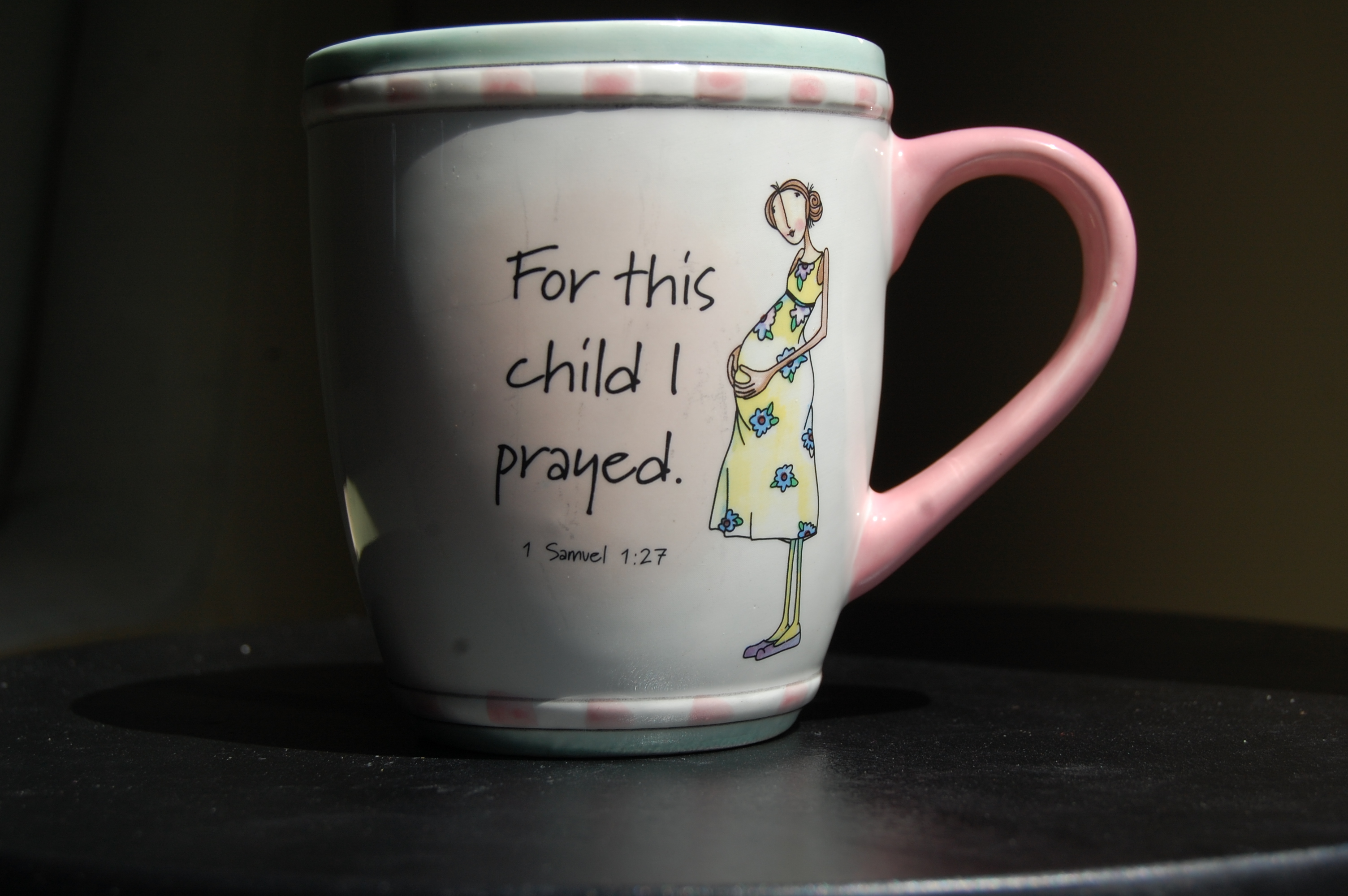
When we met in a charming seaside town midway between our homes for a spa weekend well into my third pregnancy, she said nothing of the fact that I couldn’t relax, that I was cynical, that something seemed ‘off’.  Instead, she gave me a mug to celebrate the impending addition to my family that said, “For this child I have prayed.”  When I told her what a sham I felt like because I hadn’t prayed for this child; that [she] had been gifted to me undeservingly, she said, ‘well, you’re going to pray for her now and when [she]’s here, aren’t you?’  So matter-of-fact, so trusting, so unfailing in her regard for me as a person, a mother.

DSC_0091

And when that something stayed ‘off’ far past labor and delivery, she gently and honestly broke the news to me, a headline I’d written but couldn’t read.  She’d been featured in a similar newsreel only a short time earlier.  She knew the signs, saw the struggles that someone who hadn’t been through them might have missed.  I gave her a firsthand account of postpartum depression without knowing what I was describing.  She saw herself in me.

And she saved me.

She listened to the horrible thoughts I couldn’t share with anyone else for fear they’d find out what a despicable mother I was.  She became a sounding board for all the worries running through my head.  She was my font of information on all things postpartum.  It was she who finally convinced me I needed to get help.  It was she who urged me to remove the stigma I’d attached to medication.  It was she who helped me see I wasn’t the only one who’d ever felt like a failure as a mother, a weak human being, a seriously flawed individual clinging to the sharp edge of a cliff.

Still, I fought her for a good part of the way.  I didn’t want to see myself in the mirror she was holding up to me.  I didn’t want the help she offered because it meant giving in.

But she didn’t give up on me.

She told me the things I didn’t want to hear – and kept doing so until I listened – because she wanted to help me.  She forced me to get the help I needed.  She didn’t want to see me suffer the same fate she did; she loved me so much, she wanted to shield me from it.

Like every child needs a trusted adult, so every one of us needs a confidant, a friend in shining armor; in my case, a faithful warrior, devoted to the cause of saving my soul and that of my family.  Someone who won’t give up on you even when you turn away because she’s showing you the dark side of yourself – even if you take it out on her.  Someone who sees it through to the bitter end of your acceptance and seeking of help, the start of your journey to healing.  Someone who uses her own empathic experience to lovingly see you through the darkest days of yours.

They talk about warrior moms.  Moms who fight for their children, their needs, their causes.  Moms who fight for themselves and their survival.  There are moms who fight for those who stand beside them, who pick them up when they fall, who drag them along when they stumble.  And it’s usually when we’re so bloody and battered, we can’t even think to ask for help, can’t even see we need it.  These moms lift us up in the midst of their own struggles.  They are the shining light on the hill.  Without them, our own lights would be extinguished.  All hail the friends, partners, mothers who battle for the survival and triumph of those face down in the trench.

I’d be nothing without mine.

Don’t be alone.  Don’t do it on your own.  Accept a little help from your friends.


Standard