Writing

2013 in review

Stoked with what the annual report for Chopping Potatoes reveals, especially when I see how much it’s grown since 2012.  Thank you so much for your support!


The WordPress.com stats helper monkeys prepared a 2013 annual report for this blog.

Here’s an excerpt:

The concert hall at the Sydney Opera House holds 2,700 people. This blog was viewed about 11,000 times in 2013. If it were a concert at Sydney Opera House, it would take about 4 sold-out performances for that many people to see it.

Click here to see the complete report.

Standard
anxiety, Identity, Living

Desperately Seeking a Daytimer

Second rewarm of my tea this morning.  Second start to holiday vacation for my kids thanks to a snowstorm.  Second application of warm socks and boots for the youngest who managed to lose her left one in a fall.

Final and total, complete agitation.

I rose to the insistent plying of my youngest to make her ‘brefkast’.  A detour into her sister’s room to find her playing on her iPad kept her there and left me alone with my laptop.  Instead of writing the three posts I should be or researching and revising the short story I should be, I putted around with email, online statuses, and reading blogs and comments other people had written.

I’m about as mushy as this 4-8 inches of snow will be once the temperature soars to a balmy 48 degrees on Monday.

How many pains in the asses do we have to feel before we become a cranky ass?

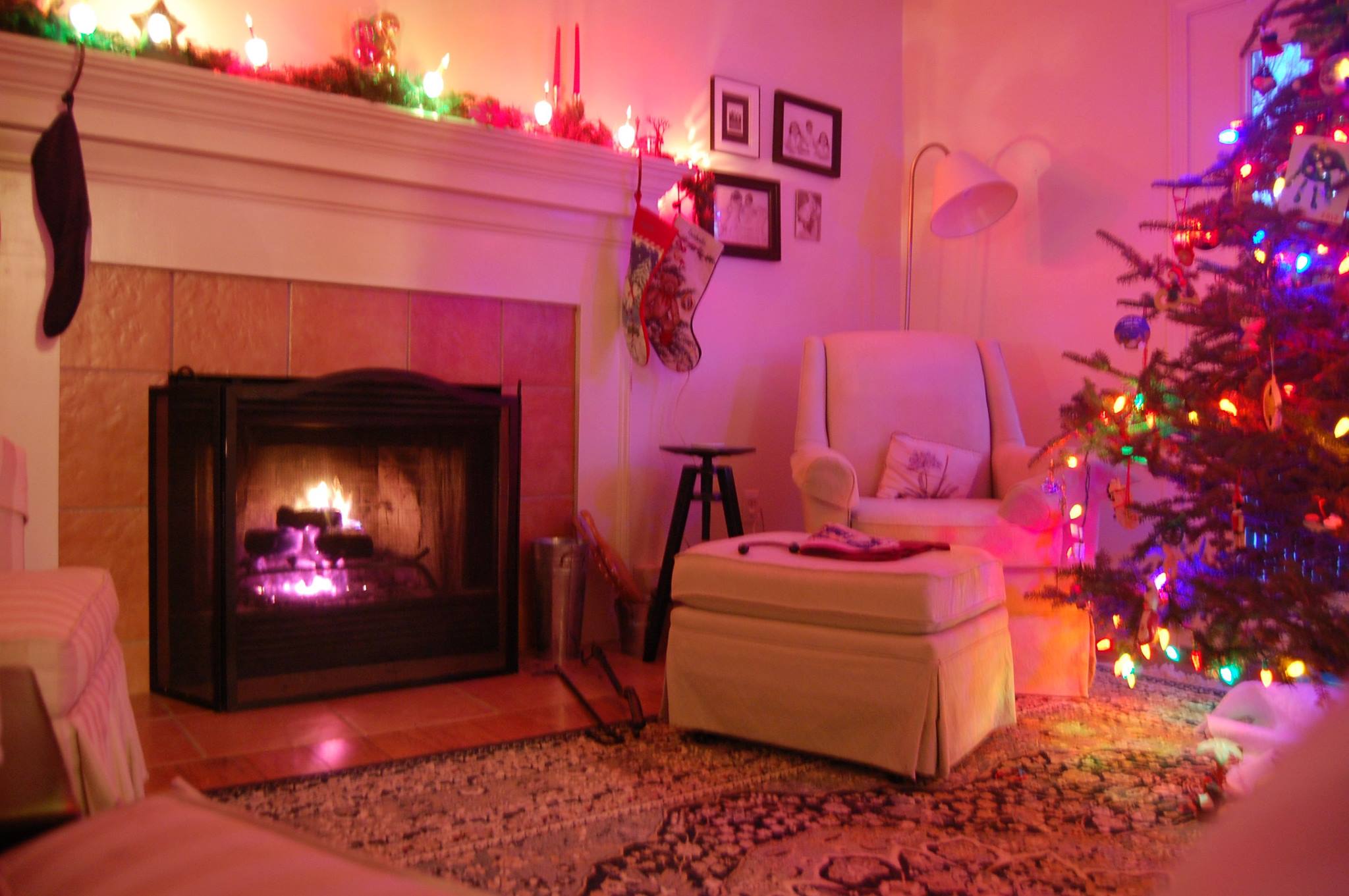
I’ve gone too long without a routine, this I know.  The four to five days following Christmas where we ambled out for a hike once we actually got dressed, ate whenever we wanted, and cuddled in actual or electronic firelight were divine.  I sorely needed them.  But one day of waking early, rushing to the bus stop, running errands, etc. etc, etc, and then back to that loosey-goosey schedule was not enough.  As much as I hate working to a clock, leaving me to structure my own days is a little like playing with that actual fire.

Plus, as excited as I am about some new ventures coming down the pike, they’re new and therefore anxiety-inducing.  Will I succeed?  Will I have enough time to complete my new tasks in addition to my existing ones?  Will I be able to create enough quality content for three blogs? (Rob and Ruby, if you’re reading . . . of course, I can! 😉 ) Perfectionism is the enemy, but if I’m putting my name to it, it best be good.  Nothing like self-induced panic and pressure.

We’re in that in-between state where the merriment of the holidays is no more, but it’s unclear what this new year will be.  Unknown strikes fear into the heart of the fear-a-phobe.

Which I suppose is why I sorely need a schedule.  One trivial, nitpicky way to get some tiny semblance of control over the whirling dervish that is now – my thoughts, my responsibilities, my needs, my children, my irrational, unfounded worries.  That should be one hell of a calendar.

Standard
Identity, Living, Poetry

How Low Can You Go?

My head keeps butting up against expectation

No amount of plying with my pronged horns can make it go away

Some holes poked, but never enough to tear the fabric,
to crumble the wall,
topple the tower

I can peep through the hole, see the happy people on the other side

Those who can see their blessings
who are pleasantly surprised by the unexpected
those overwhelmed by the ordinary, everyday miracle

Setting the bar is fine
but those who only try to go over
are always left in limbo

Standard
Children, Living, motherhood, parenting

Moms in Toyland

I assembled a trebuchet
Luke Skywalker slingshot ready to take out the dark lord
Ponies and Barbies and zebras, oy vey
Puzzles and playing cards
Flashlights, fleece, painted fingernails
A few minutes by the fireside
before I fill out the Christmas cards that just came in the mail today

Have fun assembling your Christmas treasures!
(Image from Mathworks.com)

Standard
Living

Fa La La LaLa

We’re on our fourth consecutive day of merriment.  Surprisingly, I haven’t crashed yet.  I just stare in a sort of middle-distance coma.  My oldest puked last night due to an overdose of chocolate.  My middle child hid in her room for most of the party last night because, first, too many people were looking at her, and, then, because she wasn’t getting enough attention.  My youngest wandered around petting babies and regaling adults with party conversation.  I got strong hugs from family I don’t see nearly enough.  I got to speak on the phone to another I didn’t get to see, but warmed to hear his voice.  For all the stress and worry in anticipation of the holiday, it left me with a warm and fuzzy feeling in addition to the exhaustion.  So my family found me in the woods and sat by the hearth for a while.  May you all be warmed by the fire of family with none of the third-degree burns.

Jennifer Basile

Standard
anxiety, Identity

Getting to Point A by Starting with ZZZZZZs

It occurred to me last night, as I drove in a dream-like state from sheer exhaustion, that the dreams we experience in REM sleep and those that our soul manufactures for our future do, indeed, intersect.

In the land of greeting cards and self-actualization, dreams are lofty ideals.  A higher state of being to which we aspire.  Some goal, which in the practical nature of the ‘real world’ seems too good to be true, unattainable.  If we could do anything with our lives, it is our dreams we would live.  Some bliss-inducing, talent-utilizing best form of our lives.  The realization of our truest potential.

In the land of our subconscious, dreams are bizarre alternate realities.  Different worlds where I tour Jamaica with Ziggy Marley, but don’t leave the restaurant until I collect the empty glass spice jars from the table that came from my kitchen.  Where another woman literally tries to insert herself between me and my husband.  Where I’m forever late to work, in danger of missing the bus, grossly under-dressed for some huge milestone in my life.

Ironically, the only way we remember dreams is when our sleep is interrupted.  The whole story, the important details would be lost if the alarm or an insistent child didn’t come calling.  And usually that’s perfectly all right.  More beneficial.  All those anxieties that would eat me alive – or that at least would gang up with those that torment me in my waking hours – are processed by my subconscious so I don’t have to worry about them later.  I’ve always been one for multi-tasking; if my brain can tick a few worries off the list while I sleep, fantabulous.

If my subconscious can harness its power into removing some of my anxiety while I sleep, I will be more able to achieve my waking dreams.  More at peace, calmer, even-keeled, ready to step up rather than be dragged down.  The physical processes of sleep prepare our mind and psyche to focus on achieving that other sort of dream – the ones that don’t even occur in our wildest dreams.

So while one sort of dream seems unattainable, the other bizarre, one begets the other.  Our subconscious and our soul working in concert to give us true vision.

I would LOVE to have dinner with you – if you bring the spice!

Standard
Identity, Living, Recovery, Spirituality

Really Hearing the Sound of Music

Everybody’s talking about The Sound of Music lately.

Julie vs. Carrie. Film vs. live performance. Old vs. new.

Initially I was appalled at the news of a SOM revamp with Carrie Underwood.  Who could mess with Julie Andrews’ dulcet tones?  I pushed it out of my head and got too busy to set the DVR.  After putting the kids to bed the night it first broadcast, I wandered downstairs to my husband’s channel surfing.  The remote lighted upon Carrie’s rendition of “The Lonely Goatherd”, yodels and all.  Woo Hee.  Bouncing and dancing and yodelling.  Can’t fault a chick for that.  I was thoroughly impressed.  She has a lovely voice.  But that’s all I watched.  I wandered off in another direction.

A few days later, my oldest daughter had some friends over for a mini-birthday celebration.  The movie this newly-minted nine year-old chose to watch?  The Sound of Music.  (original on VHS, baby!)  And the four other girls who attended sat in rapt attention and sang along!  My husband turned to me and said, “There is hope [for the next generation]!”

We found the televised version on-demand this past snowy weekend and that same daughter begged to watch it.  The five of us squished on the couch and did.  I don’t know whether it was that this new cast did such a bang-up job or if it was the sheer magic of the story itself that bore me along in its spell.  I couldn’t keep from singing.  I teared up when the Mother Abbess implored Maria to “Climb Ev’ry Mountain”.  I finished with a hope in humanity, the enduring strength and support of family, that standing for one’s ideals will pay off in the end.  My middle daughter requested to watch it again two days later when she returned from school.  All three girls sang and danced around the living room as if on alpine mountains.

What is it about this story that captures our imagination?

The music has become part of the cultural canon.  The refrains are easily learned and easily lodged in one’s head.  Their topics and the theme of the story itself is familiar in some way or another to us all.  We’ve all struggled with our life’s calling, finding a true mate, the personal vs political, facing up to or hiding from our problems.  Perhaps the most enduring theme of all is that love does indeed conquer all – even amidst dire struggle and imperfect circumstances.

For me, personally, the part that really struck a chord – that point in the movie when you could’ve knocked me over with a wisp of Edelweiss – was the conversation between the Mother Abbess and Maria when she balks at returning to the von Trapp home.  Maria asks, “How will I know which life is mine to live?” or some approximation of that (a line I don’t think was even in the 1965 film).  The abbess (portrayed by Audra McDonald) tells her emphatically that she must go out and look for it, at which point she breaks into a soul-stirring rendition of “Climb Ev’ry Mountain”.  Are you supposed to have life epiphanies watching network-television rip-offs of classic cinema?  I had a moment.

This conversation, these words, the Mother Abbess’ exhortation, the orchestral arrangment – they spoke to me of things I’d forgotten.  Things I’d known, but forgotten to pursue.  Things, necessities that have been dulled by constant use or made commonplace by their very existence.  Things I learned as a child – most notably when I was presented with a cross inscribed with its own exhortation: “Christ is counting on you to search.”

Christ is counting on you

I may have been like Maria, sulking behind the abbey’s walls because life hasn’t turned out the way I’d expected.  Maybe I’d forgotten how to climb those mountains – or even how to try.  I’d gotten lazy in my search for a dream that will make me want to live and love it everyday of my life.  And I’d forgotten to listen for the sound of music in the hills all around me.

The Sound of Music (1965) was playing on the hospital TV as I labored with my third daughter.  I vetoed my husband’s choice of some flavor of Law and Order, saying I’d be witnessing enough blood and gore that night.  Somewhere in my subconscious, I hoped it would soothe and inspire me.  I can’t say that it necessarily did, but I can’t help but think that, now, it’s brought me full circle.  That labor signalled the beginning of one of the roughest times of my life.  Perhaps the Mother Abbess’ exhortation has been sent to me again to snap out of it and get out and climb.

Standard
Children, Literacy, Poetry, Weekend Write-Off, Writing

Sky Magic

I grew up with many students who hated poetry.  Talented students.  Intelligent students.  Students who could write well themselves.  But understand what a poem was really saying?  And enjoy the process?  No way.

And then I became a teacher.  I worked with many teachers who avoided poetry, either because they had experiences similar to my former fellow students or because they figured their students would react in much the same way.

Somewhere between the playful lyricism of picture books and class study of extended texts, readers lose the magic of words, metaphor, and imagery, which is a missed opportunity for all.  Poetry uses words in beautiful and economical ways, providing teachable moments for literary terms and succinct expression.

That’s why when I find a children’s anthology of poetry, I am more than happy to check it out.  The latest one I’ve discovered is Sky Magic, a compilation by Lee Bennett Hopkins.  His volume, My America: A Poetry Atlas of the United States, with lovely illustrations by Stephen Alcorn, once part of my classroom library, is now part of the special collection I plan to share with my own children.  So I was eager to check out this other volume, illustrated by Mariusz Stawarski.

Every poem in Sky Magic evokes the dreamy nature of stargazing and sunny mornings.  Every one is accessible, even those written by ‘adult’ authors.  An excerpt from Tennessee Williams’ The Rose Tattoo mixes well with a poem by children’s author and poet Rebecca Kai Dotlich (whose poems in There’s No Place Like School, compiled by Jack Prelutsky, I love).  All are accessible because they use sparse language to tell stories.  All good poetry does so, through phrases and symbols, examples and metaphors.  And there is no child – young or old – who cannot appreciate a story.  Poetry anthologies made specifically for children have the added bonus of illustrations to add yet another dimension to the story.  Stawarski’s paintings are so evocative of dreamy days and nights, they bring figurative language to literal life.

Share a book such as Sky Magic with the young readers in your life – or the poetry phobes – and usher in the dawn of a new era: another form of storytelling and verbal vision accessible to all.

Legends

In the language of stars
lie stories of old
brilliant legends
told; retold.

Spelling out sagas,
spilling out light,
a mythical manuscript
filling the night.
– Avis Harley

Standard
anxiety, Identity, Living

Lowest Common Denominator

We’re taught to see the big picture.  The interrelationship of all things.  This keeps us all on the same page, united in our humanity, celebrating our differences in their similarities.  It helps us make meaning and induces awe.  I get it.  I value it.

But this mindset is antithetical to a ‘one day at a time’ mentality; a live in the moment attitude; that ever-present push for mindfulness.

Especially for an anxiety-ridden person such as myself.

How can I not ‘sweat the small stuff’, when it adds up to a whole mess of stuff?  Each tiny bit of tedium I must attend to throughout the day fills up the entire day.  I cannot shut off the mechanism in my mind that fits each peg into its hole in the mosaic of my life.

X leads to Y then to Z and every consonant clamors in dissonance.  I can’t hear the letter for the alphabet.

I’ll always be an English major, though I graduated a number of years ago.  I’ll always be a book reviewer.  An English/Language Arts teacher.  A writer.  A critical reader.  A literary theorist.  All this is type-set into my skin.  I eat, sleep, and breathe words, letters; their combinations, their phraseology.

I am forever searching for ways to form patterns, find themes, stack layer upon layer of meaning.

But what about when I need to reduce?  To distill an idea down to its purest form?  Base.  Primitive.  The smallest atom of an idea.  I need to reverse operations.  How do I learn to do that?

“The proper, wise balancing
of one’s whole life may depend upon the
feasibility of a cup of tea at an unusual hour.”
― Arnold Bennett, How to Live on 24 Hours a Day

Standard