anxiety, medication, parenting

Solitary Confinement


It’s not that I didn’t believe her . . .

My therapist told me that, while I may have had underlying anxiety for years, it hadn’t presented itself until I had one, two, three children because up until that point, it had been manageable. I could handle it. I’d organically and subconsciously found coping mechanisms. The fact that I could no longer manage it didn’t signal failure, but a new tenor to my life that was above and beyond – and that wasn’t going to change anytime soon. I balked at taking medication to control it, but she pointed out that there is nothing I can do to control the level of stress that accompanies three children – while I can assist my bodily systems and psyche with medication.

Intellectually, I understood it. I trusted her and her care. But there was a part of me that didn’t truly want to buy it. The control freak in me raged. I can do this! Even while popping the pills, I thought somehow, someday, I’d overcome this. I’d whip that three-kid schedule and lifestyle into shape and surmount the odds.

Then one day, four years, ten months into the anxious maelstrom that had become my life, I found myself alone. There was movement, noises on the edges of my consciousness, but it was gentle, distant. My husband came to kiss me goodbye before leaving for work and then I was truly alone.

I debated going back to sleep, but figured I’d be in that half-conscious state that would leave me feeling worse than if I’d gotten up early. I did roll around in my head various scenarios of what I might do with my time, but more mind blowing than my options sans kids was the quality of the time sans kids; that is, unfettered. There were things I wanted to do, things I should do, but nothing I absolutely had to do. For several hours, the majority of this fine day, I had to answer to no one.

I could eat when I felt like it. Nap when I felt like it (which I did end up doing to counteract the non-sleeping-in). Pee when I felt like it. I could open that new bag of crispy treats at midday and eat as many as I wished without vultures swooping down upon me. I could concentrate unencumbered on the tutorial for a new software program that’s been languishing on my desktop for lack of time (and be inspired to take said nap before returning to it 😉 )

There’s no such thing as perfection. I did need to intersperse my chosen activities with household duties due to the threat of family members coming to see the house for the first time. But even that may have been a blessing in disguise, as I finally found a home for the mound of summer attire that had taken over a chair in my room – which, again, would never have happened had I not been alone.

It was at some point during all this alone time, however, that I sat on the couch and stared at the gloomy scene out the rain-speckled window. I was still tired, I was still mushy-mush. I wasn’t channeling Gene Kelly in all my solitary resplendence. I was still the non-prioritizing, neurotic perfectionist able to unravel at the drop of a hat if things didn’t go according to plan.

The thing was – the plan was much more likely to stay stuck without three little whirling dervishes to spin it apart from the inside out. And if not, I could adjust accordingly, changing course according to my needs and neurosis. Or just chill out for the day until my thin skin thickened up accordingly.

It’s so much easier when things fall apart for one person than a whole tribe. And much easier to put the pieces back together. Actually, it would be more accurate to say that the whole tribe does not fall apart; in a poignantly fortunate way, I suppose, just its leader. And when it’s up to the leader to keep the tribe together, her own loose pieces rattle together until she has a day alone.

And since those days are few and far between, medication it is. At least I don’t drug alone.
 

Standard
Weekend Write-Off

Scars as Beauty


“On the girl’s brown legs there were many small white scars. I was thinking, Do those cover the whole of you, like the stars and the moons on your dress? I thought that would be pretty too, and I ask you right here please to agree with me that a scar is never ugly. That is what the scar makers want us to think. But you and I, we must make an agreement to defy them. We must see all scars as beauty. Okay? This will be our secret. Because take it from me, a scar does not form on the dying. A scar means, I survived.

In a few breaths’ time I will speak some sad words to you. But you must hear them the same way we have agreed to see scars now. Sad words are just another beauty. A sad story means, this storyteller is alive. The next thing you know, something fine will happen to her, something marvelous, and then she will turn around and smile.”

– from Little Bee by Chris Cleave


Standard
Maternal Health Month, Maternal Health Month 2014, may is maternal mental health month, postpartum depression

Work in(g on) Progress

When I started this blog chronicling my survival as a mother postpartum, I sought out other blogs with a similar focus.  My research took me all the way to South Africa.  I found Lebogang and her blog, For His Love.  A woman living a totally different life in a totally different part of the world felt the exact same way as me.  I was so glad to read my story on her pages with a different set of characters and timeline, especially since she was further along in her story, which meant I, too, would make it.  After all, that’s what the badge in the bottom right hand corner of her page said:

I survived postpartum depression.  You can too.

This image was like a magic talisman to me.  I clicked on it, half-expecting, I think, the spontaneous appearance of the how-to handbook for solving all my problems.  This mythical handbook did not appear – but Postpartum Progress did, which is, really, the next best thing.

Postpartum Progress is the brainchild of Katherine Stone.  She has built and branded a maternal mental health empire.  It started, as she says, with the blog, then a conference, and is now building its nonprofit status.  But while it started with Stone and her own struggle with postpartum OCD, its success is in the amazing community she’s created for women who all-too-often feel completely alone.

Simply their social media feed is enough to inspire hope, with affirmations, informational tidbits, and links to in-depth articles.  The blog and website offer a wealth of information and resources, that would help any woman while away the wee hours of the panicked postpartum morning before the doctor’s office opens.  And that may be precisely the point that Postpartum Progress exists.  To offer a voice and ear 24/7 to a struggling population whose problems do not adhere to office hours and are not as cut and dry as a short symptom list.

A disclaimer on all their pages states that the information and advice is not a substitute for professional care and consultation.  However, it is a place to start the journey and a companion throughout it.  It offers a place for women who have no vocal allies in their everyday lives, due to stigma, to find friends and examples of success despite struggle.

It is organizations like Postpartum Progress that give me hope for the empowerment, validation, and vindication of all women suffering from perinatal mood disorders.  Even ones like me, who are post postpartum.

IsurvivedPPD1

Standard
Identity, Legacy, Living

Battery and Rebirth

The land is repairing itself now from the spring deluge it experienced this past weekend. It is still trying to assimilate the stands of water upon its surface, soaking and sucking, trying to get back to base. Clogs of leaves and rivers of sand mark the slick black surface of tar. Mini mountains of rock crumble and crunch beneath car tires.

As I traverse curvy country roads and see nature doing its best at damage control, I realize it’s also pushing forward with its plans of renewal. It’s not just attempting to achieve stasis, it’s battling for the burgeoning growth that has been swelling beneath the surface for weeks. Carpets of moss are a brilliant green against the rust colored blankets of leaves up to their chins. In sunny snatches of land, the green points of daffodils are poking up. The air has lost its bite, but blows a breeze still fresh and new.

In this push and pull of survival and revival, I pass a farmyard with a basketball hoop. The grains of the weathered wood on the backboard peeking through the paint, it hangs sideways, the mottled metal loop of the rim vertical rather than horizontal. Of all the images I see in my travels, my mind’s eye freezes this frame.

Why does human ephemera coexisting with a totally divergent context appeal to me so much?

I ponder this as I drive on and suddenly realize why. All of us – broken backboards, bushes and trees swallowed by muck, humans sunk in quicksand – we all struggle to survive despite the forces that strive to push us down. And we do. Despite chipped paint and rusty bolts that no longer mount us firmly to our foundation, we stand. Though rivulets swell into rivers and strain our roots, we hold. Even while downward sucking motion seems inevitable to overcome, we keep our heads above the surface.

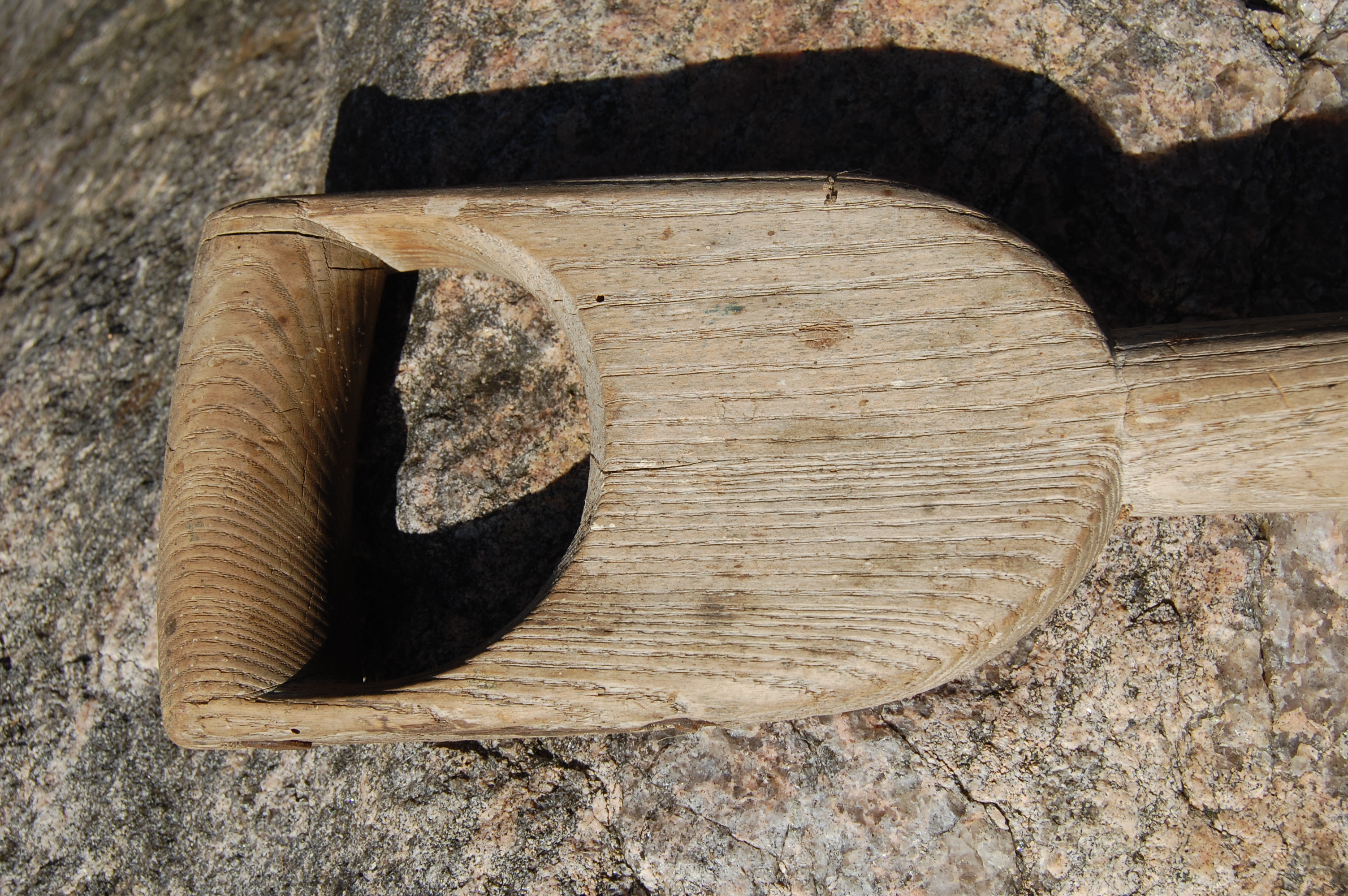
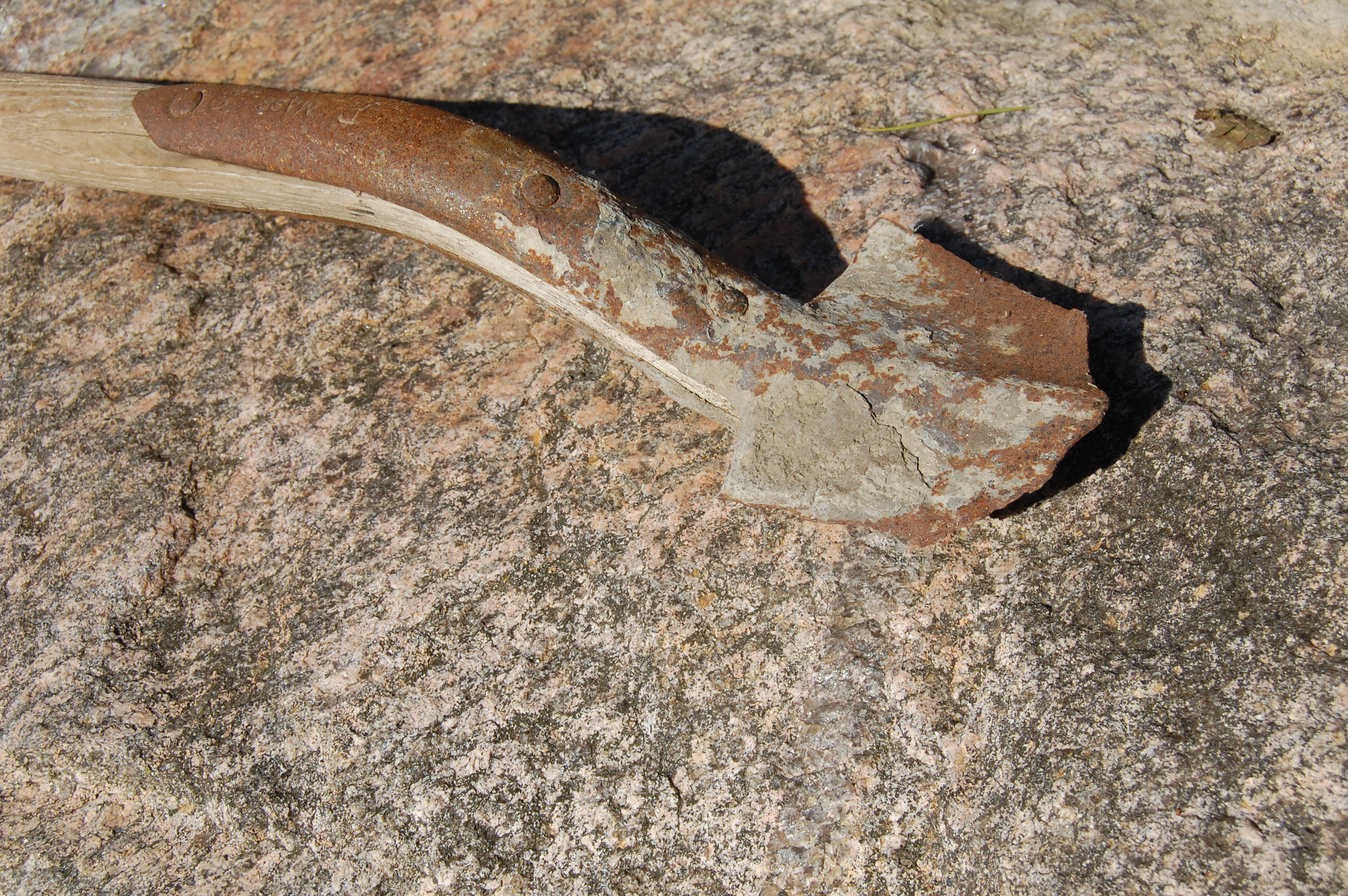
A few years ago, my mother was sorting through my grandmother’s old tool shed. An avid gardener whose advancing age had taken both her stamina and her partner, she hadn’t opened the shed in years. In the discard pile of rusty tools, I found a spadeless spade – a thick wooden handle leading to a corroded metal tip even sharper than its original piece. “Can I have this?” I asked. My mother looked at me incredulously. I wanted it as a reminder, that even in an imperfect form, items made with quality materials and craftsmanship would endure. Also, that any job is easier with the proper tools (ie of course you’ll get frustrated if you try to dig a hole with a broken shovel).

DSC_0056

DSC_0055

Even with the most vital part of its existence broken, this object will endure and possibly inspire others.

May you find your battered backboard or broken shovel.

Photos: Jennifer Butler Basile

Photos: Jennifer Butler Basile


Standard
Children, Literacy, parenting, Weekend Write-Off, Writing

The Scar

The title drew me in.

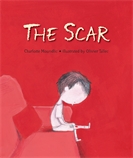
The way the red background swallowed the illustration of the small boy on the cover.

I was in tears by the time I was partway through the book.

0763653411.med

The Scar, by Charlotte Moundlic, is the story of a young boy preparing for, experiencing, and ultimately surviving the death of his mother.

This leaves a metaphorical and literal scar on him.  When he falls and scrapes his knee after his mother’s death, he remembers how she used to soothe him.  When the scrape starts to heal before he does, the boy keeps scraping at it to keep the comfort of his mother alive.

It was around this point that I really started crying.

Death, loss, self-mutilation – what kind of children’s book was this?

For the child who’s lost a parent, exactly the kind that needs to be written.

There’s no shielding those children from the pain, the hurt, the ugly truth.  They live the nightmare.

I was reminded of a man in a writer’s intensive that I took who told the story of student with special needs who found nearly every task throughout his day difficult.  He wanted students like him to read a story about them.  Even though it might be a difficult story to tell, a difficult story to read, there were children who needed a narrative to which they could relate, a way to know they weren’t the only ones to have experienced this.  They were not alone in the universe.  Maybe there were even people who overcame their difficult obstacle.

And while extremely poignant and slightly heartbreaking, The Scar does end on a positive note.  The boy, though always sure to miss his mother, allows the scar to begin to heal.

So what on the surface once seemed revolting, is now something we can look at without cringing – and, for some children, is absolutely essential.

Standard
Living, May is Mental Health Month, Mental Health

An Imperfect Porpoise

Balance.

The very word makes me twitch.

It’s supposed to be peaceful, magical, that neutral territory where the heart sings and your psyche lies in savasana.

That is, if you can attain it.

I’m forever striving.  I want to show that boulder who’s boss, shoving it up the mountain for good.  But if it doesn’t roll back over me on its way back down, it’s got so much momentum it just goes over the other side.

I lamented to my therapist that I just want to conquer depression.  I want to beat it into submission and be done with it.  I like closure.

2011-03-25-the-epiphany-of-sisyphus

Depression is not an open-close case.  It is full of decisions and appeals, a juggernaut of self-imposed juries.

For every bright spot, there is a chance of dark days.  For every low point, there is an arc of highs.  And sometimes it’s all over the road like a reading of the Richter scale.

Unfortunately (or not), this same concept applies to life.

Whether I like it or not, I have to take the good with the bad, the ups with the downs, the victories with defeat.

While Sisyphus has been the poster-child of my life as of late, a friend tried to introduce me to someone new. She said,

Here’s to imperfect progress–a gradual improvement of mood and attitude despite life’s natural ups and downs.

I’m trying to frame this in terms of my buddy Sisy and his vertical hangout.  I can’t.  A long, gradual slope comes to mind, maybe strewn with boulders along the way.  Or maybe it’s like that part of the trail where you hit the tree line and think the summit is just over the next hump, but it stretches on and on and up and up.  The view improves, but the trek is still arduous.

Rolling this new idea of imperfect progress around in my head, the words transmuted themselves into ‘an imperfect porpoise’, which not only made me laugh, but kind of fits.  I’m happy, but I don’t chirp like Flipper; can’t.  Some days I flit about the surface, skimming the waves, others I plunge into the depths.  And all the time, I like to turn words and things on their heads and see what comes about.  Porpoises are intelligent; I wonder if they over think things as much as I do.

What IS the porpoise of life, anyway?

What IS the porpoise of life, anyway?

“An Imperfect Porpoise” is my modern-day myth.  It is about the ever-elusive balance.  The disgruntled admission that this is what I need to seek, rather than domination or perfection.  And maybe that a moving target has less chance of being flattened by a boulder ;-).  Hey, old habits die hard.  This new guy and I are just getting acquainted.  Sisy and I go way back.  This whole life is imperfect anyway, right?

Standard
anxiety, Living, May is Mental Health Month, Mental Health

Entropy

I used to like you.

You were a concept I thought was rebellious, unique in its dysfunction.

I scribbled your name on the brown paper bag book cover of my science book.

I joked how my life was a measure of entropy.

I didn’t know that my worst day of stress or ill-preparedness back then was a cakewalk compared to now.

While entropy is supposed to be unpredictable, I can feel myself slipping into it.  That detached feeling while everything swirls around me.  Worries, permission slips, due dates, appointments, a specific pair of pants to be washed, thoughts, concerns, shopping lists, stresses.  I cringe as I await the fallout.  The important detail missed.  The distractedness in me leading to some major misstep.  I know it’s coming.  I know it’s only a matter of time.  I dread it.  It makes me sick.  Makes me feel like I need a keeper.  Yet I can’t stop the feeling, can’t prevent the catastrophe.

It’s only after the catastrophe that I am emptied – of the dread, the worry.  Only to be filled with sorrow, regret, and guilt.  Ashamed that I scraped the side of my car along the opening of the garage as I pulled in.  Mortified that the bus driver awaited my return at the foot of my driveway; that my children had to wonder where I was.  Weak with worry that I could do something so stupid.  And it’s in that low place that I determine such a scenario will never occur again.

And for a while, I am good.  I dial back the enthusiasm when scheduling things.  I plan ahead.  I try to allow for more time than I optimistically think I need.

But slowly, slowly I forget that ‘limp as a dishrag’ feeling following the sick rush of adrenaline and life ratchets up again.

exergy_tube

Is it like the volcano that releases all its pressure with an eruption and then lies dormant again?

Do I push and push and push until my psyche can’t take it anymore and I get set back to the starting block – only to do it all over again?

Sisyphus has been bounding around in my head a lot lately.  A friend pointed out that any upward or forward motion is good – even if it doesn’t result in reaching the summit.  I need to explore these ideas.  Because a whole lot of $#!7 keeps hitting the fan and it keeps on spinning.

Entropy is not my friend anymore.  Chaos is not anti-establishment.  It is insanity.  I know there will always be a measure of ‘can-go-wrong’ness in my life, in anyone’s, but I can’t let it build to the boiling point at set intervals if I want to live a peaceful life.

Standard
Living, May is Mental Health Month, Mental Health, postpartum depression

All the Rage

In the months that followed the birth of my third child, and things got increasingly harder rather than easier, I joked that it was a good thing I was nursing since, otherwise, I’d be a raging alcoholic.

It wasn’t until months later that I realized how true that statement was.

Per what seems to be an emerging theme (re: pertinent, but heretofore hidden, family mental health history), I’ve been learning more and more of the role – genetic and otherwise – that alcoholism has played in my family.

Several relatives on both my maternal and paternal sides, going one, two, three generations back, have suffered from alcoholism.  Or mental illness resulting in alcoholism.

There are a few instances, at least, in which I know that relatives ingested alcohol as a means of self-medication (which apparently research has shown men are more likely to do than seek out professional help).  I can’t speak to the exact motivation as it wasn’t mine, but I wonder if it had something to do with an admittance of a problem, a need for help, being seen as a sign of weakness.  Or the oblivion of an alcoholic high allowing one to deny the pain or problem in the first place.

Receiving the various members of a raucous family after a long, exhausting day, sitting down to a dinner made in fits and starts, complained about for not having the right ingredients or all the wrong ones, enduring the wall of noise, the interrupted conversations, the fights, the ignored directions and requests, knowing an hour of wrestling wily alligators into pajamas and bed lies between you and relaxation – that goes down much easier with a side of adult beverage.

But when I found that it wasn’t just easier, but more enjoyable; that I was in a better mood, an altered mood, with alcohol, I began to wonder if there was a problem if I needed a drink to enjoy it, not just endure it.

Then one day, after a heinous day at home – not that the behavior of the children was exceptionally horrible, but my state of mind certainly was – I opened the fridge to get probably the two-hundred-and-fifty-seventh cup of chocolate milk of the day and saw a lone bottle of beer left from the weekend.  It was mid-afternoon, not five o’clock somewhere.  It wasn’t a hot summer day.  I hadn’t just picked up some salty smattering of take-out.  I knew if I drank it then, I’d be drinking it for all the wrong reasons.

Sure, it would be a treat like the bowl of ice cream I’d savor on the couch after the kids went to bed.  But just like I shouldn’t reward myself with food, so I shouldn’t soothe myself with beverage.

When I made that ill-fated joke way back when, my father shot right back at me with a quick retort.

“You know that saying, ‘You kids are driving me to drink’?  There’s a reason for it.”

It’s easy to fall prey to the societal more that a tough day deserves a drink.  It’s also important to know your family history and your own limitations and take those into account.  I’m so paranoid and so self-aware and nursed for so damn long 😉 that I don’t think I’d let alcohol become a problem.  But does anyone with a drinking problem set out with that goal in mind?

Some of the happiest drunks I’ve known were the ones with the deepest hurts inside.  Hopefully someday there’ll be a way to heal all the psychological and physical ailments of alcoholism.

Standard
Living, May is Mental Health Month, Mental Health

Laugh So You May Not Cry

My grandmother came from a large first-generation Irish-American family.  All blessed with a wicked, but subtle sense of humor and superb poker faces, it was easy for their humor to run under the radar.

But what if the humor itself hid something below the surface?

One of her siblings, a woman I never met due to her premature death and my postponed birth, made dear through family love and lore, apparently had the sharpest wit imaginable.  She brought joy wherever she went and had everyone in stitches.

When I was older, I learned that she had suffered from depression.  My first inclination was to think how ironic that was given her ability to inject laughter into any situation, but I realized that made her the perfect candidate, then, for family comedian.

It made sense that the person with the most pain to hide would be the one who needed the most diversion; both keeping her mind off her own problems and drawing others’ attention away from them.

It’s easier to crack a joke than to admit you’re trying so hard to force a smile your face might crack.  It takes less energy to make a witty remark drawing a laugh than dealing with the awkward silences and looks of pity.  There’s less mental energy and anguish in concocting playful banter than constructing a viable explanation for your moods.

My senior English teacher, who later became a mentor as I prepared for an education career myself, when dealing with a particularly challenging class or situation, would say, ‘Laugh so you may not cry.’  I quoted that line as I waited out the next contraction in my difficult third labor.  My midwife couldn’t believe I still had that attitude at that point in the game.  ‘You have to, right?’ I asked.  ‘Not everyone does, though, Jen,’ she answered.

I had to.

Not finding some bright spot, some positive attitude, was akin to curling up in a ball and dying.  And that was not an option.  So, then, there really was no choice.  By process of elimination, grinning and bearing it was the only way to move forward.

Whether it’s an avoidance tactic or a coping mechanism, humor gets a lot of people through their days.  And from that deep, dark place of truly authentic experience comes some damn good material.

Standard