Claudio-Duart-Designer pixabay canva
Living, Mental Health, Survival

Five Years On

I’d like to blame my current malaise on COVID.

Not the having of the virus, though two times was punishment enough. (I know, it certainly could have been worse. Believe me, I know.)

And while the pandemic and attendant lockdown messed with my time-space continuum royally, it started in the months before.

When I let myself get so low, I had a near-panic attack just going to the doctor’s office to ask for meds.

When I got so low, I let my mind trick me into thinking needing meds was a moral failure on my part.

When I stumbled around in a fog so thick, I didn’t realize how bad it had gotten.

And then as I climbed out, I felt the need to tell the story.

I knew I needed to explain how I’d gotten there – for the mental health narrative and for my own mental health.

But the story was so huge. The path so steep and craggy, I knew not where to begin or how.

And the more time passes, the harder a thing is to tell. Details forgotten, edges dulled.

And then the world stopped.

We were all in survival mode. Myself acutely.

I thank God for the fortuitous timing of that first appointment.

For if I hadn’t started meds when I did –

thrown into ‘homeschooling’ and online learning and personal loss from afar. . .

But after months of bizarre, those details began to be forgotten and those edges dulled.

And this was life.

We were expected to pick up the baton and keep time

when time was wonky, hearts were broken, and psyches scarred.

Five years on

I’ve picked up bad habits, sloth and sipping alcohol.

Smack-dab in the middle of perimenopause

and the slog of midlife.

What started as peeling back the layers of over-exhaustion and exertion

flipped the other way into inert.

Achieving perfection and avoiding failure by not attempting at all

has settled into paralysis.

And now, what is life, but this fragile thing that can be taken and wrenched dry in mere months.

When the acute sorrow is gone and you’re left with nothing but the days

and another load of groceries to unpack.

Five years on

and I still can’t tell you how I got here.

But I have begun.
Standard
Identity, Literacy, Writing

Be the Book

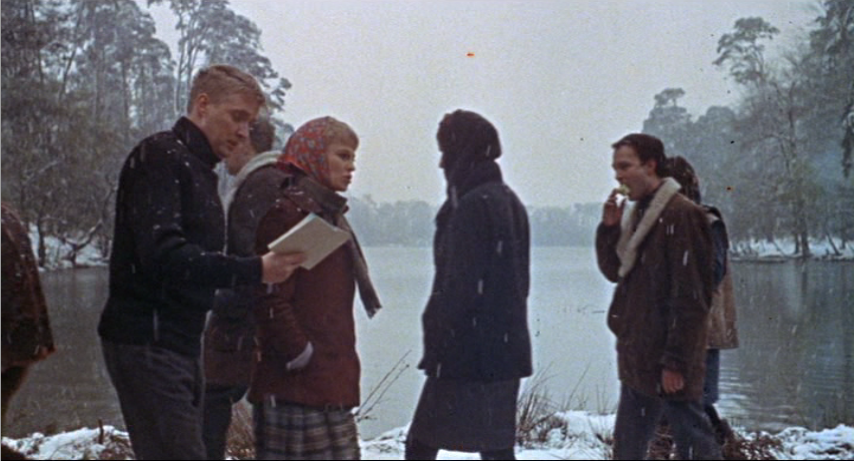
I think all frustrated writers, those in the fits and starts, the various stages of creation and denial, dream of becoming the next great American novel.  Like the bedraggled outcasts wandering around in the flickering firelight murmuring lines from books at the end of the Fahrenheit 451 film, we imagine our stories and us as one, words burgeoning forth from our being.

fahrenheit

When I first started to take my dream seriously, I mentioned it to a close friend.  As we discussed the perils of the publishing world (read: nearly impossible to enter), she suggested, that since I taught middle level ELA and studied that literature extensively, I write young adult literature: an up-and-coming worthy field and one not as constricted by that impermeable culture (at least at the time).

I had the workings of a character already, her life – or at least neurosis – already well on its way.  And her neurosis, while certainly presenting itself in an adult way then, could easily be adapted to any stage of the human condition.  So I imagined Kathryn as a high school senior, about to embark on the most significant journey of her life thus far – with no freakin’ clue where to go.

I drafted her all the way through her preparation for graduation, her stretching and breaking, hitting rock bottom, and starting to put the pieces back together, shedding her sarcastic armor in favor of some spiritual guidance.  She hasn’t reached her destination at the end of the draft, but she’s got her suitcase packed and some of the itinerary fleshed out.

Only one problem: my YA novel wasn’t exactly YA.  It straddled the line between adolescence and that liminal space beyond.  Transitional, I believe they’d call it.  And when I looked back over what I’d done, it was the time after she’d left high school that I liked the most.  Broken into two parts, the second was longer, stronger, and more developed.  Had I written Part One to satisfy the YA gods before I got to the meat of what I really wanted?

Kathryn was born in one of the first depressive periods of my life – even though I didn’t necessarily know it at the time.  Not to say that I didn’t feel the movings of it in high school (particularly at the end where I chose to place the beginning of Kathryn’s story), but it’s been a definitive part of my adult experience.  And I know what Kathryn grows into, in this alternate universe where a spiritual awakening didn’t occur in post-graduate studies.  Not to say she’s not an amazing person as a young woman, but holding her to the fire longer strengthens her mettle even more.

And now the true question: would this novel be stronger and serve the world better by seeing a woman through her darkest days of mental illness and how she somehow comes out the other side?  Is that what this story is meant to be and I was trying to cram it into some other mold?  Yes, I could make it work – and well – in its other incarnation, but would I be ignoring what it’s been trying to tell me from the beginning?

Have you ever known the answer before you’ve asked the question, but need to go through this circuitous route before you trust yourself?  Or not even trust, but just listen to that little voice that’s been there all along?

Peter Johnson told me you have to write the story the way it’s meant to be written.  You can’t worry about convention or trend or even length.

Maybe I’ve finally learned that all you need to worry about is being true to yourself and your characters.  Maybe now I can be the book.

Standard