Racism

The Madness of Post-Racism

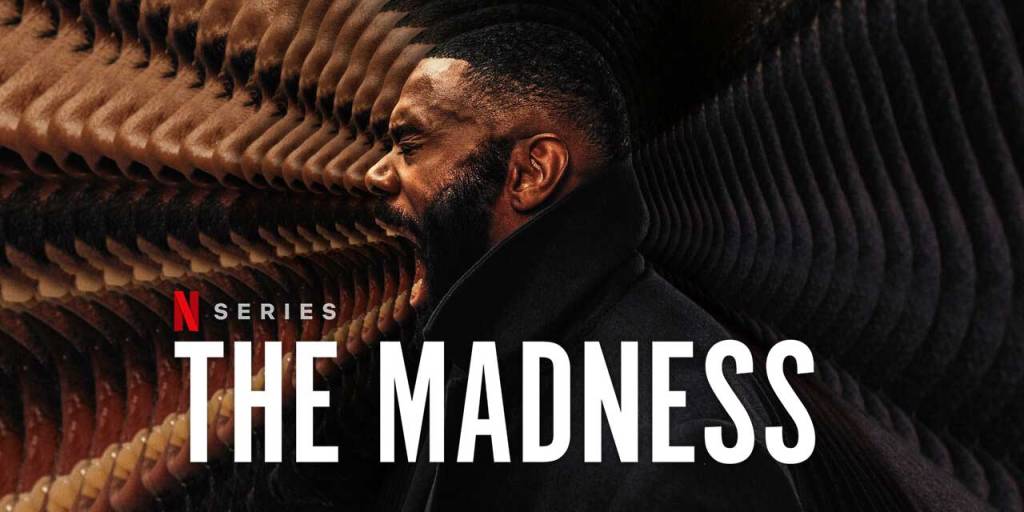
The Madness Coleman Domingo Netflix

The election of Barack Obama signaled the dawn of post-racism in America. 

And yet here we are, sixteen years later, in the murky half-light of a sun that just can’t break through the clouds. 

Series like The Madness, recently released on Netflix, reflect this atmosphere our nation finds itself in. 

Woke enough to see stories of personal growth fighting alongside and against systemic racism.

Enlightened enough to document and criticize constructs that oppress and limit. 

Yet realistic enough that Muncie Daniels’ living nightmare seems very much a possibility. 

Growing up white in the last few decades of America, fictional TV did (and would) not offer the true experience of people of color.  Eric Estrada offered a palatable Hispanic citizen as an officer of the law.  Robert Guillaume spoke a perfect King’s English as he politely answered the door.  Hollywood very much curated the vision of people of color.  If we did see the struggle of their experience, we certainly didn’t blame ourselves for it. 

We decided we wanted to have as many Black characters as possible in the show. Part of what I think we did in the show, and I think is really cool, is that this is a show anyone can watch and enjoy, and we are treating our Black characters, our primarily Black cast, like most shows treat white characters. They can just be people. They can be themselves because they’re not one of the two Black people in the show [and] have to represent all Black people. They can just be people. 

VJ Boyd, co-showrunner The Madness in The Hollywood Reporter

In The Madness, Muncie Daniels’ struggle is very real.  He must balance internal conflict with the outside forces that threaten to destroy him. 

Muncie Daniels’ situation is amplified and magnified for dramatic effect, but the frustration and helplessness that he feels very early on – in conversation with Kwesi (even before he’s forced to drop his case) and especially in the interrogation room with Philadelphia police – are palpable.  They are meant to be and feel outsized here because often the constructs racism has erected are unscalable.  A person of color may not find himself at the center of a conspiracy master plot, but the exaggerated elicited emotions here serve to prove the effect in any situation where personal actions and the truth don’t necessarily enter into the equation. 

The generational experience also weaves a meaningful thread through this story.  Muncie is haunted by the ghost of his father’s actions.  Isiah, while somewhat of a father figure, also reminds Muncie of his resemblance to his father’s flaws.  Demetrius corrects his father on the terminology of his generation when Muncie tries to say D’s friend lives in the projects.  And while Kallie is also Muncie’s offspring, she is just older than Demetrius to offer a sage outlook on his performance as a father and what his actions and attendance say about him.  The many ages and stages of living in the racial state that each generation did are well represented and contrasted.  The interactions between generations do well to represent the influence and evolution of experience. 

It is refreshing to see a mainstream series accurately reflect what has survived the ‘post-racism’ movement of America.  Unfortunately, there is always another Rodney Kraintz, as he himself posits to Muncie in the final scenes.  There is always a larger, more powerful, and insidious construct pulling the strings behind the scenes. 

Our nation has ticked the needle to a vibration just high enough to reflect the struggle and validate the experience – but not enough to dismantle the attitudes and oppression. 

Great change always begins with the artistic vision and lens, but how do we, as individuals and a nation, change the unjust reality people of color face in our nation?   

We can start by exposing the madness for what it is and not allowing it to activate the madness within us. 


As always, any social commentary of racism and its wide-reaching effects made in this blog are made with full acknowledgment of the fact that they are through the lens of my whiteness. 

Related:
‘The Madness’ Star Colman Domingo Talks Triggering Parallels and Why He Wants a Season 2

Standard
Writing

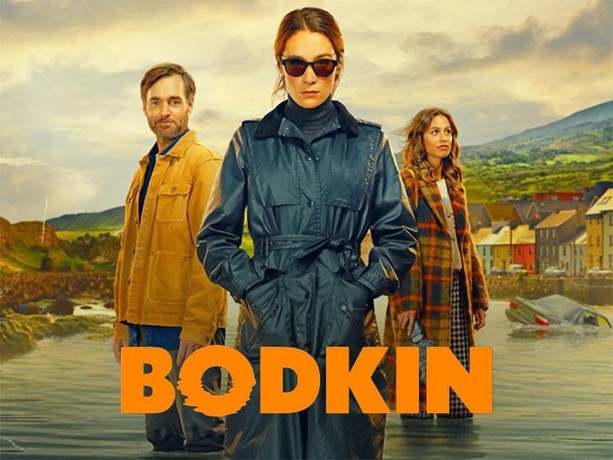
Bonding through Bodkin

I started watching Bodkin because I love a good mystery. 

I sound like the little old ladies who used to check Agatha Christie out of the library, but I’ve been a fan since my Nancy Drew days.  Read my first Agatha in junior high.  Wrote the book report.  Went on a Criminal Minds bender when my youngest was an infant.  Nothing like a sleep deprived foray into psychologically deviant minds. 

Now my cup of tea is usually accompanied by a procedural.  As long as the sun shines, I can deal with initial gore or grit for the sake of a suspenseful solution. 

I needed a new binge and there was my recently added Irish series to fill the bill.

Sure Gilbert was goofy (buffoon actually is how Dove refers to him) and the archetypal turns of phrase were expected, but my ancestral funny bone appreciated the familiar.  Both Dove and Seamus’ stand-offish yet authentically honest wit was a salve to my Celtic soul.  And the series itself has a self-deprecating manner.  When minutes after the trio of protagonists steps foot in the local pub Teddy staggers up from his barstool and sings a lyrical ballad, Dove mutters behind her pint, “That does not usually happen.” 

But the frame of Gilbert’s incessant search for the ‘story’ is what truly makes this series sing. Eventually we learn that the silly American came to Ireland for a story better than the one he was living, but everything starts with the fatal effects of Dove’s insatiable search for spilling the truth. As mysterious details come about, we learn it is the story of Dove’s past that haunts her. Emmy is only just realizing that she has a story.

Stories and folklore are integral to Irish culture.  Within the larger frame of Gilbert’s podcast, there is Samhain.  Nestled within that is the historical tradition and tragedy unique to the town of Bodkin.  From that comes the many layers and intertwined threads of the daily interactions of the townspeople. 

But around episode six, Gaelic becomes global.  It opens with Gilbert describing folktales as not only stories, but warnings, saying that “in Ireland they tell the story of the fetch.  The fetch is your supernatural doppelganger.  And if you happen to see yourself, to see your fetch, it means you’re going to die.”

I’ve been reading Timothy White’s Catch a Fire: The Life of Bob Marley, wherein he goes into great detail of the Rastafarian and Afro-Caribbean traditions that influenced Bob Marley’s life and lyrical philosophies.  Around 1964,

“He [Bob Marley] believed he was possibly under siege by obeah-directed demonic forces and might soon need a ‘shedda-catcher’ (shadow-catcher, a myalman).  Omeriah [Marley’s grandfather] . . . had performed such services for others . . . in the country, when someone believed he had lost his shadow, meaning his temporal soul force.”

Timothy White

And a few years later as Marley learned the tenets of Rastafarianism, Mortimo Planno explained that “before we are born, we have a name, and when we enter this world, we get a new name.  In each man is a separate genesis joined to that name, and most men learn their name only at the hour of their death.  A very few, however, learn it beforehand, along with the knowledge of their own end.”

Ireland and Jamaica are very different places, but the parallel story of knowing or seeing, naming oneself brought these two together like connective threads spun across the sea.  Every culture, every individual yearns to distill its story and yet stretch it in relationship with others.  Story, for every one of us, is crucial to existence.   

In the final scenes of the series, as we hear Gilbert’s closing words and transition into Dove’s epilogue, we hear that it’s not so much what has happened in the past as what story we choose to tell about it. Which is such a powerful reminder.  Not of fabrication, but of which details we choose to focus. 

How frequently do we cause ourselves pain with a negative monologue?  By frontloading our failures?  By refusing to showcase the successes? 

If we can’t change the things that have happened, maybe we can change the story we tell.

Dubheasa Maloney

Just as a narrative shifts with a new point of view so does our outlook with a different lens.  There are times, however, when the lens is a prism reflecting many of us in its image.

Standard