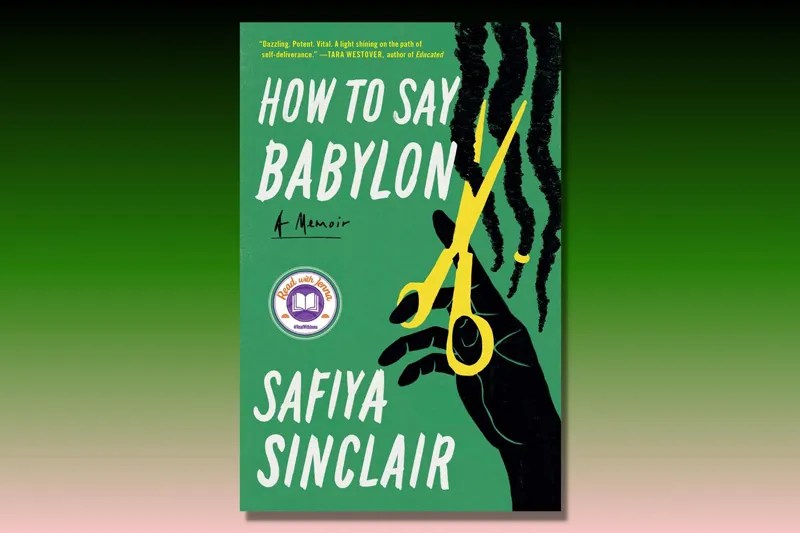
How to Say Babylon A Memoir Safiya Sinclair
Weekend Write-Off, Writing

A Word That Leapt Aflame in My Mind

“I sounded the lines out aloud, feeling the rhymes growing delicious on my tongue.  Later I went to the Encyclopaedia Brittanica and looked up William Blake. I couldn’t believe it.  He died nearly 170 years before me, but his words grew a thriving forest in my head. A thought, I understood it then, and its incendiary mind, could outlive itself. A well-made word could outspan carbon, and bone, and halved uranium.  Until now, I imagined the world divided in two halves: the world of the spiritual, of my parents: Jah and levity, vibrations, energies, and chakras.  And then, there was a world of things I could measure and understand, visible and knowable.  Now, I felt there was another world just out of reach.  A gossamer wing flashed against the bedroom window.  I took out my journal and wrote my first lines of poetry in vines of cursive.  Wings in the sunlight, wings against my dress.  I pulled wing after luminous wing from my mouth. Watching them flutter alive with each word, my hands a vibrant garden. The poem was called ‘The Butterfly,’ the first to pull itself from the soft veil between all worlds, a seam to slip through to any place, any time. I knew then that as long as I had a word that leapt aflame in my mind, I would always be living in an age of wonder.”
from How to Say Babylon: A Memoir by Safiya Sinclair

Standard
church window Job 6:37
Weekend Write-Off

To Again Become

When she can’t sleep at night, she tries to remember the details of all the rooms where she has slept: the one she shared with her parents until the age of thirteen, the ones at the university residence and the Annecy apartment facing the cemetery. She starts at the door and makes her way around the walls. The objects that appear are always linked to gestures and singular facts: in her room at the summer camp where she’d worked as a counselor, the mirror over the sink where some boy counselors had written in her red Diamond Enamel toothpaste, ‘Long live whores’; the blue lamp in her room in Rome that gave her an electrical shock each time she turned it on. In those rooms, she never sees herself with the clarity of photos, but blurred as in a film on an encrypted TV channel. Or she sees a silhouette, a hairstyle, movements – leaning out of a window, washing her hair – and positions – sitting at a desk or lying on a bed. Sometimes she manages to feel she is back inside her former body, not the way one is in dreams, but more as if she were inside the ‘glorious body’ of the Catholic religion, which was supposed to resurrect after death with no sensation of pain or pleasure, heat, cold, or the urge to urinate. She doesn’t know what she wants from these inventories, except maybe through the accumulation of memories of objects, to again become the person she was at such and such a time.

The Years, Annie Ernaux

Standard