Kramer painting Seinfeld
Depression

Music, Mood Disorders, and Manifestation

At some point in my life between the end of high school and becoming a mother, when I had time to ponder and plan such things, I dreamed up the perfect playlists for various moods.  I wanted to create mix-tapes (and then burned CDs) ready to roll on appropriate occasions.  When getting amped up for an evening out, high energy dance numbers.  When nursing a lonesome melancholy, low fi instrumentals and lyrics that reverberated deep in my soul.  Either way, a continuous loop of pertinent music that did not necessitate the shuffling of CD cases or channels. 

I remember especially wanting the low fi loop.  I don’t think it was so much about maintaining that mood, but that only certain sounds were tolerable during it.  If no person around me could understand how I felt, the aching melodies with which I resonated could at least reflect it.  While I wallowed, I at least had a soundtrack and a companion. 

As my own girls approached this age, my two oldest with wildly different tastes in music, the idea of emo came into being.  Outside of the scoffing my husband and I made that it had all already been done in the name of goth, there was almost a mocking attitude toward this music and lifestyle.  I got the sense that my kids and those their age who didn’t identify as emo feared turning so if they listened to the music. 

The Cure fan in me was insulted.  Why discount music based purely on the associated stereotype?  Now, I was not defending Panic! At the Disco, but I felt it was dangerous to swear off an entire category of music and its fans simply because they were misunderstood. 

And while I wore my darkness in the quiet of my teen bedroom ensconced in sound, such mocking obviously struck a chord.  What about the kids who needed a musical companion to confront or survive the darkness inside? 

That’s when I started wondering what came first: the Cure fan or the depressed teen?  Boys (and girls) about to fall out or those who already down?

Was the music a crutch or did it egg the depresso on? 

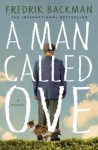
During a summer when my then three children were home on summer vacation, I discovered the book A Man Called Ove by Fredrik Backman.  I loved it so much, I wrote extensively about it, but in describing its eponymous main character’s drastic means of dealing with his deep depression to a relative, she asked whether it was a good idea for someone dealing with her own depression to read such a novel.  Ah, I scoffed, I’ve already been so freaking low, what else can happen?  From then on, I read it with a ‘come at me’ attitude, daring the book to do its best. 

Backman’s treatment of depression and the loneliness it breeds was achingly beautiful.  He handled Ove’s character with such compassion and dignity – while also being starkly accurate.  I appreciated the unflinching reality of the illness from which I also suffered.  And yet, the realistic descriptions did bring back my own reality.  Even in memory, the feelings were difficult to relive.  Come at me, they did.

And so a few weeks ago, like a dolt, I plucked another questionable title for such a highly sensitive survivor as myself off the library shelf.  The book jacket description of My Year of Rest and Relaxation by Ottessa Moshfegh –

“A shocking and strangely tender novel about a young woman’s efforts to duck the world by embarking on an extended hibernation with the help of one of the worst psychiatrists in the annals of literature and the battery of medicines she prescribes”

A Year of Rest and Relaxation by Ottessa Moshfegh

– piqued my mental health-abstract fiction-tragic hero-loving, meaning seeking self’s interest.  Never mind that ‘ducking the world’ was high on my postpartum mother’s list.  It was like Kramer’s portrait in Seinfeld.

Kramer painting Seinfeld
“He is a loathsome, offensive brute. Yet I can’t look away.”

I wondered whether reading about a woman who obviously did not deal with her ennui by healthy means was a narrative I should entertain, but I threw it into my bag of books, alongside Clark the Shark and Elephant and Piggie

By the time I’d powered through the three other books I’d selected – in hopes of inspiring juvenile summer reading, but ended up reading in moments stolen between snack-getting, screeching, and screen time – I’d forgotten what the fourth book at the bottom of the bag was. 

Oh, I thought as I pulled it out. 

Reading late at night and in a bleary-eyed early morning state may not have aided my digestion of this book.  The end of the summer with kids all sick of each other and me with a new school looming over all of us may not have helped my self-esteem either.  I mentioned my possibly poor choice of books to my therapist.  She said, at the very least, you can reflect on how things could always be worse.  Which made me laugh, of course. 

Moods do tend to overcome me.  Even other people’s.  But if I pull myself out of the moment to take stock of my mood, especially in relation to everything else – the big picture as they say – I should be all right.  Even with ennui and affective moods and music.  I won’t blame my depression on Robert Smith just like I won’t become a psychotropic fiend a la the young woman having a year of rest and relaxation. 

Just as flies didn’t issue forth from mud in medieval times, moody music doesn’t cause depression.  Do people who suffer from low moods tend to gravitate toward such music?  Perhaps.  Would I be as compelled to read novels about mental illness if I didn’t suffer from a form of it myself?  Probably not. 

Everyone needs to be conscious of the media they consume – especially those who are highly sensitive. 

Standard
Automobiles, Weekend Write-Off

You Can Tell a lot about a Man by the Car He Drives

“And there were very likely people who thought one could not interpret men’s feelings by the cars they drove.

But when they moved onto the street, Ove drove a Saab 96 and Rune a Volvo 244. After the accident Ove bought a Saab 95 so he’d have space for Sonja’s wheelchair. That same year Rune bought a Volvo 245 to have space for a stroller. Three years later Sonja got a more modern wheelchair and Ove bought a hatchback, a Saab 900. Rune bought a Volvo 265 because Anita had started talking about having another child.

Then Ove bought two more Saab 900s and after that his first Saab 9000. Rune bought a Volvo 265 and eventually a Volvo 745 station wagon. But no more children came. One evening, Sonja came home and told Ove that Anita had been to the doctor.

And a week later a Volvo 740 stood parked in Rune’s garage. The sedan model.

Ove saw it when he washed his Saab. In the evening Rune found a half bottle of whiskey outside his door. They never spoke about it.

Maybe their sorrow over children that never came should have brought the two men closer. But sorrow is unreliable in that way. When people don’t share it there’s a good chance that it will drive them apart instead.

Maybe Ove never forgave Rune for having a son who he could not even get along with. Maybe Rune never forgave Ove for not being able to forgive him for it. Maybe neither of them forgave themselves for not being able to give the women they loved more than anything what they wanted more than anything. Rune and Anita’s lad grew up and cleared out of home as soon as he got the chance. And Rune went and bought a sporty BMW, one of those cars that only has space for two people and a handbag. Because now it was only him and Anita, as he told Sonja when they met in the parking area. ‘And one can’t drive a Volvo all of one’s life,’ he said with an attempt at a halfhearted smile. She could hear that he was trying to swallow his tears. And that was the moment when Ove realized that a part of Rune had given up forever. And for that maybe neither Ove nor Rune forgave him.

So there were certainly people who thought that feelings could not be judged by looking at cars. But they were wrong.”

– from A Man Called Ove by Fredrik Backman

Standard
Weekend Write-Off

For the Love of Saab

“In the parking area outside the office stood an extremely old and worse-for-wear Saab 92. It was the first motorcar Saab had ever manufactured, although it had not been in production since the significantly updated Saab 93 had come onto the market. Ove’s dad recognized it very well. Front-wheel-driven and a side-mounted engine that sounded like a coffee percolator. It had been in an accident, the director explained, sticking his thumbs into his suspenders under his jacket. The bottle-green body was badly dented and the condition of what lay under the hood was certainly not pretty. But Ove’s father produced a little screwdriver from the pocket of his dirty overalls and after lengthily inspecting the car, he gave the verdict that with a bit of time and care and the proper tools he’d be able to put it back into working order.

‘Whose is it?’ he wondered aloud as he straightened up and wiped the oil from his fingers with a rag.

‘It belonged to a relative of mine,’ said the director, digging out a key from his suit trousers and pressing it into his palm. ‘And now it’s yours.’

With a pat on his shoulder, the director returned to the office. Ove’s father stayed where he was in the courtyard, trying to catch his breath. That evening he had to explain everything over and over again to his goggle-eyed son and show all there was to know about this magical monster now parked in their garden. He sat in the driver’s seat half the night, with the boy on his lap, explaining how all the mechanical parts were connected. He could account for every screw, every little tube. Ove had never seen a man as proud as his father was that night. He was eight years old and decided that night he would never drive any car but a Saab.”

— from A Man Called Ove by Fredrik Backmansaab92

Standard
Survival, Weekend Write-Off

Make Room for Ove

“It was the first time since the accident that he heard Sonja laughing. As if it was pouring out of her, without the slightest possiblity of stopping it, like she was being wrestled to the ground by her own giggling. She laughed and laughed and laughed until the vowels were rolling across the walls and floors, as if they meant to do away with the laws of time and space. It made Ove feel as if his chest was slowly rising out of the ruins of a collapsed house after an earthquake. It gave his heart space to beat again.”

                – from A Man Called Ove by Fredrik Backman

Standard
Weekend Write-Off

For the Love of Ove

“And when she took hold of his lower arm, thick as her thigh, and tickled him until that sulky boy’s face opened up in a smile, it was like a plaster cast cracking around a piece of jewelry, and when this happened it was as if something started singing inside Sonja. And they belonged only to her, those moments.”

   – from A Man Called Ove by Fredrik Backman

Standard
Depression, Survival, Weekend Write-Off

A Man Called Ove

We all know a man called Ove – or better yet, exactly like Ove.

A crotchety old man. The neighborhood watchdog policing persnickety policies about which no one else cares. A man who never has a nice word to say, who always has something about which to complain.

He exists in every family or neighborhood. In archetypes and novels. Small screen and silver.

He excels in Fredrik Backman’s A Man Called Ove.a-man-called-ove-9781476738024_lg

A third person narrative and clever titles for each chapter continually referring to the main character as ‘a man called Ove . . .’ (backs up with a trailer – as in chapter three) establish a sort of psychic distance between Ove and the reader. We see him as the world does. The archetypal cranky old man.

But just as many of us secretly yearn for the day and chronological age at which we can tell the world around us how we really feel, such outrageously brusque behavior almost endears Ove to the reader. At the very least, it entertains us. His dysfunctional interactions with his neighbors and clerks at the Apple store made me laugh out loud more than once. The fact that Ove is resolutely dedicated to his lifetime car of choice, Saab, brought me – as a Saab driver myself – even more joy.

While the chapter titles are structured the same throughout the book, readers slowly move closer to Ove and his motivation, the reasons for his dysfunction and underlying sadness. He wants to be left alone. He purposely pushes people away because the one person in the world who made him live – his wife – is gone.

“If anyone had asked, he would have told them that he never lived before he met her. And not after either.”

And so now, “Ove just wants to die in peace.” He wants to meet his wife on the other side and will try whatever means it takes to get there.

What I appreciate about this novel is the empathetic way it deals with depression and attempted suicide. Ove, while archetypal in other ways, does not fit the stereotypical profile of a suicidal person. Backman’s portrayal shows that depression can be situational – and elicit feelings of such dire circumstances that the only option left seems to be suicide.

However, Backman’s novel also shows the amazing strength and redemptive powers of love. It may be love that causes Ove to yearn to be reunited with his departed wife, but it is also the long reach of her love that reminds him to be a better man. It is through the initially annoying love and attention of his neighbors that Ove finds a reason to live. It is the hard fought and won love of a feline companion that offers him solace.

There is love in a riotously abstract portrait blasted in color by a three year-old. In a hand to hold. A skill transferred. A deed proffered. A meal shared. There is love in a sense of belonging, community.

A Man Called Ove reminds us all what it means to truly live and love – and I loved every minute of it.


In fact, I loved Ove so much, the next few ‘Weekend Write-Off’ entries will be dedicated to favorite excerpts of the novel, which is just full of gems.  Ove and I will see you next Friday!

Standard