Weekend Write-Off, Writing

Everlasting

Natalie Babbitt is one of my favorites.

Sure, she’s written some great books, classics even.  But I didn’t read Tuck Everlasting as a kid; not until I was an undergrad, maybe even a teacher.  I do remember the ethereal glow surrounding the cinematic fountain of youth.  There was, continues to be, a magic connected to her stories.

But Natalie Babbitt was most magical to me when I heard her speak.

She was part of a panel on the craft of writing for young people at Rhode Island College, one of four published female authors in the field. She was the eldest, the most distinguished in terms of titles and staying power.  She was also the most emphatic, matter of fact, and unapologetic.

The question was posed to the panel: what is your writing routine?

Each in turn, the first three authors stated that one must write everyday; the secret to their success is continuity, establishing a routine; treating that time at their desks as a job.

Babbitt then stated, she was a mother.  Writing everyday wasn’t always possible.  Kids got measles.

She wasn’t trying to refute what the other authors had already said, just stated it straight out.  The way life was.  The reality of her writing life – or lack thereof.

In the midst of the chaos of three small children at the time, I instantly fell in love with Babbitt.  She’d never hold my hand and tell me it was okay to skip writing time, but she understood the realities of life with children, of real life, of days when life got in the way.

Countless times, when mothering saps my focus or free time, I see Ms. Babbitt, sitting in her spot at the long rectangular table at the head of the room, unapologetically sharing her secret to successful writing.  I suppose, it’s that there is no secret.  There is no perfect time – but there are also no excuses.

Natalie Babbitt got it done and masterfully so.  There is hope for me yet.

babbitt

In memoriam: Natalie Babbitt July 28, 1932 – October 31, 2016

Standard
Living, Weekend Write-Off, Writing

At the Intersection of Love and Passion

If a human being closes her eyes hard enough and for long enough, she can remember pretty well everything that has made her happy.  The fragrance of her mother’s skin at the age of five and how they fled giggling into a porch to get out of a sudden downpour.  The cold tip of her father’s nose against her cheek.  The consolation of the rough part of a soft toy that she has refused to let them wash.  The sound of waves stealing in over rocks during their last seaside holiday.  Applause in a theater.  Her sister’s hair, afterwards, carelessly waving in the breeze as they’re walking down the street.

And apart from that?  When has she been happy?  A few moments.  The jangling of keys in the door.  The beating of Kent’s heart against the palms of her hands while he lay sleeping.  Children’s laughter.  The feel of the wind on her balcony.  Fragrant tulips.  True love.

The first kiss.

A few moments.  A human being, any human being at all, has so perishingly few chances to stay right there, to let go of time and fall into the moment.  And to love someone without measure.  Explode with passion.

A few times when we are children, maybe, for those of us who are allowed to be.  But after that, how many breaths are we allowed to take beyond the confines of ourselves?  How many pure emotions make us cheer out loud, without a sense of shame?  How many chances do we get to be blessed by amnesia?

All passion is childish.  It’s banal and naive.  It’s nothing we learn; it’s instinctive, and so it overwhelms us.  Overturns us.  It bears us away in a flood.  All other emotions belong to the earth, but passions inhabits the universe.

That is the reason why passion is worth something, not for what it gives us but for what it demands that we risk.  Our dignity.  The puzzlement of others and their condescending, shaking heads.


from Britt-Marie Was Here by Fredrik Backman

Standard
Poetry, Writing

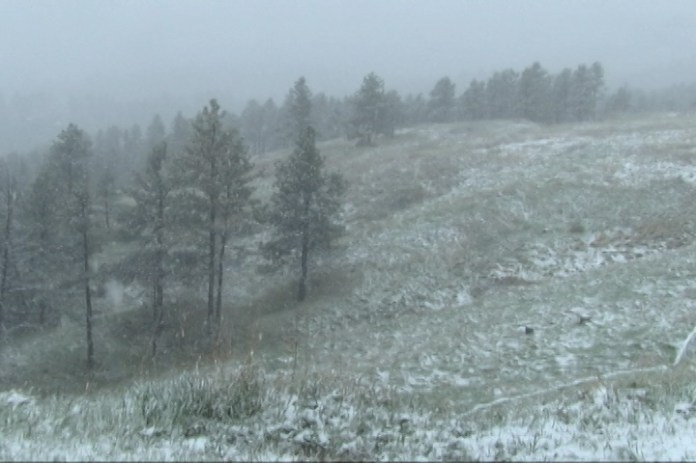
The Ghost of Winter

The ghost of winter,

a puff of breath

whisking swirls of snow
off the branches and into the air

suspended

a last gasp of cold crystals

the pine boughs flash frozen for a moment
and then it’s gone,

green grass poking through the raised mounds of snow
pushed upwards
by the fledgling growth of spring

a delicate dance

threatening
but gone in the blink of an eye

snow.Still0021

blackhillsfox.com

Standard
Uncategorized, Weekend Write-Off, Writing

Pietro

 “Excuse me . . . miss.”

The way he addressed me, I almost thought he mistook me for a clerk. The blue and white check on the shoulder of my rain jacket flashed as I turned and reminded me it looked nothing like the blue polos of the store employees. He spread his fingers across the bridge of his nose.

My glasses. I forgot them.” His index finger moved to the half gallon of milk he held in his hand and its mottled hieroglyph of a date stamp. We peered at it together.

March 26th,” I said.

Today’s . . . the . . . 11th,” we said together, the last part punctuated by the speed of certainty.

He tilted his head back and forth as if weighing the amount of milk against the weight of days.

That gives you time,” I said.

I’d seen the same dance from my grandmother countless times. What was an easy decision for me – to throw two full gallons of milk in my cart for my burgeoning family – was agonizing to a single person afraid of pouring sour dairy down the drain.

We laughed, relieved to have solved this problem together.

Eh, the basket, where do you get them?” he said. At least that’s what I thought he said. The beautiful lilt of an Italian accent rounded the edges of each word. I went through the convoluted description of obtaining a shopping cart from the coin-fed chain contraption all because of one misunderstood noun.

Oh no, the pasta. Pasta fagioli?” He uttered a few other phrases to clarify what he was seeking, which included Germany in there somewhere, I think. I finally nodded in assent and scanned the signs above the aisles, pointing to the next one over.

Pasta!” I said.

Next aisle, ah yes. Thank you very much.”

After he shuffled off and I resumed the task of picking out paper towels, his voice carried over the rack of metal shelving separating us.

Pastina,” he said. “Pasta. Pasta fagioli.”

Pastina? You mean little pasta?”

For pasta fagioli,” he insisted. “In Germany.”

This is all the pasta we have, sir.”

He had found a clerk this time, but I could tell she was as thrown by his accent as I had been. And obviously hadn’t been raised on the tiny bits of pasta Italian families added to their soups and fed buttered to their babies in high chairs.

Armed with the knowledge my Italian husband and his family had fed me with, I figured I’d better hightail it over to the pasta aisle and intervene. I’d failed translating the first time, but maybe this time, I could help. Plus, I needed some campanelle of my own.

Pasta fagioli,” he said again to the confounded clerk.

They both looked at me as I approached. “You mean in a can?”

My Italian relatives would cringe at my suggestion, but the way he kept repeating it, I thought maybe he wanted some ready-made.

No, no, the pastina, to put in the pasta fagioli.” His thumb and forefinger made a small gap of light to show its size.

I had assumed that’s what he had wanted all along. Even though he was elderly and shopping alone, living perhaps presumably alone, a man who requested his type of pasta by the Italian name of the dish it was destined for, in a voice tinged with his mother tongue, would want to whip up a batch himself.

The clerk repeated that what was in the aisle was all they had. I agreed that I didn’t see it, nor the ditalini I instinctively knew would also work.

Sorry,” she said as she moved back to the front of the store.

Are you Italian?” he said.

My husband is,” I said.

Your husband,” he repeated as if processing the information.

Yes.”

What is your last name?”

I’d had this conversation many times before in supermarkets, nursing homes, and once a cab ride in Rome. It was not an interrogation. It was a sharing of roots; whether common ones or airing your own; a sense of pride; a tradition borne across the world.

Basile.”

He was not the first one to stumble on my last name, but his was not due to pronunciation. Once his hearing clarified it, he pronounced it more precisely than I could.

Calabria, Campagnia, Sicily?”

I knew, of course, where the maternal and paternal shoots of my husband’s tree hailed from, but struggled to find the short answer in the middle of the supermarket.

Rome.” I decided on the branch that bore our surname.

Ah, Roma.”

Si,” I said.

He smiled.

And you, you are American?”

I shouldn’t have been thrown by such a question, especially coming from someone who certainly did not sound like a native English speaker. Yes, I was American, but my family had been for three generations now – and that was the most recent immigrant branch.

Yes, Jennifer. My family is Irish,” I said.

The Irish,” he said.

My genetics must have been ingrained with the biases my ancestors dealt with, for I was almost afraid how he would react. I wanted to assure him with my grandmother’s assurance made just fifteen short years ago, that Irish and Italians marry well.

My daughters,” he said. “I have two. One she lives upstairs from me. The other, she lives in New York. She married an Irish man. Kevin O’Rourke. He’s a good man,” he said. “Even though, you know.” He paused to make a guzzling motion with his thumb and pinky extended, then laughed. I couldn’t tell whether this was an indictment of his son-in-law or the Irish in general.

Well, I don’t,” I said. “Especially now,” I quipped, indicating my pregnant belly.

He smiled. “A boy?” I couldn’t tell whether he was rooting for a boy as any Italian relative I’d encountered during any of my pregnancies did, or if he was just wondering whether I knew the sex of the baby.

I don’t know, yet,” I said. “We already have three daughters.”

He indicated pleasure rather than the surprise that admission usually met.

And what is your name?’ I asked.

He extended a strong hand spotted with age. “Pietro.”

It’s nice to meet you, Pietro.”

Yes, you have a good day now,” he said. “Good bye, ciao, auf wiedersehen.“

His litany of multilingual greetings threw my mind into a tailspin. It spun wildly for the words to wish him a good day in Italian.

Perhaps he mistook my pause for confusion, for he explained ‘auf wiedersehen’ was from the German. I realized I’d never asked exactly from where he’d hailed. He was obviously tied to Germany as well as Italy.

Si,“ I agreed.

He laughed. “Ciao, bella.“

As he left, I turned back to the pasta. Not only did they not have pastina, there was no campanelle either.

– Jennifer Butler Basile, 2016

Standard
Depression, Weekend Write-Off

Bigger in her Head

“When we first lost our house, I told Reba, ‘I just want things to go back to normal.  When is that going to happen?’

‘Soon,’ she promised.

Soon seems awfully far away.

‘Your mom’s on medication that makes her tired,’ Dana Wood explains.

‘What’s wrong with her?  She’s never been like this.’  I’m trying to get a breath.  I feel sick to my stomach all of a sudden.

‘The early diagnosis is that she had something called a severe depressive incident.  That can happen when people are very stressed and then something tough happens and they can’t bounce back.’

I sit down.  ‘Like not getting the job she was counting on?’

‘Exactly.  It was the last straw, and she shut down.’

‘She made it bigger in her head than it really was.’

‘That happens often, Sugar.’

‘But it’s not normal, right?  Normal mothers don’t do this!’

‘What I can tell you is that most people sometime in their lives make something bigger in their heads than it really is.’

‘But they don’t end up in the hospital!’  I’m trying to breathe normally, but it’s hard.

‘Sugar, the doctors and nurses here know how to help.’

That doesn’t tell me anything.  ‘How long does she have to be here?’

‘A week, probably.’

‘Then what?’

‘We’re not sure yet, Sugar.’

I’m getting tired of this.  ‘I want to talk to somebody’s who’s sure.’

‘I’d feel the same way if I were you, but right now, no one’s sure.’

I have another question, but I’m not going to ask it.

Could this shutting-down thing happen to me?

almost home— from Almost Home  by Joan Bauer

Standard
Living, Writing

Driving Blind But in the Moment

[Writing is] like driving a car at night: you never see further than your headlights, but you can make the whole trip that way.”
– E.L. Doctorow

A few summers ago, I sat in a writing workshop with the inimitable Kelly Easton that unexpectedly turned into a therapy session – perhaps most unexpectedly for her.

We’d been given an exercise to write a scene from our work in progress from the point of view of a secondary character rather than our protagonist. I love Ant. He’s so fun to write. His humorous and outrageous comments flow from a place that’s cheesy and cathartic at the same time. So he was my target voice.

When I read back my piece to Kelly and the others for feedback, she said she loved the energy and spontaneity of the beginning, but that lessened as it went on. It was, she said, as if I didn’t trust his voice, myself; that rather than letting the story go where it would, I clicked on that control switch, molding the plot to the overall plan I had in mind. That I was afraid to relinquish control.

The critique hit me like a ton of bricks. Not because she was wrong. Not because I can’t take criticism (at least from a trusted source 😉 ). But because Kelly’s critique applied to my entire life – not just my work in progress.

How often do we follow some preordained plan rather than functioning within and through the essence of our being? How often do we tick off the to-dos to achieve a goal rather than burning and glowing with the initial desire for it? How often do we rein ourselves in rather than galloping exuberantly forward?

For what?

Unless we’re acting recklessly, we will not crash. There’s a fair distance between joy and mania. Why are we so afraid to inhabit our joy? Are we afraid to feel it in advance of our perceived loss of it?

What’s the worst that could have happened in my story? Anthony would’ve surprised me? Would’ve taken the plot in a new and exciting direction? The writer me could’ve certainly looped him back around to my original story – or marvelled at an even-better blossoming of the plot.

The same applies to life. Long ago, a wise friend reminded me that when your dreams haven’t come true or prayers answered, perhaps it is because God has something even better in store for you. We need not see further than our headlights illuminate. Stubborn human nature makes us want to, but it’s not necessary to survival and success – and certainly not to our happiness.

Standard
Depression, Weekend Write-Off

‘Sweetness and Light’ Amidst the Darkness

“’So what new stuff are you going to plant in the garden, Mom?’ I ask.

‘Plant?’ Mom says. She looks out at the yard and shrugs.

‘How about if we make a list? Marcy said it was good for you to make lists and cross things off. When you first got home, you made lists.’ I stand up to go get some paper and a pencil. I want Mom thinking violets, daffodils, tulips, bright colors flashing in her brain.

‘Thinking about spring tires me out, Chirp,’ Mom says.

‘But in May we can pick lilacs!’ I say. ‘We love picking lilacs.’

Mom reaches for my hand. ‘Just sit with me, honey.’

I sit back down.

I need to stay patient with Mom, especially since her new psychiatrist just told her that he thinks her depression is chronic, which means it will never completely go away. She’s been depressed at different times in her life and will probably always struggle with it. That’s news she needed like a hole in the head just two weeks after gettting home.

Three black-capped chickadees play follow-the-leader around the rhododendron bush. I can’t tell if Mom’s watching them.

‘You don’t have to pick lilacs,’ I say. ‘You can just keep me company when I pick them.’

Mom puts her arm around me and squeezes tight. When I look at her face, tears are streaming down.

‘Listen, Chirpie,’ she says, brushing the tears away like they’re pesty no-see-ums. ‘I need to tell you something important, okay?’

‘Okay.’

‘You’re a really special girl. A beautiful, strong, special, special girl. You know that, right?’ She’s gripping my arm.

‘Uh-huh.’

‘Good,’ she says. ‘It’s important.’ She lets go of my arm. She rests her hand on my knee. ‘When I was a girl, my mother loved to tell me what was wrong with me. I made no sense to her at all.’ Mom stares out at nothing. ‘Luftmensch.

Luftmensch?

‘It’s a Yiddish word. It means a dreamer. From my mother, the worst thing a person could be.’

‘But didn’t she like some things about you?’

Mom doesn’t answer for a long time. Finally she says, ‘My hair. My mother liked my hair.’

Wind whips across the yard. The grass shivers.

I touch Mom’s hair, but she doesn’t look at me.

‘She didn’t love me,’ Mom says quietly. ‘That’s just the simple, hard truth.’

A crow screeches, and all three chickadees take off into the air at the exact same time.

‘Wow!’ I say.

Please, Mom. Please, Mom. Notice.

‘Wow,’ Mom says, with a little smile.

We watch the chickadees until they disappear into the trees.

‘Lilacs are my favorite flower,’ Mom says.

‘I love them,’ I say

‘Me too,’ she says.

‘They smell so good.’

‘Like sweetness and light, Chirpie.’

I put my hand in Mom’s pocket. She reaches in and holds my hand. It’s sweetness and light, our hands together in her warm pocket.

— from Nest by Esther Ehrlich

Standard
Automobiles, Weekend Write-Off

You Can Tell a lot about a Man by the Car He Drives

“And there were very likely people who thought one could not interpret men’s feelings by the cars they drove.

But when they moved onto the street, Ove drove a Saab 96 and Rune a Volvo 244. After the accident Ove bought a Saab 95 so he’d have space for Sonja’s wheelchair. That same year Rune bought a Volvo 245 to have space for a stroller. Three years later Sonja got a more modern wheelchair and Ove bought a hatchback, a Saab 900. Rune bought a Volvo 265 because Anita had started talking about having another child.

Then Ove bought two more Saab 900s and after that his first Saab 9000. Rune bought a Volvo 265 and eventually a Volvo 745 station wagon. But no more children came. One evening, Sonja came home and told Ove that Anita had been to the doctor.

And a week later a Volvo 740 stood parked in Rune’s garage. The sedan model.

Ove saw it when he washed his Saab. In the evening Rune found a half bottle of whiskey outside his door. They never spoke about it.

Maybe their sorrow over children that never came should have brought the two men closer. But sorrow is unreliable in that way. When people don’t share it there’s a good chance that it will drive them apart instead.

Maybe Ove never forgave Rune for having a son who he could not even get along with. Maybe Rune never forgave Ove for not being able to forgive him for it. Maybe neither of them forgave themselves for not being able to give the women they loved more than anything what they wanted more than anything. Rune and Anita’s lad grew up and cleared out of home as soon as he got the chance. And Rune went and bought a sporty BMW, one of those cars that only has space for two people and a handbag. Because now it was only him and Anita, as he told Sonja when they met in the parking area. ‘And one can’t drive a Volvo all of one’s life,’ he said with an attempt at a halfhearted smile. She could hear that he was trying to swallow his tears. And that was the moment when Ove realized that a part of Rune had given up forever. And for that maybe neither Ove nor Rune forgave him.

So there were certainly people who thought that feelings could not be judged by looking at cars. But they were wrong.”

– from A Man Called Ove by Fredrik Backman

Standard
motherhood, Technology, Writing

I could’ve danced talked all night

wpid-wp-1440692157183.jpgThe universe works in mysterious ways.

There’s a reason for cliches such as this.  In ways unexplained, people and circumstances are drawn together.  In an affinity, a warm, glowing feeling that spreads with seemingly no foundation, conversations click, relationships made, journeys continued before we’d even realized they’d begun.

One such journey began in 2012, though I was not yet aware.  As I typed the first tentative strokes birthing my blog in January of that year, Charlotte of Momaste went about her business a few mere miles down the road.  One day seven months later, in a burst of breastfeeding genius, her blog was born.  About a year later, I discovered the light and love and unabashed truth of her blog when its SPOT-ON post, Touched Out, was Freshly Pressed.  She gave voice to the heretofore dysfunctional and guilt-inducing tendencies I’d been seeing in myself as a mother.  I’d found a kindred spirit.

Depression – postpartum and otherwise.  Anxiety.  Mindfulness.  Breastfeeding.  Trying to balance selfhood with motherhood.  Yoga.  Puns.  Writing.  So many connections.

And then she posted a picture of the view from the end of her street.  And I saw the same bay I could see out the window of the house I’d started my family in and just recently vacated; the same one, admittedly, I had an imperfect view of, too, but still reveled in mentioning.  Not only were we from the same state, we been living in nearly the same zip code.

I felt even more of a kinship.  I had a scaffold in which to place her ruminations and observations; a visual schema her scenes unfolded against, even if I wasn’t on the exact street.

We bandied about the idea of meeting for quite some time.  Fellow bloggers can attest to the feelings of friendship engendered by genuine, heartfelt comments and the uncanny ability to pin pieces of your own gray matter on their own sites.  Still, with our young families, no concrete sense of who each other was, and both suffering from anxiety and possible cases of social awkwardness, the time never presented itself, nor was never found, to meet.

Then I registered for a conference in Boston for survivors of postpartum depression.  The excitement leading up to the real-time introductions at the conference led to whole lots of conferring online beforehand.  If strangers were becoming friends for that, why not my other ppmad peeps?  I reached out to Charlotte and floated the idea of traveling to Boston for the conference.  That plan didn’t hash out either, but it created a real impetus for our meeting irl, as they say, which finally happened yesterday.

The thoughts going through my head as I drove to meet her were akin to what I’d imagine if I were in an episode of Catfish.  My ten year-old daughter, in an annoying yet pride-provoking manner, had pointed out that there are dangerous people on the internet, you know.  My mother relayed the message that my grandmother was very nervous and didn’t want me to go.  I said I highly doubted this woman would turn out to be a 47 year-old male axe-murderer – not for the sake of a blog meet-up.  Charlotte and I did do the awkward blind date eye-contact, avoidance, cut through the coffee house, then back out onto the deck greeting.  She affirmed that yes, she was not a man and no, she did not think a 47 year-old axe-murdered would go to so much trouble writing blog posts to lure in a victim – particularly ones about breastfeeding.

That was the first of many laughs on this my first blind date with my first online friend meeting in the flesh.

We swapped stories about our kids, our spouses, our writing, our work, our struggles, disappointments, triumphs, and joys.  Most rewardingly, we shared the same space – psychically and emotionally.  The whole simpatico thing worked in person as well as it did online.  While our stories differed in their twists and turns, we got it.  There are as many differences as similarities, but we respect the journey each of us is on and support each other.

When Charlotte checked whether it was time to pick up her daughter, I realized I’d lost all track of it.  While nearly two hours had spooled away, it felt as if we’d just started our conversation.  I experienced almost the same feelings I’ve had when I realize I haven’t caught a friend up on the crush of things that’ve happened since our last visit – even though we face the stretch of time before our next one.  And we had to get caught up from the beginning!

But there’s always the next cup of tea – or chai in this case (to which I will have to add copious amounts of milk if we visit the same place as it was mighty strong).  There’s time for friendships to grow – online and in real time.  And there’s the universe – that has already proven it’s got our backs in bringing us together.

Momaste, Charlotte: the mom in me so bows to the mom – and lovely human – in you.

Standard