Identity, motherhood, postpartum depression

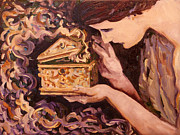
Postpartum’s Pithos

Is postpartum a misnomer?

When does the depression start? Is it the instant the partum becomes post? When the final product is pushed from its incubator?

My writers’ group got into a discussion of postpartum depression last night based on the arrival of a box of books on a doorstep. The doorstep belonged to a fellow writer; the box was full of copies of the book she’d just finished writing. She said she was saddened by its arrival. When asked why, she said she wasn’t sure; she’d have to think about that. She said it was almost like postpartum depression. But she couldn’t say why. And she said she didn’t really know all that much about postpartum; that she’d never had it, though she’d birthed several children.

Someone asked, was she sad because she’d have to say goodbye?

This question assumes that she enjoyed her time building and birthing this book. That it had grown inside her and expanded her heart and mind to the point of exploding with love and pride. That would make a good case for depression upon its release. This symbiotic element of herself was now separate. There most definitely would be a feeling of loss upon the shearing off.

But what if the division and multiplication of cells riots against the verisimilitude of a woman’s life? Against her will. Her expectations. Her idea of time lines and schedules. In that case, depression would come post haste.

The birth does not usher in a sadness at goodbye. It is the greeting – most often with a big wet smack in the face – of responsibility, duty, expectation. The idea that she’ll be instantly in love with this mewling little being in front of her.

When really it has nothing to do with that child at all.

When it comes right down to it, while it’s enacted by the burgeoning and birth of that little being, postpartum depression is all about the mother. Her reaction to it. The way her hormones wreak havoc on her systems and sanity. The total upending of her reality and orientation of existence.

I didn’t want to say goodbye to the little lovely who sits by me now four years older and bigger. I don’t associate her with the things to which I want(ed) to say goodbye. I would’ve loved to say goodbye to the shit that came with her preparation for and entry into this world. I still would. The sadness started way before the postpartum period. And unfortunately, it still doesn’t fit in any sort of tidy box.
Addie May Hirschten

Addie May Hirschten

*** A HUGE addendum to this post: It is NOT selfish to see postpartum as all about you. I think many women don’t receive the help they need because they think it’s wrong to think about something other than their baby.  However, I don’t want my post to be construed as a devaluing of the utter miracle of and attendant caring for a newborn.  We must get the help we need as women so we can go on to be healthy mothers and healthy individuals.

Standard
Humor, motherhood, parenting

How to Lose Your Keys

Step One: Start at t-minus 10 minutes till you have to leave the house (preferably to pick up your child from school).

Step Two: Put away all the groceries you just purchased in your small window of kid-free-dom – even the dry goods that can wait until your child safely arrives home.  Run up and down the basement stairs to the pantry in a frantic exercise routine (it’s all you get anyway).

Step Three: Stash the candy canes you bought at deep discount in a spot where they won’t be found till next Christmas (you hope) – there’s so much sugar in them they’ll taste the same a year from now anyway.

Step Four: Forgo carrying a purse in favor of a fistful of keys – car and house on two separate rings.  Better yet, at least one with no ring.

Step Five: Cram as many cardboard recyclables (empty now from all the granola bars you oh-so-efficiently placed in their tins) as you can into your other fist so as to deposit them in the bin in the garage on your way to the car.  This is so much easier and convenient than making a separate trip.

Step Six: Use both hands to crush said cardboard into the overflowing recycling bin.

Step Seven: Dance around all the junk in the garage to locate the stockpile of reusable grocery bags that would’ve been useful about an hour ago.  Pick things up, move them around, especially with the hand holding the mess of keys.

Step Eight: Throw reusable bags into trunk with great aplomb and slam the lid.

Step Nine: Run to the driver’s side door in a panic to hit the trunk release because you think you just shut your keys in there.

Step Ten: Pull apart every reusable bag, snapping one of those infernal plastic liners meant to stabilize the bottom of the bag because it’s so friggin’ cold out.

Step Eleven: Don’t find your keys.

Step Twelve: Avoid looking at your watch because you know your 10 minutes is close to elapsing.

Step Thirteen: Begin to fling toilet paper rolls and the mangled remains of Monster High boxes out of the recycling bin imagining your state-of-the-art, extremely expensive electronic key fob in a heap at the dump.

Step Fourteen: Remember the slight echo of that rubberized plastic fob hitting cement, somewhere.

Step Fifteen: Dance around all the junk in the garage again, lay nearly on your belly, and find key under red wagon.

Step Sixteen: Arrive at child’s school directly behind the mom who called ahead saying she’d be late and yet still stands on the steps in a sweaty panic.  Act as if nothing happened and you meant to arrive at this time, key in hand.

Standard
Children, Living, motherhood, parenting

Moms in Toyland

I assembled a trebuchet
Luke Skywalker slingshot ready to take out the dark lord
Ponies and Barbies and zebras, oy vey
Puzzles and playing cards
Flashlights, fleece, painted fingernails
A few minutes by the fireside
before I fill out the Christmas cards that just came in the mail today

Have fun assembling your Christmas treasures!
(Image from Mathworks.com)

Standard
Identity, Living, motherhood, parenting

Pop IS a Weasel

Whatever our proclivities in music, whether we like it or not, pop music is infectious.  It’s catchy, has a funky beat to it, and makes us want to move our bodies – most of the time.  Pop is, after all, an abbreviated form of popular.

I, however, shunned this mainstream music sometime around tenth grade, when Kurt Cobain and Eddie Vedder burst on the scene with their unapologetically noisy and angsty music.  Bubble gum and lip gloss and boyfriends?  Ugh.  Gritty guitar and grunge and pissed-off people?  Yes!

I scoffed at the perfectly polished, canned rhythms and the lifestyle it seemed to eschew.  I slapped a bumper sticker for the local ‘modern rock’ radio station on my car and changed the channel for, oh, about 25 years.

And then my children discovered how the controls on the radio worked.  They discovered the bouncy, syncopated beats.  They called out from their belted backseat bastions for the bastions of popular culture.

NOOOOOOOOOOOOOOOOOOOOOOOOOOOO!!!!!!!!!!!!!!!!!!!!!!!!!!!!!!!!!!!!!!!!!!!!!!!!!!!!!!!!!

from www.nursery-rhymes.org

Who me?

It was only a matter of time, really.  I remember belting out every single word to Laura Branigan’s “Gloria” as a kindergartener.  They only want what feels good and sounds good, with none of the prejudicies of high art vs. low, sophistication vs. simplicity.

However, it is in being forced to listening to these songs and music that I’ve made an important cultural discovery. There’s a whole lot of people walking around completely clueless of their personal worth.

Listen to One Direction’s “What Makes You Beautiful” (I’d post the link but that totally crosses the line of my personal philosophy. Sorry – you’ll have to find it on your own).  “You’re insecure” is the first line of the song.  You don’t know you’re beautiful? Looking at the ground when someone looks at her?  The entire song is these young men pointing out to the female subject that everything about her is what makes her beautiful.

Bruno Mars’ “Treasure”: a song worth it just for his Jackson 5/Early Michael Jackson-esque singing, but that also has a theme of not knowing one’s worth.  Despite being wonderful and flawless, the subject “walk[s] around here like you wanna be someone else”.  He tells her, “you should be smiling.  A girl like you should never look so blue.”

So what is it about our society that we need pop artists to tell us we should be content with who we are; that we should be happy?  What is so lacking that even the airwaves rush in to fill the void?

To me, it’s a disturbing trend.  Someone, something has failed in our current system of being if there is a trend like this among music.  I’m not saying it’s bad to build people up; I’m wondering why there are so many walking around already beaten down.

Were we not loved as children?  Were we not told of our innate worth through hugs and hand-holding and ‘I love you’s?  Have we suffered a spiritual crisis that has let us forget that we are ‘fearfully and wonderfully made’?  As a special deacon used to tell me, “God made me and He don’t make no junk.”  We all have our worth.  We are all someone’s treasure – even if no one else’s on earth, at least our own, and certainly to God.  Our very existence is enough to make us beautiful.

Looking closely at these songs has also tipped me off to one other disturbing nuance: the fact that, in both songs, males are telling females their worth.  As a woman and mother of three girls, it scares me that the lyrics could be construed as a lesson to value oneself through the lens of male approval.  There is something very special about finding a partner who will value you and point out beneficial qualities you may have missed in yourself.  But to look solely to an outside – especially sexual – source for self-worth is dangerous.  The fact that pop music is so infectious and seemingly feel-good could slide such messages right under the radar without young people even realizing their transmission.

And here I was scared that my kids liked pop over some other style of music.  It runs much deeper than that.  Now I really have a reason to go listen to angsty music.  But, if I haven’t ruined the carefree nature of pop music, I could go listen to that for a pick-me-up.  Whatever it is, we all have to move our feet in time to the rhythm and pick each other up if we fall.

* Disclaimer: I must acknowledge that my grunge/alternative music is not so uplifting and self-affirming either.  It was born, in fact, of a self-loathing and misery.  And among its measures are certainly misogynistic ideas and mistreatment.  But pop certainly presents its off-color ideas in a much more appealing package.  Plus, ‘modern rock’ is not in heavy rotation like Top 40.

** Weasel image from nursery-rhymes.org

Standard
Children, motherhood, parenting

The Elf on the Shelf: Blessing or Curse?

Children all over the world have been scared into submission by Santa for centuries. Starting with December 1, if not sooner, parents have had a disciplinary lever in Kris Kringle to shove their little ones under their thumbs. And then came the Elf on the Shelf. Holy holly berries! Now there was tangible proof of Santa knowing each child’s every misdeed. Never mind the millions the mother/daughter team likely made exploiting their family tradition and the warped fun parents can have placing their elf in compromising positions each day, this was parenting gold.

Image from mommyofamonster.com

We could scare the shit out of our kids with that freaky little face and make them work for their gifts, putting the merry back into a season usually packed with mania.

Until the morning you wander downstairs, still in a fog of sleep, and are met by the faces of your little cherubs who want to know why Mikey is in the same spot. Because Mommy has more important things to do than move a felt-covered elf with his hands and feet sewn together, that’s why! But, no, that’s not what you say. You weave some elaborate story about how he must have been so tired from all his work that he had to rest last night instead of flying back to Santa. Or you just feign ignorance. Oh, I don’t know! Maybe he’s really cozy there. You don’t tell them that Mikey had too much eggnog and couldn’t find his way back to the North Pole.

Or until he shows up for the first time this season and uber-scares the shit out of your sensitive child. Perching him above the newly acquired bunk beds so he can check them out may not have been such a good idea as he appears to be giving her the hairy eyeball as she tries to sleep mere inches from him on the top bunk. Her younger sister alights the bunk to stare lovingly into his rosy-cheeked face, agog at this Christmas marvel. But as bedtime approaches, the sensitive one dissolves into tears and you want to rip the friggin’ thing off the ceiling fan and fling it. But then he’d lose his magic! Luckily, your husband has the brilliant idea of rotating the fan blades to avert his gaze.

About fifty times between dinnertime and your little ones’ bedtime, you look at Mikey and say, Must remember to move him before I go to bed, and wrack your brain for some creative spot for him (with the new added stress this year of one that won’t cause your sensitive child irreparable psychological damage). Once the children are in bed, like the magic that flies Mikey back to the North Pole and that allows the Weeping Angels to sneak up on us, some memory sweeping phenomenon takes place and Mikey doesn’t get a new home.

That is, until 1:41 AM when you bolt upright in bed and realize you didn’t move him. After the obligatory mid-night bladder deballast that occurs in all mothers, you drag a dining chair to the foyer and remove Mikey from the chandelier. You manage to complete this feat of physical prowess while still half-asleep and live to see your pillow again, but you wake with no recollection of it. When your child asks you where Mikey is this morning, you freak out all over again. You raise your eyes reluctantly to his perch from yesterday, dreading that your child has already seen that flash of flannel. But he’s not there. How can it be? Oh, you did move him. Imagine that.

Sometimes, the elf on the shelf hides so well, no one can find him. Not even the mommy who placed him in the Elf Protection Program so his ruse of returning to the North Pole upon hearing Santa’s bell wouldn’t be blown. Mommy rips apart the bins of Christmas shmagma in the basement while Daddy keeps the cherubs busy upstairs – after she forgot to locate and place the elf while they were out of the house – surprise, surprise.

All those elves perched on the shelves of holiday houses throughout the land aren’t really keeping mischievous kids in line; they’re slowly driving parents crazy. Instead of scaring the shit out of misbehavers, they’re scaring the shit out of memory-challenged mothers and fathers. The shock of coal in the stocking is nothing compared to that early morning shock of parents who forgot to move the elf! In a world where parents can’t even go to the bathroom by themselves, stealing a spare minute or two to feign a flying elf is a Christmas miracle in and of itself.

And that’s really why we do it, isn’t it?

Preserving the childlike wonder of Christmas is part of all these machinations. Seeing the awe in their eyes makes it all worthwhile. If we can get them to behave – while avoiding nightmares – it’s all good. Just don’t ask me how I feel about it at 3 o’clock tomorrow morning.

Standard
Children, Identity, motherhood

Skating Away . . .

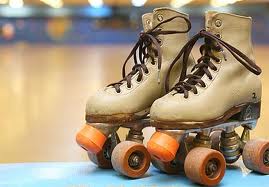
Putting a woman who has given birth three times, the last time nearly splitting her in two, on roller skates probably isn’t the best idea. But that’s what I did this past weekend at my friend’s daughter’s birthday party.

My eight year-old was fine once she remembered what she’d tentatively learned at other parties, but my four and six year-olds needed assistance and my there was no way my husband was getting out there.  The last time he skated was the ice variety and let’s say the ice nearly melted from the heat of pain-induced oaths he uttered.  Plus, I enjoy skating. I loved it as a girl, forcing the wheels over the pebbly asphalt of my street, gliding along the multi-layered laquer of roller rinks.  There was a freedom and euphoria in the way the wind pushed my hair back and the music thumped as I floated along.  I thought I was the cat’s pajamas when I mastered cross-overs.

But that was when I was young and nimble; limber and loose.

The other day I used muscles I hadn’t used since childbirth – or at least since the physical therapy following childbirth to put me back together.  Keeping my feet from drifting too far apart, I had to pull those adductor muscles to attention and, oh, that got my attention.  I managed to haul my foot over for one cross-over before I felt the other one start to slide out.  The thought of my pelvis in the aftermath if I ended up in a split on the floor was enough to dissuade me from trying any more.  My groin muscles were already pulling; I didn’t want to strain any of their neighbors.

But, when one of my girls took a break, or refused to take my hand, I would speed up, feeling the familiar rush of air. My godson, brother of the birthday girl, took a shine to the disco ball at the center of the rink and kept gravitating toward it whether he had skates on or not.  When his father went out to be sure he stayed in the center, out of the melee of circling skaters, an impromptu dance party popped up.  His brother and sister, my girls, and husband sans skates, joined us and grooved to Daft Punk disco-style.  It still had the same effect as my favorite Michael Jackson song way back when.skates

I don’t know if it’s the act of skating itself or the associations it engenders, but it’s a whole lot of fun.  There’s no way I could last as long as I used to when I could feel myself rolling around the rink even after I’d taken off my skates.  And I’m sure my body wouldn’t forgive me either if I tried.  But as the birthday girl asked me as she rolled by, “How’s your skating going? Is it going good?”, I can say, “Yes, yes it is.”

Standard
Mental Health, motherhood, Uncategorized

Touched Out

Amazing description of that feeling of wanting to jump out of your own skin. And so reassuring that it’s not some freak occurrence on my mommy part.

Charlotte's avatarmomaste

20130923-084341.jpg

My life was mostly touch in those days. . .  All day long I touched the clean plates and bowls as I put them away, and the children’s heads slimy under shampoo in the tub, and the softness of their faces, and the scrape of poop off their goose pimpling backsides, the hot noodles, the heavy wet laundry as I threw it into the dryer, and the brick front steps as i sat reading to myself for eight minutes while they played just beyond the page in the prickling new grass, and then when one of them fell down I touched the grass and the mud and the scraped knee, and the sticky Band-Aids, and the wet cheek, and my jeans, and the dangling shoelace.”  —  Elizabeth Kostova, The Swan Thieves.  

I used to think of myself as an affectionate person.  At least I don’t remember being repulsed…

View original post 952 more words

Standard
Identity, Legacy, motherhood

How Did They (Do We) Do It?

I often wonder how mothers of our mothers did it. In the age of keeping up appearances and, in the generation before that, of simply surviving.

There were no therapists, no LICSWs, no yoga retreats and meditation circles. There was no opportunity for a facial and hot stone massage. There was no medication to make the pain go away – except for those self-prescribed.

There was alcohol sipped in secret. There was valium – and laudanum in the early days. There might be lashing out at the children when the husband or society did the same to them.  Catholics might find solace in confession – if the guilt of their perceived shortcomings and ungrateful attitude didn’t keep them away.

I wonder how many women thought they were flawed because they didn’t love the life handed to them.  That they were failures because they didn’t find rearing children and keeping house easy.

But that’s not even the point.

Mothers today still flounder with the many resources available to them.

How the hell did women of previous generations keep it together?

Was it the lack of a pervasive media that kept us from hearing about children murdered by their own mother’s hand? Did bubbling anger dissipate through more readily accepted floggings? Were extended family and neighbors more readily available and willing to step in and pick up slack?

Did women suffer in silence?

I wonder how many women devolved into mental illness from the stress of responsibility, relentless duty, stifled desires. I wonder how many Academy Award worthy actresses were forged in the face of an uninterested audience.

And what do we do for them now? How do we celebrate the uncelebrated?

By feeling guilty as hell that we don’t like this comparatively golden portion we’ve been dealt?

Or by saturating the dry earth of hopelessness with resources for women struggling with themselves, with motherhood, with life?

Part of me yearns for the ironclad persona of the women and mothers of my thrice-removed family. But another more unwilling part realizes that armor came at a merciless price. Not only are these women I cannot question because of space and time, but because they would never answer. Perhaps one small admittance would open the chink that would crumble the entire suit. They would never take that chance. Nor would society let them. They did what they had to because there was no other choice. Their own mothers had it hard and so, then, would they.

I wonder if in this age of modern convenience we have too much time on our hands to ponder our existence. However, I’d like to think, even amidst the stirring of lye and slaying of chickens, our female forebears wondered the same things. They probably wouldn’t have lived so fiercely if they hadn’t.

How do we live fiercely in their honor while fighting for what we all need?

Standard
anxiety, Identity, motherhood

Desperate Measures

My feet sweat in my sneakers.

image from Marie Claire

image from Marie Claire

My t-shirt pulled under my arms.

My hair rubbed at my neck.

I tucked, pulled, squished, shrugged.

I could not get comfortable.

I wanted to rent my garments from my body and my hair from its roots.

I burned out the last of the caffeine scrubbing in the shower and fidgeted into bed with a foggy plan forming.

I dropped my last daughter off at preschool after a harried rush to the others’ bus stop.

And waited in line with the other little old ladies in front of the walk-in salon.

I chopped my hair.

I spent the remainder of the morning scouring sale racks for totally new togs.

I squandered the entire morning, returning to the preschool just in time for their singing debut in front of the senior luncheon.

The teachers, the secretary, my neighbors – all did double takes.

How brave you are, they said.

How different you look, they said.

How great it looks, they exclaimed.

I felt like it was an act of desperation.  The only grip on unpredictability I can grasp right now.  To leave as one thing and come back as another.  To blow off all responsibilities and should-dos for one morning in exchange for a few no-need-fors.

My daughter didn’t flinch.

It looks beautiful, Mommy, she said.

I don’t know if that spells success or failure for my desperate mission.

Standard
Identity, Living, motherhood, parenting

Contemplative Meandering

It is 8:52 AM and I am alone in my house.  I rush in with the usual sense of urgency, keys jangling, purse pulling on my arm, slouching the jacket off my shoulders and – what?

The light in the living room still has that early morning hush, shadows mixed with brilliant swathes of light.  But it’s not just the light that’s hushed.  The house is actually quiet.  No talk radio emanating from the alarm clock radio my husband usually leaves on.  No little voice accompanied by the thud of rubber-soled shoes in the middle of the floor.

The silence is deafening.

For the first time in, I don’t know, forever, I have two hours and 57 minutes to myself.

I could hand wash those clothes I’ve left languishing.  I could peel the shower curtain liner from its moldy seal on the bathtub and scrub it.  I could transfer summer to fall in my daughter’s clothes drawers without interruption.

Yes, those would all be worthy endeavors.  Useful.  Productive.  Jobs easier done without little people becking and calling.

But for the first time I am alone in my house for longer than five minutes, is that what I should do with my time?  It might be what I want to do, or feel I should do from some deep-seated guilt (Where does that come from anyway?  Heloise’s shadow people?), but I know it’s not what I need to do.  I need to decompress, to learn how to shut off these urgings when I actually do have time to myself.  It’s such a foreign concept, my mind and soul freeze up at the suggestion.

And while I do write even on days my lovelies are around, it’s always with one ear to the ground.  And one hand in the snack bin doling out goodies.  And half my attention elsewhere.  Either that, or I’m writing in such a small window that it is with a laser-like focus, barring out the kind of contemplative meanderings that we all need to do now and again.

So I’m contemplatively meandering.

That is a damn good goal in and of itself.  That could sum up an entire bucket list in two succinct words.

But aside from writing, I do not know how to do that.  I can feel the needle and thread pulling my hands.  I hear the chipmunk squeaking in the woodpile.  Even the mold growing and multiplying.

I may not achieve the ultimate level of transcendence today, but there is the desire.  That is worth something, right?

Standard