Living, May is Mental Health Month, Mental Health, Recovery

Getting from “I can’t” to “I’ve GOT this”

“We have to let go of what the world wants us to hang onto and hold onto what the world wants us to let go of.”

The wise deacon who gave the homily this Sunday morning spoke these words.
But how do we operate within this paradox?
Why is it always about balance?
How much of it is our attitude and how much is our chemical make-up?
What miracles will ‘heal’ us if we believe?
This post raised similar questions.

Admin's avatarOff Duty Mom

I have struggled for most of my adult life with borderline depression and probably a little anxiety, too.  These things, however, have not existed in real life like I would have imagined they would.

cryingI had previously figured that depression was reserved for people who had SOMETHING to be sad about.  And those poor saps wouldn’t be able to get out of bed each morning.  They would cry constantly.  They would probably resort to maniacal meth usage, would wear all-black and would get swoopy haircuts, but would ultimately not really wash or style their hair much, anyway.

I figured that people who had anxiety would be nervous wrecks 100% of the time, would talk really fast, drink too much coffee, talk incessantly about governmental conspiracy theories, and would be all twitchy and weird.

Most of that stuff is dead wrong.  For me, at least.  Except, I could get into a…

View original post 696 more words

Standard
anxiety, Children, May is Mental Health Month, Mental Health, motherhood

Crash and Burn

My five year-old was invited to a classmate’s birthday party at the bowling alley.

The day dawned rainy and miserable.  She had stayed up late the night before.  Her grandparents brought donuts for breakfast.  She was so amped up, I think she had burned through her reserves before we even got in the car.

She excitedly greeted her classmates, donned her bowling shoes, and added her name to the scorecard when we arrived, but two turns down the lane, she gave up.  “I don’t know how to play,” she complained.  Then she spotted the arcade games.  Cut from the same cloth as her father, she gravitated toward the motorcycle that swayed side to side as its driver maneuvered the flat terrain of the screen.

We had a seemingly needless discussion about why we were at the bowling alley: to visit and celebrate with her friend, the birthday girl.

The behavior that followed defied all logic – unless you take into account the lack of rest, the lack of energy resulting from sugary foods, the lack of barometric pressure that was doing something to her brain and skull.

By the time we said goodbye to the guest of honor and her mother, she was a sniveling mess grasping onto me for dear life.

“Oh no, what’s wrong?  Is she okay?” the mother asked.  I think she was concerned she was hurt – and also that she hadn’t had a good time at the party she’d hosted.

“Oh, she’s fine.  She’s just crashing and burning,” I said.DownloadedFile

“I know how you feel,” said the mother with an exasperated look.

Indeed, I’d watched her try to catch her breath throughout the party as five year-olds pooled around her legs.  ‘Herding cats’ was the phrase that came to mind as I watched them try to adhere to bowling procedure.  As she tried to coordinate with the staff to get lunch on the table for all these kitties, I overheard her tell her husband to ‘do something’. 

I recognized in her all my telltale signs of anxiety bubbling up.  The throwing of hands in the air.  The curt responses.  The barked commands.  Looking around you as if you’ll see the one thing that will calm the chaos.

I wasn’t supposed to notice.  I wasn’t supposed to hear the slightly heated exchange between she and her husband.  But I didn’t judge.  Instead, it roused me to action.

For once, I wasn’t the one crashing and burning, but since I certainly had been there, I did what I thought I might appreciate when I was.  I grabbed a pitcher of soda and refilled cups.  I moved said pitcher when I was afraid the birthday girl’s unwrapping might upend it.  I tried to assist the kitties at my end of the table with cutting of food, getting of napkins, etc.  I tried to make her laugh and get her out of her own mind, which no doubt was swirling and sucking her in.

I don’t know her that well.  I don’t have any right to assume what she needs.  But I know what it’s like to crash and burn.  And I know I’d appreciate it if someone slowed my descent even just a little.

As for my five year-old, after scowling into middle distance on the thirty-minute ride home and sulking for a bit once there, she finally snapped out of it.  The familiar surroundings of home and routine and a good night’s sleep resurrected her good mood.

I guess we all just need care and attention to thrive – or at least not end in a fiery inferno.

Standard
anxiety, Living, May is Mental Health Month, Mental Health

Entropy

I used to like you.

You were a concept I thought was rebellious, unique in its dysfunction.

I scribbled your name on the brown paper bag book cover of my science book.

I joked how my life was a measure of entropy.

I didn’t know that my worst day of stress or ill-preparedness back then was a cakewalk compared to now.

While entropy is supposed to be unpredictable, I can feel myself slipping into it.  That detached feeling while everything swirls around me.  Worries, permission slips, due dates, appointments, a specific pair of pants to be washed, thoughts, concerns, shopping lists, stresses.  I cringe as I await the fallout.  The important detail missed.  The distractedness in me leading to some major misstep.  I know it’s coming.  I know it’s only a matter of time.  I dread it.  It makes me sick.  Makes me feel like I need a keeper.  Yet I can’t stop the feeling, can’t prevent the catastrophe.

It’s only after the catastrophe that I am emptied – of the dread, the worry.  Only to be filled with sorrow, regret, and guilt.  Ashamed that I scraped the side of my car along the opening of the garage as I pulled in.  Mortified that the bus driver awaited my return at the foot of my driveway; that my children had to wonder where I was.  Weak with worry that I could do something so stupid.  And it’s in that low place that I determine such a scenario will never occur again.

And for a while, I am good.  I dial back the enthusiasm when scheduling things.  I plan ahead.  I try to allow for more time than I optimistically think I need.

But slowly, slowly I forget that ‘limp as a dishrag’ feeling following the sick rush of adrenaline and life ratchets up again.

exergy_tube

Is it like the volcano that releases all its pressure with an eruption and then lies dormant again?

Do I push and push and push until my psyche can’t take it anymore and I get set back to the starting block – only to do it all over again?

Sisyphus has been bounding around in my head a lot lately.  A friend pointed out that any upward or forward motion is good – even if it doesn’t result in reaching the summit.  I need to explore these ideas.  Because a whole lot of $#!7 keeps hitting the fan and it keeps on spinning.

Entropy is not my friend anymore.  Chaos is not anti-establishment.  It is insanity.  I know there will always be a measure of ‘can-go-wrong’ness in my life, in anyone’s, but I can’t let it build to the boiling point at set intervals if I want to live a peaceful life.

Standard
anxiety, Identity, Living, May is Mental Health Month, Mental Health, postpartum depression

The Blue Chicken or the Anxiety Egg?

Which came first? DownloadedFile

It’s the proverbial question.

Did my anxiety beget my depression?  Or am I worried how things will turn out because of my depression?

Worry-wort.  My own worst enemy.  Always running things through my head.  So sensitive.  Beating a dead horse.  All of these are terms used to describe me at one time or another.

I do have a tendency to perseverate.  I can’t let things go.  I worry them like a dog with a bone that is impervious to bite marks.  It’s not productive.  It’s not reassuring.  It’s a form of torment actually.

In college, after my roommate had left for the weekend, I would lie on my top bunk and stare out the window, wondering why I couldn’t go out and round up new friends as easily as everyone else seemed to be doing.  I would watch the sun set, thinking how alone I was.

As August neared its end one year, I bought a thin volume entitled, Why Are You Worrying?  As the cashier plugged my purchase into the register, he asked, “Are you a teacher?’  He said he’d bought the same book at the start of a school year once too.  While he may have bought the book for the same reasons I did, no self-help book could help me turn off the worry.  I triangulated every possible scenario in the classroom; how I would put out fires, cut off conflicts at the knees before they stood up, squash rebellion before it started.  But you can’t plan for every permutation.  The very nature of education is the X factor.

And this nervous nature – is that what plunged me into depression when life became so overwhelming as a mother of three?  I couldn’t control anything, didn’t understand and couldn’t fix the feelings I was having, and felt really crappy as a result.

Or is it viewing life through the dark glasses of depression that makes me see the shadows of worry in every corner?

It’s all tumbled together in the dryer at the highest setting anyway.

The only ‘good’ thing about all of it is that what I thought was a flaw on my part, a weakness, an inability to achieve, connect, push myself, believe in myself, is really anxiety.  I’m not this wimpy, pathetic, sad sack.  I have an excuse!  A reason, a rationalization, a disease.  Good for me!

So chicken or egg – it’s all part of the cycle of life.  All I can do is try not to get scrambled.

Standard
anxiety, Living, May is Mental Health Month, Mental Health

Self-Aware

Has a massage ever brought you to tears?

Tears that spring out of nowhere at the release of tension you didn’t even know you had.

The line between physical and psychic stress often blurs.

We often operate at such a high level of continuous stress that it doesn’t even register unless we disturb the flow.

A few months ago, my father and I attended Tai Chi classes.  It was something he had wanted to try for quite some time.  I found a class offered at the community center in my town and we went.  I was used to the gentle flow of yoga, which the instructor told me is a cousin to Tai Chi, but this required an even higher level of calm and restraint.  With my high-strung, perpetually-on-a-treadmill ways, it was a stretch of a different kind.  I told myself to slow down as my cloud hands swept across the room, but it was something long since foreign to my body.

At one of the sessions, our teacher led us through a meditation we’d never done before.  I didn’t know how relaxed I could get without lying prostrate on the floor, but I dutifully took my breaths and moved my hands – and started to cry.

It was not a bad day.  I did not feel overly stressed, anxious, or upset.  And yet, once I allowed my body and mind to slow, the pressure slack, the excess overflowed.

I wanted to kiss this little old lady for releasing my five elements.

But I need to channel my own little old lady.  I cannot look outside for inner contentment.  I must make the time to stretch in the morning, to adjust my posture, to make a mental scan of my body and release the tension.

I need to be more self-aware and body-aware so that a small chink in the dam doesn’t lead to a crazy rush of water I didn’t even know was collecting.  It shouldn’t take a breach to make me notice the physical, mental, and emotional stress I’m holding.

My mental and physical health should be about maintenance, not damage control.

meditation

Standard
Living, May is Mental Health Month, Mental Health, motherhood, postpartum depression, Recovery

Wisdom in a Cup of Tea

My friend is always sending me notes saying she wishes we could share a cup of tea.  Or she’ll e-mail and say we need to schedule a phone call with a simultaneous cup of tea.  She’s someone who would darken my door every afternoon for tea and sympathy if I weren’t in her kitchen first.  If she didn’t live 585.9 miles away that is.

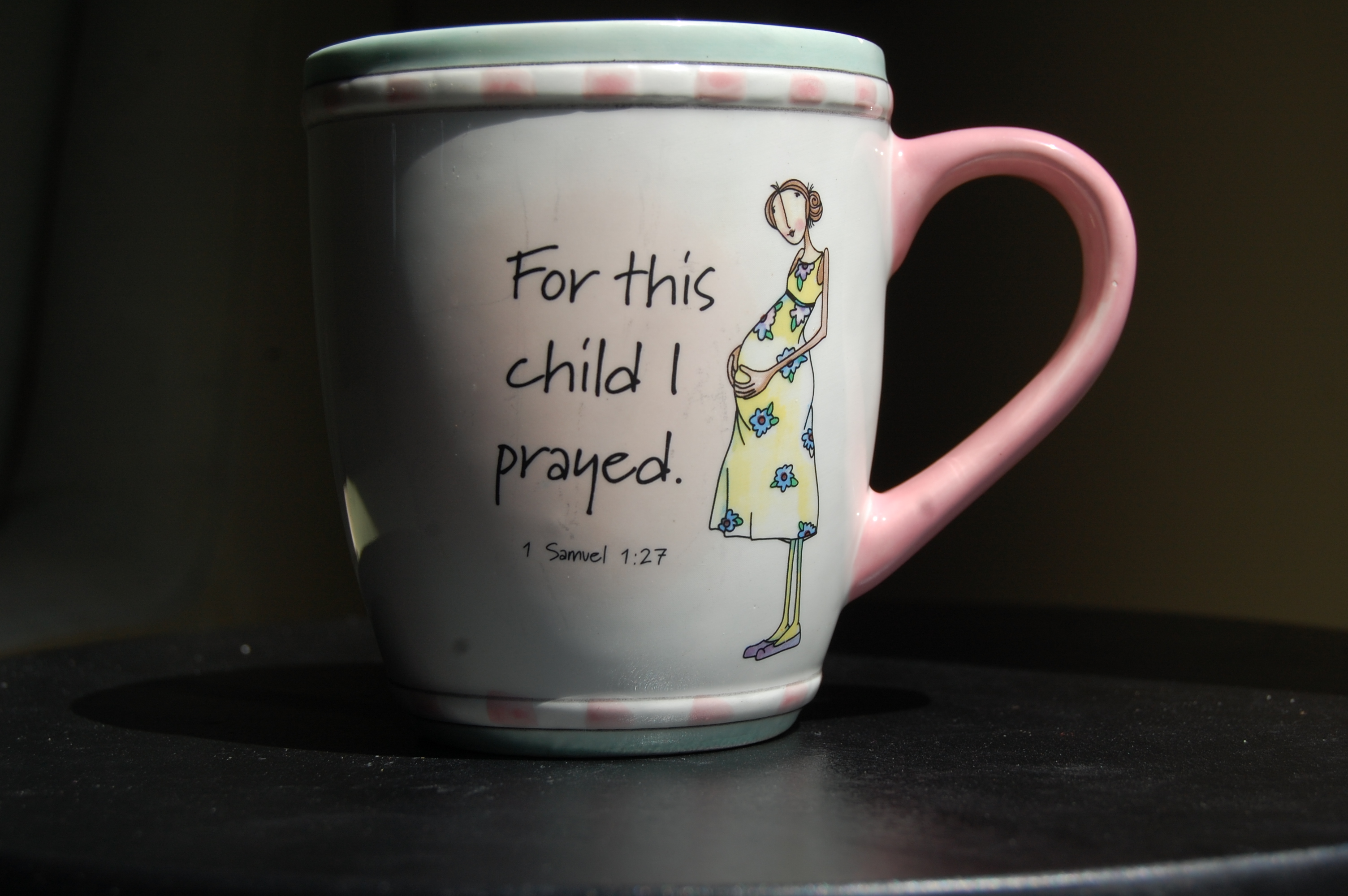
When we met in a charming seaside town midway between our homes for a spa weekend well into my third pregnancy, she said nothing of the fact that I couldn’t relax, that I was cynical, that something seemed ‘off’.  Instead, she gave me a mug to celebrate the impending addition to my family that said, “For this child I have prayed.”  When I told her what a sham I felt like because I hadn’t prayed for this child; that [she] had been gifted to me undeservingly, she said, ‘well, you’re going to pray for her now and when [she]’s here, aren’t you?’  So matter-of-fact, so trusting, so unfailing in her regard for me as a person, a mother.

DSC_0091

And when that something stayed ‘off’ far past labor and delivery, she gently and honestly broke the news to me, a headline I’d written but couldn’t read.  She’d been featured in a similar newsreel only a short time earlier.  She knew the signs, saw the struggles that someone who hadn’t been through them might have missed.  I gave her a firsthand account of postpartum depression without knowing what I was describing.  She saw herself in me.

And she saved me.

She listened to the horrible thoughts I couldn’t share with anyone else for fear they’d find out what a despicable mother I was.  She became a sounding board for all the worries running through my head.  She was my font of information on all things postpartum.  It was she who finally convinced me I needed to get help.  It was she who urged me to remove the stigma I’d attached to medication.  It was she who helped me see I wasn’t the only one who’d ever felt like a failure as a mother, a weak human being, a seriously flawed individual clinging to the sharp edge of a cliff.

Still, I fought her for a good part of the way.  I didn’t want to see myself in the mirror she was holding up to me.  I didn’t want the help she offered because it meant giving in.

But she didn’t give up on me.

She told me the things I didn’t want to hear – and kept doing so until I listened – because she wanted to help me.  She forced me to get the help I needed.  She didn’t want to see me suffer the same fate she did; she loved me so much, she wanted to shield me from it.

Like every child needs a trusted adult, so every one of us needs a confidant, a friend in shining armor; in my case, a faithful warrior, devoted to the cause of saving my soul and that of my family.  Someone who won’t give up on you even when you turn away because she’s showing you the dark side of yourself – even if you take it out on her.  Someone who sees it through to the bitter end of your acceptance and seeking of help, the start of your journey to healing.  Someone who uses her own empathic experience to lovingly see you through the darkest days of yours.

They talk about warrior moms.  Moms who fight for their children, their needs, their causes.  Moms who fight for themselves and their survival.  There are moms who fight for those who stand beside them, who pick them up when they fall, who drag them along when they stumble.  And it’s usually when we’re so bloody and battered, we can’t even think to ask for help, can’t even see we need it.  These moms lift us up in the midst of their own struggles.  They are the shining light on the hill.  Without them, our own lights would be extinguished.  All hail the friends, partners, mothers who battle for the survival and triumph of those face down in the trench.

I’d be nothing without mine.

Don’t be alone.  Don’t do it on your own.  Accept a little help from your friends.


Standard
Marriage, May is Mental Health Month, Mental Health, motherhood, parenting

They’re Baaaaaack

And what a hell of a reentry that was.

They came bearing packages, bags of laundry, and lots of noise.  All of which happened to coincide with the whine of chainsaws and segments of tree thudding to the ground as we removed two more trees from our property.

The yard looks like a tornado came through, which I would think was totally fitting, if I wasn’t the one swirling around in its center.

Apparently there are findings that show people experience depression upon returning to their routine schedules after vacation.  This weekend felt like the ultimate vacation.  I was calm.  I was peaceful.  I was not done.

The moment they walked back in – in fact, even as I rushed around trying to finish things I knew I wouldn’t be able to when they came home – my stress level ratcheted up.

We showered them early because they had run around sticking to the tree sap and I looked at my husband at 6:13 PM and said, do we really have to wait over an hour to put them to bed?  Whatever reserves I had built up over the weekend had been depleted in a few short hours.

One validating point: my father-in-law, when recounting how the weekend had gone, looked at me and said,

“I don’t know how you keep up with the three of them all day.”

Yes, it was a shallow victory because it just confirms how life-sucking they are.  BUT – and this is a very big BUT – it means that there is not something wrong with me to find it challenging.  It’s a normal, natural response that many people have apparently.

That doesn’t make it any easier to deal with on a day-to-day basis . . . but at least I know I’m not some freak of nature.

So, the take-away.

  • I like alone time.
  • I crave uninterrupted creative time.
  • I respond well to long, drawn-out, meandering shopping trips.
  • I thrill in the perfect flea market find for my home décor.
  • I eat like a pig who has found the trough for the first time when I can do so without distraction.
  • A new dress does a girl good.
  • Certain physical endeavors provide good stress relief 😉
  • I suck at carrying over these lessons to the everyday; reality, if you will.

But I have to figure something out.  As I said when I lay in bed last night, in an exhausted stupor, ‘I love them.  I need to find a way to like being with them.’

Whether it’s situational depression or what, that’s not something a mother is supposed to say.

Standard
Identity, Living, May is Mental Health Month, Mental Health, parenting

Christine Koh: Minimalist You: Self-Care Is Not Selfish

Christine Koh: Minimalist You: Self-Care Is Not Selfish.

My last post is a perfect segue to this, no?  Ha!

Simply put, I suck at self-care.  Obviously (if you read yesterday’s post!).

But I can’t function without it – which is why I struggle with mothering a lot.

Does that make me a failure as a mother or a person because I need it?

Last month, my youngest was sick.  While her two older sisters were at school, she slept in bed.  I wrote the whole time.  I felt so alive, so rejuvenated.  I had time to formulate thoughts, solutions, ideas for my writing, to move beyond the small task at hand. How excited I got and how invigorated I felt to face life and motherhood after that.

But that was tempered with a guilt.  Why couldn’t I find joy in my children even without such creative time?

How do we care for ourselves when we don’t feel worthy of it?

Or when we don’t even have the energy for it?  When depression drags you down so much that even getting out of bed takes too much energy, let alone getting dolled up and entering the world.

It truly is a vicious cycle.

But read this article and follow some or all of its tips.  Self-care is worth it, whether we believe it – or in ourselves – or not.  And if we don’t, it’s been proven that faking a smile actually lifts one’s spirits so fake that you enjoy that yoga class and maybe one day you will. (Quoth the reverend who needs to review the Ten Commandments 😉 )


Standard
Living, May is Mental Health Month, Mental Health, postpartum depression

A Sit-com of Errors

I desperately want[ed] to pin my depression on ‘postpartum’.

If the hormonal let-down following birth was responsible for my troubles, then it was acceptable.  It was normal, natural, physiologically sound.  And it was temporary.  Once my body got back to stasis, it would go away.

Three years later, though the cloud has shrunk, no wind stiff enough has come through to sweep it across the plain of my life and over the horizon.

I don’t think I can ‘blame’ postpartum anymore.

My therapist said that my anxiety and depression are situational; that the heightened stress of my last pregnancy, the trauma following it, the continued stress of a three-child household all brought out my worst symptoms.  I argued that I may have always had some latent tendencies toward anxiety and depression.  Perhaps, she said, but up until this point I had successfully managed them.  I wanted to pinpoint the origin of my maladies, while she was focused on helping me overcome them.  In my mind, if I could find a reason for it, my depression might be more understandable, more valid, more easily admissible.

I think the term situational freaked me out.  Situational.  Just because I was in a shitty situation I couldn’t hang?  What kind of weak human was I?  This wasn’t a sit-com on network television that, after thirty minutes, left the sad sack sitting on the couch for a vibrantly-colored automobile commercial that told viewers to go out and grab life by the *#&@s.  My situation had grabbed me by the neck and wouldn’t let go, throttling me for much more than thirty minutes.

Now as postpartum fades in the rearview mirror, and my symptoms continue, some getting weirder (reemergence of night sweats), I’m turning my attention to other causes.  My aunt gave me Thyroid Power: 10 Steps to Total Health by Richard L. Shames and Karilee Halo Shames.  Since adolescence, my physician has tested me for nearly every cause of low energy: anemia, low blood sugar, mono, thyroid . . . you name it.  A few years ago, she diagnosed me with Raynaud’s Syndrome (because of my frigid, ubersensitive extremies), but that was seemingly unrelated and no other conclusive evidence could be found of a specific problem.  After reading this book, it seems this is the story of many other individuals with undiagnosed and untreated thyroid issues, which – you guessed it – is a major cause of depression and energy problems.  At this very moment, I am awaiting the results of a blood test much more detailed than the usual thyroid work-up, which often isn’t sensitive enough to catch subtle problems.

But even if I never determine the exact cause of my depression, does that make it any less real?

Whether my brain is misfiring its seratonin, my hormones revolted against another pregnancy, my anxiety makes it impossible to hakuna matata, or my thyroid is on hiatus, my depression is impairing my ability to live.

Yes, I need to analyze certain factors to appropriately address it (i.e. choosing SSRIs, hormone therapy, and/or just plain old people-to-people therapy), but my therapist had the right idea with simply moving forward; rather than looking back, looking forward with a positive outlook to improve my situation.

images

It would be nice if the script-writer of my life could wrap it up in a nice, tidy episode, though.  To be continued . . .

Standard