Claudio-Duart-Designer pixabay canva
Living, Mental Health, Survival

Five Years On

I’d like to blame my current malaise on COVID.

Not the having of the virus, though two times was punishment enough. (I know, it certainly could have been worse. Believe me, I know.)

And while the pandemic and attendant lockdown messed with my time-space continuum royally, it started in the months before.

When I let myself get so low, I had a near-panic attack just going to the doctor’s office to ask for meds.

When I got so low, I let my mind trick me into thinking needing meds was a moral failure on my part.

When I stumbled around in a fog so thick, I didn’t realize how bad it had gotten.

And then as I climbed out, I felt the need to tell the story.

I knew I needed to explain how I’d gotten there – for the mental health narrative and for my own mental health.

But the story was so huge. The path so steep and craggy, I knew not where to begin or how.

And the more time passes, the harder a thing is to tell. Details forgotten, edges dulled.

And then the world stopped.

We were all in survival mode. Myself acutely.

I thank God for the fortuitous timing of that first appointment.

For if I hadn’t started meds when I did –

thrown into ‘homeschooling’ and online learning and personal loss from afar. . .

But after months of bizarre, those details began to be forgotten and those edges dulled.

And this was life.

We were expected to pick up the baton and keep time

when time was wonky, hearts were broken, and psyches scarred.

Five years on

I’ve picked up bad habits, sloth and sipping alcohol.

Smack-dab in the middle of perimenopause

and the slog of midlife.

What started as peeling back the layers of over-exhaustion and exertion

flipped the other way into inert.

Achieving perfection and avoiding failure by not attempting at all

has settled into paralysis.

And now, what is life, but this fragile thing that can be taken and wrenched dry in mere months.

When the acute sorrow is gone and you’re left with nothing but the days

and another load of groceries to unpack.

Five years on

and I still can’t tell you how I got here.

But I have begun.

Standard
Silhouette Photo Of Women Under Blue Sky
May is Mental Health Month

Women Supporting Women

And now we enter that portion of programming pertaining to women. It’s important to have supportive people of all stripes, but I have found an immense affinity and solidarity and empowerment in female bonds. In the lived experience and in the realm of all things matrescence.

I’ll be using several subsequent posts to share and showcase some amazing women, standing by and showing up for others, starting with a throwback to when one loved me enough to tell me what I didn’t want to hear.

And then to remind myself of the beautiful little stink that never was a question:

Standard
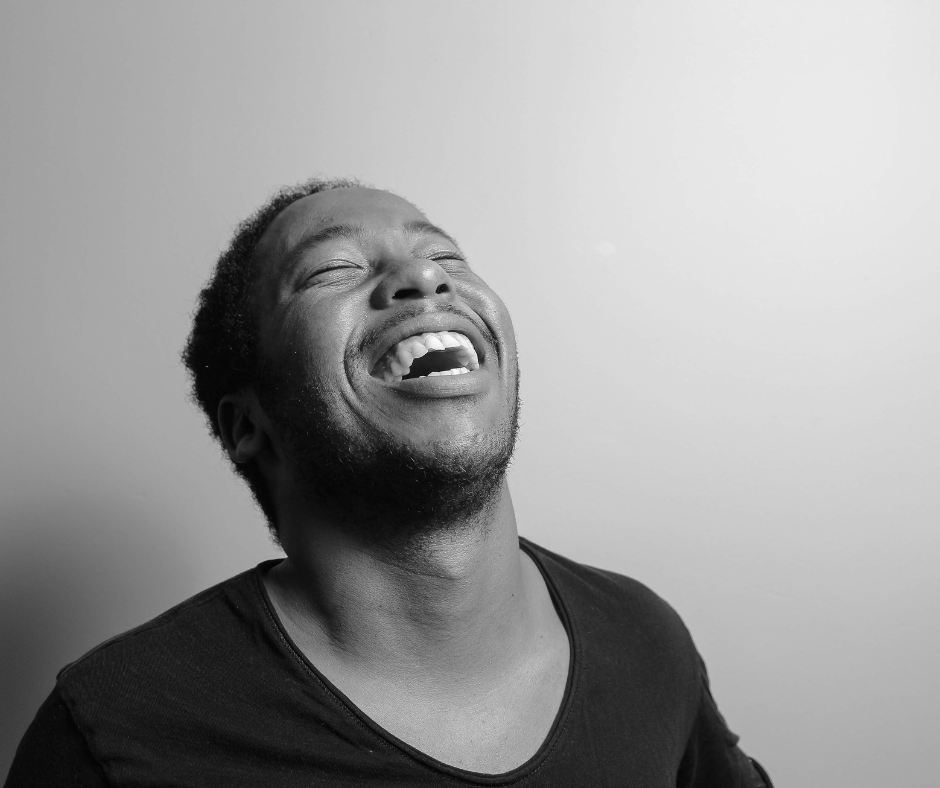
Grayscale Photograph of Man Laughing
May is Mental Health Month

Generational

Last weekend, I traveled a good portion of the eastern seaboard and visited with a dear aunt. The eldest of her three siblings, my godmother, I hadn’t seen her in seven years. She is the keeper of important family details, historical data. My cousin (and travel partner) had countless deep conversations with her across our four-day visit.

When my aunt showed us her photo album/geneaology book, she pulled out a copy of the following blog entry. Given the weight of many of our conversations, the poignant irony could not be any thicker than if fog had filled the room.

The motto of the weekend, a lot of our family, my life.

Standard
Young Woman on a Session with Her Therapist
May is Mental Health Month

Mental Health Help for Moms in Rhode Island

One of the developments of the past year is my writing for Rhode Island Moms. While I was not hired to write specifically about mental health, fittingly, my first two articles for them were about this topic so near and dear to my heart. Then Megan Block, the founder of Rhode Island Moms, allowed me to share my personal postpartum story.

My Mental Health Articles for Rhode Island Moms:

Today, to mark 2025’s mental health awareness month, my latest article dropped to share resources with women and mothers who are thinking they might need extra support.

I am incredibly grateful that Rhode Island Moms gives mental health a platform on its site and allows me to write about it.

Standard
May is Mental Health Month

May 2013

May 2013 was the first time I undertook a month-long theme of multiple posts to mark mental health awareness. Below are some of my posts from that series. A trip in the way back machine that explains a lot about my current state of mental health, motherhood, and life – and how I got here.

Standard
Mental Health, motherhood

Her Journey – Not Mine

I sat in on my daughter’s therapy appointment.

I was invited. I did not force my way in

in helicopter fashion.

Perhaps my daughter didn’t want to be in the wash of the rotors by herself.

And I am fully there for that

despite my own second guessing about . . .

the optics? I felt the need to tell the therapist it was requested.

the process? Is my presence inhibiting personal growth?

It is hard as a parent to let go of the idea that we know our child better than she knows herself.

It is dangerous to hold, though.

The process of separation began as the fourth trimester ended, as infant realized her own personhood.

There is no sense in cinching the ties now.

It inhibits the self-actualization we want for our children.

After the hours of my own therapy I’ve put in and countless readings and writings, I look at things differently from my end – even though we’re both sitting on the same couch. And knowing her as well as I do, I can offer a perspective she may not have even considered herself.

But that doesn’t mean she won’t. And that doesn’t mean she won’t learn a ton in the journey to get there.

Because it’s her journey – not mine.

Standard
Mental Health

Question, Persuade, Refer: A Path to Prevention

Last month, I had the opportunity to attend a suicide prevention training at my community hospital. I’d heard about it through their email newsletter and jumped at the chance to complete the training I’d had on my radar for at least a year. Finding MHFA training so beneficial, the extension of care specifically to those experiencing suicidality was something I was very interested in.

When I saw that some of the participants were apparently hospital staff extending their own professional knowledge, I was even more appreciative that they opened the class to the community – and that was before I met the instructor.

Dr. Robert Harrison had a long and dedicated career at Westerly Hospital as an Emergency Room physician – and that was after his service to the country in the United States Navy.

Now, he serves as director of the Washington County Zero Suicide Program.

As impressive a vitae as that, it was Dr. Harrison’s extensive knowledge of and empathy for people suffering from depression and slipping into the despair that can lead to death that was even more so.

He shared the staggering statistics of the mental health crisis of which our nation is currently in the grip.

Facts such as:
  • The suicide rate rose 33% from 2004 to 2021
  • Total deaths by suicide in 2021 were 48,183
  • Suicide is the 11th cause of death in the US; 3rd leading cause for 15-24 year-olds

The sobering facts of suicide, the stories of suffering could have gone on all evening, but Dr. Harrison shifted the focus during the second half of the presentation – to one of HOPE.

QPR, the steps of this process we could use to help those we suspect are suffering, is intended to provide hope through positive action.

By QUESTIONing, we can deduce whether a person is contemplating ending their life.

We can then PERSUADE them to get help, to find a hopeful solution to what seems like an ‘insoluble problem’.

Finally, we REFER them to professional help, either by taking them directly, making arrangements with them, or giving them referral info and getting a ‘good faith commitment’ that they will not complete or attempt suicide.

Having practical tools to apply in what seems like an unfixable situation is empowering. Depression IS terrifying. But to know that there are ways to stave off or circumvent its lying advances and urgings is the epitome of HOPE.

As striking as this revelatory information is, knowing that there are empathetic people who walk this earth and populate our hospital halls is even more amazing. The nuance and care with which Dr. Harrison shared his experience and information was moving; the witness he bore to pain and suffering and support of people who care was affecting.

In a mental health atmosphere where citizens don’t want to discuss the uncomfortable, practitioners aren’t armed with the skills to stave off suffering, and systems don’t support access or affordability – this conversation at Westerly Hospital one evening in October is one I won’t soon forget.

Yes, it served the professional development of my skills; it fortified the tools and resources in my fight for mental wellness – but it also filled my reserves of hope to overflowing.

That can be an uncommon occurrence in this work.

But it’s at the very root of what we do.

All anyone wants in this life is HOPE.

QPR helps us walk the path together.

Standard
Mental Health, Recovery

Reprogramming

Reframe

Rewire

Retrain

I’m completely convinced that if I talk through an issue or situation thoroughly with a trusted individual or take the time to sit and write it out, I will arrive at the problem or underlying emotion at its core.

Not because I’m a genius. But because I know myself well.

Both my interior movings and motivations and my ability to let the hectic pace of life pull me right along with it, blurring the signposts along the way.

If I moved slower or stopped more frequently, I would see the patterns of programming peeking through. I would be alert to the where and why-for of my feelings, thoughts, and actions. I would be able to stop at the head of a trail instead of barreling straight down it. I could course correct before the wheels locked into the well-rutted tracks.

Having such an epiphany when talking to my therapist today, I put my folded hands to my forehead and sighed, “Ugh, reprogramming is so hard.”

She started tapping her forehead, as if pressing a button with a beep to stop a function, saying, “Yes, I am worthy, I am loved, I can change my conditioning.”

For that’s what it is: social conditioning, programming – call it what you will. It is the patterns our mind has learned and practiced that we think are gospel simply because they are so well traveled.

We can change the paradigm.

We can force reboot, restart, turn off then on again –

and start fresh.

Standard
executive dysfunction
Mental Health

Even Executives have Support Staff

Can we talk about executive dysfunction?

I feel like this absence of function is everywhere!

On reels about Adult ADHD to menopause to thyroid conditions, to depression, anxiety – the list goes on.

The proliferation of social media content sharing symptoms with clickbait titles like, “Sure signs you have trauma-informed . . . insert syndrome here”, clarify some things for us, giving us those, oh that’s why I do that moments. But they also can make us (me, we’re talking about me – maybe you, too) paranoid, thinking we have every flipping struggle under the sun.

While the A-ha moments can make our lives easier, especially if we take our new questions and epiphanies to our therapist to work through them and integrate tactics into behaviors and routines, most of these posts offer no solutions – just a new title to add to our tally of neuroses.

I read an interesting article this week positing that while such posts have helped decrease the stigma surrounding mental health via awareness and exposure, mental health practitioners aren’t 100% appreciative. The phenomenon of ‘therapy-speak’, this widespread use of therapy vernacular, has assigned mental health diagnoses to non-clinical behaviors by untrained people.

“Mental health professionals urge, you should embrace nuance and avoid pathologizing normal – albeit annoying or painful – behavior.”

Allie Volpe, “The Limits of Therapy-Speak” in Vox

Enter my paranoia (and my comment about bringing such concerns to a trained therapist).

I’m not walking around diagnosing my friends or strangers on the street, but more than one of those reels has given me pause with my own concerns.

Which brings us back to Executive Dysfunction (and yes, I see the irony in my sidebar).

When a Gen Xer such as myself was raised in a people-pleasing, perfectionistic-inducing atmosphere, it may have been easy to mask symptoms of ADHD. And just like my depression didn’t fully manifest – or become a real f*$%ing problem – until my third postpartum go round, I’ve been able to function and keep all.the.plates.spinning – until now. A friend, helping to manage her own child’s ADHD and discovering her own possible similarities, found in her research that women approaching and going through menopause is the largest group of new diagnoses for the disorder.

Now, my people-pleasing, perfectionist tendencies (see above) doth protest. I’m not having a problem functioning, says the woman with unfinished tasks all over the house. I don’t have a problem managing, says the woman who is running late to every single event she attends.

And those freaking reels do not help, with their peppy, easily digestible, eye-candy way of pointing things out.

But how much is a lack of executive dysfunction and how much is the untenable expectations put on modern mothers? How much is the lingering effects of a global pandemic? How much is my lack of sleep? My wonky thyroid? My anxious tendency to flee from the overwhelming? How much is the reality of four freaking kids and their often inattentive attitude to my pleas for help? The very people-pleasing, perfectionist feeling I have to, promising to, do all. the. things?

The answer likely lies right in the middle.

But that’s not something I can suss out all by myself. And I suppose that’s the point.

Not only would my executive dysfunction likely not let me (insert self-deprecating laugh here), I am not the professional trained for that job.

executive dysfunction
Standard
Mental Health, Mental Illness

Red Hot Reminder

I had just taken my morning meds when I went to light the woodstove. 

Reduced to embers and ashes from the night before, I had to start fresh and stacked the bricks of compressed wood dust in their faintly cheerleader-ish pyramid.  I twisted two long tears of newspaper into loose spirals and set them inside.  Usually a small square of firestarter set atop would be all that was left. 

But this morning, I picked up the medication information sheet that shipped with my newest refill of meds.  I usually just recycle it.  I’ve received dozens, if not hundreds, before.  This morning, for whatever reason, I tore it into quarters and laid them over the delicate spirals of newspaper, tucking the firestarters in as if for bed. 

The opposite ends of each coil of newsprint burst into light at the touch of the match, that crawled toward the center as usual.  But the information sheet, made of a heavier weight and sitting atop it all, didn’t catch right away.  It sealed in the tongues of flame and made the smoke swirl above the bricks in a pulsating plate. 

One quarter of the sheet, that rested vertically, served as a firebreak.  On one side of it, the fire roiled, yet the paper seemed untouched.  On the opposite side, the words of warning, of various side effects and negative outcomes attached to this tablet meant to cure me, to fix my foibles – glowed, as if alive with molten lava; not painted or poured; moving, active – and yet about to disappear.  About to be consumed by the heat and flame.  At their brightest and most brilliant – about to fade into oblivion, no longer legible or meaningful.  Not even holding shape or form, a hot rush of ethereal, ephemera.

Obviously, I am a sucker for symbolism. 

And so, as I sat and stared into the fire, amazed and mesmerized by what very likely was a mere reaction of the ink to the heat of the fire, I pondered glowing prophecies and potent mystical messages.  I know that seeing warnings like ‘may cause nausea or stomach upset’ in a rosy hue doesn’t make them magical or more enjoyable.  But as someone always ambivalent to ‘fix my mood’ with meds, the occurrence seemed to have some sort of message.

I’d thrown the paper in the woodstove this morning on purpose.  Prescriptions and warnings and medical material litter my life and countertops and brain.  How I would love to wake in the morning and walk out the door without having to take something so life doesn’t seem so overwhelming.  But as much as my stubborn will desires and tries to snuff it out of existence – the problem, the illness remains. 

Sometimes I need a red hot reminder to stay the course and keep healthy.     

Pexels/Free Range Stock
Standard