Identity, Literacy, Writing

Be the Book

I think all frustrated writers, those in the fits and starts, the various stages of creation and denial, dream of becoming the next great American novel.  Like the bedraggled outcasts wandering around in the flickering firelight murmuring lines from books at the end of the Fahrenheit 451 film, we imagine our stories and us as one, words burgeoning forth from our being.
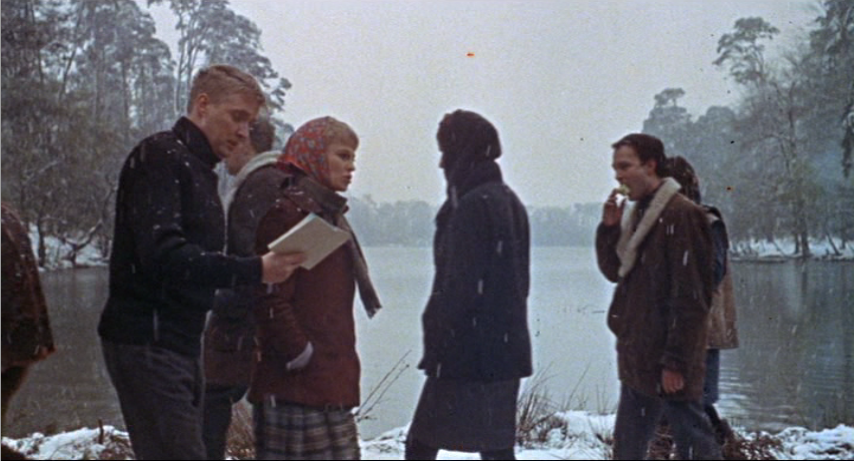
fahrenheit

When I first started to take my dream seriously, I mentioned it to a close friend.  As we discussed the perils of the publishing world (read: nearly impossible to enter), she suggested, that since I taught middle level ELA and studied that literature extensively, I write young adult literature: an up-and-coming worthy field and one not as constricted by that impermeable culture (at least at the time).

I had the workings of a character already, her life – or at least neurosis – already well on its way.  And her neurosis, while certainly presenting itself in an adult way then, could easily be adapted to any stage of the human condition.  So I imagined Kathryn as a high school senior, about to embark on the most significant journey of her life thus far – with no freakin’ clue where to go.

I drafted her all the way through her preparation for graduation, her stretching and breaking, hitting rock bottom, and starting to put the pieces back together, shedding her sarcastic armor in favor of some spiritual guidance.  She hasn’t reached her destination at the end of the draft, but she’s got her suitcase packed and some of the itinerary fleshed out.

Only one problem: my YA novel wasn’t exactly YA.  It straddled the line between adolescence and that liminal space beyond.  Transitional, I believe they’d call it.  And when I looked back over what I’d done, it was the time after she’d left high school that I liked the most.  Broken into two parts, the second was longer, stronger, and more developed.  Had I written Part One to satisfy the YA gods before I got to the meat of what I really wanted?

Kathryn was born in one of the first depressive periods of my life – even though I didn’t necessarily know it at the time.  Not to say that I didn’t feel the movings of it in high school (particularly at the end where I chose to place the beginning of Kathryn’s story), but it’s been a definitive part of my adult experience.  And I know what Kathryn grows into, in this alternate universe where a spiritual awakening didn’t occur in post-graduate studies.  Not to say she’s not an amazing person as a young woman, but holding her to the fire longer strengthens her mettle even more.

And now the true question: would this novel be stronger and serve the world better by seeing a woman through her darkest days of mental illness and how she somehow comes out the other side?  Is that what this story is meant to be and I was trying to cram it into some other mold?  Yes, I could make it work – and well – in its other incarnation, but would I be ignoring what it’s been trying to tell me from the beginning?

Have you ever known the answer before you’ve asked the question, but need to go through this circuitous route before you trust yourself?  Or not even trust, but just listen to that little voice that’s been there all along?

Peter Johnson told me you have to write the story the way it’s meant to be written.  You can’t worry about convention or trend or even length.

Maybe I’ve finally learned that all you need to worry about is being true to yourself and your characters.  Maybe now I can be the book.

Standard
Literacy, Writing

Blank

Words haunt me in my dreams, in my waking hours

They carve themselves in my grey matter

They pull my hands in loops and lines

The click of keys, the satisfying clunk of return

Bits and pieces of phrases and lyrics

Familiar yet fleeting

Disparate yet part of my collective consciousness

Inspiring love, eliciting hate

Droughts or a copious spate

A blank screen, a taunting cursor

Time to sit, reflect, create

A swirling maelstrom in my brain

I cannot settle on a name

Standard
Literacy, Living, parenting, Poetry

Lessons Learned from Shel Silverstein

I am a late convert to the school of Shel Silverstein.  While my peers cut their literary teeth on his silly and sentimental poems, I had never read them.  My mother hit all the other required lending from the library – Dr. Seuss, Sesame Street, Richard Scarry – but I had never cracked the spine of Where the Sidewalk Ends.

Until my first grader came home singing its praises.  Her teacher had read it aloud to her class and she was hooked.  A week or so later when we signed her up for the summer reading program at our local library, she went straight to that book as the first she’d ever check out with her own library card.  Her nose stayed in that book like a bloodhound to a trail – except when she’d call me over to read a particularly silly poem or look at a contorted pen and ink drawing that she found equally funny.  And from there, she guffawed through Runny Babbit, onto A Light in the Attic, and Falling Up.

It blows my mind to be here at the exact moment when my child becomes an obsessive, voracious reader.  I know I’m one, but I can’t even say that I remember exactly when it happened (though it was most likely on my mother’s lap at bedtime).  Where the Sidewalk Ends is her gateway drug.

Harry Potter hit at the outset of my teaching career.  Then and many times since, I’ve heard people disparage its literary quality (which I don’t necessarily agree with), but applaud its ability to get kids hooked on reading.  I am not drawing parallels that bring Mr. Silverstein’s work into question, but having never been privy to the mania surrounding his work myself as a kid, I can’t say I understand it.  But, hey, it has lit that part of my child’s brain that makes her interested in an author, a genre, amassing a body of knowledge – it’s literary gold as far as I’m concerned.

And tonight, I mined for gold even further when I held up two books for she and her sister to choose from for bedtime reading, one of which was The Giving Tree, knowing full well which one they would choose (her sister is also becoming enamored with the idea of Shel Silverstein just by hearing big sis talk about it all the time).  The Giving Tree is actually the only Silverstein book I’m familiar with, having received it as a gift for the girls (no doubt by one of my contemporaries who has fond childhood memories of biting into it) when they were smaller.  I remember reading it in a hormone-induced haze and choking through my words at the end of it.  Man, it got me.

But the simplicity of it got me even more tonight.  And the message that it has for all readers – young and old alike.

I was reading it with a different eye, tuned into the words in light of the poetry my daughter has been reading.  Spread across multiple pages, the beginning is actually an extended stanza.  I could see the line breaks and hear the cadence across the creases.  But then the boy grows older.  And things get more complex.  There is an up-tick in language.  A problem.  Discussion.  Back and forth.  A one-sided decision.  And the tone of the story remains at this elevated level until the boy returns as an old man, weary of the world and its ways, and ready to embrace what he already knew as a young person.

So, tonight, as a thirty-three and seven-eighths year-old woman, I learned a lesson from reading Shel Silverstein; one that I couldn’t possibly have learned had I encountered him for the first time in first grade.  By keeping things simple – our language, our needs, our desires, our interactions with others – life is more enjoyable for everyone.  It is only when we want more, we expect more, we demand more, that things gets muddled and more difficult, especially when we look for those things in inappropriate places.  Being totally appreciative of what we have and honoring those who help us get it is a place to start.  And perhaps we wouldn’t be so very tired at the end of it all if we remembered these things.

Who would’ve thought that I would’ve learned such a profound lesson by reading a bedtime story to my children?  Certainly not I.  So a big shout out to Shel Silverstein tonight, wherever you are – for opening my daughter’s eyes to the wonders of reading and giving me new eyes to see.

Standard
anxiety, Literacy, motherhood, parenting

Story Time

It’s a good thing I believe in the power of reading – because if I didn’t, there’s no way I’d take my kids to the library.  Time after time, it proves to be a taxing experience – one I’m not sure is balanced by the benefits of the books we obtain.

The kids, however, love it.  So much, in fact, that they burst through the doors like an invading army, one running this way, one the other.  Unfortunately, the front doors deposit us right into the “quiet” section of the library.  While I try to corral them towards the book drop, they dodge and weave, this last time with Julia lighting upon the stack of rolling bins “just like the ones at the grocery store, Mama” to tote books around in – even though I can’t get her to carry our tote bag.

After numerous shushes on the way to the reserves where Mommy’s book is waiting, it’s time to commandeer the children’s section.  They rush to the stairs with renewed vigor, Angela’s voice reverberating through all the levels as we ascend.

They do comment on a few books on display en route to the play area, Julia picking one on various modes of transportation throughout the ages.  Story time must have just ended because there are many little people and their parents hovering about.  Julia and Angela dive into the crowd, playing with the puppet theatre and puzzles; making friends more easily than I.  Julia sits on a low-slung kid couch near another mother and starts a conversation with the Tyrannosaurus she’s operating.  Angela giggles at the parrot another mother has squawking.  I smile and mill about.  These two must already know each other because a few minutes later, I can’t help but overhear one relay the story of her husband’s possible adultery to other.  One father with a preschooler and an infant looks up in surprise when he sees his baby smiling through a gap in a bookshelf, playing peek-a-boo with me – maybe he doesn’t want to draw attention to himself either.  A grandmother plops in a chair after depositing her toddler into the play area, looking worn out.  I want to tell her I feel her pain.

Today, as with nearly every visit here, I’m having flashbacks to when Julia was an infant.  So exhausted as a new mother, yet determined to keep my active two and a half year-old busy, I would strap Julia to the front of me and take Bella to story-time.  I think I was trying a passive-aggressive attempt at keeping some semblance of pre-baby # 2.  I figured if I couldn’t sleep when she slept and lie around all day in my pajamas, I may as well be out and about to distract myself from my misery.  I’m still not sure which was worse: a mom who could hustle around two of them, her harried mania bubbling just below the surface, or a mom drooling in delirium with a stir-crazy kid.  I was so desperate to latch on to something, I rushed the kids to story time without realizing there is an etiquette to such events.  I was lucky enough to attend the first meeting of a new session, at which there would be arts and crafts and for which advanced registration was required.  The most dour-looking librarian of the staff came over to me with her clipboard, pointing to my daughter, and asked, “And who might this be?”  After introductions, she said, “Ok, I’ll add her to the list for next time as she’s not signed up.”  I stammered some statement/question about pre-registration and she assured me it was fine; she had extra materials for the craft.  She had moved on to the next child, who was on her list, before I could thank her.  We went home with our contraband craft and never returned.

I guess I’m not much of a joiner.  One of the things I love about reading is getting lost in one’s own little world, a world that changes from chapter to chapter, book to book.  The solitary, quiet joy of it.  Although, I do love sharing and discussing the juicy details of a book I’ve just finished with someone else.  It has to be someone I know will enjoy it equally though.  Someone who loves a good story for the pure, unadulterated joy of it; the thrill of figuring out a mystery; the ache of a loss as if it were your own.  Not someone who will rebuff me because I wasn’t playing by a set of rules I didn’t even know existed.

I still take my kids to the library.  Though I’d much rather get my books and run, I let them say hello to the fish in the aquarium; put together puzzles that are missing a few pieces; pluck books from the shelf not by their merit, but because they’re at eye-level.  I let them scan the books at the self-check station even though their squeals as they push each other off the stool they’re sharing make me cringe – never mind the other patrons.  I take them to the library because they need to create their own experiences in the world of reading.  I can’t force them to operate under a set of rules made by someone else; they need to be afforded the same opportunities as those kids whose names are on the list.

Plus, it always makes for a really good story.

Standard