Children, Literacy, Weekend Write-Off

On My Way to Buy Eggs

“May I go outside and play?” Shau-yu asks.
“I need you to go to the store first,” her father replies.

On My Way to Buy Eggs by Chih-Yuan Chen starts simply enough.  In this father-daughter exchange, it seems Shau-yu’s intentions for the day are reversed, but her trip to the store becomes the play, not a postponement of it.  She chases shadows, greets neighborhood animals, transforms found objects into treasures and the back alley ways of her surrounding area into magical places.  Imagination allows her to see her ordinary path in a new light – that and the discovery of a blue marble and lost pair of glasses.

The everyday nature of this story is where its power lies.  Not only does it showcase childlike wonder and the power of play, On My Way to Buy Eggs proves that life occurs in the small moments.  The true experiences occur in the in-between.

Shau-Yu returns home at the end of the book.  The two final pages of the book, a spread of illustration, show her playing in the background while her father prepares supper with the eggs in the foreground.  The wordless scene incorporates all the facets of her journey.  Whimsy and the necessary intersect.  Real life and the imaginary merge.

Children form identity through a sense of belonging, a place to call home, a combination of play, responsibility, and autonomy – all of which Shau-Yu encounters on her way to buy eggs.

Standard
Children, Identity, motherhood

Skating Away . . .

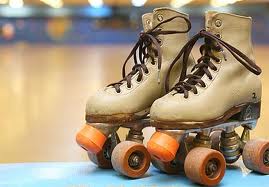
Putting a woman who has given birth three times, the last time nearly splitting her in two, on roller skates probably isn’t the best idea. But that’s what I did this past weekend at my friend’s daughter’s birthday party.

My eight year-old was fine once she remembered what she’d tentatively learned at other parties, but my four and six year-olds needed assistance and my there was no way my husband was getting out there.  The last time he skated was the ice variety and let’s say the ice nearly melted from the heat of pain-induced oaths he uttered.  Plus, I enjoy skating. I loved it as a girl, forcing the wheels over the pebbly asphalt of my street, gliding along the multi-layered laquer of roller rinks.  There was a freedom and euphoria in the way the wind pushed my hair back and the music thumped as I floated along.  I thought I was the cat’s pajamas when I mastered cross-overs.

But that was when I was young and nimble; limber and loose.

The other day I used muscles I hadn’t used since childbirth – or at least since the physical therapy following childbirth to put me back together.  Keeping my feet from drifting too far apart, I had to pull those adductor muscles to attention and, oh, that got my attention.  I managed to haul my foot over for one cross-over before I felt the other one start to slide out.  The thought of my pelvis in the aftermath if I ended up in a split on the floor was enough to dissuade me from trying any more.  My groin muscles were already pulling; I didn’t want to strain any of their neighbors.

But, when one of my girls took a break, or refused to take my hand, I would speed up, feeling the familiar rush of air. My godson, brother of the birthday girl, took a shine to the disco ball at the center of the rink and kept gravitating toward it whether he had skates on or not.  When his father went out to be sure he stayed in the center, out of the melee of circling skaters, an impromptu dance party popped up.  His brother and sister, my girls, and husband sans skates, joined us and grooved to Daft Punk disco-style.  It still had the same effect as my favorite Michael Jackson song way back when.skates

I don’t know if it’s the act of skating itself or the associations it engenders, but it’s a whole lot of fun.  There’s no way I could last as long as I used to when I could feel myself rolling around the rink even after I’d taken off my skates.  And I’m sure my body wouldn’t forgive me either if I tried.  But as the birthday girl asked me as she rolled by, “How’s your skating going? Is it going good?”, I can say, “Yes, yes it is.”

Standard
Children, Literacy, Weekend Write-Off, Writing

Under the Big Sky

Apparently I’m drawn to morbid and depressing children’s books.  Save a sweep of the memoir section on our walk in, the children’s section is the only one I get a chance to truly explore while at the library.  So perhaps it is some deep-seated need for adult content even if it must come in child format.

Ironically, I try to keep my ‘child’ selections from my own children, keeping them with my books rather than their stack of picture books.  But if they look like ducks . . . my kids expect them to waddle like ducks and inevitably find them.

One such duck is Under the Big Sky by Trevor Romain.  The main character is sent on a journey by his grandfather, approaching the end of his years, to discover the secret of life.  If he does so, the boy will receive all of his grandfather’s riches.  Not a bad carrot to waddle after, and so, the boy sets off, querying objects, animals, and people as he goes.  The answers he collects are rich examples of metaphors, which present wonderfully teachable moments for young readers in trying to suss out both their literal and figurative meanings.

Understandably, there is no one easy or straightforward answer.  Expecting that there was one, the boy becomes discouraged.  He finally crosses the world and many years, searching.  Upon his return to his grandfather (who, honestly, I was surprised had not died by this point), he reports that he has not found the secret of life.

“But you did find it,” said his grandfather.  “Your journey itself was the secret of life.  And along the way you have learned everything you will need to enjoy a full and rich life.”

And so the boy does attain his grandfather’s riches; in fact, he had them all along.  As do all of us on this journey of life. Apparently it takes an adult reading of a child’s book to remember this.  Who knows?  Perhaps if children do read books like this, they will discover the secret sooner.

Standard
Children, Living, parenting

Bunkin’ Crazy

Two nights ago I stayed up until two in the morning searching for Ikea hacks.

Yes, that is correct.  I deprived myself of precious sleep to troll the internet for the most perfectly imperfect set of bunk beds I could find.

I’m in that seasonal state of flux that rolls around every 3-4 months.  This time the feelings are even more urgent because ‘winter is coming’ (at least I don’t have to deal with white walkers – thank goodness!) and everything – our minds, our activities – turns inward.

I’m starting to notice that maze of boxes I left in the basement after a summer scavenger hunt; the piles of clothes that need to be sorted into bins after leaving the drawers to be filled with sweaters and fleece that -just-won’t-fit (at least if I want the drawers closed!); the clothing, supplies, books, toys . . . that my children are starting to outgrow that don’t need to be junking up the joint.

In this sorting and stowing maelstrom, the need for bunk beds in the room my middle and youngest daughters share is making itself vehemently known.  As if the insistent reminders of my middle daughter would let me forget. 😉

In my dreams – that’s right I said MY dreams – I would get a bunk with a rock wall to scale the top bunk, a slide to descend, and a secret nook below.  If not for the problem of maintaining a marital bed, I think that would still be my ultimate dream bed – regardless that I’m supposed to be grown up.  Alas, I don’t think my husband is looking to relive his days on a tight bunk on a Coast Guard ship.  Besides, I can’t afford and/or justify the exorbitant price tag.

If you can afford or justify it, get one - they're gorgeous!

If you can afford or justify it, get one – they’re gorgeous!

Bunk beds in the midrange are still overpriced for the level of quality the consumer receives.  Wood?  MDF with a veneer that looks sickly plastic?  Weirdly placed slats and drawers?  So I figured, since I’m not going to get what I want, I may as well make the price a little more tolerable.

Enter Ikea.

But I’m stubborn and still trying for the extra storage and whimsical details of other bunks I’ve seen and so went searching for hacks to make my own.  If my bedtime that night is any indication, I did not find one.  Some of them looked like hacks.  Some of them would work for a college student used to precarious positions, but not for my rowdy children (especially on the top bunk).  Some of them included far too much carpentry for my tastes.  So I guess that makes me lazy and cheap and incredibly hard to please.

I almost broke up the marital bed even without my dream bunk because my husband was none too happy with me when I finally crawled in.  Call it my seasonal nesting, I could not rest until I’d found a solution (or given up in defeat that morning).  It’s driving me nuts that the current system is not working and yet I can’t find a satisfactory replacement.

Then the neon postcard from a local charity came in saying they would be making the rounds soon to collect.  That’s all I needed.  I went into hyperdrive, stockpiling all I could to clear it out!

If I can talk my father into going to Ikea with me while you’re at work, I can get the bunk and we can break down the crib and donate that.  And the mattress.  And the crib sheets and the crib set . . .

Maybe it’s reverse nesting.  But that’s another post.

If you’ve learned nothing else from this post: Know that bunk beds are ridiculously overpriced and one should not shop for one during a seasonal stir-up or under the effects of extreme sleep deprivation.  Happy Purging and Dreaming!

Standard
Children, Literacy, Weekend Write-Off, Writing

Bluebird

I hate books with sad endings.  But I love Bob Staake’s.

The Donut Chef is in heavy rotation in our house.  I cannot eat a donut without proclaiming, “There’s nothing quite like glazed, I think!”

So when I spied a new title, Bluebird, on prominent display in my child’s library at open house, I couldn’t resist removing it from its perch for a peek.  My first grader came home with it a few weeks later much to my delight.

bbsmallcov

Every workshop on children’s writing I’ve attended, particularly those on picture books, says you must have a happy ending or at least end on a positive note of some sort.  Kids need to know they will prevail in some fashion.  Lately, I‘ve been finding many books that are heartbreaking!  After reading Bluebird, I have to say, my excitement in finding a new Staake book was quelled somewhat by the poignant moments at the end of it.

A lonely boy begins a new school year.  Two bullies have him pegged from the moment the class queues up outside.  After school, he heads in one direction, the rest of the children, the other.  He is all alone save the bluebird that has been quietly watching him all day – from tree branches and windowsills.  Immersed in his solitary confinement, he does not notice the bird flit along beside him, until she swoops in low over his head and engages him.  With a fun mixture of tag, hide-and-seek, and follow-the-leader, the two become friends as they move through the city.  These are the only times we see the boy smile.  As he floats a boat in the park, the bird perched upon its mast, drawing the attention and friendship of a nearby boy and girl, readers rejoice with the boy and finally relax.  He will be okay.  He has found happiness, even if one bright spot of it.

And then he passes under the bridge – where three bullies want not friendship, but his beloved toy boat.  At first, the bird hangs back, watching from atop the bridge.  I wanted the bird to rescue him, but the workshops have also taught me that protagonists need to solve problems for themselves.  Still, I was angry that his new friend was seemingly hanging him out to dry.  But when the situation turns dire and the boy truly needs him, she swoops in.  She blocks the blow the boy would’ve received from a stick thrown by the bullies, but sacrifices her own life in the process.  To their possibly redeeming credit, the bullies are appalled by the result of their actions.  A flurry of rainbow-hued birds lifts the boy and the bluebird into the sky for the spiritual denouement.

His friend dies?  He finally has someone that makes him smile and she’s dead?  This is not the gooey goodness of a glazed donut!  But it does adhere to that positive tenet of children’s literature: through the process of nurturing this friendship and finding what makes him happy, the boy can now fly on his own.  The bluebird has taught him how to find happiness on his own.

The plot of this book is riveting and transcendent.  What is astounding is that there is no narrative text whatsoever.  Staake tells this incredibly intricate and rich tale with nary a word.  It is a true testament to his amazing graphic skills.

This book may not have been what I was expecting, but happiness rarely is.  Bluebird joins Bob Staake’s catalog as another superb example of children’s literature.

Standard
Children, Literacy, Living

Neville

It starts with a colorless world.

The only color comes from the belongings he’s brought with him to this foreign land.

An unsanctioned move, an unfamiliar school, and unknown classmates, who most certainly won’t become friends.

This is the bleak landscape in which a young boy finds himself at the beginning of the picture book, Neville, by Norton Juster.

9780375867651

At the beautifully gentle suggestion of his mother, he takes a walk down the street on the off chance of meeting someone.  Reaching the end of the block, he looks skyward and bellows a name.

Neville

Is this the name of a friend he’s left behind?  A pet who’s wandered off into this new neighborhood?

It’s unclear who he’s summoning, but first one, then a whole slew of children answer the call.  They all begin to seek out Neville without even knowing who he is.  Not exactly synchronized, but part of a collective effort to find this unknown friend.

“Hey, I don’t know anyone named Neville who lives around here.  Is he new?”

“I guess so,” the boy said uncertainly.  “Everyone has to be new sometimes, don’t they?”

The anxiously-sought-after Neville becomes a great source of curiosity, the children clamoring for information and hoping to meet him soon – though they’re pretty impressed with his friend, perhaps even more so than the mysteriously absent Neville.

Returning to his new house, it looks a little less bleak.  Closing his eyes that night, his mother wishes Neville goodnight.

The surprise reveal of Neville’s identity is a clever twist.  The entire book is a poignant look at the void a move can create; what is left behind is no longer accessible, but it’s unclear yet how to access the new resources available.  The tentative way Neville approaches it all is such a realistic depiction – for children and adults alike experiencing a move.  Readers will feel for Neville’s plight (even before we know it’s him), but not just because he’s a nervous kid; because he represents the ambiguity we all face when we experience a move.

We’ve all been tempted to raise our face to the sky and bellow our own name to see what comes back.

In the case of Neville, it’s all good.

Standard
Children, Living, Photography

Scene from September 14

The first time we viewed this house, our realtor said she could picture our girls climbing all over this boulder on the property.  Mere seconds later, their little bodies ranged all over it.  She apologized for jinxing us!  After removing several trees from the yard and only recently removing the leftover wood, the girls rediscovered it and, today, turned it into their canvas.  Remembering that first day and seeing how they’ve made it their own, I can’t help but see the cyclical quality of this year’s passage and how our little corner of the world becomes home.

Calcium carbonate comes home

Calcium carbonate comes home

Standard
Children, Literacy

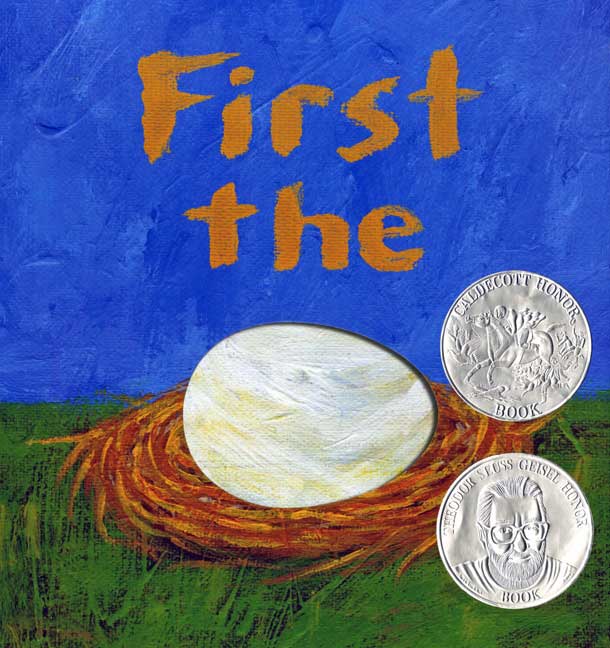
First the Egg

My newly minted six year-old, about to enter first grade, chose this book from the bins at the library.

9781596432727

I often wonder at her book selection process, as it seems to be hunt and peck, plucking a book after rifling through just a few.  Maybe something about the cover piques her interest, sometimes it’s one I later find out she’d read with her beloved kindergarten teacher – once, it was because it had the country Swaziland in the title, whose name sent her into peals of laughter the first time she heard it pronounced (no disrespect, Swaziland).  But most times, it seems she chooses a book simply because it seems as good as any other, with a shrug, an impatience with the process.

Whatever her motivation, First the Egg was a great choice.

Starting with a spin on the proverbial question of origin, First the Egg introduces and reinforces many important literacy skills.

Cause and effect, Sequencing, Prediction, Sight words/recognition for emerging/early readers, Parts of a Whole.

Graphically, it is a treat.  Cut-outs on each page hint at what comes next, further reinforcing prediction skills and creating excitement, anticipation for young readers.  Sequencing and staging of processes is reinforced as well, for on every ‘then’ page, there is an illustration in the middle of the phase.  For example, the egg hatching before the chicken appears on its own page.  My favorite, of course, is the Word > Story series.  So exciting to see all that typeface take shape into a story.

And my six year-old isn’t the only one who can read it.  My three year-old, after hearing it a few times from her sister, started “reading” it.  It most likely was memorization and parroting, but I can’t help but feel that she’s starting to put those patterns together.

Ironically, when I took a break from writing this post, my daughter told me that she had, indeed, read this in kindergarten.  So she may not be as brilliant as I thought in picking out this book, but maybe her teacher is!  And at least the lessons stuck with her.  Most importantly, the joy of a good book.

Standard
Children, Identity, motherhood, parenting

On Her Way

My daughter has reached the age at which I formed a consciousness.

We all have snippets of early childhood, maybe even earlier; bits and pieces of memory.  Sitting on grandfather’s lap to create a painting.  Banging on the ledge above the backseat because you couldn’t sit quietly in mass.  How much is real memory, spotty because of time elapsed, and how much is fabricated from photographs and family story?  And when does the real narrative begin?

I remember all of third grade.

I remember playing at friends’ houses, sleepovers, sitting under a desk goofing with a classmate.  That is the year I think of as starting true friendships and forming my own separate identity (though I didn’t know it at the time).  That is the year my eldest daughter has just begun.

Four days into school and she asked for her first ‘play date’, though I’m sure that term has fallen out of fashion with her set.  She and her friend had already arranged it on their bus ride home one afternoon; it was just up to the adults to assent once they’d filled us in.  She’d had her first sleepover at this girl’s house last year (her one and only thus far save relatives’ houses and no – I wasn’t ready for that), played there once this summer, and gone to the beach with her once.  This was the friend’s first time at our home.

I later realized that I adopted the always-appreciated (on my part) mode of parental supervision my mother employed whenever I had friends over growing up.  There, but not.  Seen, but not noticed.  Moving through, not hovering.  Accessible, but not in your face.  My mom always joined the conversation when drawn in – and usually made some fun comment – but never horned in.  She always made sure we were safe and having fun, but in such a way that made us still feel like we were on our own.  Similar to my mode of relating to young children, which I think I also adopted from my mother: let them come to you when they’re comfortable; don’t force yourself on them.

As my daughter and her friend’s conversation floated in from the adjacent room and later the porch window, I heard the exchanges and tenor of my own third grade days; the way kids talk when there are no adults around, the free and easy language and grown-up cadences because they are the big kahunas with no one else around.  My daughter introduced her friend to her way of life on her own turf; her likes and dislikes, her favorite activities and special belongings.  Her friend got to see how she interacts with her sisters and me and my husband.  She welcomed her into her home, her nest, a secret club of sorts – a level of friendship that can’t be reached at school.

A level of friendship that can’t be reached, I don’t think, until this age, this magic number where our little kids morph even more into distinct little beings.

My daughter and her friend played so nicely.  They were polite.  My daughter didn’t even goad her friend to join her in tormenting her little sisters.  But I sense the shift.  One more step in her leaving the home, one more layer of my baby shed.

I know – not because I’ve mothered a child this age before, but because I’ve been this age before.  I remember it as formative, solid memories in my experience.

She’s on her way.

Standard
Children, Living, motherhood, parenting

Legendary

If you’ve ever watched a three year-old dance, you will quickly realize that rhythm is innate.

Is it the way the earth turns below us, the pull of the tides, the swish and wash of our mothers’ womb that makes our bodies able to move in time to the music?

And what is it about growing up that makes us lose this innate ability?

If you’ve ever seen a thirty year-old twitch on the dance floor, you realize that some of us indeed do.

When we knew we would spend our lives together and started forming dreams of family, my husband and I imagined bringing our barefoot babies to outdoor concerts where we could watch them twirl and bounce them on our knees and hips.  When the time came, we were either too tired or it was the children’s bedtime or it was simply too much work to pack an army of little people and all their accoutrements for the park.

Three kids and several years later, we actually achieved some of that dream last night.

A local tribute band to Bob Marley and The Wailers was playing on the beach a town over from where we live.  A beach concert with a picnic supper would probably be enough to lure my husband and the music of one of my favorite musicians – albeit covers – was more than enough for me.  The kids were impressed with the novelty of sitting on the beach listening to live music, aided by the fact that they got to peer through their father’s binoculars to see the action on stage.  My eight year-old made me burn with pride, when just by the opening chords of a song, she said, “Mom, isn’t this one on your CD?”  She has a great ear for music.  She skipped through the waves crashing on the shore as the music played, her sisters quickly following her lead and soaking the one pair of clothes they each had.

photo courtesy of Tunes on the Dunes

photo courtesy of Tunes on the Dunes

Just as the riveting bass line of “Could You Be Loved” surged through the speakers, not one, but two daughters expressed the urgent need to use the facilities.  I heard what turned out to be the last song of the concert through the bathroom walls.  I hadn’t exactly envisioned this in my dreams of family concerts.  But it was a nice night with a good vibe and the girls were having fun by the water, so we decided to hang out and let the crowds disperse.  Many others decided to do the same and the band apparently decided to do another set.  I was psyched.  ‘Redemption’ from my bathroom run!

But my youngest was soaked and sandy, my husband was getting cranky at running interference with the girls, and the tide was coming in.  In resolute denial that I wasn’t watching a show in my peasant blouse cuddled with my fiancé on our Guatemalan blanket, I turned away from the shore in my mom capris, huddled with my toddler on our picnic blanket – determined to enjoy the show.

My husband finally sat down.  My older two finally buried themselves in the sand at my feet.  And I got to rock steady to the beat.  I was rewarded by deep tracks only on my Bob vinyl.  By the time the finale came, I rocked and bounced my youngest in my arms.  We had our own extended “Soul Shakedown Party” as the sun faded.  She laughed and anticipated my moves, bobbing her head one way as I bobbed mine the other.

Time seemed to stop.  No, suspend.  As the band played an extended version of that great song, the minutes spooled out with the sound, a treasured pocket of time where my daughter and I moved to the same driving rhythm.  In synch.  In tune.

I saw a mother a few blankets over rocking and bopping with her infant and I flashed back to the times I’d worn tracks in our living room rug doing the same thing.  It occurred to me that rhythm may be innate, but we help transfer it to our children.  Or make the tendency stick.  And they in turn remind us of our primal instincts.  The marrow of  our being, what we came into this world knowing and needing to do.

Moving, grooving, and enjoying the rhythm of life.

Standard