anxiety, Identity, Living, Writing

Ironic Tosh of Fate

Irony.

When I titled yesterday’s blog entry, I had a song from the early career of Bob Marley and the Wailers in my head.  I searched in vain for a recording or video of it, finding only a much slower version.  The version I remembered had more of a rock-steady beat than rolling reggae one.  A few comments online reminded me that it was Peter Tosh singing that version (with the Wailers) anyway.

I gave up the hunt, but got the ironic twist that, though the universe was handing me a slower beat, I still wanted the frenetic one.

And I remembered that a character I’d written – if whom bares any resemblance to her author is purely coincidental – blasted that song in her car as she tried to outrun her problems.

After muddling her way through study hall and forcing concentration in the rest of her classes, Kathryn finally flopped into the front seat of her car.  She stared out the front window.  She put the keys in the ignition, but did not turn them.  She just sat.  She sat and thought about nothing and everything all at once.  She took vague notice of the cars moving and leaving around her, but only when they moved directly across her line of sight did her eyes actually focus.  When she finally noticed that there had been no movement around her for quite some time, she looked around to see hers was the only car left in the parking lot.  She reached her feet towards the clutch and brake pedal and her hand towards the keys.  Peter Tosh’s voice suddenly flooded the insides of the car and ran down her eardrums and into her brain.  She was awake now.  Maybe the rock-steady would steady her nerves and take her out of this funk.  She moved the gearshift into first and grasped the steering wheel.

Kathryn left the parking lot without having any idea of where she was going.  It was as if her car was on autopilot and eventually she found herself on the highway.  All the while, she bounced in time to the music and occasionally would break into song, but all of this was secondary.  It was as if her body and car were simply performing a routine; her consciousness really wasn’t along for the ride.  As she moved on, off, and around the major arteries surrounding the city, moving in one big loop, she had no destination.  She let the CD loop continuously as the steering wheel slid loosely between her fingers.

The sun finally dipped so low it angled itself right into her windshield and her eyes.  She realized it was probably time to go home.  She put on her left blinker to signal her way into the passing lane.  Just as she edged her way around the car in front of her, she saw the two stripes of black rubber on the road.  They started right where her front tires were now and arced away from her in a gentle curve until they ended at the Jersey barrier and a broad metallic smudge and gouges began.  She almost wanted the car to follow them the way her eyes had – but why?  Because it was a natural progression?  Because she felt she was already set up on that path?  Because it was easier to continue on an established path than to start a new one not even forged yet?

Suddenly the deep bass line of another Peter Tosh song resounded through the car speakers and she jerked the car back into line with the others.  She shook her head and took a deep breath.  She gripped the steering wheel, her fingers resting in the grooves meant to keep her hands in place, in control, and began to sing along:

“Stop the train, I’m leavin’, stop the train, I’m leavin’ believe me when I say, stop the train, I’m leavin’, said it won’t be too long whether I’m right or wrong, won’t be too long whether I’m right or wrong.”

Personal resemblance to our characters – especially when they do things we don’t like – is a whole ‘nother discussion.  But there it was.  Stop the train, I’m leavin’.  Maybe I can shut my mind off long enough to disembark and get back to center.

In the meantime, I can at least listen to some kick ass music.


Editorial note:  Thank you for respecting my intellectual property and not sharing my work with others without my permission – unless of course you know an editor who needs new talent ; )


Standard
anxiety, Living, Spirituality

Stop This Train

How do I shut off the interior noise?

How do I ignore the gritty, tacky texture of frosting on my fingertips and ringing the ring on my finger?

How do I remember that the ashes on my forehead are an outward sign that everything I do is in the name of the Father, the Son, and the Holy Spirit?

How do I stay focused with the distraction, the inability to focus, gravity pulling me elsewhere, my eyes to the side when they need to be focused front and center?

My brain feels fuzzy.  It has that detached feeling that comes with being unhinged.  “Unable to prioritize” as the postpartum/anxiety literature says.  That’s a nice neat term for what I’m feeling.  A gross oversimplification of the split between my rational and emotional selves.  I can prioritize.  My mind can still order things, ranking them in order of importance.  But my [free will, stubborn mule, FU factor, overwhelmed stressball of anxiety – pick one or all of the above] ignores that list, places it behind a film so the suggestion of it is there, but I can’t quite grasp it.

In the sleep-deprived days following the birth of my third, I finally came to understand what my grandmother and other relatives described as a futile searching for a word in conversation.  You know what you want to say.  The idea is fully formed in your head, but you cannot transmit it out your mouth and to the understanding of those around you.  Grasping, pinching, clutching, coveting those words, like a linguistic Scrooge, you can’t pull the one you need down from the clouds in your head.  You would share if only you could.  Being at a loss for words truly brought home how sleep deprived I was.  With the birth of the second, third, et al, child, you don’t have a choice but to continue on with the routine of your family as if nothing happened except a new addition to your family and sleepless nights.  It’s easy to ‘forget’ or repress how damn tired you are – until you stammer like a blithering idiot because you truly cannot form a sentence.

That’s the sensation I get now – only not with words, but thoughts.  I cannot light on one particular thought before being pulled to another before it’s fully formed, and another and another, ad infinitum, until I write obsessive lists because I’m so desperately afraid that one most important thought will fly out of my head.

With my three year-old chatting next to me and the priest’s microphone shut off for the second half of mass so his words only slightly permeated the walls of the cry room, I actually did get some peace.  Before the microphone went off, a handful of most important words permeated the walls of my heart.  Everything we do is in the name of the Father, the Son, and the Holy Spirit.  Comforting and terrifying at the same time.  The ashy smudge on my forehead, at least for today, gives me a tangible reminder to hold my tongue, cull my words carefully, not let my obnoxious, self-absorbed anxiety-ridden self rule my role as mother, wife, human being.  I want to ooze peace, love, and hair grease (well two of the three anyway).  I’m in my own miserable little world lately, but I need to relate to the greater world and try to improve at least my little corner of it.

It’s hard to break out of rotating loop of mindchatter, though. – especially when it comes at you like the feed from a manic channel surfer.

So how to do it?  Shut off the TV by going to sleep?  Prayer?  Beating my head against the wall?  Go on vacation?

Any suggestions?

Standard
anxiety, motherhood, postpartum depression, Recovery

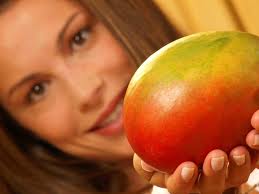
Chopping Mangoes

Is there an easy way to cut a mango?

I tried the avocado method.  Cut in half, drive knife blade into pit, rotate blade quarter turn, and pull.  Not so much.  That pit was not having it.  Didn’t budge.

I tried digging it out.  That just hacked up the fruit flesh around it.

I did not have such warm feelings toward my mango.

I did not have such warm feelings toward my mango.

I finally sliced the fruit away from the core, apple style.

Except my hands were completely covered in goo from the pulp most of the fruit had become.

Goo + santoku = not the optimal chopping situation

As three small children pulling at your pant-leg while wielding said santoku is not.

Giada’s fish tacos with mango salsa be damned.  I was ready to fling that mango out the window or smash it against the wall.  I’d have squeezed it in my fist if only it weren’t so damn slippery.

No, you can’t have fishies right now.

Mama’s trying to concentrate.

No, fish tacos aren’t disgusting.

Yes, I’m putting that green stuff in them.

How the hell do you cut a *&^%*(# mango!?

Potatoes, mangoes – whatever I’m chopping, preparing dinner is always a trigger for me.

It used to be because I hadn’t planned a meal.  Countless trashed produce and late nights cured me of that.  Now I plan an entire week of meals before food shopping.  So that’s not the problem (well, that’s a PIA in and of itself, but that’s another topic for another day).  I’m toast by the time dinner prep rolls around.  I’m getting hungry myself.  I’m tired.  The sun is going down.  Daddy isn’t home yet.  That pot of anxiety boils up pretty quickly.

Revisiting the feelings elicited from chopping potatoes, things have changed.  Potatoes are dense; mangoes are much softer, pliable.  Potatoes are born of dirt; mangoes have a hard core with a soft surrounding (oh, there are so many metaphors for a post-baby body with that one).  Potatoes are a cold-weather crop; mangoes thrive in a tropical clime.

I am a warmer, softer person than I was post-partum.  I may not have tight abs, but I do have an inner reserve of power from which to draw.  Like slicing through the pulpy flesh, a lot of things are easier, but not all (removing the pit).

I still get pissed off at the distraction and whining as I’m wielding a large, sharp knife, but I no longer want to cut off my fingers to earn an escape to the emergency room.

I’d call that progress.

And I’d call mango salsa on fish tacos freakin’ delicious if it weren’t so hard to chop.


* Against my better judgment, I’ve included the recipe for Giada’s fish tacos.  Proceed with caution – and use sour cream instead of wasabi and crème freche, unless you like adding more stress to your life.

** I’ve also included a link to the proper way to cut a mango (There is a mango.org – who knew?  Video is worth it for the entertainment value alone).  I think I’d still proceed with caution.

Standard
anxiety, Living

Call in the Astronomers

I hate a whole week’s worth of list staring at me.  Seven entrées marching across the menu of my life.  A calendar scattered with to-dos and appointments bookended by trips to and from the  bus stop.

A thousand grains of sand – insignificant events – piled up to smother me.

I cannot compartmentalize, tackling one manageable item at a time.  Trivial, minute tasks threaten to overwhelm me simply because they come all at once.  Like a student with an IEP, I need my work broken into more manageable chunks and fed to me one at a time so I don’t choke.  But I don’t have a case manager.  I am my case manager and I can’t ignore the subsequent steps I know are coming for the sake of the present one or my sanity.  Just like I can’t fall for the set-my-clock-fast-so-I-won’t-be-late trick.  I always subtract the minutes and fight against that clock trying to fit squeeze every second for what it’s worth.  I see right through the subterfuge.

And then I remember the words of a visiting priest this past Sunday.  He reminded us that there are millions more stars in the sky than all the grains of sand in the world.  If even the mass amounts of sand are dwarfed by the all the stars in the sky, how small are we?  How infinitesimal our blip on the radar of the universe.  How trivial our concerns and worries and to-dos that seems so life-altering when we encounter them.

This is not unlike the advice my therapist gave me a year or more ago, which still proves relevant: The 10-10-10 rule.

Will this matter in ten minutes?

Will this matter in ten months?

Will this matter in ten years?

Yes, in ten minutes, I’ll probably still be worrying and obsessing over it, but in ten months or ten years?  Doubtful.

Our visiting priest also quoted a South African astronomer, who when a world war was imminent and battle lines were being drawn, told policymakers and strategists, do not call politicians or soldiers to solve the world’s problems, call in the astronomers.  How much grander is the universe than our little corner of it?  How petty even multinational concerns in the grand scheme of all creation?

I have a newfound love for astronomers.  I think we should employ them in all things personal and global.  What a different world it would be if we gazed heavenward from time to time instead of always being bogged down by the drudgery of the corporeal.  After all, we are all made from dust and to dust we shall return.  And we all know dust is way outnumbered by stars.


Standard
anxiety, Identity, Living

A Change in Me

I was totally on my game last night.  I mention it because it is so not me.  I was laughing, telling jokes, comfortable, making comments without much worrying about what people would think of me.  In other words, I was my authentic self.  Not insecure, not worried, not painfully self-aware.  And there were times throughout the night when I realized this and took note; not quite like an out-of-body experience watching it from afar, but my insecure or irrational or timid mouse inner self noticed and was pleasantly surprised.  And then I tried to tell her to go away, to enjoy it for what it was worth, to follow this relaxed, uninhibited self however far she would go.  Not to jinx it, second-guess it, scare her away with too many self-checks and ruminations.  And now I think of the Halloween party we went to last Saturday.  My kindergartener was invited to a classmate’s family party.  Their neighbors were there, family members, other classmates and their families.  Walking in to a crowd of ‘strangers’ was a bit daunting, but surprisingly only a little.  A playmate’s mom soon walked up and introduced herself.  I found the host’s mom and introduced myself.  I sought out other classmates’ parents.  I told jokes.  I talked to strangers.  I initiated conversations.  I was so not me.  But then, I said to my husband, I was on my game.  Because that is me – part of me, anyway.  The part that is uninhibited, comfortable in her own skin, totally inhabiting the spacious self that is she.  My authentic self.

Is it this place?  Is it the excuse, the opportunity of a change in place to make things happen, to reinvent myself?   Because I could’ve done all these things in my former home.  But I didn’t.  Was it the memory and residual trauma of postpartum?  Was it the repression of people who knew me from way back when, when I was a certain way?  Was it the familiar that I began to blend into?  I was scared.  I was stuck.  Now I’m free.  I don’t know if it’s the physical space that now surrounds us that is freeing us; the mental space that in turn affords (if you believe if in the elements of Feng Shui); the need to ground ourselves and make connections since we don’t have any.  But life seems to be shaping up.  And me right along with it.


Standard
anxiety, Identity, Living, Writing

A Rock to Remember

Last week, I was forced to go to the beach.

I was cranky.  I was tired.  It was a holiday and all three kids were home, but my husband was working.  I still had tons of tedious tasks to do to get settled in the new house.

My parents said, it’s a beautiful day, let’s go for a walk.

I walked from the breach way to the border of this same beach with my parents when I was a girl.  It was like coming full-circle treading it this day with my own children a short distance from the place I now call home.

The girls dove straight into rock hunting with my mother.  I didn’t even have to chase my three year-old out of the waves, as she plopped down in one spot and proceeded to sift and stack.  I sat down, too, and gave myself over to the sound of the rocks chattering against each other in the surf.

My other home was a short walk from a small inlet on Narragansett Bay.  It was a lovely spot and we were fortunate to live so close to it (though we didn’t make the trek nearly enough).  But it had nothing of the raw power and expansiveness of this beach, the open ocean.  I am not used to the mass amounts of rocks, perfectly pounded and rounded by the constant tumbling of the sea.  The smooth spheres of granite, mica, and other minerals I should remember from science class and Rhode Island history.  Their shapes were so alluring to me, beckoning me to pick them up, roll them in my hands.

And so I did.  I sat just apart from my daughter’s sifting and sorting and felt the weight in my hands.  The cool heaviness, the sun-soaked pressure.  I searched for the one that fit perfectly in the palm of my hand.  Then I spun it round and round, the smooth surface soothing me in a way that didn’t seem needed, but became suddenly essential.

I felt my hackles lowering, my blood slowing in my veins, my body decompressing, my soul expanding.  I was running, running, running so quickly, so constantly, that I didn’t even know how wound up I was.  I didn’t know how much I needed the salve of the sea.

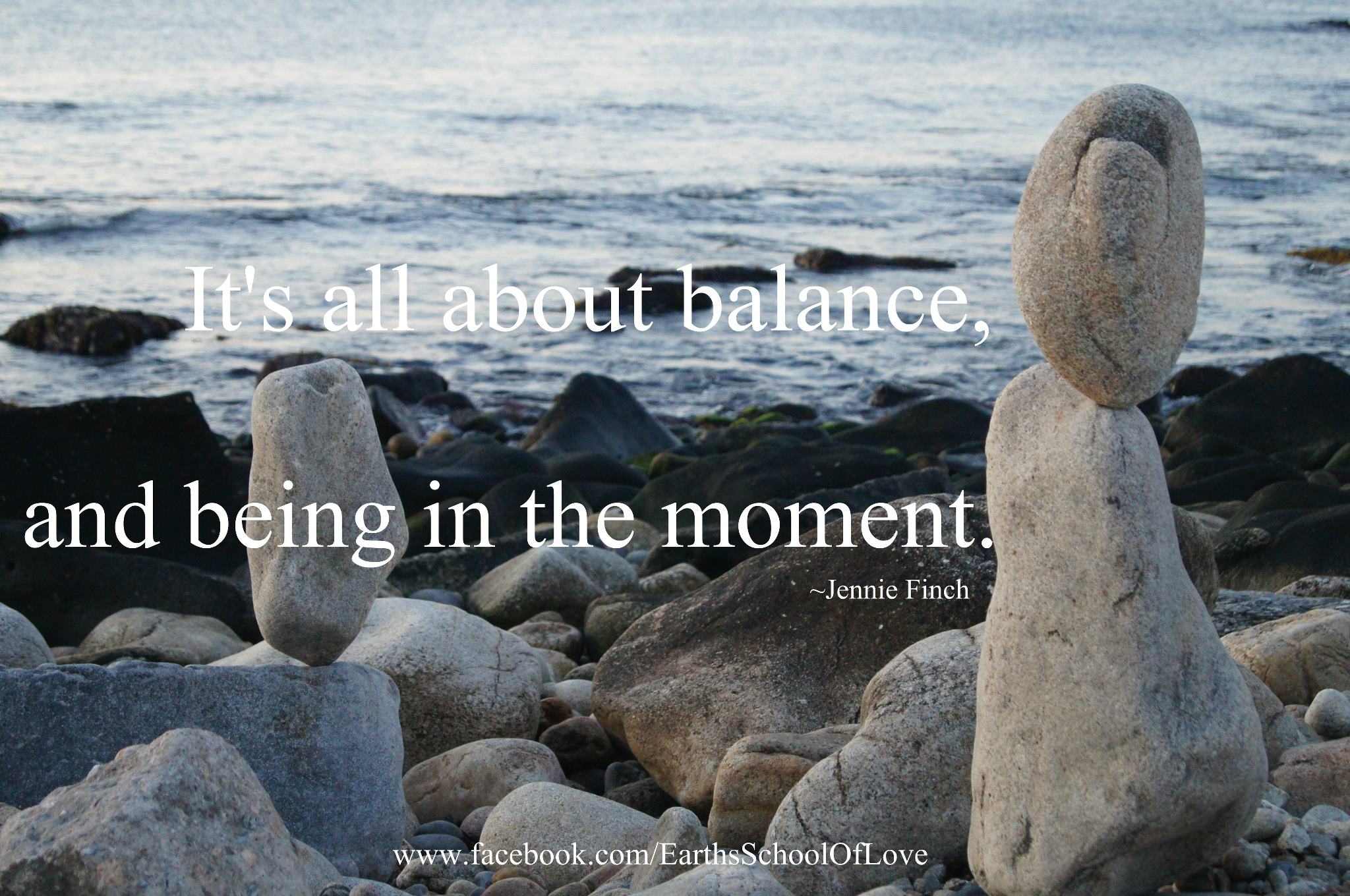
I recalled a stretch of preteen fall days when a friend and I rode our bikes to the sand flats with our notebooks and sketchpads.  I was so disappointed that I was caught without a notebook when the muse was so apparently calling to me, when an epiphany was beating me over the head with a smoothly-shaped rock.  I hoped beyond hope that I could bottle this feeling and bring it home with me.  It’s been diluted over the last week, but I did bring some rocks home with me as reminders.  I picked out some beautifully speckled, striated, spotted ones that I stacked into cairns in my garden.  I selected two larger ones to use as worry rocks, prayer stones, literal talismans to ground me; I planned to give one to my husband so he could benefit from my lesson, too.

As I kneaded these rocks in my hands, I thought of the many manifestations of humanity’s need for physical reminders of the spiritual side of life, of our souls.  Kachina dolls, worry dolls, worry stones, chime balls, stress balls, rocks perched on gravestones, relics . . . there are so many examples.  But they all begin at their basest level with a bit of the natural world.  There is a reason humans turn to nature to reset their moods, their demeanors, their selves.  While I cannot put my finger on it, there is something about it that resonates in our souls.  I’ll just have to wrap my hand around those rocks each time I forget.

Standard
anxiety, Identity, Living

Liminal and Beyond

“The Waiting Place . . . [a most useless place]

for people just waiting.

Waiting for a train to come or go

or a bus to come, or a plane to go

or the mail to come, or the rain to go

or the phone to ring, or the snow to snow

or waiting around for a Yes or No

or waiting for their hair to grow.

Everyone is just waiting.


Waiting for the fish to bite

or waiting for wind to fly a kite

or waiting around for Friday night

or waiting, perhaps, for their Uncle Jake

or a pot to boil, or a Better Break

or a string of pearls, or a pair of pants

or a wig with curls, or Another Chance.

Everyone is just waiting.”

As I was waiting for the will to write a positive blog entry today, these lines from Dr. Seuss’ Oh, the Places You’ll Go rang through my head.

I’m waiting.  For the end of PMS.  For the washing machine to finish its cycle.  For an expected tradesperson to show up.  My husband to come home from work.  My children to stream up the stairs and into the corner in which I’m hiding (which took one more line of typing, by the way).  For this new place in life to feel ‘normal’, to reach some sort of stasis.

Well into On Moving by Louise DeSalvo now, I’ve read about “liminal life – the life that is neither here nor there . . . These difficult-to-live-through interstices, I’ve read, are necessary for growth: the psychic spaces where the old self is shed and the new one begins to develop (DeSalvo 72).

A few weeks ago, I said that I felt I could become my authentic self in this house.  I didn’t realize how much the move would shake things up though – both our physical possessions and my own psychological foundations.  Everything can’t feel just as it did in the other house, though, because then I’d fall into familiar routines and frustrating ways of being.  Now’s the chance to fix things that are broken.  Discard things that are hindrances.  Create new ways of living and doing and being that improve our life, not just get us through it.  I wouldn’t have done that in the comfortable nest of my other home.

On the flip side, I cannot ignore the pieces of myself that will remain no matter where I am, those rituals that will follow and sustain me wherever I go.  DeSalvo said, “I’ve been waiting to ‘settle in’ before I start writing.  But writing will help me ‘settle in’.” (DeSalvo 88)  Just as there are certain beloved objects that will travel from home to home and comfort with their mere presence, so must I make time to practice these rituals that will soothe me.

I cannot wait for everything in my home to be set up perfectly before I roll out the yoga mat.  I cannot avoid writing until the perfectly appointed writing desk sits in its nook.  I cannot avoid ‘living’ while I run through my unpacking/set-up list.  If I ignore those foundational elements of myself that will indeed make anywhere I live a home, the window of liminal time will close and this chaos will become my life.

No more waiting.

This is not ‘the waiting place’.  These are the living rooms.  This is home.  It’s time to start feeling it.

Standard
anxiety, Identity, Living

Eat the Frog

I’ve been doing a lot of that lately.

Suffering through those things I don’t want to do in order to get to the ones I want.

Problem is, by the time I eat said frogs, I’m usually too damn tired to do the things I want, which never really were obligatory anyway.  Or, I take so long staring down the frog or pretending I don’t hear him croaking that I have just enough time to gulp him down hurriedly before the sun goes down; it’s time for dinner; time to pick up the girls from the bus stop.

Procrastination and perfectionism are not mutually exclusive.

When, pre-move, I described how I was failing to meet my goal of packing five boxes per day, an acquaintance pointed out how I couldn’t possibly be an overachiever and a procrastinator.  Luckily, another such duality came to my defense.  She concurred, that, oh yes, it is possible to be so worried about doing something perfectly that it stops you from attempting it at all.

In college, I grabbed a pamphlet from the career center on procrastination.  I’ve since thrown it out – though it took me quite some time ; ) – but it laid out similar terms.  I didn’t necessarily agree with it.  I am not one obsessed with the pursuit of perfection.  At least not overtly.  I understand the human condition and all its frailty.  I like to think I empathize and can forgive our various faults.

But do I refuse to start projects until I have sufficient time to complete the entire task?  Yes.  Will I stay at that task far into the night or despite my husband’s repeated attempts to beckon me to the dinner table until it is finished?  Yes.  Will I avoid beginning a task until I know exactly how to execute it?  Yes.  Do I fail to commit to a task until I know I can fulfill all the obligations that go along with it?  Yes.  And regardless of all reasons not to start, do I place an unrelenting sense of guilt heavy upon my breastbone until I do start?  Yes.

Hmmm . . . maybe I threw out that pamphlet because I was not ready to see myself in its words.

What is it with these freakin’ frogs?  And why do they all float on lily pads obscuring what murky depths really cause all this angst: ANXIETY.

Because that’s what it really is, isn’t it?  I worry about getting things right because I’m anxious.  I put things off because they make me nervous.  Or I’m worried about getting it all done.  Or I’m worried I’ll run out of time.  Or it’s an unpleasant task.  Or it’s out of my comfort zone.  Whatever hue or size these amphibian friends and foes come in, they’re all from the same frog mother.  And what a mother-f*&%$#@ she is.

The more I learn about myself, my reactions, feelings, and disposition, the more I realize how much of my life has been colored by anxiety.  I don’t know if I’ve ever known what it is to live without it.  There was a time when I didn’t know I was living with it, but looking back, now I can name it unequivocally.

A very talented writer friend of mine just shared a story wherein a character and her mother try to pinpoint the exact origin of the mother’s obsessive-compulsive disorder.  They realize that not only is it impossible, but it is a form of obsession in and of itself.  What does it matter where it began?  One must learn coping mechanisms to take forward with her.  I find myself doing this repeatedly with my anxiety.  But why?  When did it start?  How?  What purpose does that serve beyond making me more anxious?  Why roll back the reels over those years over and done – and with a pretty good measure of success?  Why create suffering where there may have been none?  Or where there was some, but where I had the wherewithal to function despite it?

Maybe it’s the perfectionist in me, but I feel that the fact that I’ve reached a point in my life where I can’t hack it when I previously could makes me a failure on some level.  I know this is my masochistic overachiever unrealistic hair shirt-wearing self, but it is still part of me and I can’t turn it off no matter how hard I try to push with my rational self.  And all that croaking just reminds me of it.  Why do I get a mental block when I assess my to-do list?  Why can I not complete tasks that I know will reap rewards?

Guess the only way around it is to choke the frogs down before they choke me.

Standard
anxiety, Living, parenting

Next Stop: Transition Town

Ironically, the section of the book I’m reading right now is all about transitions.

To ease the transition of moving for our children, I gathered a thematic collection of books to borrow from the library:

  • Fred Rogers’ Moving (classic – right down to the 80s fashion in the photos!)
  • Mo Willems’ City Dog, Country Frog (we are going from city to country – though I didn’t expect the heartbreaking twist!)
  • Our House by Emma and Paul Rogers (inspired my daughter to suggest leaving a time capsule; guess it translated my idea of legacy and different chapters in life)
  • Moving by Michael Rosen (the cat giving his family the cold shoulder b/c of the move didn’t quite get across the positive vibe I was going for, but I guess it shows that even ambivalence can be won over with food!)

As I sifted through the on-line card catalog, I extended my search to books for me.  I think originally I was looking for books on the logistics of moving, tips and tricks.  Maybe.  Who knows?  I’m all over the road lately.  But in any event, I found two titles that sounded interesting.  The first, Moving On by Sarah Ban Breathnach, caught my eye because I’ve had Simple Abundance on my shelf for years.  I figured the universe might be giving me a nudge if I was seeking books on moving and here was one by the woman who first introduced the idea of a gratitude journal to me.  Though I know her other title to be more of a self-help, for some reason I expected a memoir on the rigors and epiphanies of moving.  There are personal anecdotes, but it’s also about finding one’s true home regardless of physicality; being comfortable with one’s space in the world regardless of where she calls home.  The idea of home and making the space within those four walls enjoyable is tackled, but it’s really more about letting go of excess baggage to make room for that enjoyment.

Ha, ha, ha.  So funny as my days are filled with purging and packing.  I am totally in limbo.  This home no longer looks like my own as the boxes begin to outnumber the intentional home décor.  My new home is still occupied by someone else.  So I’m hanging out somewhere in the ‘twain’.  I can’t do any of those exercises she suggests for finding what works about your home because I don’t know which one to focus on!  I know the chaos that surrounds me right now certainly isn’t working.

So I get about halfway through this book and reach the section on transitions.  A major thrust of it is that we actually make these difficult times even harder for ourselves by refusing to let go, go with the new flow of things, honor the past and appreciate the future.  Who, me?  I hate change.  There are some people who have wondered if I want to move.  Yes, of course.  And another scared, change-hating part of me, says, this is so freakin’ hard.  I lay in bed one night and realized I’d have to leave the blades of grass I’d stenciled onto the walls of our first nursery (affectionately known as the grassy knoll).  So between the stress of actually making the move a reality and the mental and emotional preparation, I probably do come across as a little ambivalent at times.

But not because I’m not looking forward to settling in our great new house and setting up shop, exploring the community, meeting people.  It’s just because I’m apparently really good at setting up roadblocks on the way to transition town.

And so this is where another highly appropriate quote from Moving On comes into play.  Ban Breathnach shares the words of Mary McCarthy, who says,

“There are no new truths, but only truths that have not been recognized by those who have perceived them without noticing.”

Ha!  If that does not describe me in nearly every aspect of my life, I don’t know what does.  How often have I relearned something I’d already known?  How often have I ignored what needed to be done though the answer was staring me in the face?  Human frailty, I suppose.  That damn weak free will.  We know what’s best and yet take the easier, more convenient, if insanely repetitive and possibly destructive, path.

I know I need to focus on the amazing truths on my doorstep.  A rich life lived in this beautiful little house with many pleasant memories to pack.  A lovely, airy, hope-filled home waiting for us to fill it with sights and sounds and silliness.  I know I can be my authentic self there.  I know this transition will make me stronger and truer.  It’s just a hell of a lot easier to feel it when you’re at the other end of the journey.


In a somewhat related vein, the other book I chose to read is a memoir: On Moving: A Writer’s Meditation on New Houses, Old Haunts, and Finding Home Again by Louise DeSalvo.  I have yet to read it.  I’ll let you know what epiphanies that unveils ☺

What books have helped you and your children make a successful transition when moving?

Standard
anxiety, Living, medication, motherhood, postpartum depression

You Can Call Me Peri?

So I crack open this month’s issue of Family Circle, the latest installment from the gift subscription my mother-in-law gave me for Christmas, and see an article on menopause.  Ok, think it’s safe to skip that one.  But oddly compelled to read all printed matter that comes across my radar regardless of whether it pertains to or interests me, I scan the first page.  In speech bubbles strewn about the page are various questions, worries, and anecdotes from peri- and post-menopausal women.  More than half the bubbles could have been direct quotes from me!  And I am not very peri at all!

The article invites me to “read on to find out how to outwit, outplay and outlast the next chapter in your life.”  Thus begins a decade-by-decade breakdown on how to outwit this personified beast that threatens to overtake all women all over the world.  “In [my] 30s,” I can expect my fertility to decline.  Yes, knew that and no, that does not bother me in the least.  I should become my healthiest self as “what [I] do now impacts how early menopause starts, how intense the symptoms are and how they affect my body.”  Right about now, my dander is starting to get up – and it’s not just the lack of the third comma in the lists of three things that is doing it.  I need to “bust stress” as “mini-meltdowns will be happening.”  I should try tai chi or yoga or a “peaceful play list on [my] iPod” to “help alleviate menopausal related anxiety.”

It’s about now that I realize I’m fucked (and, no, I don’t mean the uncomfortable sex that I can look forward to in my 50s).

Either I’ve been perimenopausal since my prenatal visits for my third bambino or it’s gonna get a whole lot worse.  How does one who seems to be suffering from post-partum post-trauma prepare for a whole lot more of the same?

There is a sidebar by my decade entitled, “Get the #1 Test You Need Now.”  Apparently a baseline hormone panel (“an easy blood, saliva or urine test that determines [my] optimal hormone levels”) will assist my doctor in prescribing hormones “specific to [my] ideal range instead of the range of an average woman” when the time comes.  I actually laughed out loud when I read this, eliciting strange looks from my daughters.  My oldest asked what I was laughing at; how would I even begin to explain?  That, when it comes to Mommy, there is no such thing as ‘optimal hormone levels’?  That if the doctor prescribed me hormones based on the ‘range of an average woman’, the cocktail would be akin to a stiff drink of water?

While discussing “the (formerly) ‘silent passage’ is no longer taboo,” many women are still petrified by the thought of it.  Except maybe for my friend – who has such irregular periods, she was almost wishing for it.  But when I mentioned this to my mother-in-law, joking about it, she responded very seriously, “No, she doesn’t want it.”

So where does that leave me?  No, I don’t have hot flashes.  I haven’t gained mysterious pounds regardless of what I do or eat.  But mood swings, irritability, anxiety – all de rigueur already – and I’m only in my first decade, according to this handy little guide.

I’m starting to view women’s susceptibility to hormones as this insidious little secret that was only hinted at as my mother described my body’s cycles to me as I sat on the bathroom floor over two decades ago.  By no means was my mother light on the details; I understood my body’s workings in what, to a twelve year-old, was a revoltingly clear manner.  But I didn’t know how pervasive those pesky little hormones were.

Yes, I knew there’d be a few days of PMS.  Yes, I knew I’d be overly emotional during pregnancy.  Yes, I knew there’d be a few days of baby blues.  Then I noticed extra irritability that seemed to coincide with ovulation.  Then those damn hormones ganged up on me with crazy, heart-wrenching situations in my life to send me into a swirling storm of anxiety and depression.  Thankfully, my head broke water a while ago, but only with medication and therapy.  And I still struggle.

I’d like to say that an awareness helps me prepare for and deal with the effect hormones have on my life – just as the article touts the “18 Things Every Woman Should Know About Menopause.”  To a certain point, it does.  But when you know the beast is coming no matter what – and you can’t run and hide because life won’t allow it – what do you do?  Grin and bear it?  Pray to the gods that in your next life you come back with a penis?  I love yoga, but unless I take my strap and choke the hell out of the beast, it’s not gonna make it go away.  Maybe I can drown it out with the soothing sounds of my peaceful play list while I try to achieve optimal hormone levels.  Maybe instead of ‘silent passage’, it should be ‘silent scream’.

UPDATE May 2014: I spoke too soon on the hot flashes!  My past three menstrual cycles have been ushered in by a week of night sweats.  Good, clammy times!


Standard