postpartum depression, Recovery

This is YOU

When you come across a picture of oneself and are impelled to use it as your profile pic, you know you’ve hit a good one.

Scrolling through the images my daughters snapped when they commandeered the family camera, I found one such picture.

One hand on my knee, other on that hip, I am leaning into the camera. My face is the first thing the lens encounters. I am smiling, my laugh lines and crow’s feet in full effect. My eyes alight with joy and love.

People who’d seen the photo commented that it was lovely, adorable, beautiful, terrific. One friend said it made her smile. Another said:

This is YOU, very much alive and ready… Love it

All very wonderful, but it wasn’t until I gave photo cred to my daughter that I realized that was why this picture was so successful. It wasn’t how gorgeous I am or how fashionable my scarf was; it was the love radiating toward my daughter through the lens.

Now, the average parent – or grown child who fully grasps the connection between parent and offspring – might think this explanation is obvious, unnecessary. To me, it’s a huge a-ha moment.

Amidst the anguish and uncertainty that followed me through the postpartum period of her birth, I was afraid she wouldn’t feel loved. I was afraid that soft yet strong, gentle yet fierce protector of a mother would never show through all the layers of dark, depressive, disgusted and disgusting matter hiding it.

Yet, here I am, five years later, beaming at her radiantly. Looking the best I have in awhile and all lit up because of her. If I ever doubted whether my love shone through, now I have photographic evidence.

YOU* Please note that simply smiling will not heal postpartum depression.  I am still shoring certain parts of myself up after five years.  It’s okay if you don’t feel like smiling right now.  There are other ways your baby will know love and there are ways you can get help.  Talk to your physician, your baby’s pediatrician, or sites like postpartumprogress.com

Standard
anxiety

Off the Grid

The irony of

one post about the beauty of staring into the fire

and the next

about not staring but rushing around willy-nilly

does not escape me.

Of life-giving warmth

giving meditative bliss and salve

being ignored for

frantic prepping and sapping of adrenaline that may be needed in actual emergency.

I get it.

My analytic mind senses the conundrum.

My overly expectant self wallows in the defeat of two house-bound days devoid of relaxation.

Though my electrical panel never lost power, I did.

The ability to worry is the only sort of control I have.

Standard
anxiety

Free to Fall

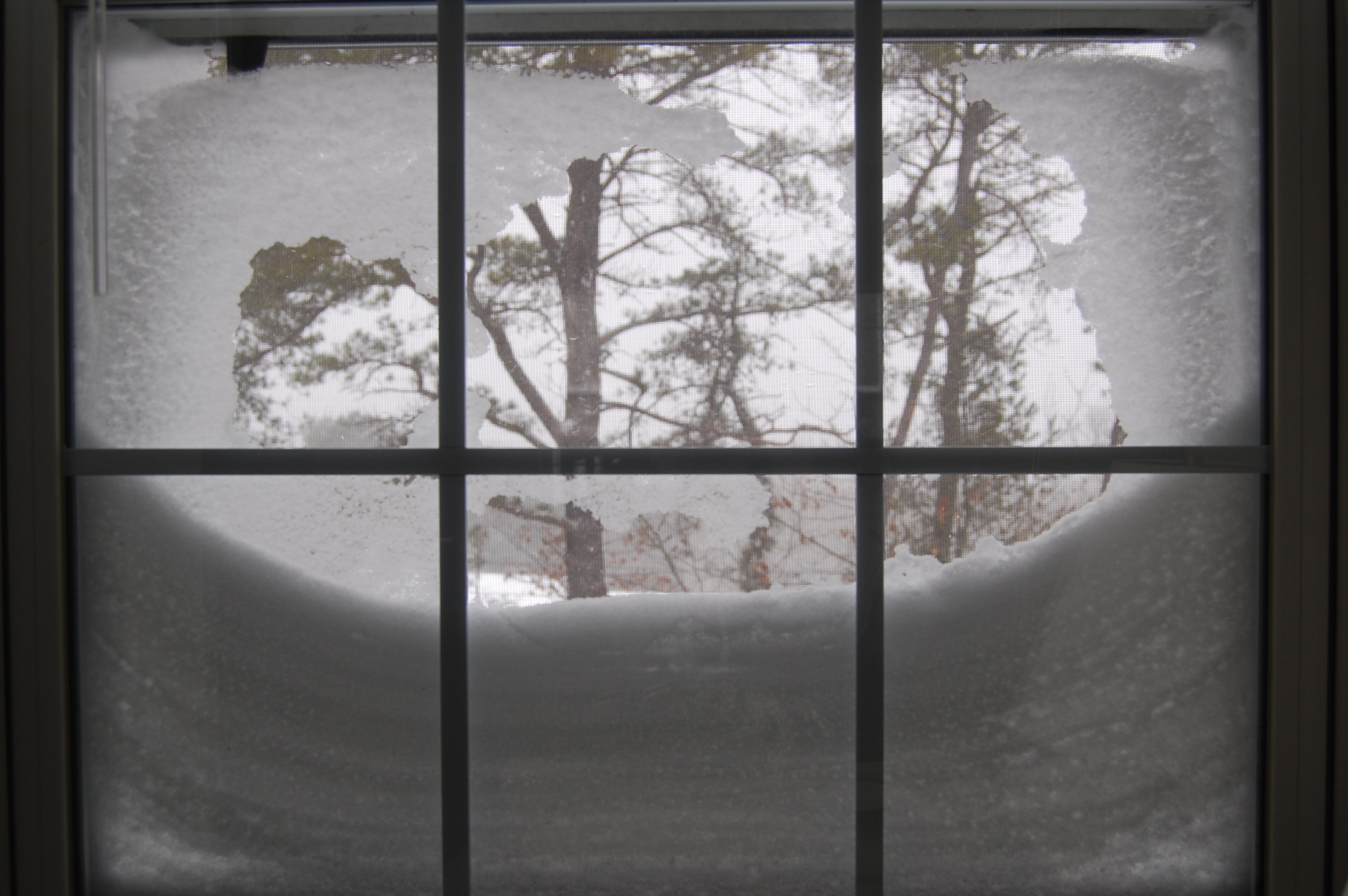
I think waiting for the power to go out is worse than dealing with its absence.

Flush the toilet one more time, hurry to put the last load of laundry in the dryer, fill the sink with soapy rinse water. Charge the computer, the tablet, the cellphone. Stack the wood, stoke the fire, boil one more pot for tea.

This blizzard is the perfect microcosm for my anxious world.

The worrying is worse than the event.

The scenarios the brain can come up with cause more pain than living through the eventuality.

The waiting, the waiting – for the other shoe to drop, the limb to fall, the powerline to go slack.

My mind is spinning faster than the vortex of wintry wind outside.

I am not thinking of the warm cocoon my house provides, the heat radiating from the wood stove that didn’t exist during the last such storm, the canned and dry goods in the pantry.

I am on edge. I am a raw nerve. I am living in fear of the worst outcome not happening – for if it did, I’d be free of the worry.

Jennifer Butler Basile

Jennifer Butler Basile

Standard
Living, Poetry

As I Once

In the parking lot of a Burger King on the Canadian border

On the bluestone terrace of a bed and breakfast in Vermont

By the cobwebbed window of a general store in the Redwoods

A quiet side street, a rushing river, an elegant table for two:
These are the places I go without going anywhere.

The places I’ve been in past lives,

The places I’d go if unencumbered

by lack of freedom and finances,

responsibility and restrictive routines.

But one blip on the timeline,
they come back to me

as I once went to them.

Standard
Living

Catch a Fire

I can see why the discovery of fire was such a watershed moment in the history of mankind.

Not only for its life-giving (or preserving) qualities – warmth, cooked meat, and protection from becoming raw meat are all good things – but for its mesmerizing abilities.

In the past few years, having moved to the country, built a fire pit, and acquired a wood stove, I’ve spent a lot of time staring into flames. There is a certain magic to the seemingly alive tongues of fire; the dance, the movement, the consumption of material, the production of charcoal, the transformation to ash.

It also teaches a lot of life lessons.

Building and maintaining a fire takes a lot of work. Steady attention. Checking in. One cannot get distracted or fully immersed in some other project. Until it’s rip-roaring, your job is the fire. You must focus. You must settle into that state of mind that allows you to do the task at hand and nothing else. It’s quite freeing, actually. Poking, prodding, turning, and nudging – worries, urges, outstanding obligations fall away in the tedious, tactile action.

As does the guilt that usually accompanies the exclusion of other tasks. While only focusing on one, this task is keeping your family, your house warm. It is providing a comfort, a safe haven – it’s even saving on fuel costs 😉

Maintaining a fire teaches other lessons as well that aren’t as easy or pleasurable to learn.

Like patience.

Sometimes you don’t need to throw another log on the fire; sometimes you need to shut the door and watch the roiling smoke. Watch until it produces enough heat on its own. Watch until the flames burst forth seemingly spontaneously – only they don’t. There’s lots of quiet build-up and warming-up that lead to it – all without your interference.

The agonizing part is knowing when these moments of holding back are needed. Will you lose the fire altogether if you mistake its need? Or will you squander the heat by opening the door and fiddling with it too much?

This give-and-take, this mental questioning seems like the opposite of the mindless joy in minding a fire I described above. But only if you let it be. Through practice, through trial and error, such decisions will come instinctually. And focusing on the fire is always better than obsessing over the machinations of your own life.

Sitting by the fire, the warmest, coziest spot in the house with a cup of tea, has become my favorite spot to be, thing to do (or not do) on these cold winter days. The voice in the back of my mind tries to tell me I’ve fallen into a pattern of leisure that is not good. But a louder, happier part of me thanks those prehistoric peoples who discovered the wisdom of the flames and learned from it.

Reflecting on fire

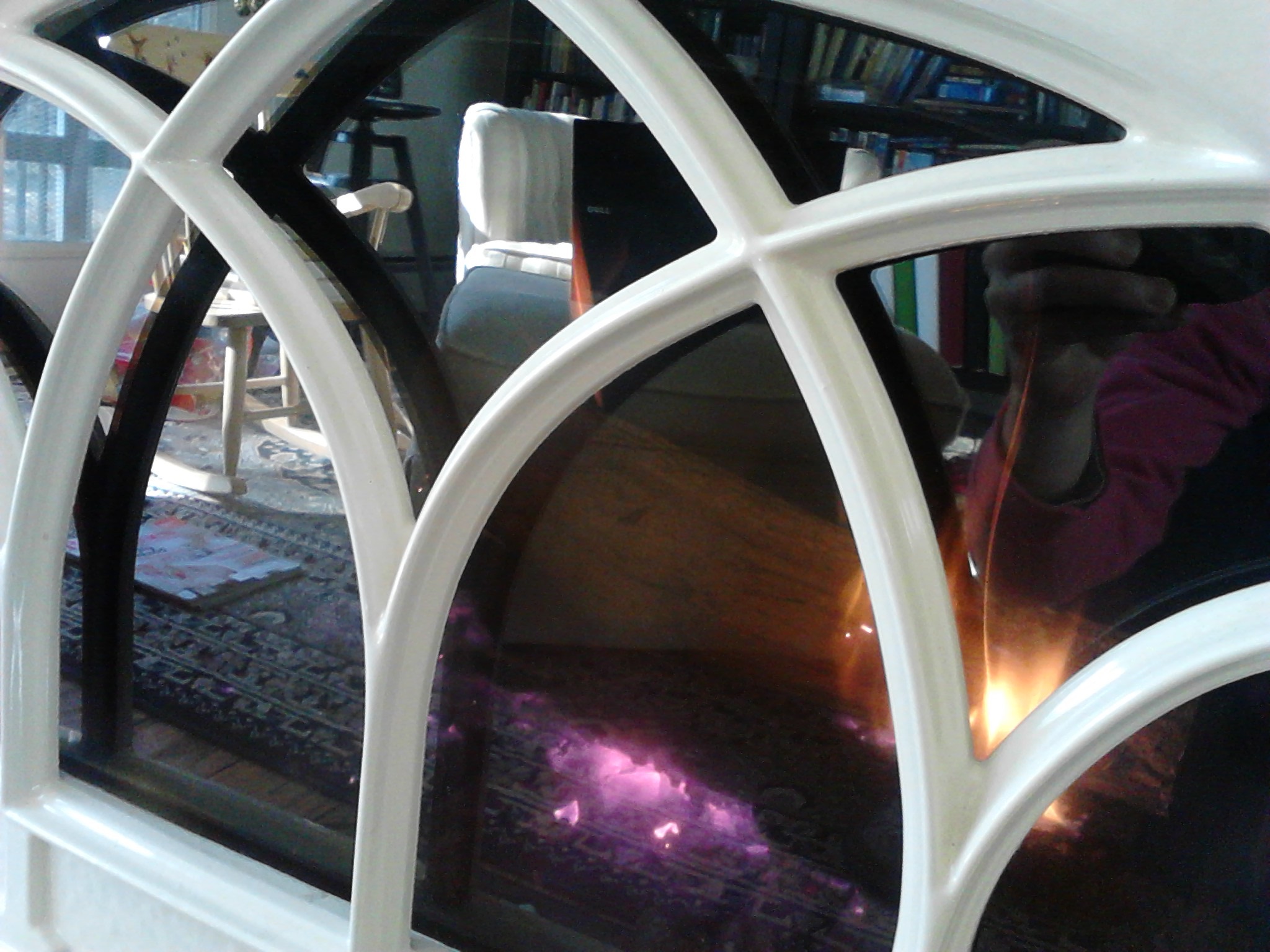
                Reflections of fire (Jennifer Butler Basile)

Standard
Children, parenting, Poetry

Dark Matter

Where does a backpack go
confined inside four walls?
Does it sprout legs
and walk off?
Will the underlord of the couch
reveal his hostage?

Where can a blank book hide
from prying eyes?
Filled with private words,
its thick cover is not enough
to disguise it from vengeful fingers and pens.

An errant sock, a puzzle piece, a lego gone astray –
inanimate things seem to take on a life of their own
when children roam the home.

image by Terry Broder

image by Terry Border

Standard
childbirth, dialogue, help, motherhood, postpartum depression, pregnancy, prevention, Recovery

More to the Story

I spent an hour and a half sitting on the basement floor of my local library the other morning.  I’d found the general Dewey decimal neighborhood I’d wanted and set about meeting the locals.

One good thing about living in a small town on a frigid morning and rushing the library doors as soon as they open is that you have nearly the whole place to yourself.  I was the one who flipped on the banks of fluorescent lights as I descended the stairs.  I sipped from my travel mug of tea as I decided which books would aid me in my research journey.  I read nearly an entire chapter of one that I eventually set back on the shelf – one I’ll certainly return to, but didn’t match the goals of today’s project.

Today’s project is preventing postpartum depression.

Though I checked out nine books, welcoming jokes from the clerks at the front desk as to what kind of wagon I’d need to transport them to the car, none is about postpartum depression.  One is about ‘regular old’ depression.  Others have a few pages, maybe a section specifically about postpartum.  But not one of the towering stack I selected gave an in-depth discussion of postpartum depression.

In the online catalog of our state’s inter-library system, there were some, but still not that many.  And none that looked, on first glance, like they offered the kind of practical information and solace that a woman in the throes of postpartum would want or need.  I know.  It doesn’t take much to put myself back to that hopeless place I experienced myself.

I ended up checking out mostly childbirth preparation books or ‘how-to’ guides to pregnancy, which made my children, upon seeing Mommy read a book with a woman’s round belly on the front, very suspicious.  Two of my girls put in orders for a baby brother.  I asked my eldest if she’d want me to be pregnant, to which she said, no, but if you were I’d want a brother.  Only now do I see the irony in their thinking I needed to read another book about pregnancy after three times around the mountain.

Been there, done that.

But this time, I was trying to read these pregnancy preparation books with new eyes.  Having been through it and having had the experiences I did, what would help me do it differently?  Or more importantly, what support systems would have kept me from plunging into the depths of despair?  And how can I apply those to helping other women?

I was surprised to enjoy Ina May’s Guide to Childbirth (Ina May Gaskin) as much as I did.  I figured that title would be one I skimmed to find anecdotes or info pertaining to postpartum, but I am thoroughly enjoying delving into the personal accounts of unhurried, gradual childbirths.  I am rediscovering the empowering parts of my own labors and deliveries – the first two for their strengths and victories, the last for my eventual triumph over seemingly insurmountable odds.  With that last one as my capstone, I’d forgotten the positive parts of pregnancy and childbirth.  Remembering that gives me something to help women to which to aspire.

The disparity between parts of my own experience and beautiful birth stories brings into sharp focus those areas that can serve as triggers, flashpoints for distress and disorder.  And by beautiful, I do not mean perfect or idyllic.  As Anne Cushman says in The Mindful Way Through Pregnancy, “labor and delivery are wild and messy and animal and angry and bloody and painful.  The transcendent act of giving birth is made up of the earthiest of elements: bodily fluids, a hospital gown stained with blood and excrement, the bruises left on your partner’s arm by the agonized grip of your fingers.” (Piver 16)  All this is normal, to be expected.  That’s not what we need to worry about.  We (women, mothers, humans, physicians, therapists, ob/gyns, midwives) need to help women recognize when there is cause to worry.

So maybe sitting on the floor of my local library and freaking my kids out with pictures of the ocarina found in one of my books will help me figure out how exactly to do that.  As with anything, it’s all about dialogue.  Whether that dialogue comes through books at the library, blog posts, or conversations with doctors, expectant and newborn mothers need to know there’s more to the story.

Standard