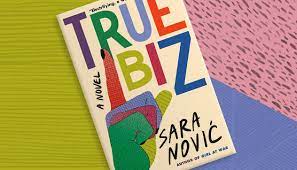
true biz ASL
Weekend Write-Off, Writing

Being the Verb

What that? she signed, pointing to one boy’s lunch tray.

Pizza, someone said.

What i-s that? she said. She fingerspelled emphatically, question-marked her eyebrows. Austin understood first. With a flash of recognition, he scrunched up his face and gave her a scolding finger wag.

I-s. Finger wag, he said.

Charlie was disappointed – so ‘is’ and ‘am’ and ‘are’ just . . . weren’t?

How could a language exist without so fundamental a concept? Perhaps, she thought grudingly, her mother and doctors were right about the limitations of signing. Could you have a real language without the notion of being?

true biz ASL

But Austin just pointed to Charlie’s hand, then made his own gesture, sweeping up from his stomach out into an arc across the room. Charlie copied the sign, but that didn’t seem to be what he wanted. She stared.

Me, said Austin, pointing to himself.

He patted his chest, then his arms, then held out his hands, flexed his fingers before her.

You, he said.

He took her by the wrists and held her own hands out before her. She looked down at her palms and understood – her being was implied, her potential thoughts and feelings coursing through her body, the names of everything she knew and those she didn’t yet, all in perpetual existence in her fingertips.

Standard
Identity

Deep Thoughts with Karen Day

Several years ago, I heard Karen Day, author of several novels for young adults, including my and my thirteen year-old daughter’s favorite No Cream Puffs, speak at an ASTAL panel at Rhode Island College. As she shared lessons learned about the craft of writing, she dropped a bit of wisdom that will forever be ingrained in my mind.

Whatever age of character you gravitate toward is likely the age or stage where you are stuck.

I’m paraphrasing here, but I gave a knowing laugh when she said this, as did she and many other audience members. This comment, equal parts profound and simple, is one of those nuggets you come across in life that make you say, holy shit and well duh at the same time. It is absolutely no surprise, when I stop and think about it, that my first YA novel concerns a young person finishing high school and struggling with familial vs personal ideas/dreams of what should come next. And that my first adult manuscript centers a woman processing loss and a spiritual/emotional crisis.

As someone with storage boxes and shelves full of no-longer-blank books, I obviously use writing to process things in my life – interior and exterior. This blog serves as a weekly/monthly/yearly example of that as well. But just as my fictional writing is coated by a thin veil from my autobiographical or personal feelings, so has this concept of Karen Day’s permeated my everyday life.

For seventeen years of my life, most of my time was governed by the academic cycle. Sept-June. Academic planners were of more use than Gregorian calendars. The new year began in fall, not New Years’ Day. Then I became a teacher. Then I became the time keeper and facilitator for four students of my own. I’ve been feeling for quite some time now that I will never graduate; that I will be forever encased within the concrete block walls of classrooms and bell schedules.

With the amount of anxiety wrapped up in my school career – pre- and post-graduation and perpetually – it’s very easy for moments in my daughters’ lives to rehash my own experiences.

Big case in point: my eldest just committed to college.

I was filled with the rosy warmth of pride and love as we toured campus with her. For what she’d done and what she’ll do. For who she is and who she’ll become. Just gratitude for this fully formed yet evolving woman before me.

And yet, I couldn’t just let myself feel it. That warmth rolled around my chest and I felt it and the smile that threatened to permanently crease my cheeks.

And I fretted over how this isn’t just cause for celebration, this is just the beginning.

I worried about how closely we’ll have to read the financial aid packet and what scholarship applications we haven’t submitted.

I questioned the new direction the honors program will be taking.

I wondered what is the proper balance between sharing what I’ve learned from my base of experience and leading her to places she’ll resent me for later.

I second-guessed my own choices and those I let others’ make. I felt the what-ifs pull at my edges. I pondered could-have beens and what the hell I’ve done since I was in her shoes, which seems like fucking yesterday.

And I thought, have I ever really left that part of my life. Am I forever stalled in that existence that I never came to terms with.

And will all the writing in the world ever let me get past my fear.

Standard
Weekend Write-Off, Writing

‘To Be’ Does Not Exist

Something was missing. Where was the verb ‘to be’? How are you? What is your name? Maybe it was too complicated for beginners.

They spent the rest of the class pointing at objects around the room and learning what they were called, but this only exacerbated Charlie’s curiosity – what might the noun for ‘being’ be, and did the answer to her missing verb lie there? She wanted to ask the teacher but didn’t have any of the words to form the question. That night she stayed up searching online ASL dictionaries, endless scrolls of GIFs and line-drawn bald men frozen in sign. She looked for the sign for ‘to be’ and found several sites confirming that it did not in fact exist, but no satisfying explanation for its absence.”

True Biz: A Novel by Sara Novic
Standard
motherhood

Stop Gaps on the road to Self Care

My last post, The Kids are All Right, elicited a lot of feelings and reactions. More than I expected actually.

I always view difficulties through the lens of mental illness vs health, but those I outlined last Tuesday struck a chord with many moms across the spectrum.

That doesn’t mean there is an epidemic of maternal mental illness – though there is an underreported and underserved population for sure. It only underscores what every mother already knows: motherhood is extremely trying.

Every age and every stage has its challenges, which usually present themselves directly after one set has been deciphered and conquered. But add in a post-pandemic, high-inflation, middle-age slump (at least for me and my contemporaries) and even getting out of bed seems like a monumental feat.

There are many systemic and cultural constructs that make up the fabric of our current constraints – and yes, there needs to be change at those levels. But what can one mother do as she looks at her own face in the mirror?

She needs to be clear on what motherhood means to her. What it looks like. What is non-negotiable and what falls under should. What has to occur/or not for her to be able to rest her head on her pillow at night and not toss and turn.

This does not preclude those around her from supportive responsibility. But the reality is, she likely will have to recruit this, too.

Self-care has been co-opted as a concept by the those who can make money off face masks and body poufs, candles and cocoa butter. But taken at its literal meaning, mothers need stop gaps to release the daily pressure of motherhood.

Mothers need stop gaps to release the daily pressure of motherhood.

In the everyday rush of responsibility and running on empty, however, caring for oneself can be just one more item on an already too-long-list.

Sometimes it is quiet and solitude. Sometimes it is community. Sometimes it is rest. Sometimes it is activity.

Surviving motherhood is a constant balancing act. Hopefully we don’t get turned around in the process.

Standard
motherhood

The Kids are All Right

When I saw this image as part of an Instagram post shared by The Blue Dot Project, my mind did the mental equivalent of a fist pump. I’d uttered a very close variation of this to my own father during my own bout with postpartum depression.

“The kids will be fine.  They will always be fine.  Me on the other hand . . .”  I twisted my face into a questionable shrug.  I’m not sure I actually said it, but what I meant was: it was me it was killing.

I wasn’t failing on some self care front. I was totally consumed by the day-to-day care of (at the time) three littles. After that, there was little time or energy left – and all of that went to me keeping it together. Not thriving, not growing, not healing – keeping the fucking lid on.

And I think that’s the irony of preparing mothers for motherhood. And the way we support mothers after birth.

Yes, you should swaddle. Yes, you should lay them on their backs to sleep. Yes, you must wake them for feedings.

No, you can’t take them to bed. No, you don’t need more than an inch or two of water in the bath.

Is there ANY mention of how to care for mother?

The ways that women take care of the themselves before baby don’t necessarily work afterward. Schedules and responsibilities shift. Existences shift. Hell, even space and time shift.

The reality of motherhood is that most women will grind themselves into the ground to provide for the ‘thrive’ of their child.

And that has propagated the species. It has kept generations of us alive and marching forward. It often gives us the fierce, yet tender protection of her love.

But we cannot set mothers up for this. We cannot send them into self-sacrifice unwittingly. No matter how ready they are to swipe tiny bums with warm wipes, they stand the chance of losing themselves and their mental health if we do not support them.

The kids usually are all right. It’s the moms for whom we have to watch out.

Sometimes, I feel I gotta get away
Bells chime, I know I gotta get away
And I know if I don't, I'll go out of my mind
Better leave her behind with the kids, they're alright
The kids are alright, the kids are alright, the kids are alright
  

Pete Townsend wrote the above lyrics to the song whose title inspired that of this blog post. And it was going to be just the title that inspired it – until I looked closely at the lyrics.

We cannot leave moms to be swallowed up by the all-encompassing duties of caring for and growing humans. Yes, the kids will be all right – but moms should be, too.


  • quoted text Jennifer Butler Basile, memoir
  • song lyrics “The Kids are Alright” The Who
Standard
Living, Perspective

A Voice Rises Above the Din

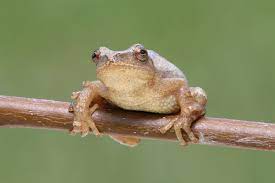
This past weekend, I stepped out onto my porch and heard the most glorious sound.  The delicate yet undulating and overlapping squeaking of spring peepers. 

Officially known as pseudacris crucifer, spring peepers are also defined as chorus frogs.  And that is exactly what they were doing at my Saturday evening concert. 

In this neck of the woods, we haven’t really had any sort of winter to speak of.  The low spot in the sky the sun has hung from has affected me, of course, but it hasn’t been incredibly cold and we had but one (and a half?) snow event(s) all season. 

Still, this harbinger of spring sets the wings of my soul aflutter. 

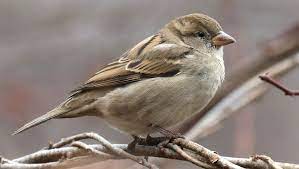
Just as the little sparrows flitting from porch railing to the bush branches just below my dining room window do.  Coming down the stairs in the early glow of dawn, their chirps sound almost as if they’ve entered the house to say hello.

In the rush of the bus stop, if I tune my ear between the hum of the engine melting the morning frost and the calls of my daughter, I can hear the scree of what must be a juvenile hawk hanging around its nest from last spring.  And in the quiet rush of afternoon wind before the bus comes back, I can pinpoint chirrups high up in the tree tops.

Spring

Nature

Rebirth

Signs

The sigh of the universe

Our own intuition,

                            desires,

                                         designs,

                  they’re all there


If we but step outside, still ourselves, and listen.

Images: Farmers Almanac, Wicked Local, Jonathan Eckerson respectively

Standard
Mental Health, Mental Illness

Red Hot Reminder

I had just taken my morning meds when I went to light the woodstove. 

Reduced to embers and ashes from the night before, I had to start fresh and stacked the bricks of compressed wood dust in their faintly cheerleader-ish pyramid.  I twisted two long tears of newspaper into loose spirals and set them inside.  Usually a small square of firestarter set atop would be all that was left. 

But this morning, I picked up the medication information sheet that shipped with my newest refill of meds.  I usually just recycle it.  I’ve received dozens, if not hundreds, before.  This morning, for whatever reason, I tore it into quarters and laid them over the delicate spirals of newspaper, tucking the firestarters in as if for bed. 

The opposite ends of each coil of newsprint burst into light at the touch of the match, that crawled toward the center as usual.  But the information sheet, made of a heavier weight and sitting atop it all, didn’t catch right away.  It sealed in the tongues of flame and made the smoke swirl above the bricks in a pulsating plate. 

One quarter of the sheet, that rested vertically, served as a firebreak.  On one side of it, the fire roiled, yet the paper seemed untouched.  On the opposite side, the words of warning, of various side effects and negative outcomes attached to this tablet meant to cure me, to fix my foibles – glowed, as if alive with molten lava; not painted or poured; moving, active – and yet about to disappear.  About to be consumed by the heat and flame.  At their brightest and most brilliant – about to fade into oblivion, no longer legible or meaningful.  Not even holding shape or form, a hot rush of ethereal, ephemera.

Obviously, I am a sucker for symbolism. 

And so, as I sat and stared into the fire, amazed and mesmerized by what very likely was a mere reaction of the ink to the heat of the fire, I pondered glowing prophecies and potent mystical messages.  I know that seeing warnings like ‘may cause nausea or stomach upset’ in a rosy hue doesn’t make them magical or more enjoyable.  But as someone always ambivalent to ‘fix my mood’ with meds, the occurrence seemed to have some sort of message.

I’d thrown the paper in the woodstove this morning on purpose.  Prescriptions and warnings and medical material litter my life and countertops and brain.  How I would love to wake in the morning and walk out the door without having to take something so life doesn’t seem so overwhelming.  But as much as my stubborn will desires and tries to snuff it out of existence – the problem, the illness remains. 

Sometimes I need a red hot reminder to stay the course and keep healthy.     

Pexels/Free Range Stock
Standard
anxiety, parenting

First Time, Again

Filling out FAFSA forms by night, chasing children at the bus stop by day

All in a day’s work for the parent of wide-ranging offspring

In the dark of a living room where the TV has just been turned off

In the glaring sunlight where the diesel fumes roil

Anxiety can spring up anywhere. 

When worrying about dotting all the i’s and filling all the coffers for this teen

Awakens ancient fears and failures in your own teen psyche

When bedtimes and days off and firm first grade routines

Rekindle similar sibling struggles

Each struggle distinct and yet one in the same

One span of the time space continuum that stretches and loops back upon itself

You have been here; You have done that

It is now difficult in new ways.

Photo by alexandru vicol on Unsplash
Standard
Identity, Living

Fallo

Why do some people have a fear of failure and others believe they can do anything?

It isn’t as simple as ego,

for some people possess profound confidence without arrogance.

For some, anxiety factors in somewhere,

looping a lasso around self-esteem and dragging it down.

Is fear of failure fueled by perfectionism?

The idea that an ideal is unreachable

so the motor is cut before passing go.

In what way are we programmed?

How is failure default for some and left to previous versions for others?

How do those infected with the virus

code switch

and update the mainframe?

Standard
motherhood

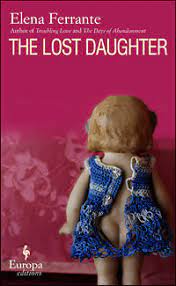
The Lost Daughter

People who read voraciously will tell you the book is always better than the movie. 

I take it one step further by requiring my children to read the book before they watch the film adaptation, a rule I usually follow myself.  But when I watched The Lost Daughter on Netflix, I did not realize the story came from a novel of the same name by Italian author, Elena Ferrante.  Fascinated, if slightly unsettled by the film, I did some research after viewing it and obtained the book. 

The movie touches on nearly every single note of the book, something that cannot be said for most film adaptations.  Even nuanced subtleties are included.  It is a book lover’s dream. 

Both are a conflicted mother’s nightmare. 

The main character, Leda, is a conflicted mother. 

With the main line of the plot centering on Leda’s solo beach holiday, one might assume that’s all behind her – but as Ferrante so deftly proves, the mother/child bond is one that pulls a thread through lives, years, generations. 

Leda’s holiday at the shore is a celebration; not of her daughters’ departure, but of her independence, of the absence of obligation.  Yes, she brings a bag of books to the beach to prepare for the upcoming year’s classes, but she “carried a wicker chair out to the terrace, and sat for a while to watch the evening descend on the sea” as her first act upon arrival, something she never would have been able to do when “for years every vacation had revolved around the two children.”

Leda enjoys one supremely relaxing day at the beach – before her past, in the form of a large Neapolitan clan, blocks her path to the water.  The group, both large in size and attitude, whose continual return to this same spot inspires a sense of ownership in them, reminds Leda of the extended family of her childhood from which she fled.  She remembers her mother’s abhorrence and yet ultimate adoption of their crude and violent ways.  The interactions of a young mother and daughter make Leda reassess the bonds she had with her own daughters. 

In an expert weaving of past and present, one mother/daughter pairing to another, Ferrante explores how polarity and magnetism can exist at the same time within maternal bonds: motherhood vs. selfhood, generational transference and connection, love vs. duty. 

A bedraggled doll covered in beach sand becomes a character as real and large as any of the humans.  She is the love Leda needs from her childhood, she is the care Leda aches to give her own children freely, she is the unquestioning fragility of the mother/child bond. 

Conflicted mothers want to know that walking away, that tending to their own needs and desires, though viewed as monstrous by the outside world, is worth the internal validation.  Leda’s mother threatened to do so many times (“You will never ever ever see me again”) yet never followed through.  Leda made a point to never utter those words, but actually did walk away.  Now the young mother Nina laments how “your heart shatters: you can’t bear staying together with yourself and you have certain thoughts you can’t say.”  She believes it will pass, comforted by the fact that Leda returned.  Yet, Leda answers, “With my mother it became a sort of sickness.  But that was another time.  Today you can live perfectly well even if it doesn’t pass.”  Ultimately, Leda cannot offer young mothers a satisfying response.  

Leda herself hasn’t found a solution.  Years after her own disjointed upbringing, a strangled happiness in motherhood and a thwarted success in academia – she finds herself drawn to the very things from which she was running.  Closing herself off ultimately opens her to the dangers of these present-day manifestations. 

Both the novel and film treatments of The Lost Daughter come across as haunting and unnerving.  There is an undercurrent of threat throughout: of loved ones leaving, of missed opportunities, of loss and bodily harm.  Sometimes the threat isn’t even apparent; there is just the feeling of dread.  There is a meditative melancholy to this story, much in keeping with the heavy machinations of life and communion Leda carries with her. 

At times, this story is even esoteric.  Given the central question at its heart – can a woman attain selfhood and motherhood in the same lifetime – this is the perfect paradigm.   It has haunted three generations in just this story and countless women throughout the world.  There is no clear answer.  There are many iterations of the lost daughter. 

Standard